Visual Perception Skills Normal Math Worksheets for Ages 3-6
3 filtered results
-
From - To
Discover age-appropriate math worksheets designed to enhance visual perception skills for children ages 3-6. Our expertly crafted activities focus on developing young learners' ability to interpret and understand visual information, laying a strong foundation for future mathematical success. Through engaging exercises like pattern recognition, shape sorting, and spatial awareness tasks, your child will boost critical thinking skills and cognitive development, all while having fun. Ideal for preschool and kindergarten, these worksheets ensure your little one thrives in an interactive learning environment. Download now to help your child excel in math and beyond!
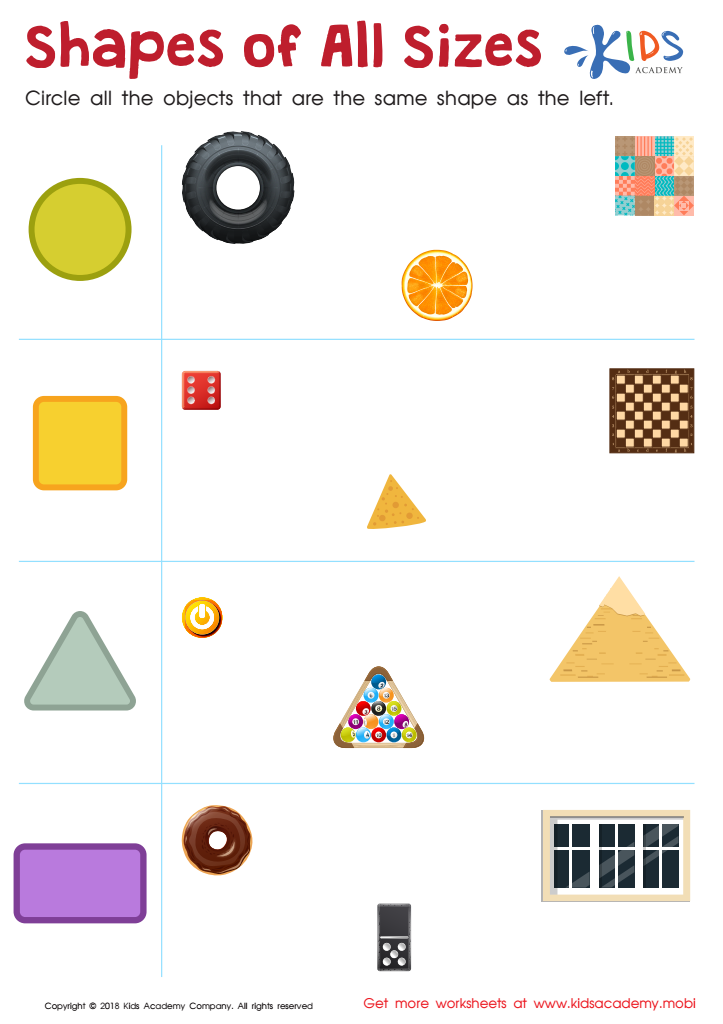
Shapes of All Sizes Worksheet
 Assign to My Students
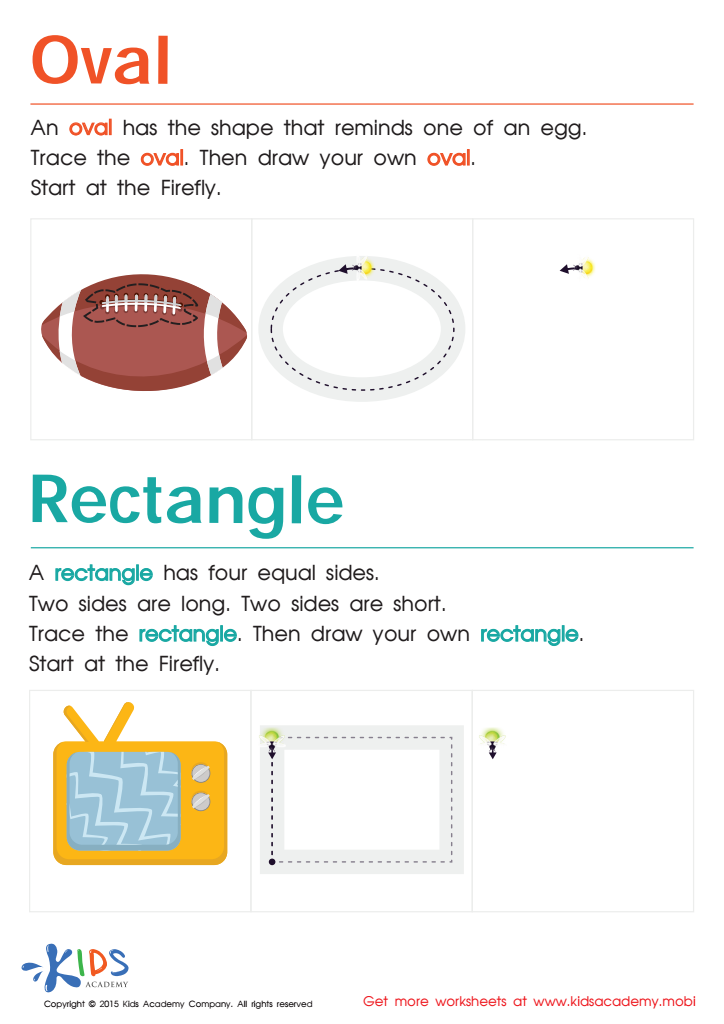
Easy Drawing of Ovals And Rectangles Worksheet
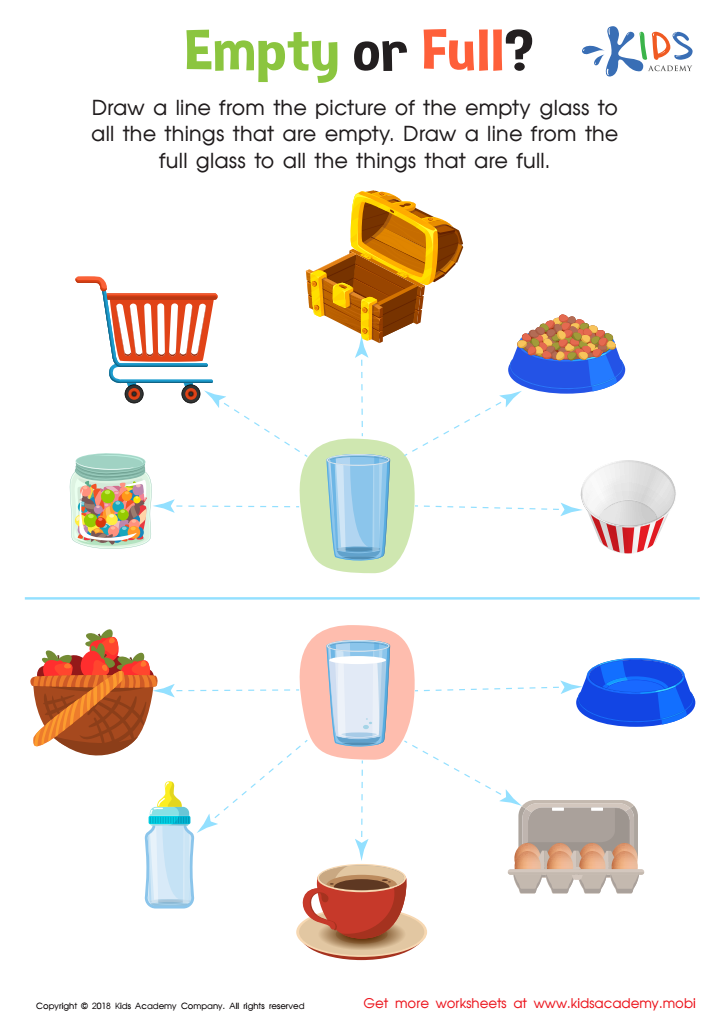
Empty or Full? Worksheet



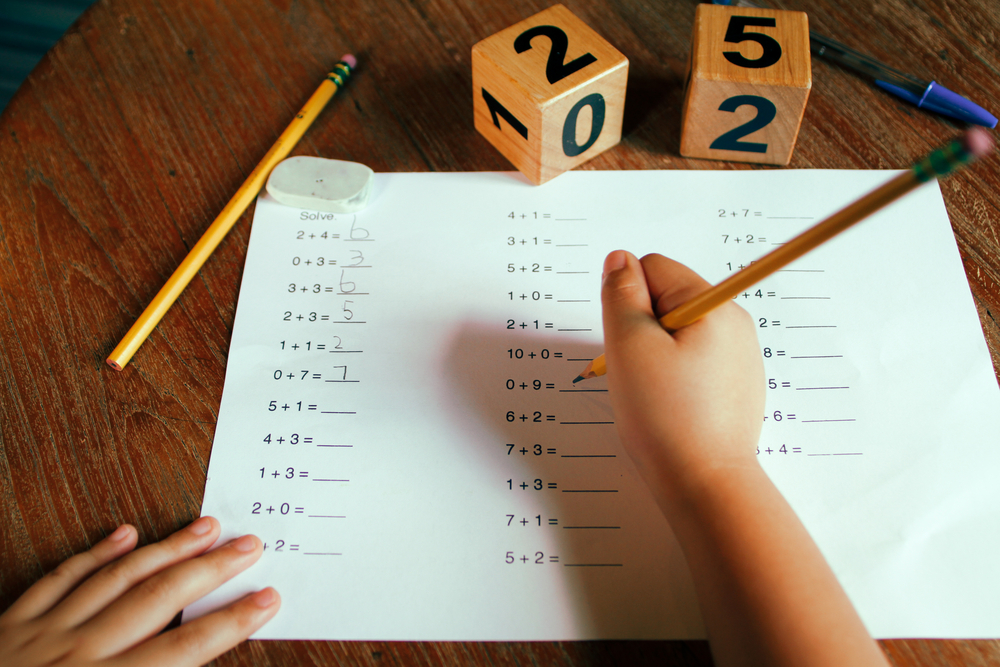




Visual perception skills are essential in the early developmental stages of children aged 3-6, as they underlie many aspects of learning, including mathematics. These skills involve the brain's ability to interpret and understand visual information from the world around us, which is crucial for recognizing numbers, shapes, patterns, and spatial relationships.
For parents and teachers, nurturing visual perception skills can directly impact a child's readiness to tackle normal math problems and activities. Good visual perception helps children distinguish between different numbers and shapes, allows them to recognize patterns, and supports their ability to navigate worksheets and books. Problems with these skills can result in difficulties with more complex tasks such as differentiating between similar numbers (like 6 and 9), understanding geometry concepts, or resolving counting sequences.
Moreover, math-related activities often require children to visualize something before they can solve it. For example, counting blocks, piecing together puzzles, or arranging objects in size order are all tasks that rely on strong visual perception.
Supporting visual perceptive skills fosters a child's ability to understand the visual world, lays a firm foundation for their mathematical journey, and boosts overall cognitive development. Activities like puzzles, matching games, and hands-on, multisensory learning tasks should be integral in early education to reinforce these crucial skills. This, in turn, not only enhances math readiness but also empowers children with a robust learning toolkit for their future academic endeavors.








