Pattern recognition Normal Patterns Worksheets for Ages 3-6
5 filtered results
-
From - To
Enhance your child's cognitive skills with our "Pattern Recognition Normal Patterns Worksheets" designed for ages 3-6. These engaging worksheets help young learners identify, create, and extend patterns, fostering critical thinking and early math skills. Featuring colorful images and fun exercises, children will enjoy learning through play while they recognize sequences in shapes, colors, and more. Ideal for preschool and kindergarten settings, these worksheets promote independent learning and can easily fit into your homeschooling routine. Give your child the foundation to excel in math and develop essential problem-solving skills. Start their journey in pattern recognition today!
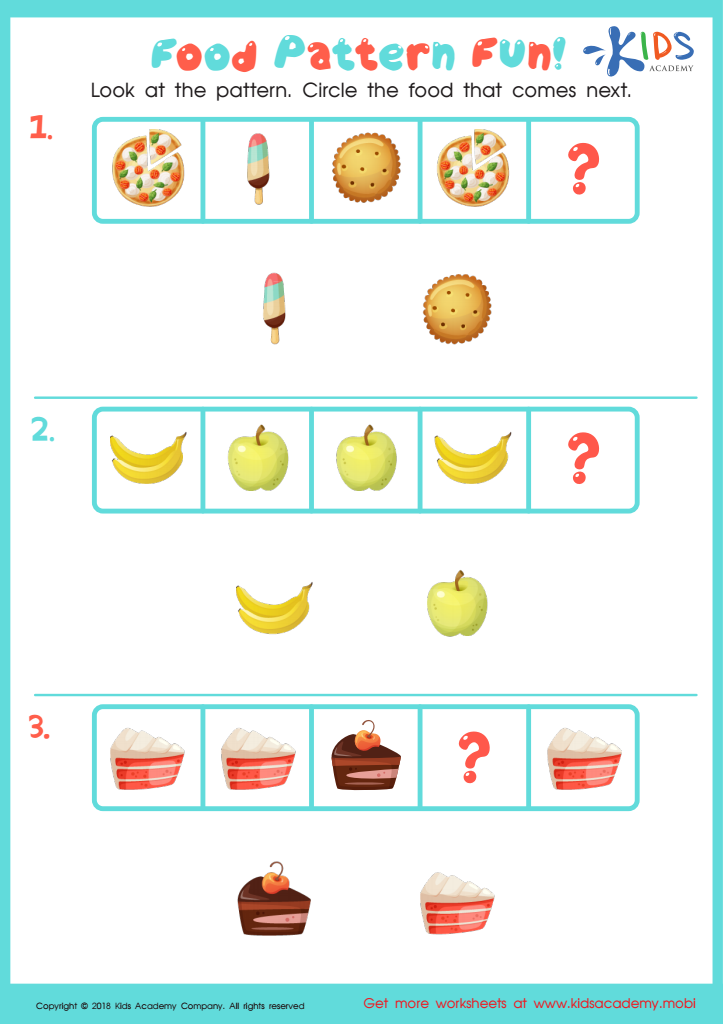
Food Pattern Fun Worksheet
 Assign to My Students
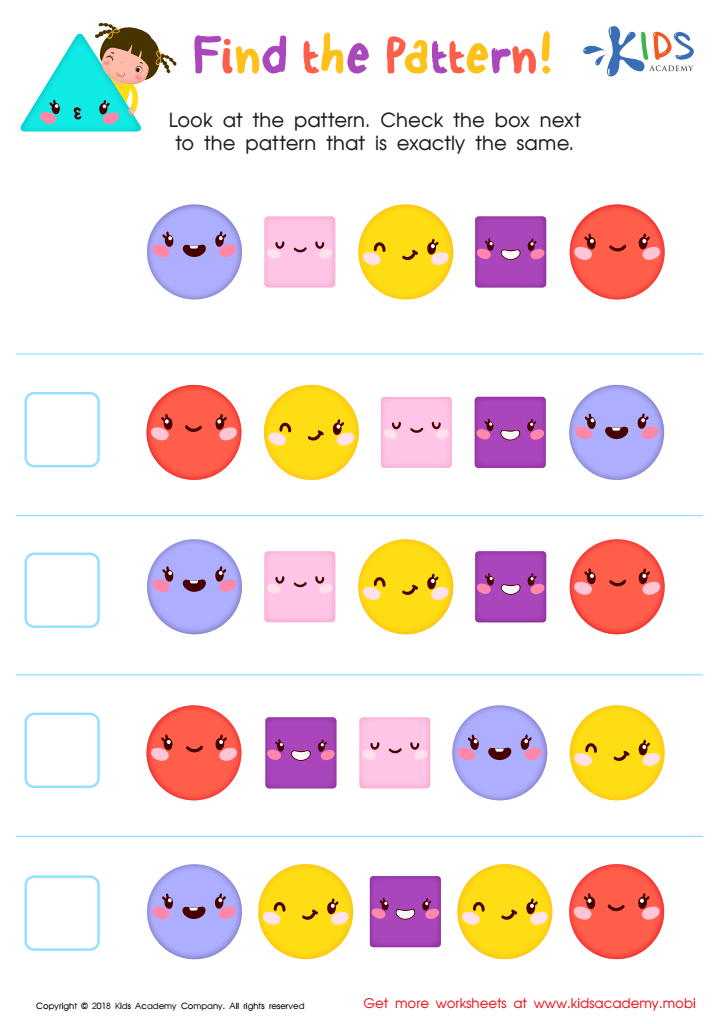
Find the Pattern Worksheet
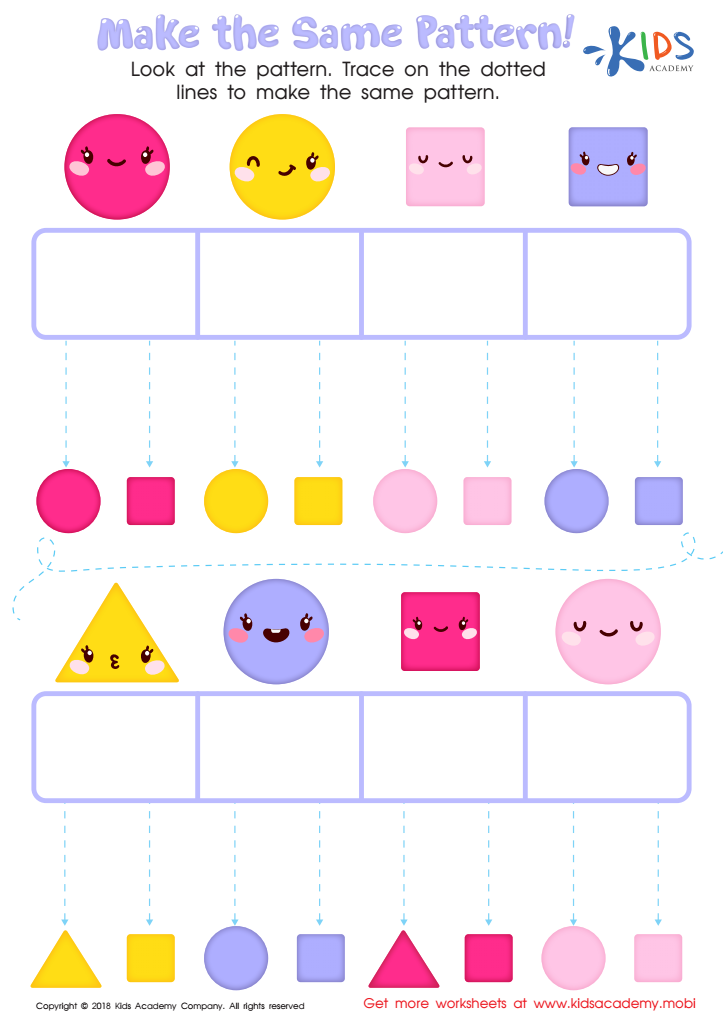
Make the Same Pattern Worksheet
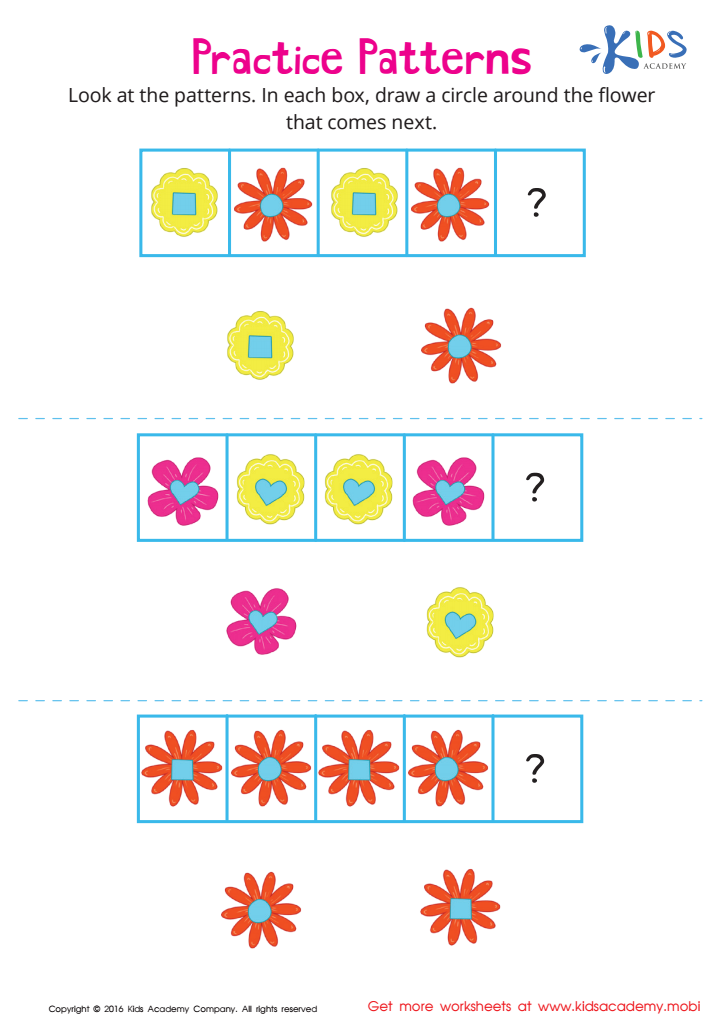
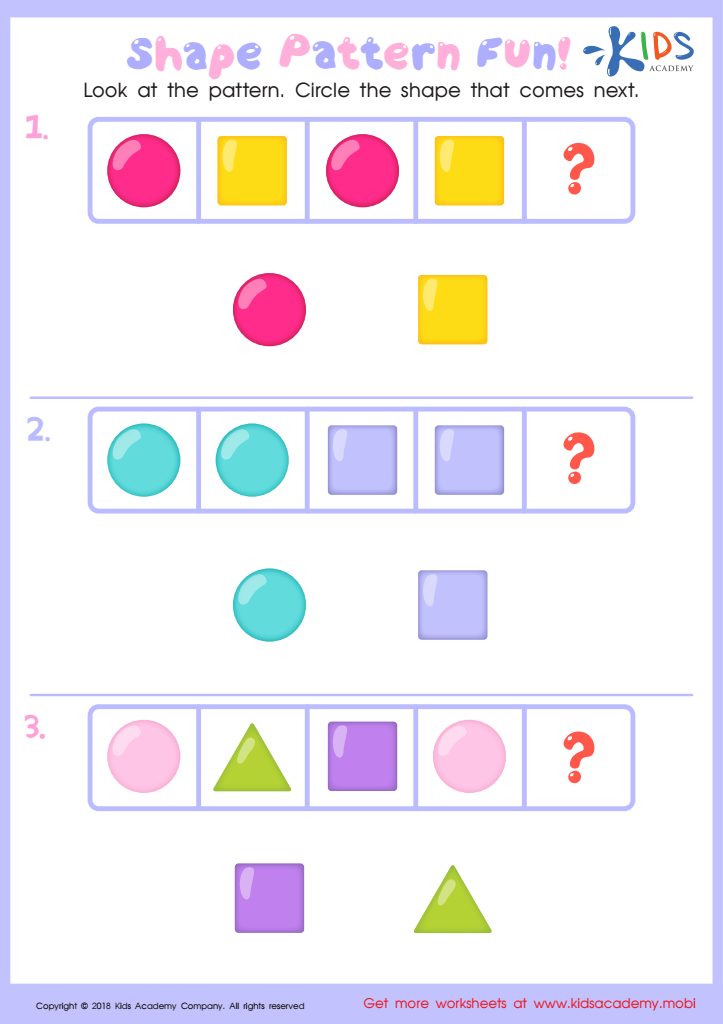
Shape Pattern Fun Worksheet







Pattern recognition is a fundamental cognitive skill critical for children ages 3-6. During this developmental stage, children naturally explore their environment, and engaging with patterns enhances their observational skills, logical thinking, and problem-solving abilities. Recognizing normal patterns—like sequences, repetitions, and associations—supports early math and literacy skills, laying a strong foundational understanding for future academic success.
Parents and teachers should care about pattern recognition as it encourages critical thinking and creativity. By noticing and predicting patterns in numbers, shapes, and sounds, children develop the ability to make connections and draw conclusions, fostering deeper understanding in various subjects. For example, recognizing a pattern in a story or rhyme enhances comprehension, boosts vocabulary, and makes learning enjoyable.
Additionally, engaging with patterns helps children build perseverance and confidence. As they practice identifying and creating patterns, they develop a sense of accomplishment, stimulating their motivation to learn. Finally, integrating pattern recognition through everyday activities and play not only nurtures cognitive development but also strengthens parent-child and teacher-student relationships by facilitating interactive and collaborative learning experiences. In essence, nurturing pattern recognition during early childhood contributes significantly to a child’s overall growth and development, setting the stage for academic achievement and lifelong learning.








