
Critical Thinking Normal Reading Fiction Worksheets for Ages 3-6
24 filtered results
Difficulty Level
Grade
Age
-
From - To
Subject
Activity
Standards
Enhance your child's critical thinking skills with our carefully curated reading fiction worksheets designed for ages 3-6. Our resources feature captivating stories that foster creativity, comprehension, and analytical skills. Through engaging activities, children will learn to interpret narratives, recognize patterns, and connect concepts, laying the foundation for advanced literacy. These worksheets not only nurture a love for reading but also teach young minds to question, infer, and reflect. At Kids Academy, we provide an enriching experience that balances education and fun, ensuring your child develops essential problem-solving abilities while enjoying the magic of storytelling.
Favorites
With answer key
Interactive
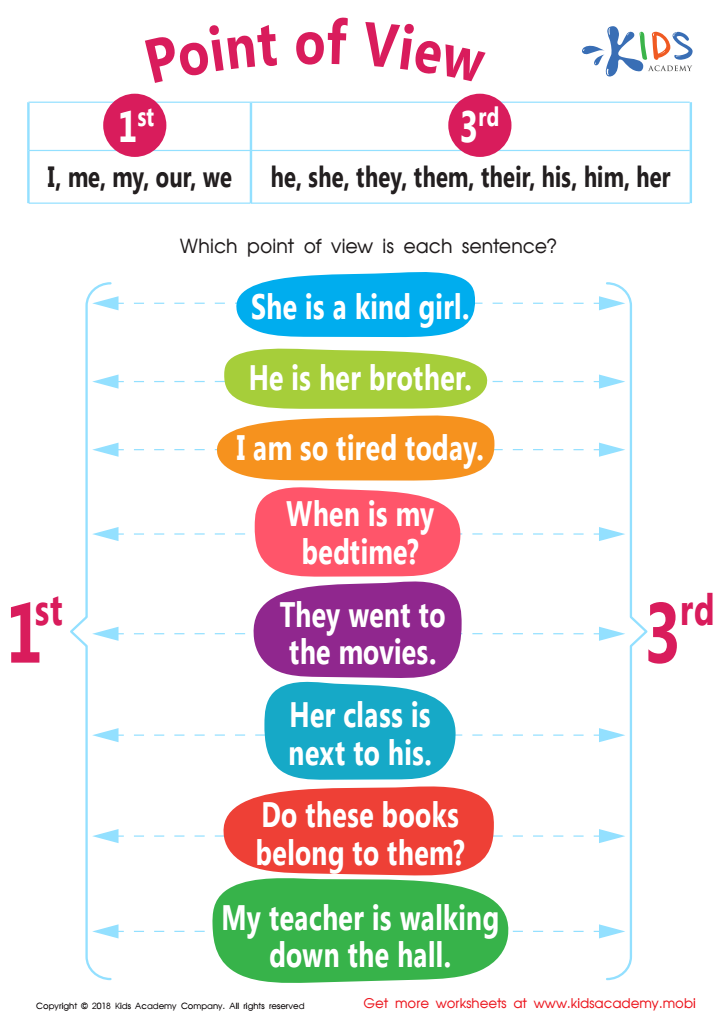
Point of View Worksheet
This printable worksheet helps kids understand Point of View by providing 1st and 3rd person choices. It's a fun way to practice differentiating between the two viewpoints and improve their reading comprehension. Match the sentences to 1st or 3rd person to strengthen understanding and enjoy the task!
 Assign to My Students
Point of View Worksheet
Worksheet
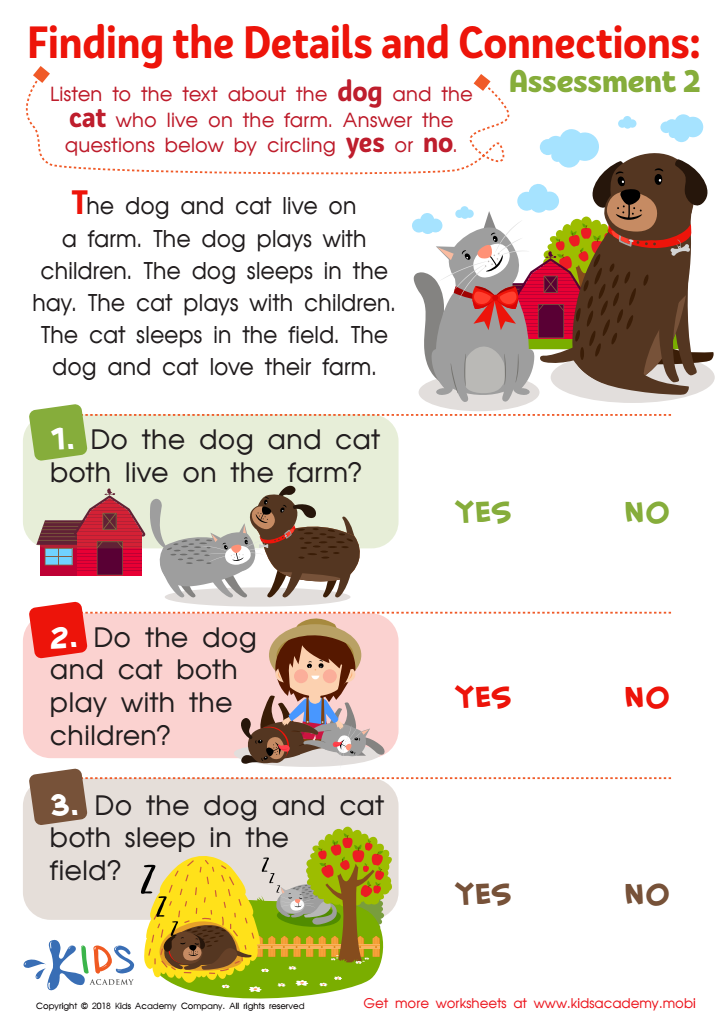
Finding the Details and Connections: Assessment 2 Worksheet
Does your child love animals? If you have pets, they'll relate to the text in this worksheet. Read it aloud to them and help them answer the simple questions by circling yes or no. The story is about a dog and cat living on a farm. Let your child read it aloud to you if they can.
Finding the Details and Connections: Assessment 2 Worksheet
Worksheet
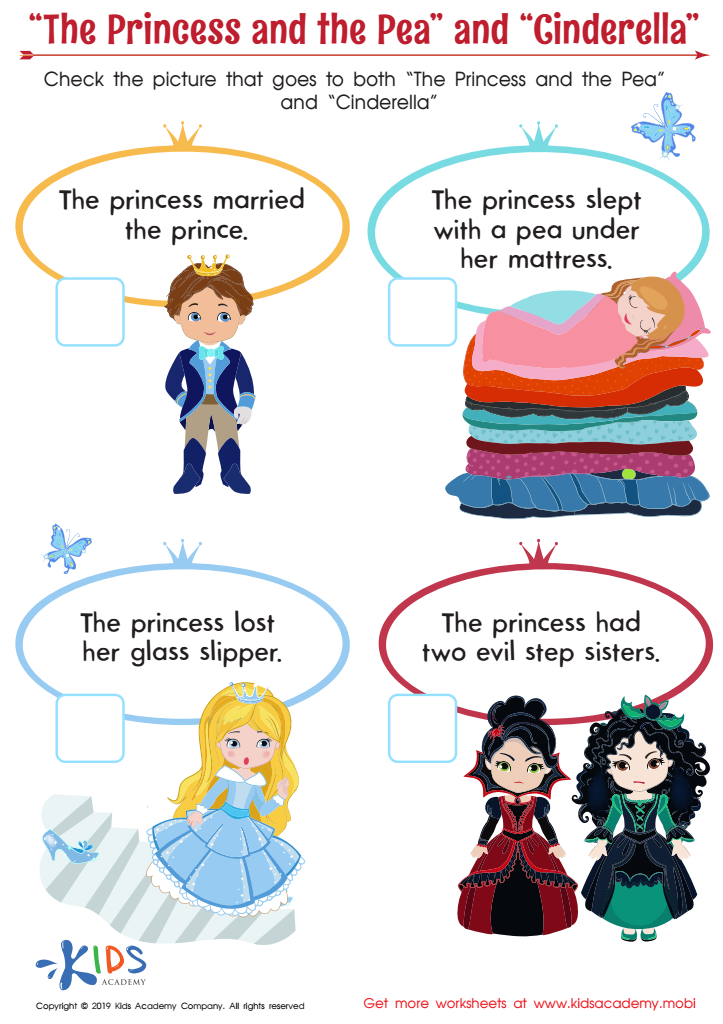
“The Princess and the Pea” and “Cinderella” Worksheet
Read "Cinderella" and "The Princess and the Pea" to your little ones. Ask them what their favorite parts were and what similarities they found in the princesses. This worksheet has four pictures of scenes from the stories. Ask your kids which picture goes with both tales.
“The Princess and the Pea” and “Cinderella” Worksheet
Worksheet
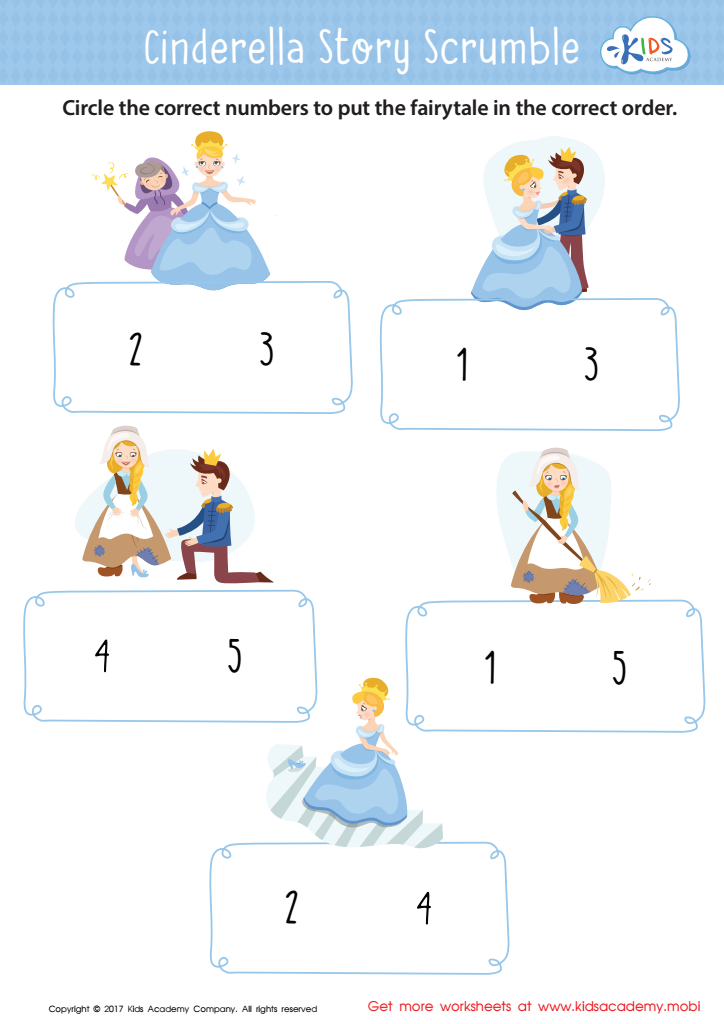
Cinderella Story Sequencing Worksheet
This worksheet helps strengthen reading comprehension skills by getting your child to remember key moments from the Cinderella story. They'll be asked to place pictures in the right order to tell the story.
Cinderella Story Sequencing Worksheet
Worksheet
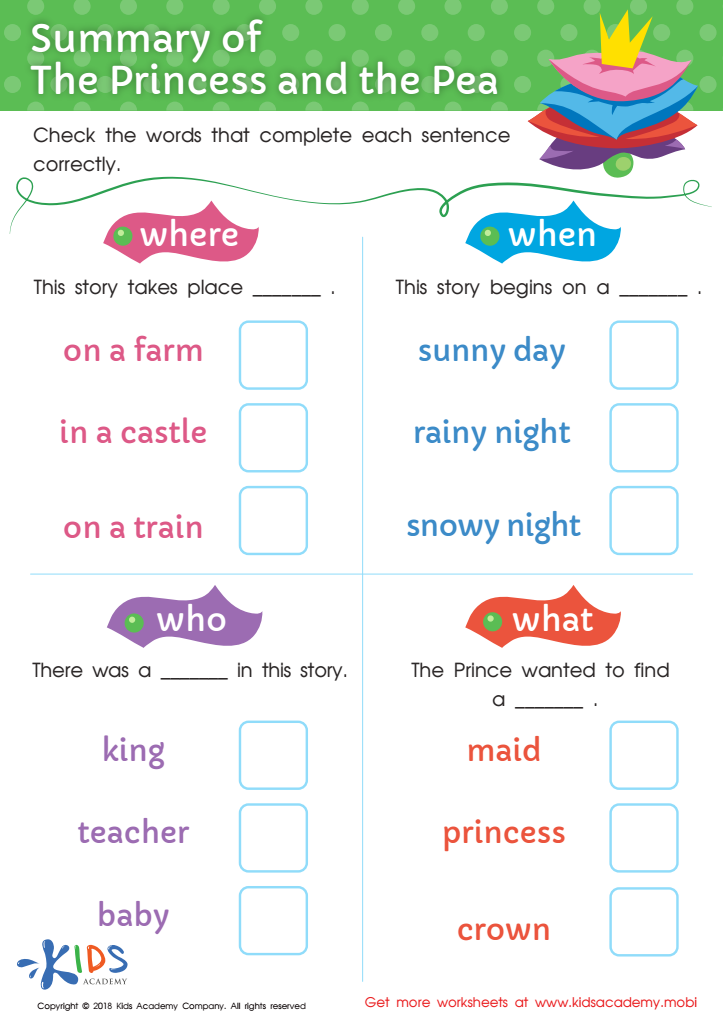
The Summary of the Princess and the Pea Worksheet
Test your student’s knowledge of the story The Princess and the Pea with this quick worksheet. With who, what, when and where questions, it's a great way to assess comprehension skills. It's a perfect resource for school or home classrooms. Download it now and start improving comprehension skills!
The Summary of the Princess and the Pea Worksheet
Worksheet
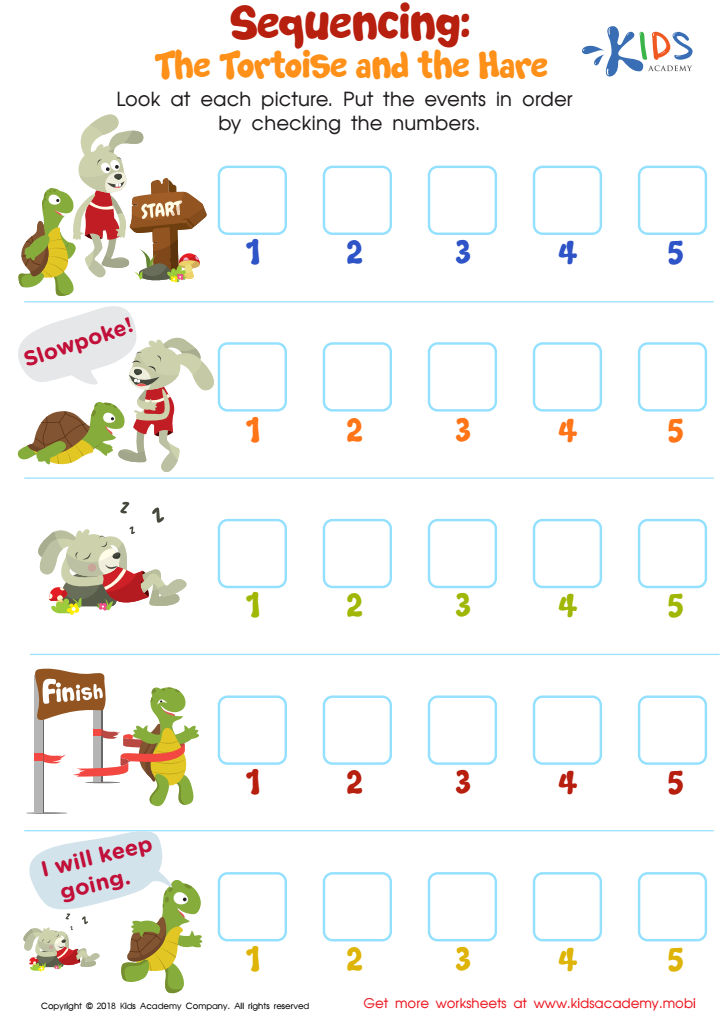
Sequencing: The Tortoise and the Hare Worksheet
Help your child become an independent reader and critical thinker with a sequencing worksheet from Kids Academy! Have them read the classic tale of the tortoise and the hare and use the accompanying worksheet to check their understanding of the story's sequence of events. Have kids identify the correct order of events by selecting the box next to the correct number for each image!
Sequencing: The Tortoise and the Hare Worksheet
Worksheet
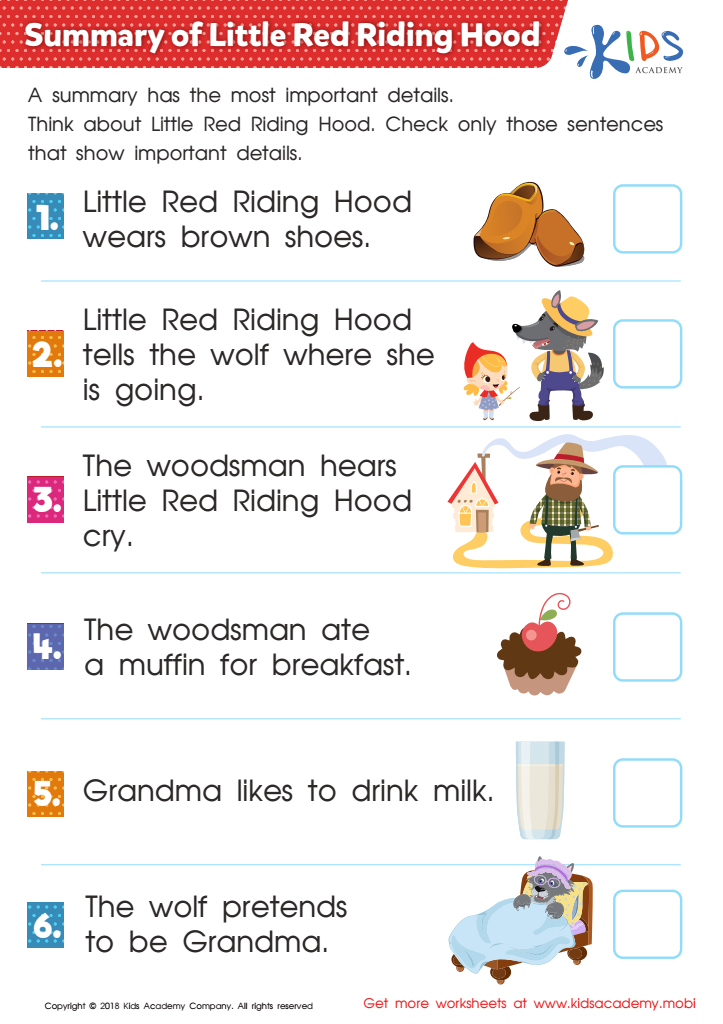
Summary of Little Red Riding Hood Worksheet
Young students may find it hard to summarize stories. This worksheet helps them learn to distinguish between important story details and unimportant ones. Practice reading Little Red Riding Hood and pick out only the important details with the help of this downloadable worksheet.
Summary of Little Red Riding Hood Worksheet
Worksheet
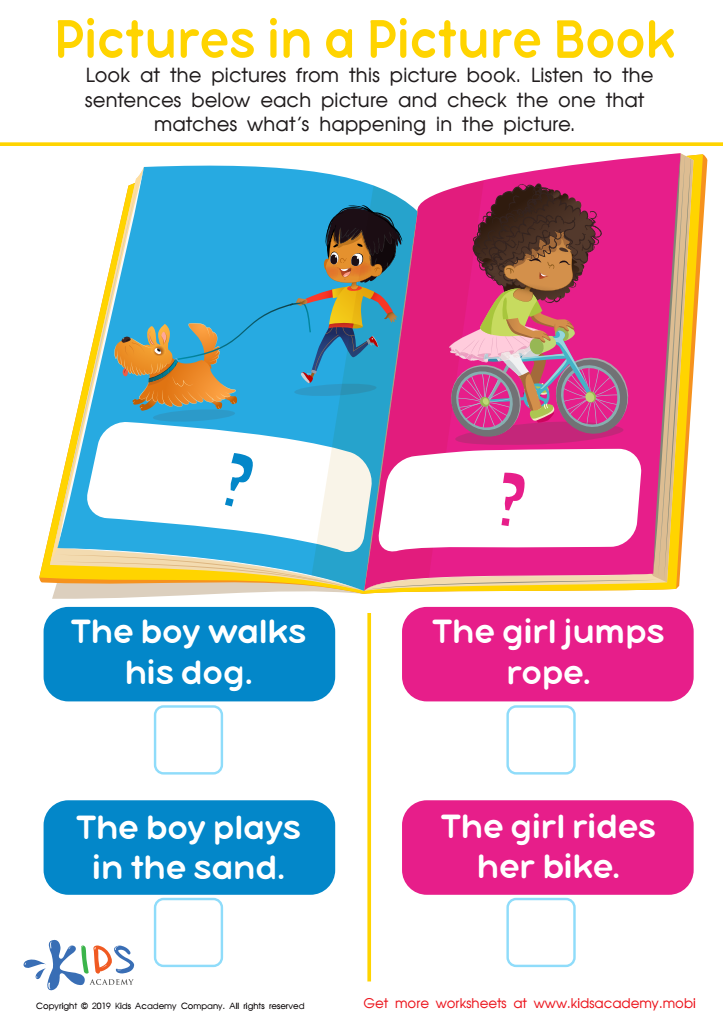
Picture in Books Worksheet
Picture books are popular with students - they're easier to read and understand because of the captions and illustrations. With preschoolers, look at the pictures in the book and read the sentences in the worksheet. Help them choose the one that matches the scene.
Picture in Books Worksheet
Worksheet
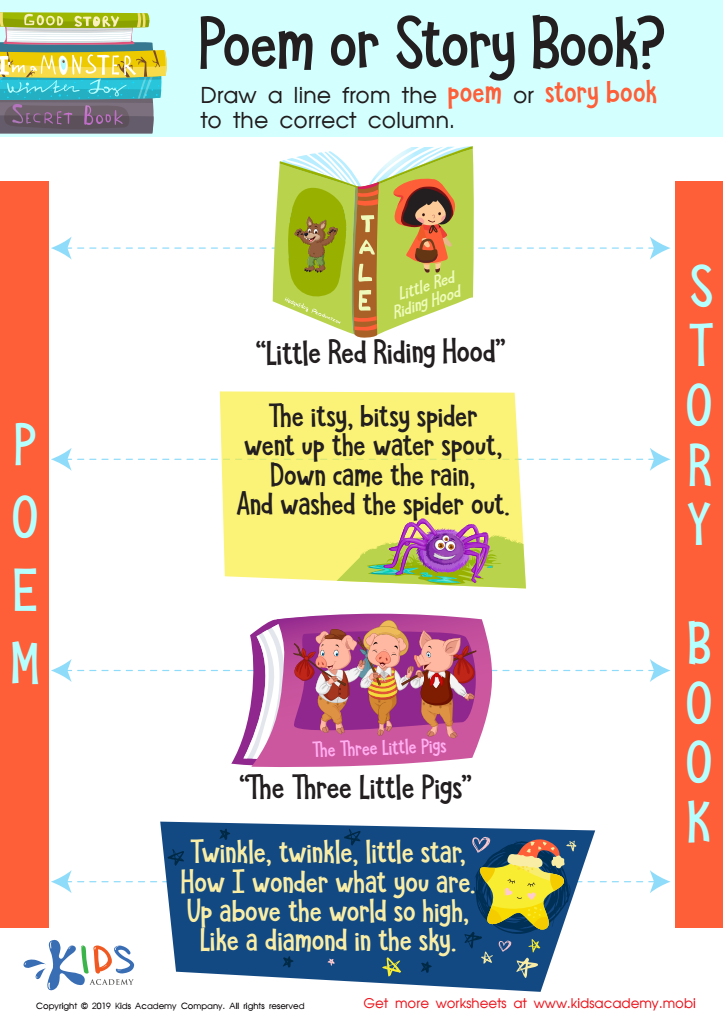
Poem or Story Book? Worksheet
Help your little readers comprehend different genres with this free worksheet! Colorful images and familiar themes help them distinguish between poems and story books. They'll identify which is which, then connect the picture to the right column with traceable lines. A fun way to expand their understanding!
Poem or Story Book? Worksheet
Worksheet
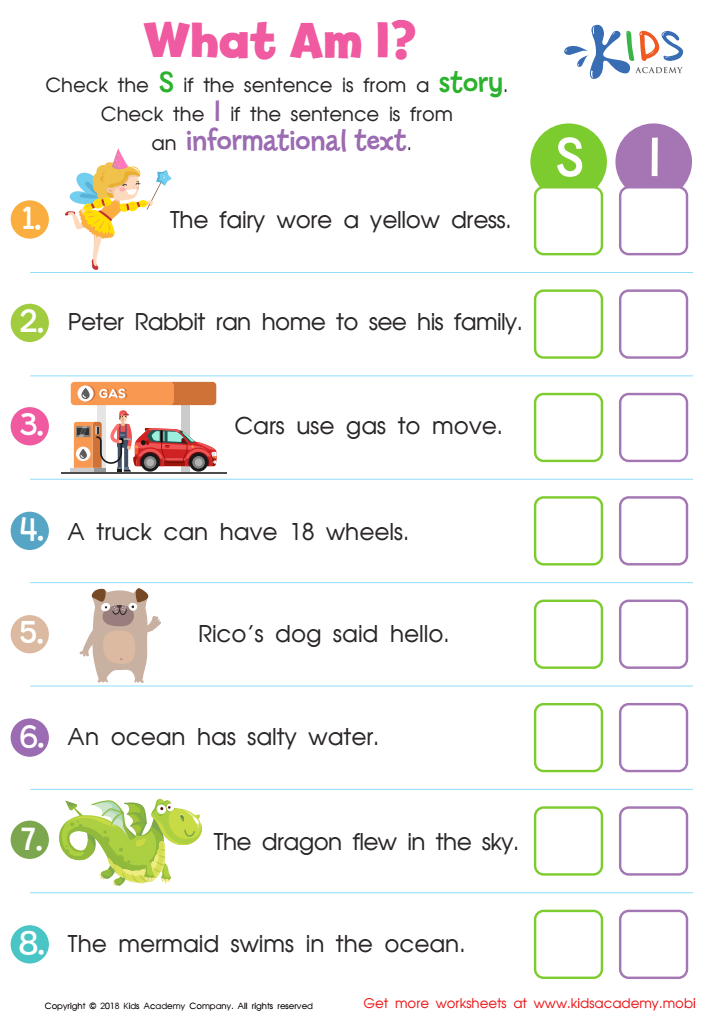
What Am I? Worksheet
This worksheet assesses students' ability to differentiate between stories and texts they read for facts. Students learn to distinguish between reading for pleasure and reading for information. It includes statements from both a story and an informational text, and students must decide what type of text it is.
What Am I? Worksheet
Worksheet
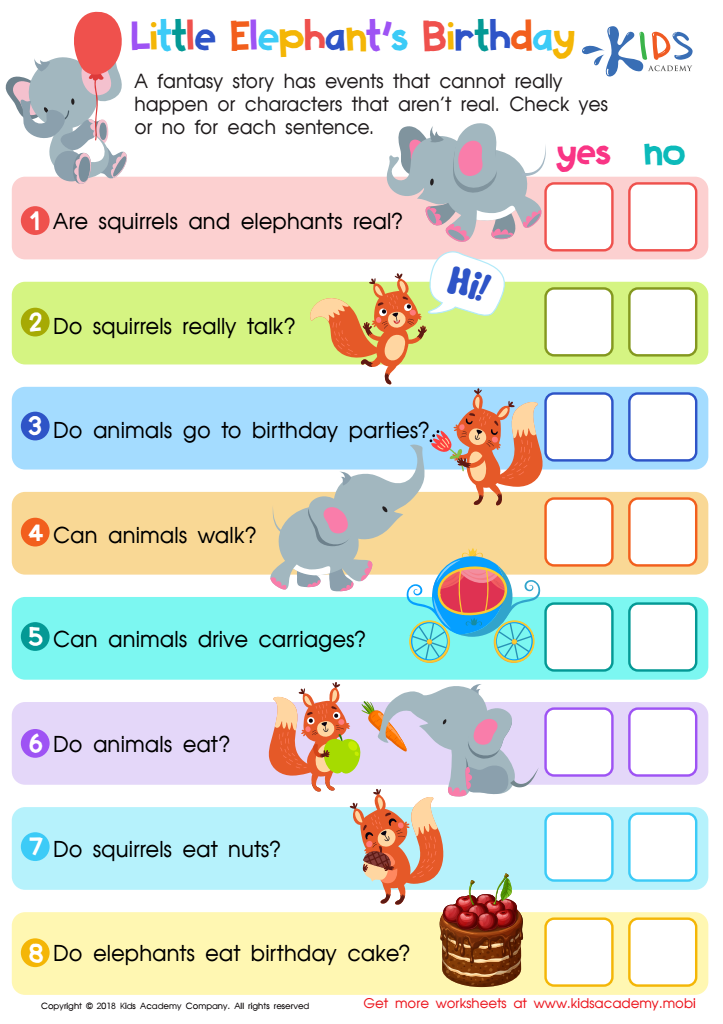
Little Elephant's Birthday Worksheet
It's Little Elephant's birthday! Help your students celebrate with this fun worksheet full of colors and pictures. Deciding which questions are facts and which are fiction will help them differentiate between fantasy stories and reality. Let them have fun learning why certain elements of fantasy can't be true!
Little Elephant's Birthday Worksheet
Worksheet
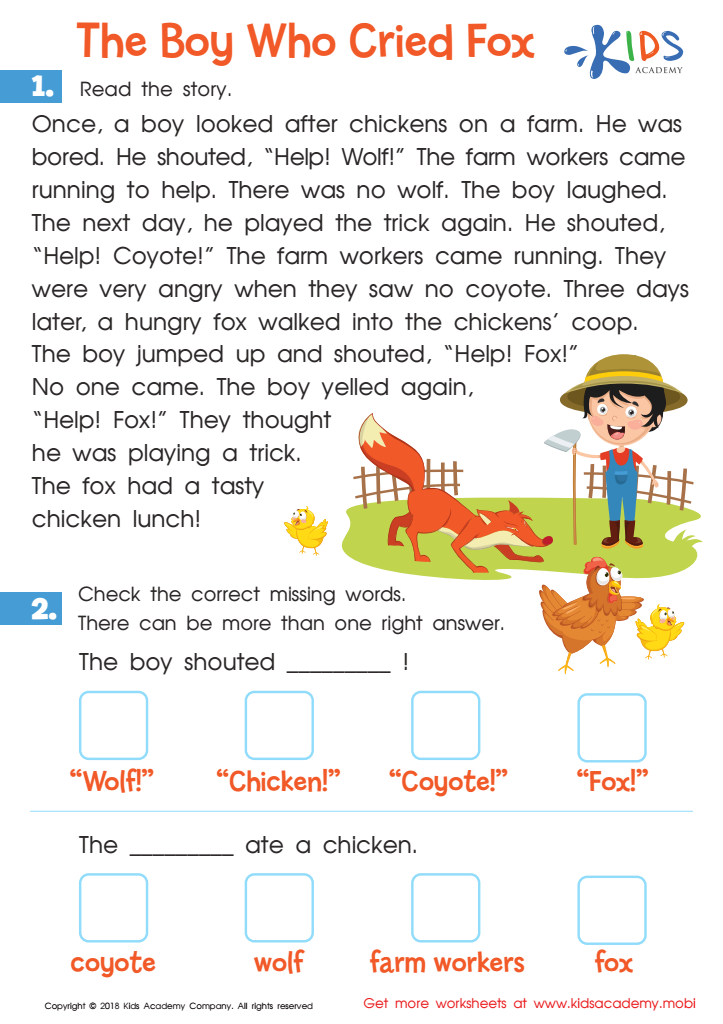
The Boy Who Cried Fox Worksheet
This worksheet encourages students to recall details from a story and answer questions to test their comprehension. Perfect for reading lessons, enrichment, or extra help.
The Boy Who Cried Fox Worksheet
Worksheet
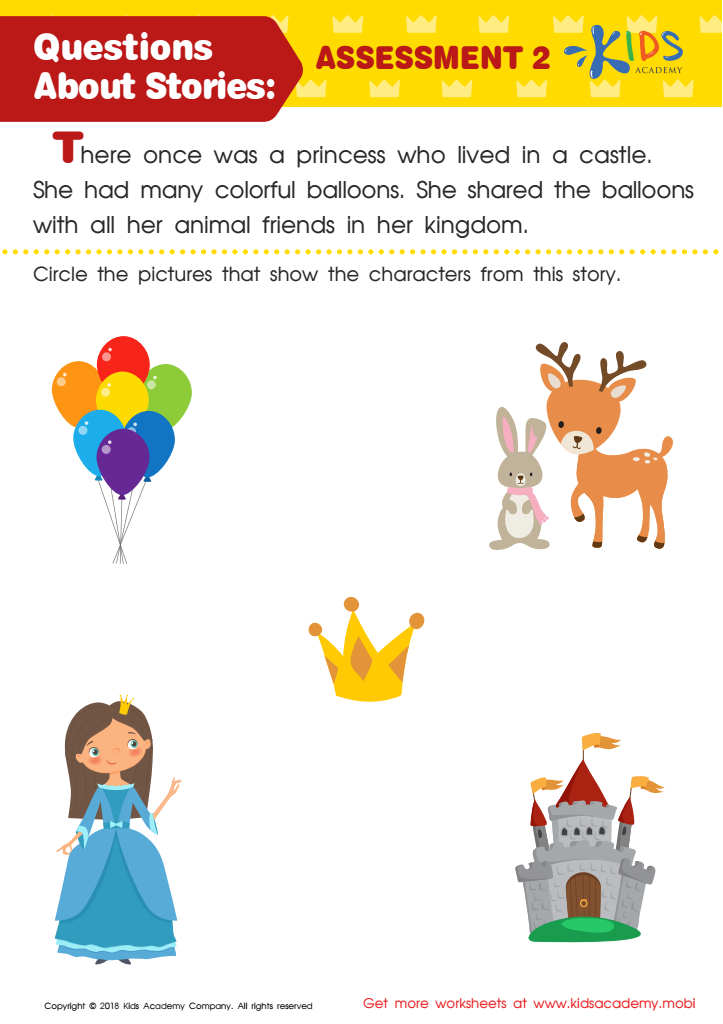
Questions About Stories: Assessment 2 Worksheet
Talk to your child about what a princess is and what activities they associate with that word. Then, read the story to them and help them identify characters in the pictures. Look out for details and ask them questions to ensure they understand.
Questions About Stories: Assessment 2 Worksheet
Worksheet
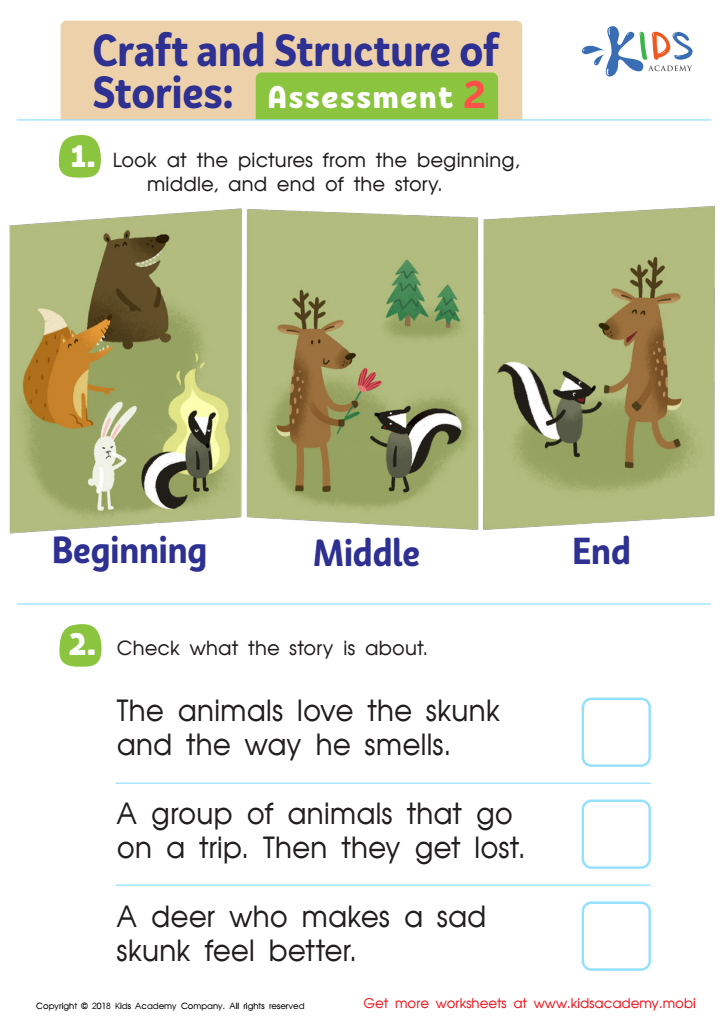
Craft and Structure of Stories: Assessment 2 Worksheet
Help your child assess their story sequencing and reading comprehension skills using this cute worksheet! It encourages them to look at the three pictures on the page, each representing a scene from the beginning, middle and end. Ask them what the story is about, then let them check the box next to the correct answer. This is a great way to ensure they understand the main events of a story.
Craft and Structure of Stories: Assessment 2 Worksheet
Worksheet
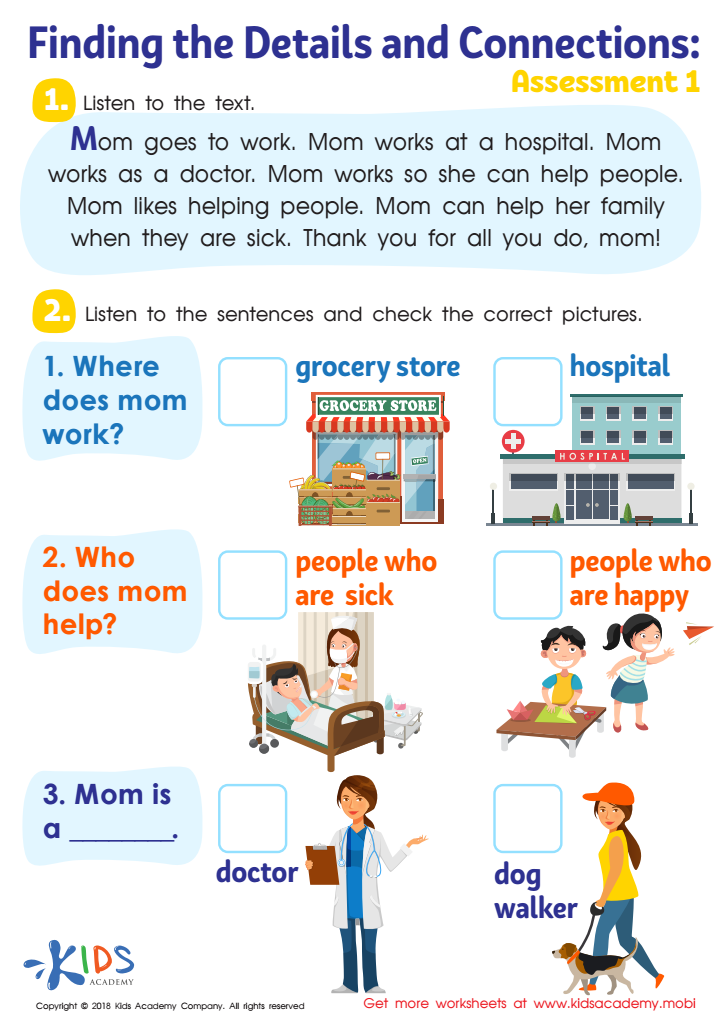
Finding the Details and Connections: Assessment 1 Worksheet
Ask your students what their parents do for a job. Do they know what profession their mom is in and where she works? Professionals have places they go to do their job. In this task, Mom goes to a hospital and is a doctor. Read the text and help them check the right pictures.
Finding the Details and Connections: Assessment 1 Worksheet
Worksheet
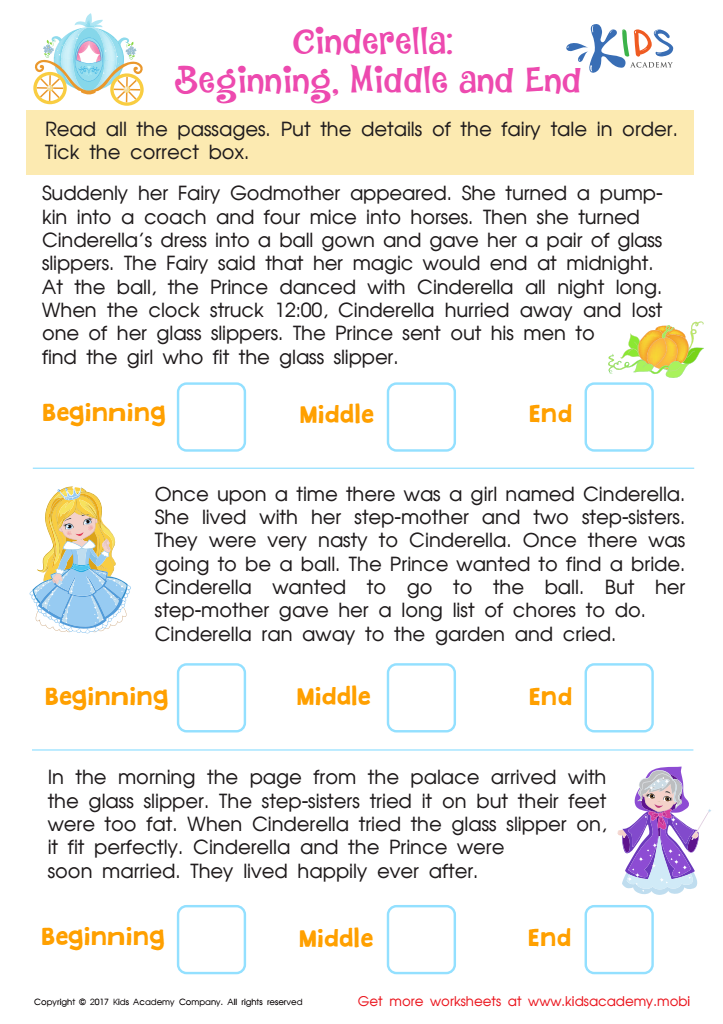
Cinderella: Beginning, Middle and End Worksheet
This Cinderella-themed worksheet provides an excellent opportunity for your child to practice reading comprehension and understanding the basics of story structure.
Help your child learn a key story concept with this Cinderella-themed reading comprehension worksheet. It's an excellent way for them to practice understanding the different parts of a story, from the beginning to the end. Kids will love getting to know the beloved fairy tale of Cinderella!
Cinderella: Beginning, Middle and End Worksheet
Worksheet
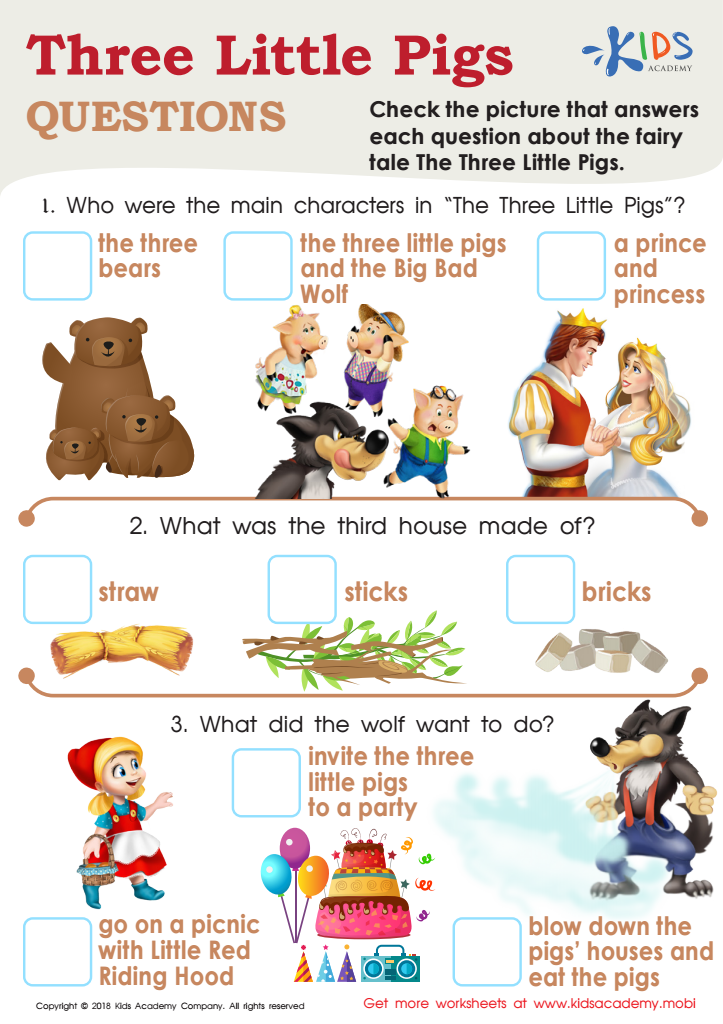
Three Little Pigs Questions Worksheet
Does your kid love bedtime stories? Test their classic fairytale knowledge with this worksheet! If they mention The Three Little Pigs, they're in luck - this pdf has them answering questions based off the classic fairytale. They'll check the picture that answers each question about the story. Is their fairytale knowledge up to scratch?
Three Little Pigs Questions Worksheet
Worksheet
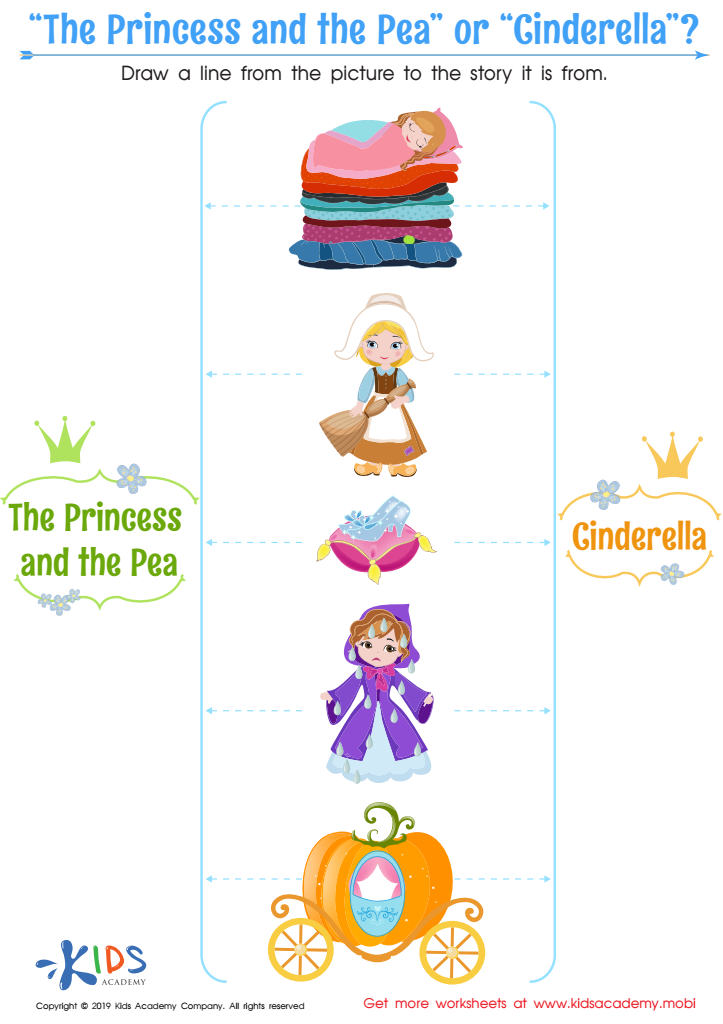
“The Princess and the Pea” or “Cinderella” Worksheet
Help your child identify the characters and objects from both the Princess and the Pea and Cinderella. Ask them to draw a line from the pictures to the story it's from on the tracing sheet. Encourage them to tell you the similarities between the two stories. Enjoy the tale with your daughter and watch her be fascinated by these two classic children's stories.
“The Princess and the Pea” or “Cinderella” Worksheet
Worksheet
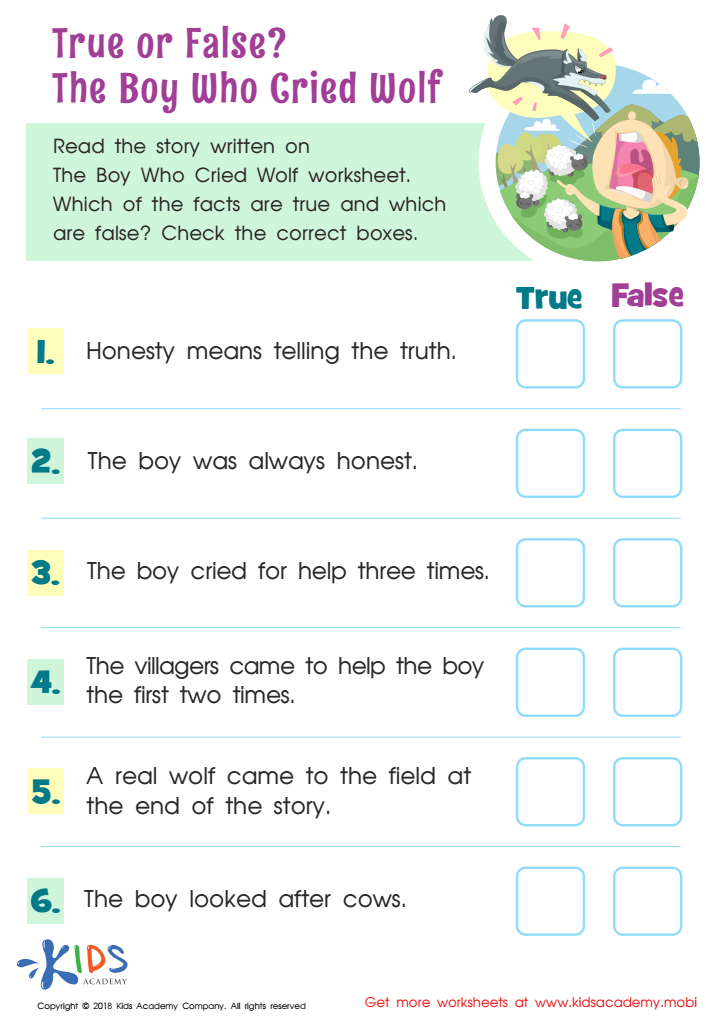
True or False? The Boy Who Cried Wolf Worksheet
Test students' understanding of The Boy Who Cried Wolf with this free downloadable worksheet. It contains true/false questions to assess comprehension of key events. Easy to complete, it checks students can recall facts from the story. Try it and see!
True or False? The Boy Who Cried Wolf Worksheet
Worksheet
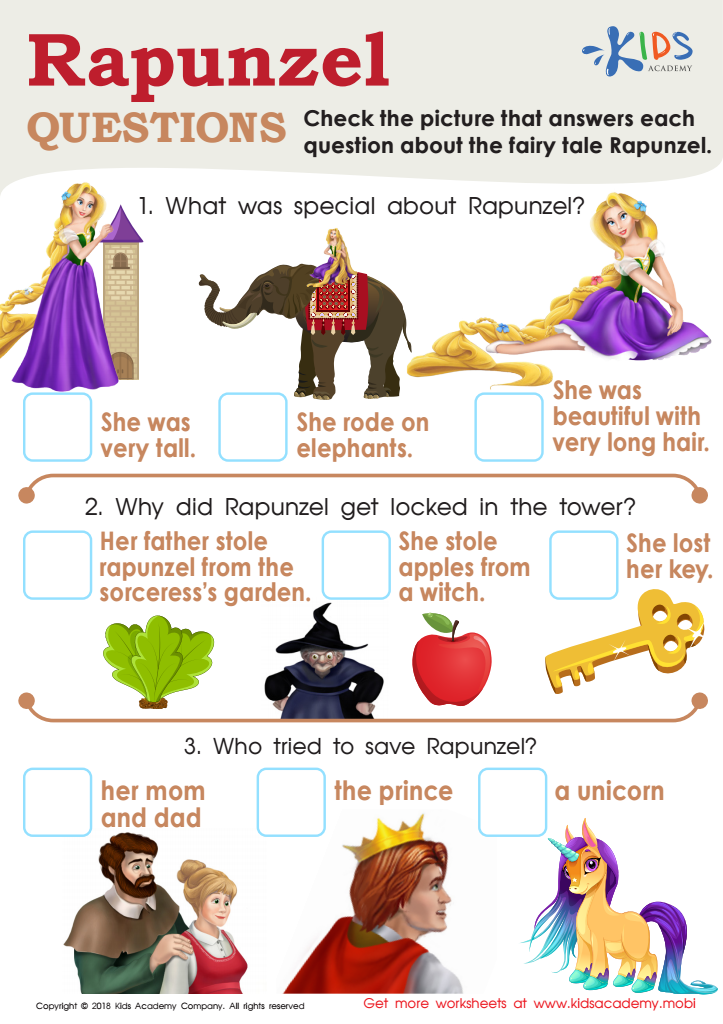
Rapunzel Questions Worksheet
Read the fairy tale 'Rapunzel' to your kids. For those who really enjoyed it, read it twice and ask questions to test their understanding. Then, get them to check the pictures related to the questions to test their comprehension of the story.
Rapunzel Questions Worksheet
Worksheet
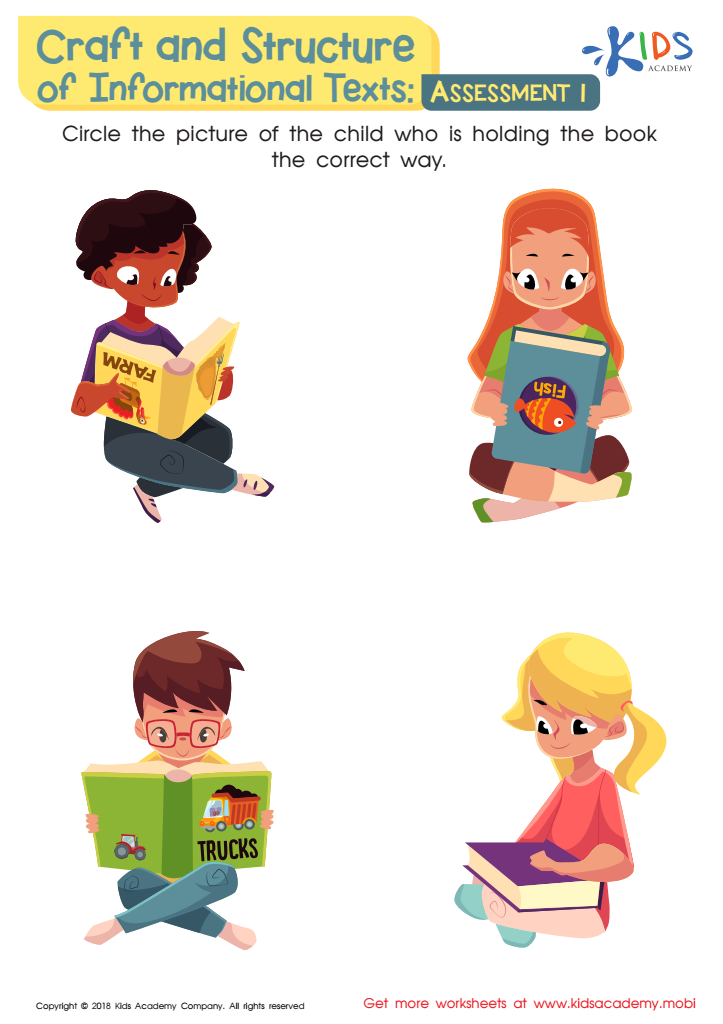
Craft and Structure of Informational Texts: Assessment 1 Worksheet
Young children need to know how to hold books correctly when they start reading. This assessment worksheet helps them show they know what to do. They'll look at the pictures and circle the child who is holding the book correctly. It's a great way to tell they are well on their way to becoming lifetime readers!
Craft and Structure of Informational Texts: Assessment 1 Worksheet
Worksheet
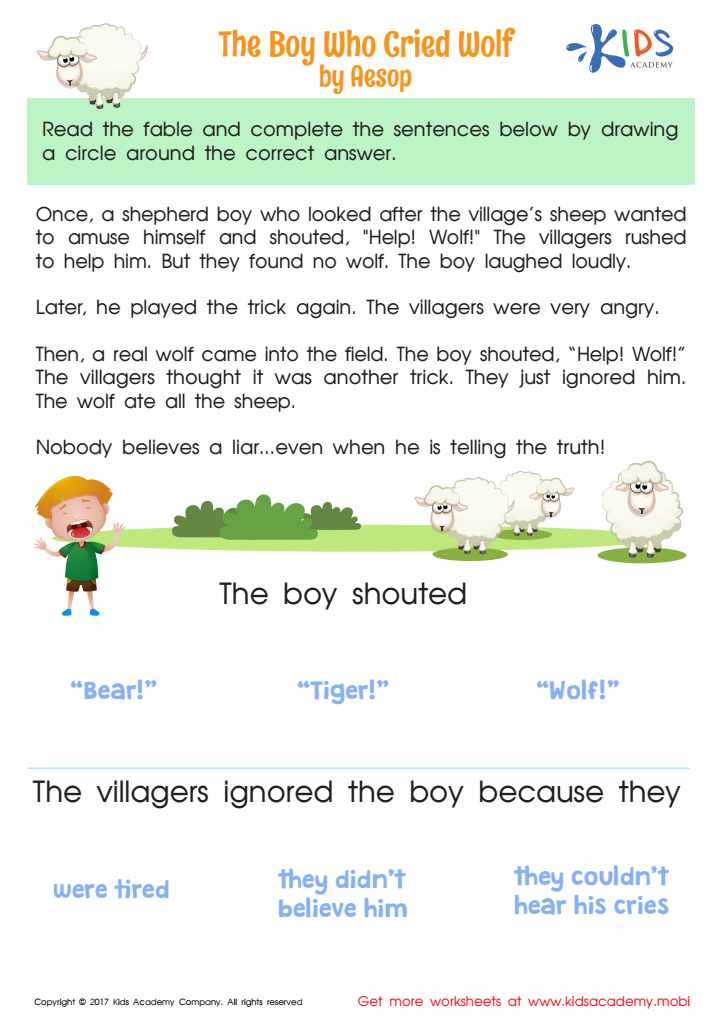
The Boy Who Cried Wolf Worksheet
Test your child's reading comprehension with The Boy Who Cried Wolf worksheet. Read the fable, then answer the questions. Use the text to help your child check their answers are correct. Boost reading skills in a fun, interactive way!
The Boy Who Cried Wolf Worksheet
Worksheet
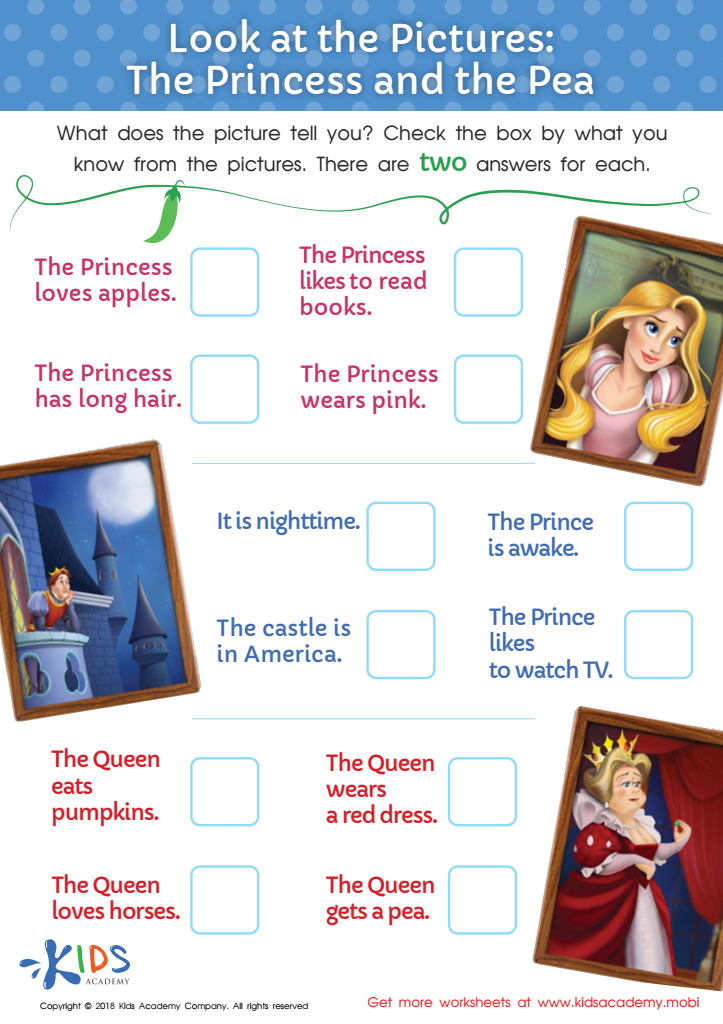
Look at the Pictures: The Princess and the Pea Worksheet
Early readers can benefit from picture clues to understand stories and text. Looking at images helps them learn the meaning of words and comprehend events. Use this worksheet on The Princess and the Pea to let students observe and learn from the pictures. It's a great way to help them comprehend early reading materials.
Look at the Pictures: The Princess and the Pea Worksheet
Worksheet
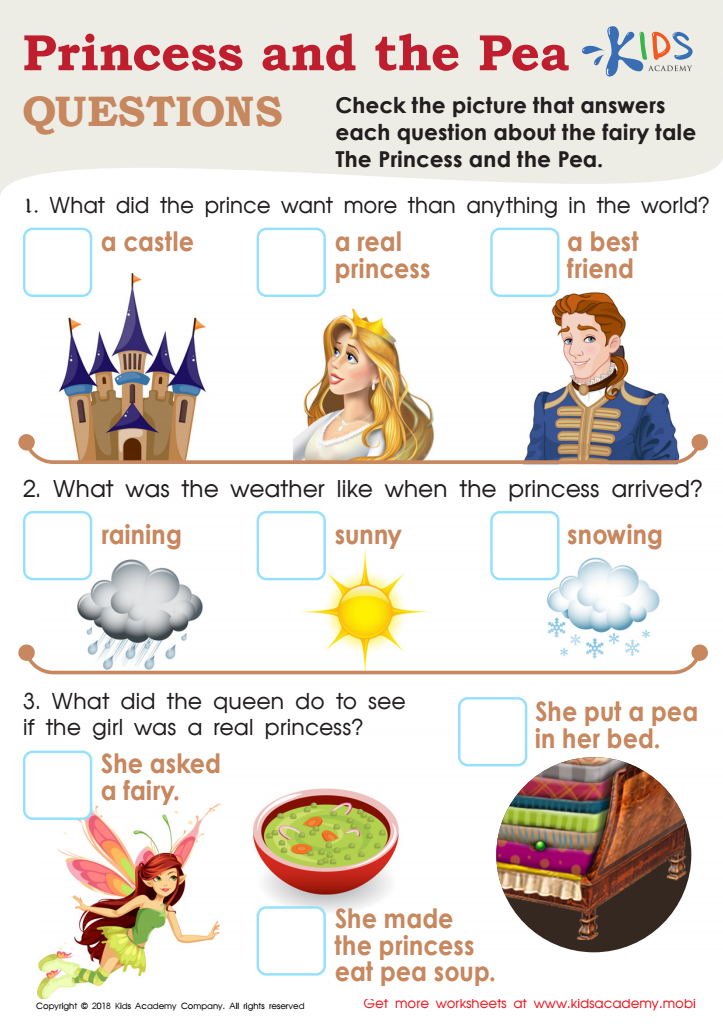
Princess and the Pea Questions Worksheet
Your kid knows The Princess and the Pea inside-out? Test their knowledge with this worksheet. Ask your little one to read the questions and match each one to the picture. It's a fun way to see just how much attention they've paid to their bedtime story.
Princess and the Pea Questions Worksheet
Worksheet
Join Kids Academy for Free
Who is primarily going to use this learning content?


.jpg)





Encouraging critical thinking and normal reading for fiction in children ages 3-6 yields profound benefits in cognitive, emotional, and social development. At this formative stage, the brain is highly receptive to new ideas and ways of understanding the world. Reading fiction nurtures imagination and empathy—children learn to see different perspectives and emotions, which cultivates social skills and emotional intelligence.
Integrating critical thinking into reading enhances comprehension. Young children, though just beginning to read, can start practicing by asking simple 'why' and 'how' questions about the stories. This encourages curiosity and a deeper interest in learning. Discussing plot, characters, and settings helps develop analytical and interpretative skills, setting a foundation for future academic success.
Additionally, reading fiction regularly boosts vocabulary and language skills as children encounter new words and sentence structures in meaningful contexts. Storytime can also strengthen the parent-child bond or teacher-student relationship by fostering a shared experience that is both educational and enjoyable.
Ultimately, fostering a love for reading and critical thinking from an early age cultivates lifelong learners, equipped with not just knowledge, but the wisdom to use it effectively. By valuing critical thinking and normal reading practices, parents and teachers give children essential tools for richer, more reflective lives.







