
Counting skills Normal Plants and Animals Worksheets for Ages 3-6
5 filtered results
Difficulty Level
Grade
Age
-
From - To
Subject
Activity
Standards
Introduce your little learners to the fascinating world of plants and animals with our Counting Skills Normal Worksheets designed specifically for ages 3-6! These engaging and educational activities encourage young children to explore counting through vibrant illustrations of various flora and fauna. With a focus on developing early math skills, our worksheets promote interactive learning while fostering an appreciation for nature. Kids will enjoy counting, identifying, and categorizing different plants and animals, making numeracy fun and harmonious with the natural world. Perfect for home or classroom use, these resources are ideal for nurturing foundational skills in a playful and inspiring way!
Favorites
With answer key
Interactive
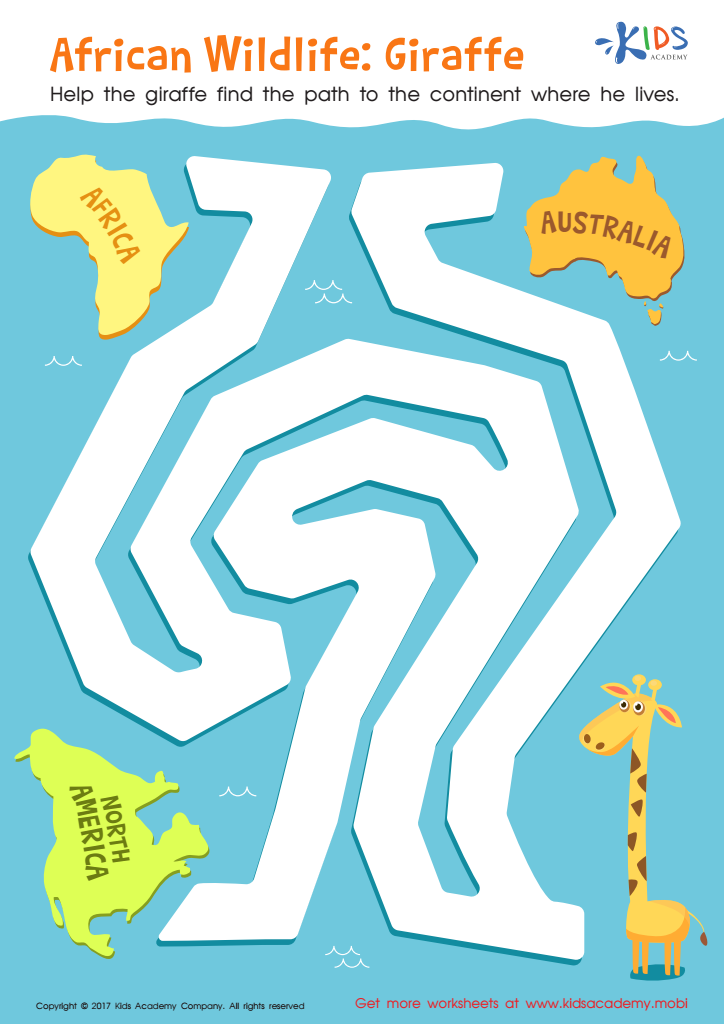
African Wildlife: Giraffe Worksheet
Help the giraffe get home! This African wildlife giraffe worksheet will boost your child's logical reasoning skills while they complete a maze to help the giraffe navigate choppy waters. Learn about different continents and their unique climates, practice problem solving and expand knowledge of the world and its habitats. Perfect for inspiring little learners!
 Assign to My Students
African Wildlife: Giraffe Worksheet
Worksheet











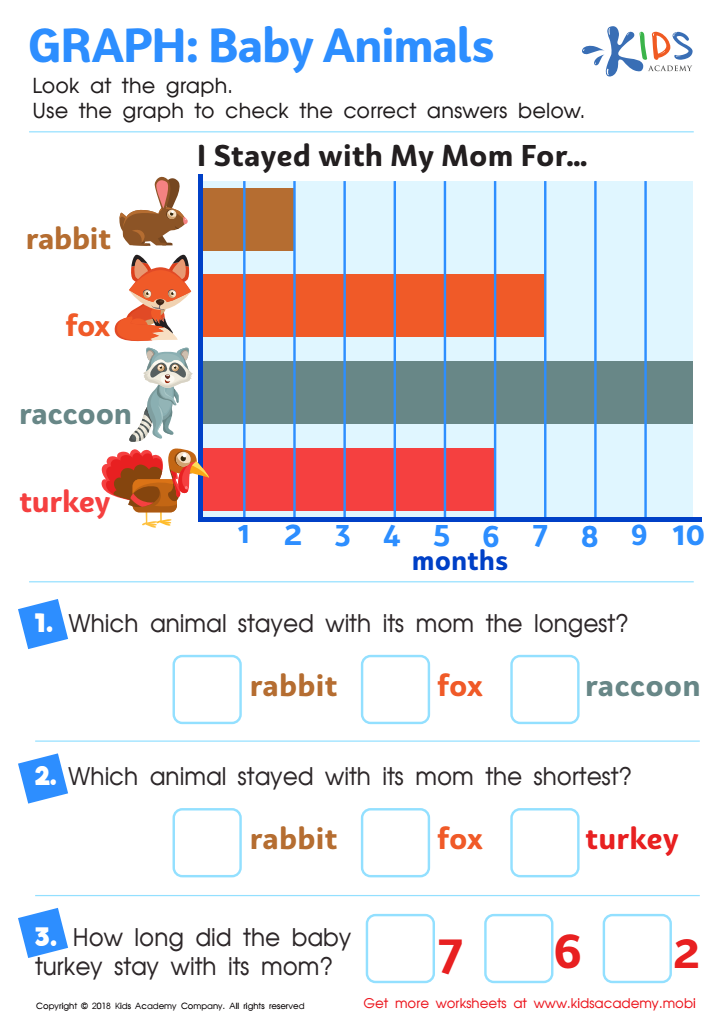
Graph: Baby Animals Worksheet
Graphs are essential for learning in math, science and ELA. This worksheet featuring baby animals is a fun way to practice reading graphs. Look at the graph and answer the questions below it. Check the boxes for the right answers based on the data.
Graph: Baby Animals Worksheet
Worksheet
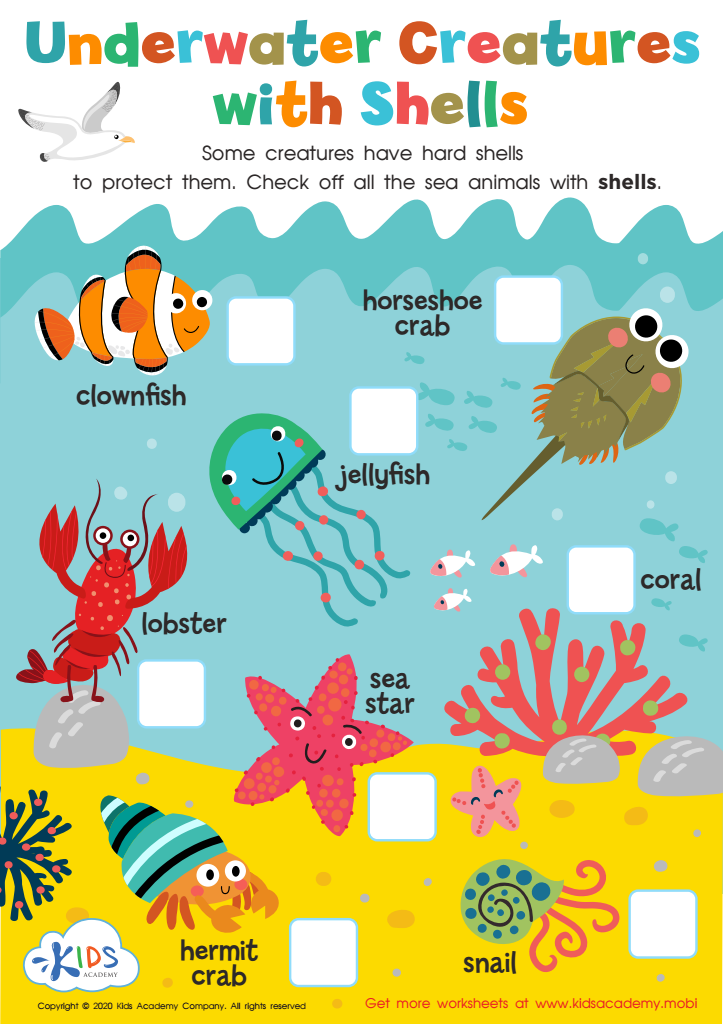
Underwater Creatures with Shells Worksheet
Teach your child about sea creatures with this vibrant PDF science worksheet! Comb through the colorful image to identify animals with shells; compare them to others and check them off. Let them know shells don't just wash up on beach, they serve as protection for sea creatures!
Underwater Creatures with Shells Worksheet
Worksheet
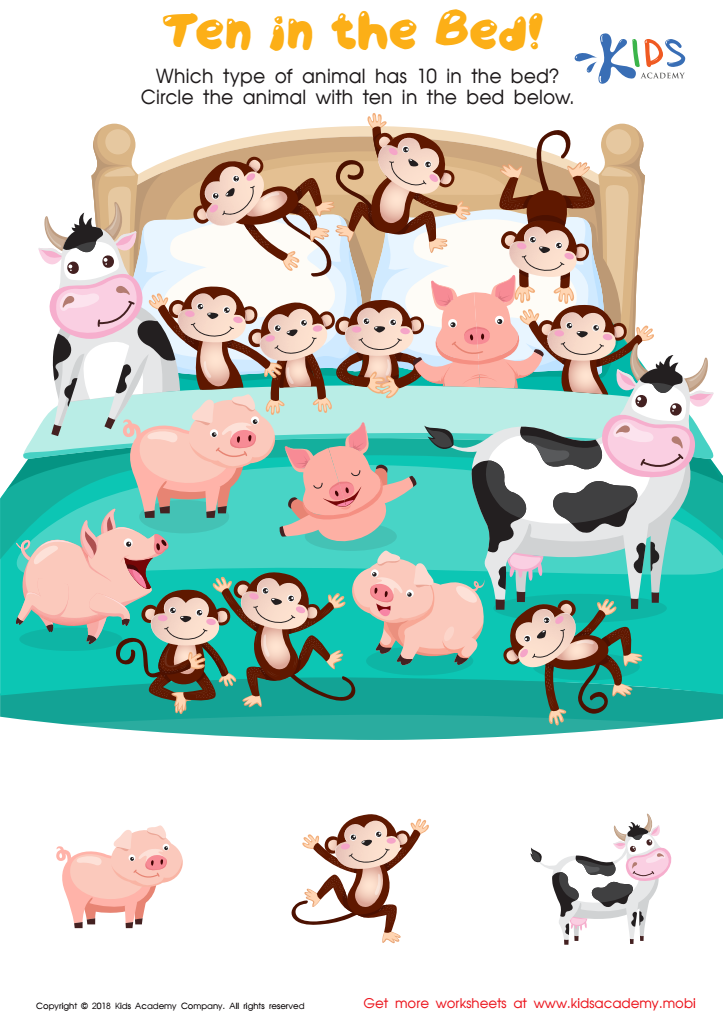
Ten in the Bed Worksheet
This fun worksheet has your kids counting and sorting friendly animal faces in a bed of ten! It's a great way for them to practice their mental math skills, like adding and multiplying more efficiently. Plus, it brings a new meaning to the classic song "Monkeys Jumping on the Bed"!
Ten in the Bed Worksheet
Worksheet
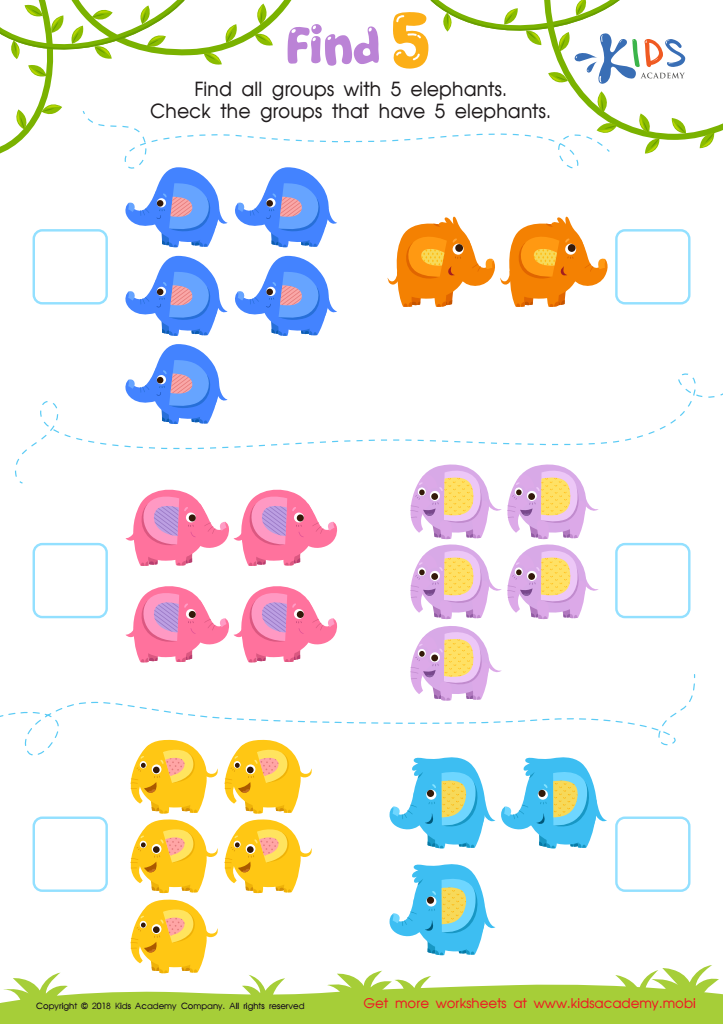
Find 5 Worksheet
Kids will love these cheery elephants that help them discover grouping and counting by fives. It's a great way to start learning addition and multiplication, while also developing fine motor skills. Download the free PDF and let the fun begin.
Find 5 Worksheet
Worksheet
Join Kids Academy for Free
Who is primarily going to use this learning content?








Counting skills related to normal plants and animals are crucial for children ages 3-6, as they lay the foundation for early numeracy and observational skills. Engaging with nature helps young children develop an awareness of their environment while fostering curiosity. By counting leaves on a plant or the number of ants in a line, children can practice basic counting in a context that feels relevant and enjoyable.
Furthermore, integrating counting with plants and animals encourages hands-on learning, making abstract concepts more tangible. When children count butterflies or monitor the growth of sprouting seeds, they connect mathematical principles to real-world experiences. This not only enhances cognitive development but also nurtures a sense of responsibility and care for the environment.
Additionally, outdoor experiences can spur discussions about diversity in plants and animals, promoting language development and critical thinking. Teachers and parents can utilize these moments to foster social skills, as children often work together, collaboratively counting or sharing observations.
Overall, nurturing counting skills through nature equips children with essential foundational numeracy, observational competencies, and a lifelong interest in learning about the world around them. It ultimately supports holistic development during these critical formative years.







