Reading proficiency Normal Alphabet Worksheets for Ages 3-7
7 filtered results
-
From - To
Unlock your child's reading potential with our expertly designed Reading Proficiency Normal Alphabet Worksheets for Ages 3-7. These engaging resources help young learners master the alphabet through fun, interactive activities, enhancing their phonics and reading skills. Each worksheet is crafted to align with early learning standards, supporting systematic letter recognition and sound awareness. Perfect for both classroom settings and home practice, our worksheets promote a love for reading and boost confidence in young readers. Start your child on the path to literacy success today with Kids Academy’s top quality educational tools.
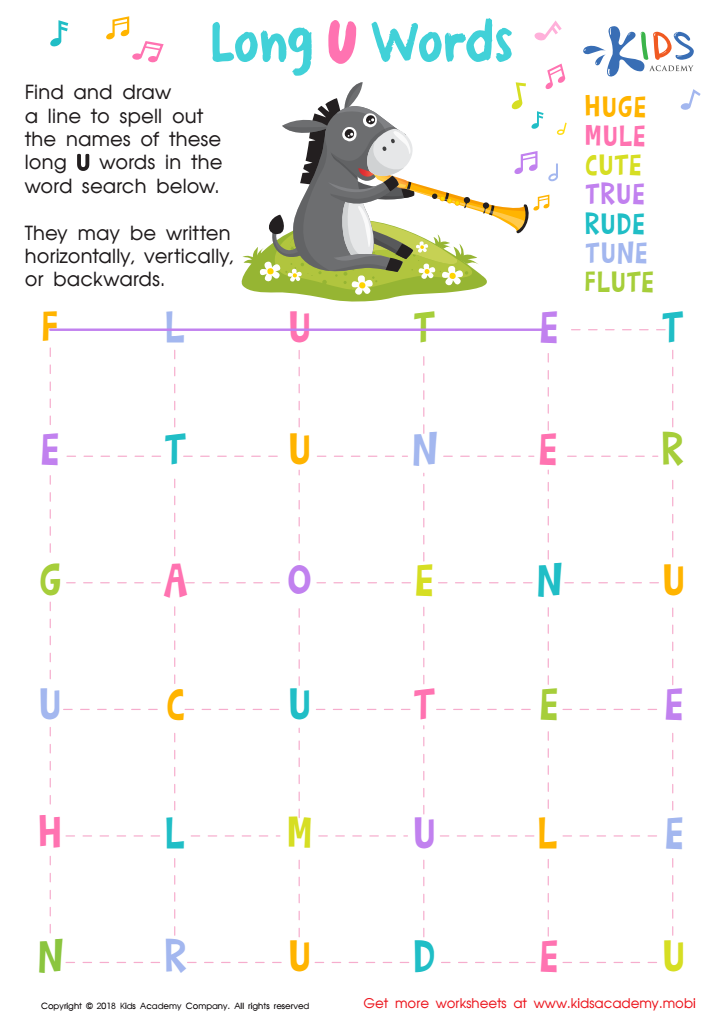
Long /u/ Words Worksheet
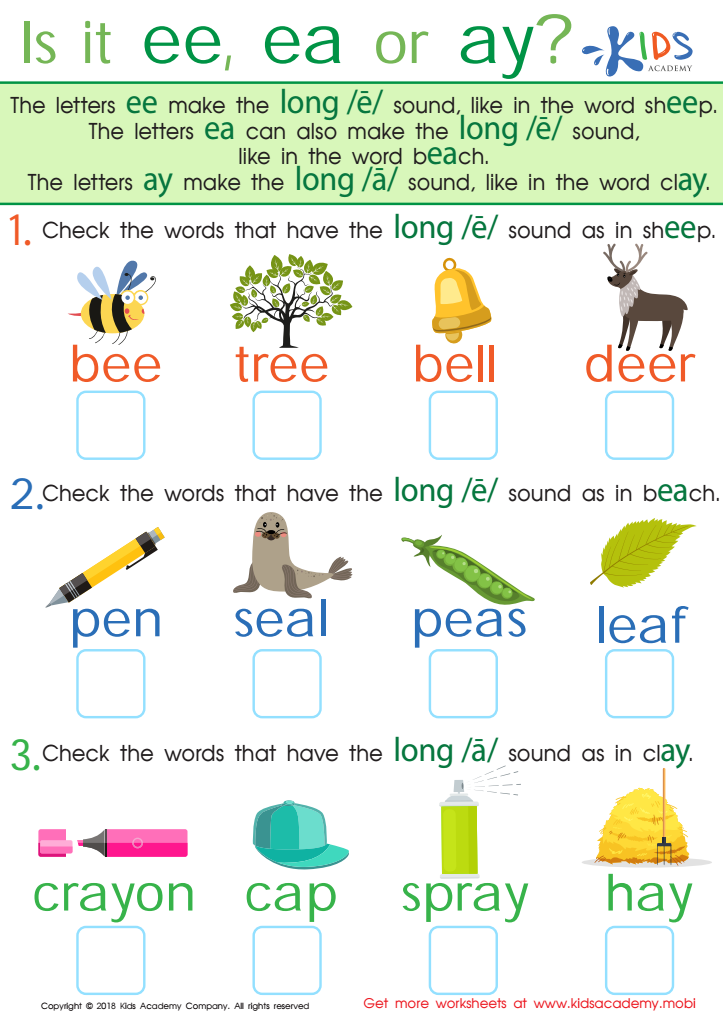
Is It EE, EA, or AY? Worksheet
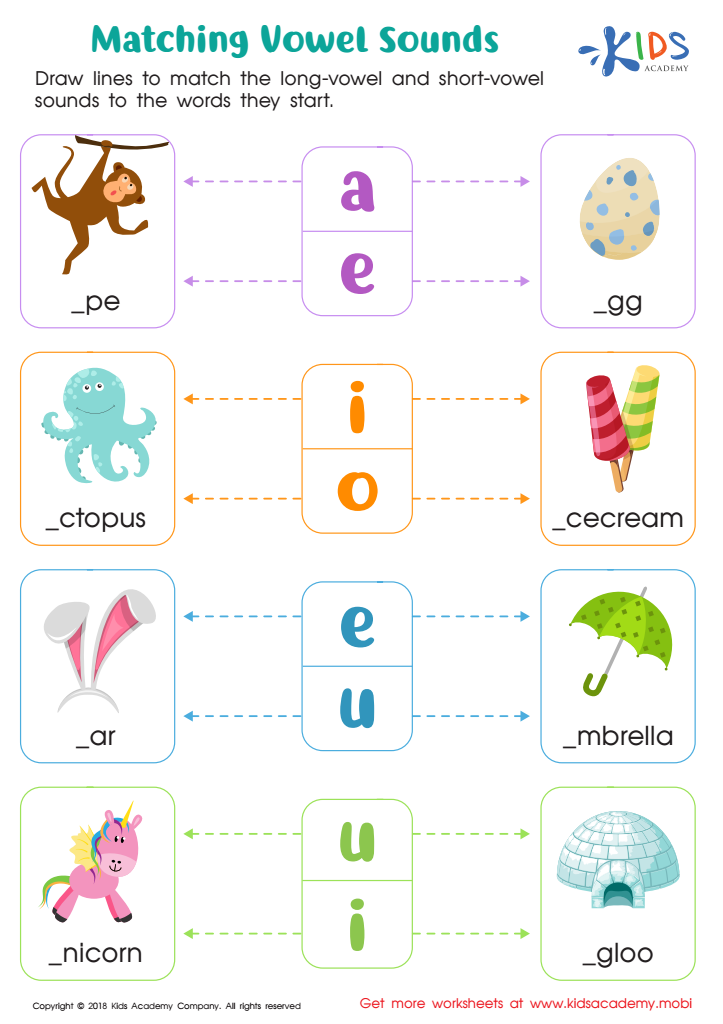
Matching Vowel Sounds Worksheet
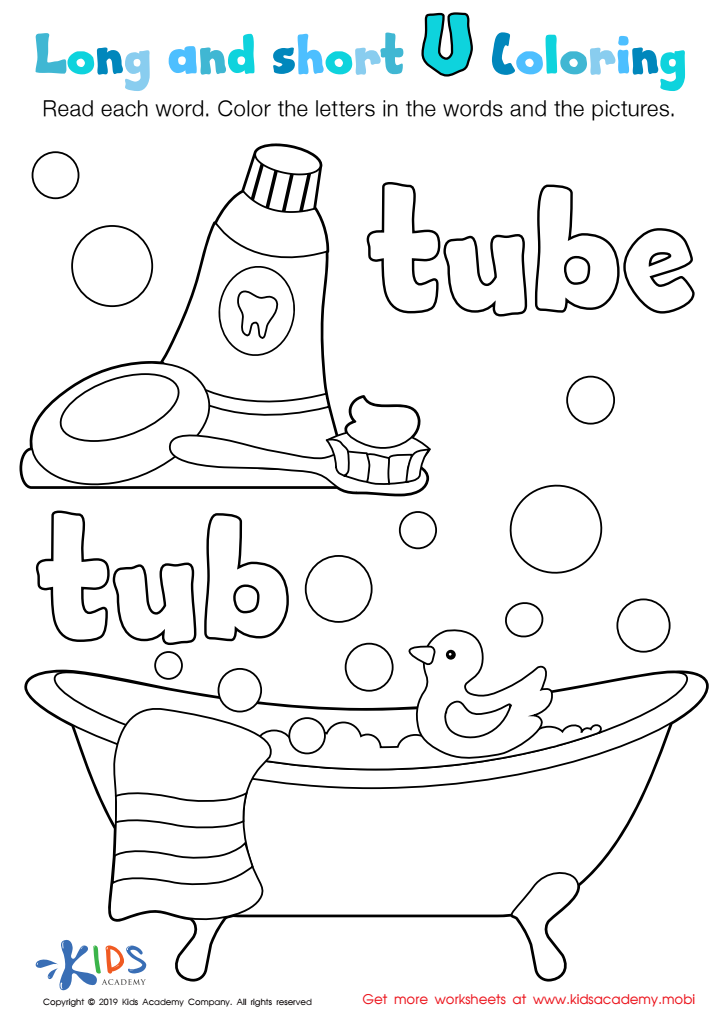
Long and Short U Worksheet
 Assign to My Students
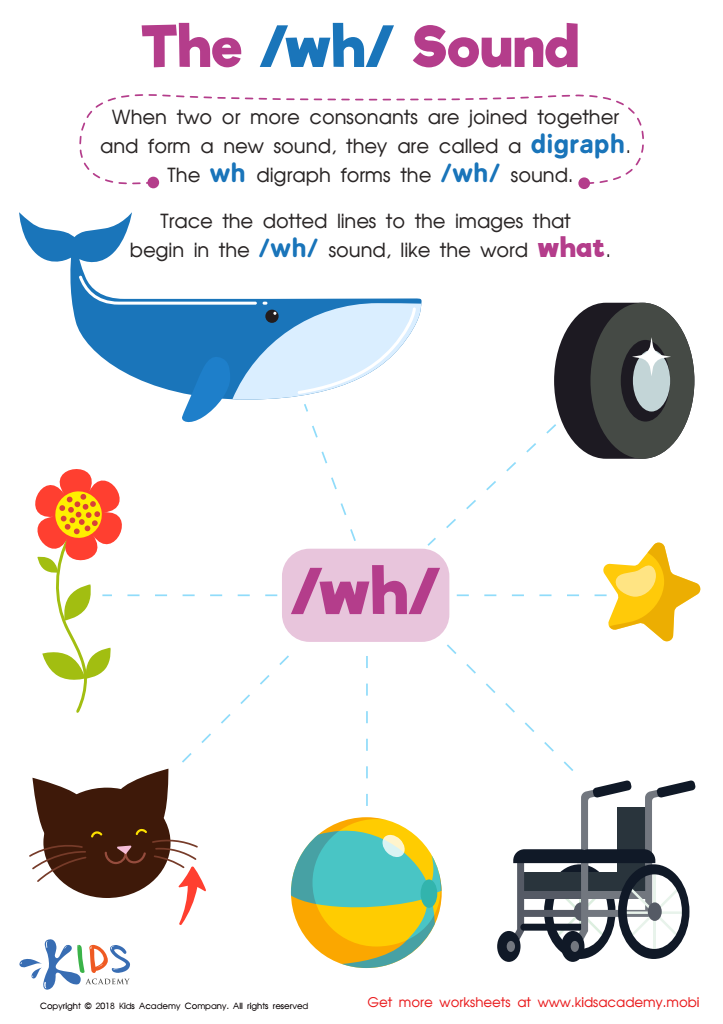
The /wh/ Sound Worksheet
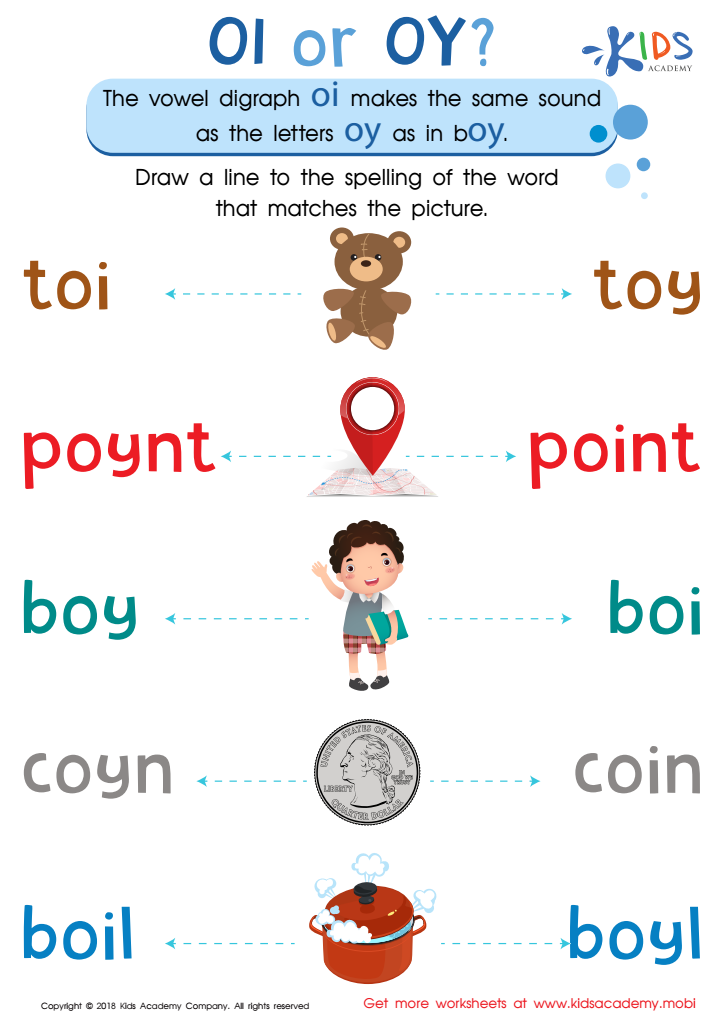
Reading: OI and OY Worksheet
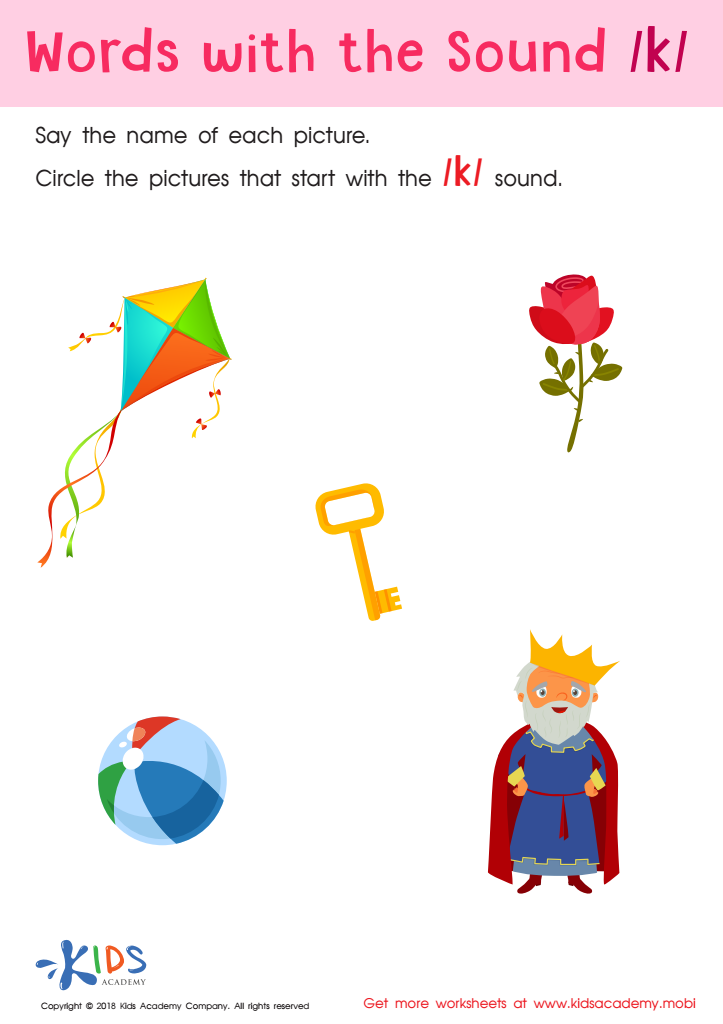
Words with sound k Reading Worksheet








Reading proficiency in ages 3-7 marks a crucial developmental milestone that sets the foundation for lifelong learning. During these formative years, children are most receptive to acquiring language skills, making it an ideal period for nurturing reading abilities. Mastery of reading not only enriches a child's vocabulary but also enhances cognitive development, including critical thinking, imagination, and comprehension. When parents and teachers focus on reading proficiency, they equip children with the tools essential for academic success across all subjects.
Proficient readers generally perform better academically because they can absorb and understand new information more quickly. This head start is linked to better long-term academic outcomes and increased self-confidence in students. Moreover, developing strong reading skills early mitigates the risk of falling behind, which can adversely impact a child's self-esteem and attitude towards learning.
For parents, encouraging reading at an early age strengthens the parent-child bond, providing quality time and shared experiences that foster emotional attachment. For teachers, it enables a more engaging classroom environment, where students are more capable of participating and comprehending material. Overall, early literacy is pivotal; it holds the key to unlocking a child’s potential, underscoring why parents and educators must prioritize it.







