Reading readiness Normal Alphabet Worksheets for Ages 3-7
5 filtered results
-
From - To
Enhance your child's early literacy skills with our Reading Readiness Normal Alphabet Worksheets designed for ages 3-7. These engaging and educational worksheets are specially curated to introduce young learners to the alphabet, fostering letter recognition, phonemic awareness, and pre-reading skills. Perfect for preschool and early elementary students, our worksheets combine fun activities with effective learning strategies to build a strong foundation for reading success. Discover a variety of exercises including tracing, matching, and coloring that make learning the ABCs enjoyable and interactive. Equip your child with the essential tools to embark on their reading journey confidently.
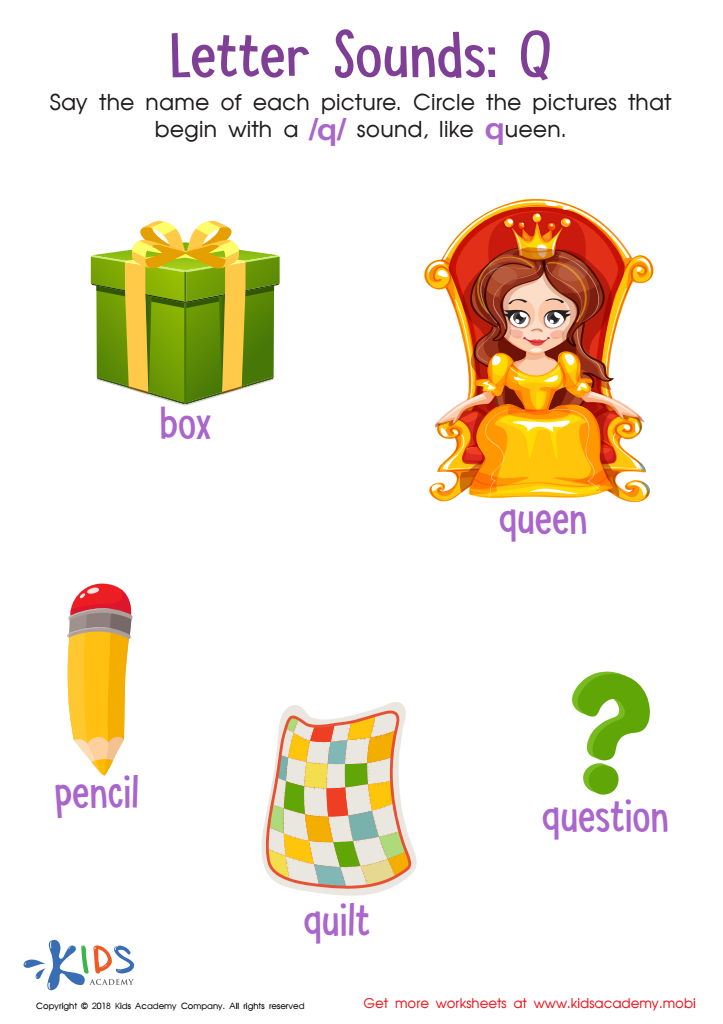
Letter Q Sounds Worksheet
 Assign to My Students
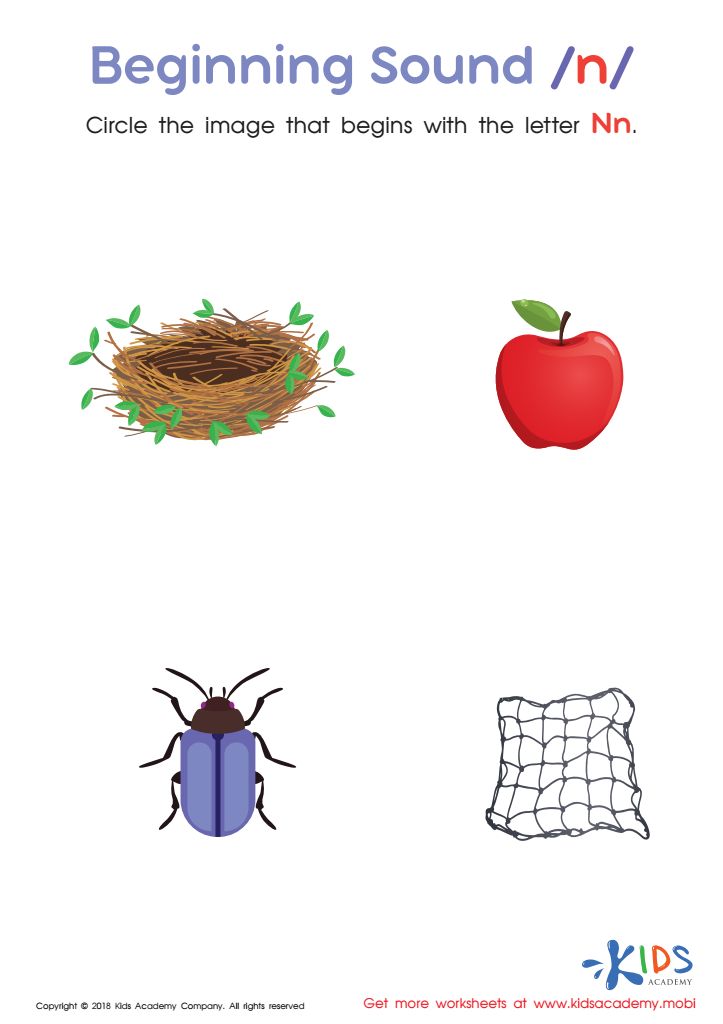
Beginning Sound «n» Worksheet
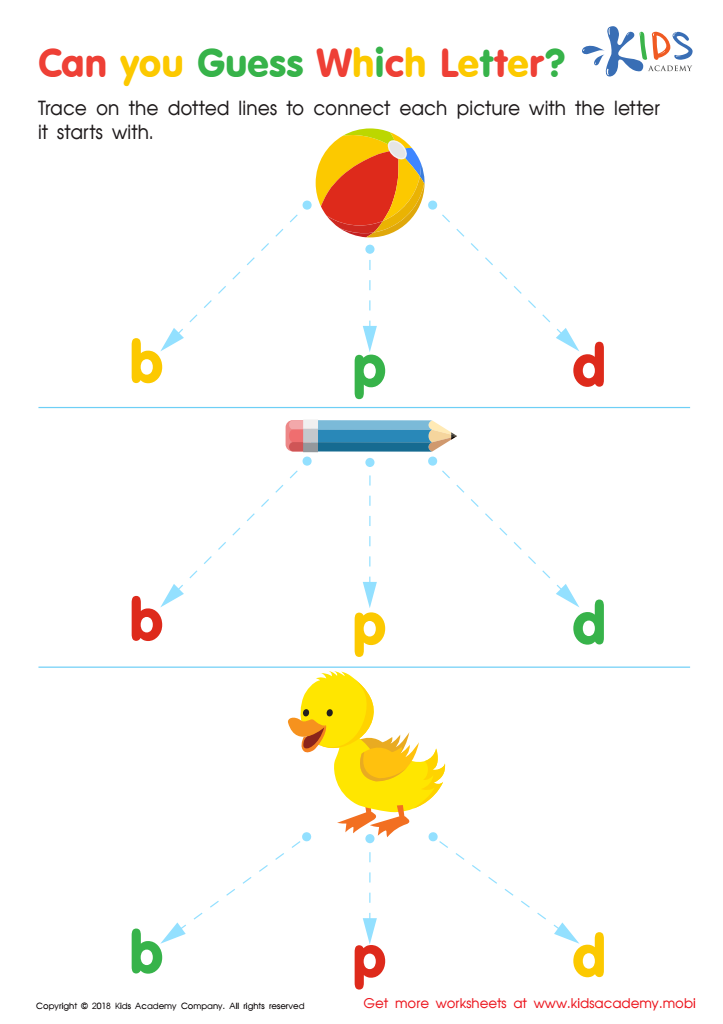
Can you Guess Which Letter? Worksheet
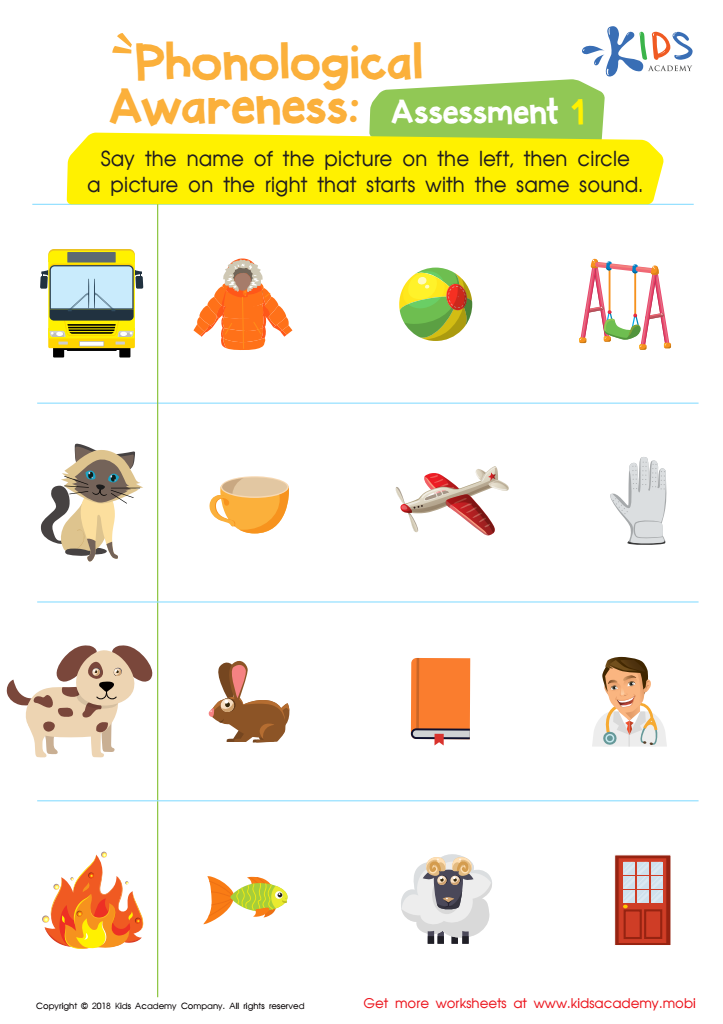
Phonological Awareness: Assessment 1 Worksheet
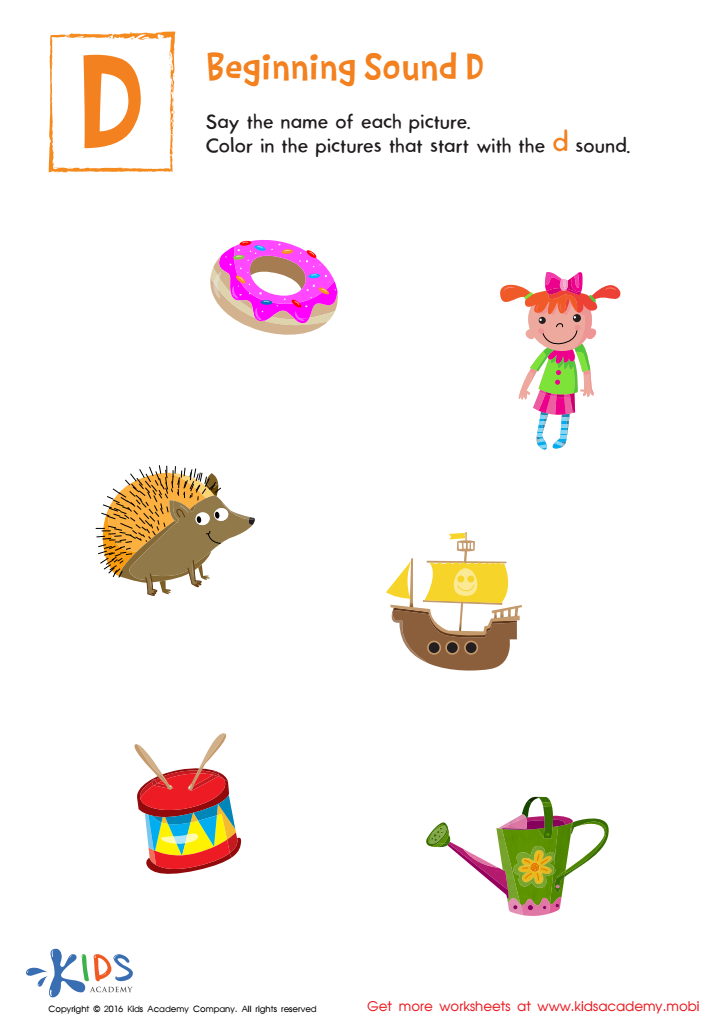
Beginning Sound D Worksheet








Reading readiness—or the ability to understand and recognize words and letters—is a critical foundation for lifelong learning, especially between the ages of 3 to 7. This formative period is when young brains are most malleable and primed for acquiring language and literacy skills. Parents and teachers should prioritize reading readiness because it directly impacts a child's future academic success and also builds crucial cognitive and social skills.
Introducing children to the normal alphabet early helps them become familiar with the shapes and sounds of letters, fostering phonemic awareness. This awareness is essential for developing decoding skills, which are necessary for reading comprehension. Children who grasp these basics early are more likely to experience fewer struggles in learning to read and are generally more confident when approaching academic challenges.
Furthermore, reading readiness promotes an enjoyment of books and learning, allowing children to engage creatively with stories and information. This encourages curiosity and a passion for knowledge that can carry into adulthood. Early exposure to the alphabet also supports language development, enhances vocabulary, and improves communication skills, which are important across all areas of life.
By focusing on reading readiness, parents and educators can offer children a head start not just in academics, but in all facets of personal development. Investing in these early skills lays a robust groundwork for a lifetime of learning and intellectual growth.







