Visual discrimination skills Normal Alphabet Worksheets for Ages 3-7
5 filtered results
-
From - To
Enhance your child's visual discrimination skills with our engaging Normal Alphabet Worksheets designed for ages 3-7. These worksheets provide a fun and interactive way for young learners to identify and differentiate between letters and similar-looking shapes. By practicing visual discrimination, children strengthen their ability to recognize letters, paving the way for successful reading and writing. With colorful illustrations and varied activities, these worksheets capture the interest of young minds, making learning enjoyable and effective. Perfect for home or classroom use, our resources are tailored to support early childhood development and build a strong foundation for future academic success.
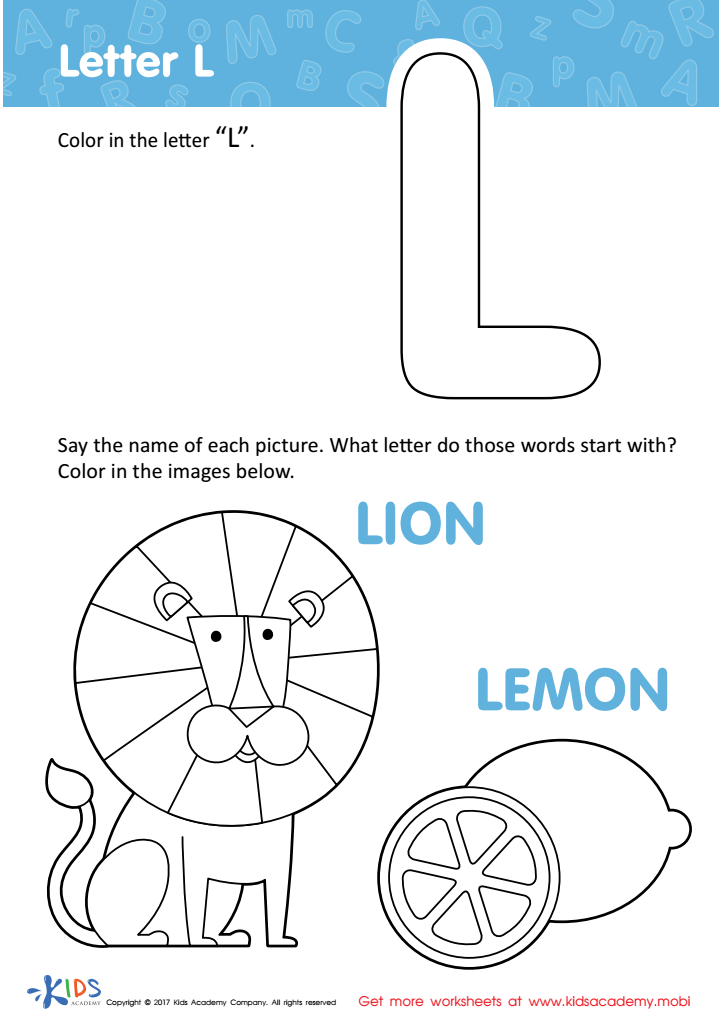
Letter L Coloring Sheet
 Assign to My Students
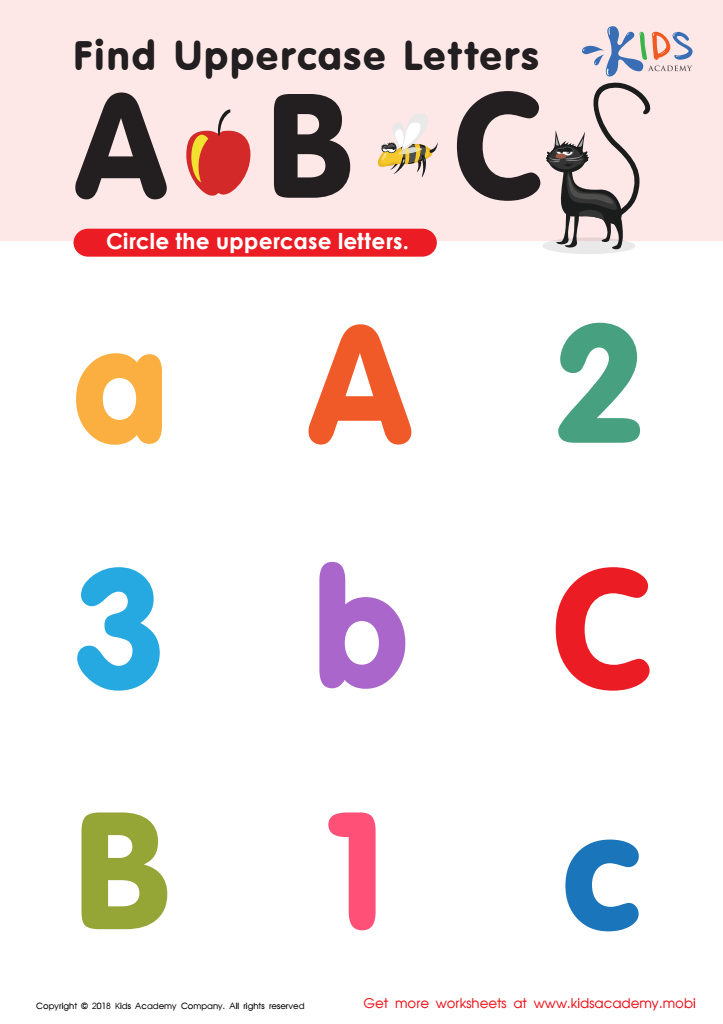
Find Uppercase Letters A, B, and C Worksheet
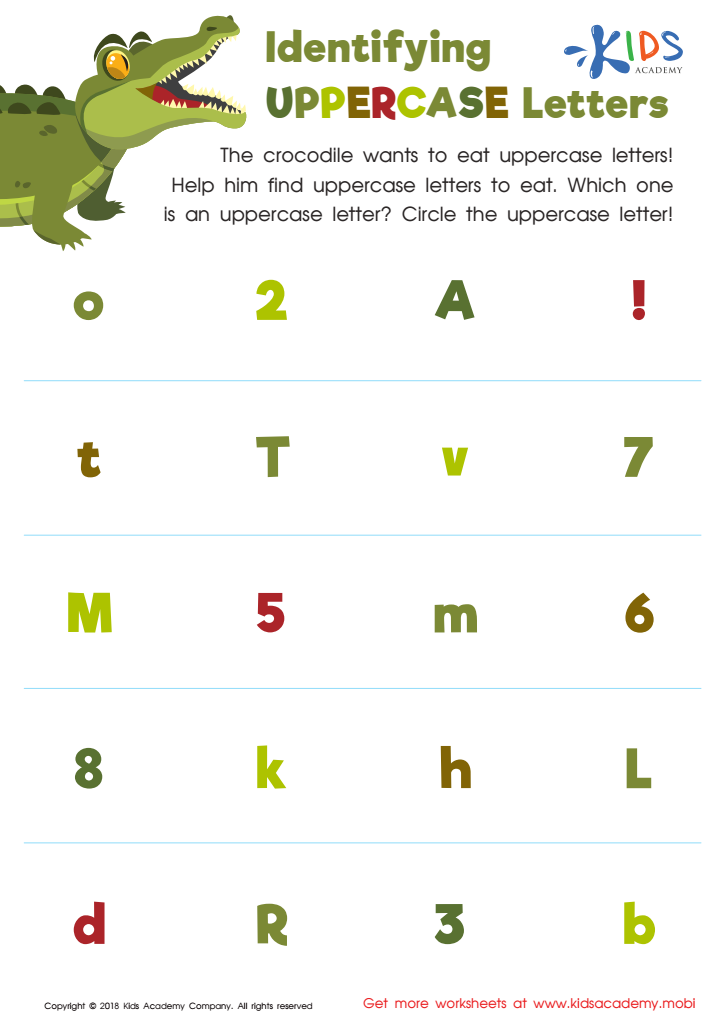
Identifying Uppercase Letters Worksheet
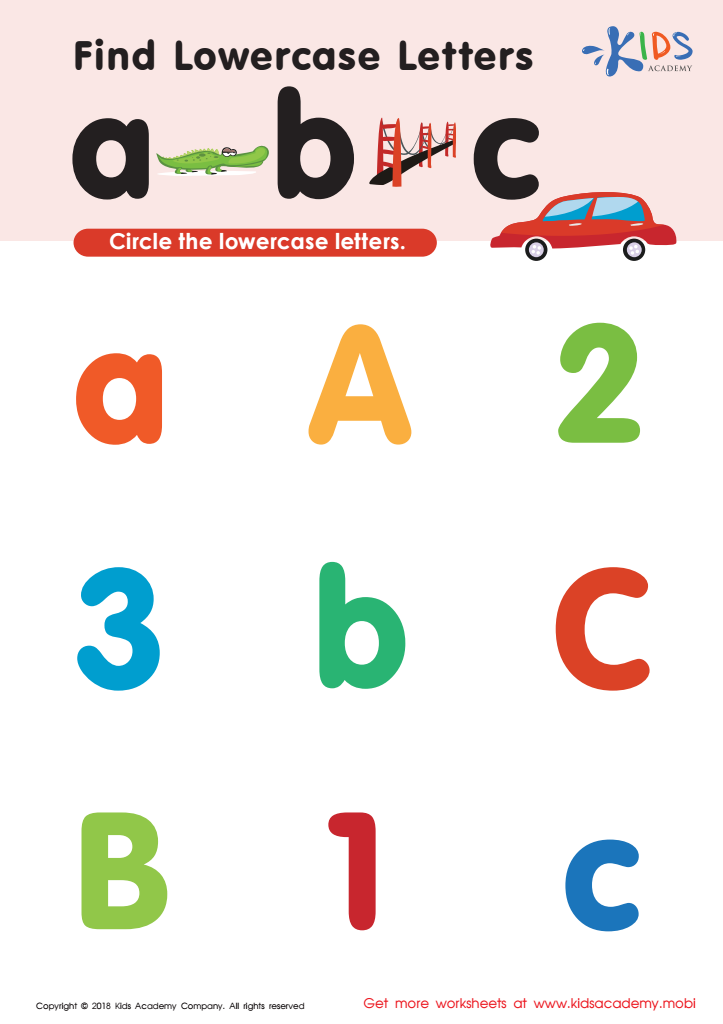
Find lowercase letters a b c Worksheet
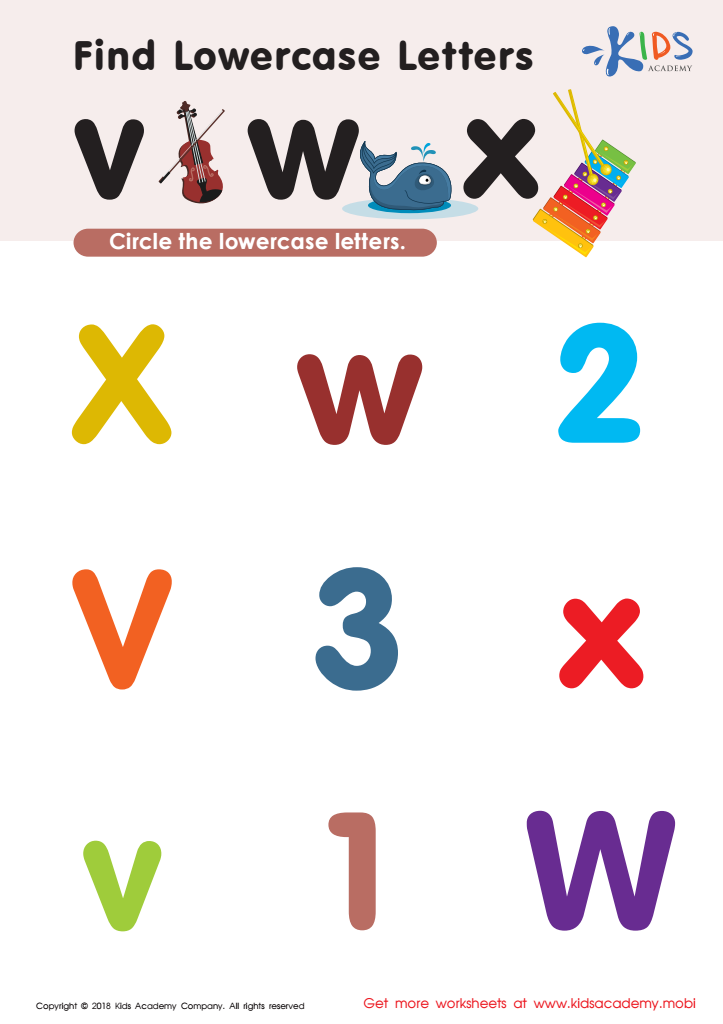
Find Lowercase Letters v w x Worksheet







Visual discrimination skills are essential for children aged 3 to 7 as they lay the groundwork for successful reading, writing, and overall academic achievement. These skills refer to the ability to distinguish differences and similarities in shapes, colors, sizes, and patterns. By developing visual discrimination, children enhance their capability to recognize letters, numbers, and important symbols, which is fundamental for literacy development.
Early childhood is a critical period for honing these skills, as they directly impact a child’s ability to decode words and understand written materials. When parents and teachers prioritize visual discrimination activities, such as matching games or sorting tasks, they help children build strong foundational skills that are essential for learning how to read and write.
Additionally, these skills contribute not only to academic performance but also to problem-solving abilities, critical thinking, and attention to detail. Creating an engaging learning environment that fosters visual discrimination can boost a child's confidence and motivation to learn. Ultimately, by caring about visual discrimination skills, parents and teachers are investing in a child's holistic development, equipping them with tools needed for future educational success and lifelong learning.







