
Letter-sound recognition Normal Phonics Worksheets for Ages 3-7
4 filtered results
Difficulty Level
Grade
Age
-
From - To
Subject
Activity
Standards
Unlock your child's reading potential with our Letter-Sound Recognition Normal Phonics Worksheets designed for ages 3-7! These engaging and fun worksheets help children develop essential phonics skills by focusing on identifying letters and their corresponding sounds. Each worksheet is crafted to captivate young learners, ensuring an enjoyable, interactive learning experience. Perfect for early grades, our resources provide a structured approach to mastering letter-sound relationships, paving the way for reading success. With a variety of activities tailored to different learning styles, your child will gain confidence in their literacy abilities. Explore our collection and support your child's love for learning today!
Favorites
With answer key
Interactive
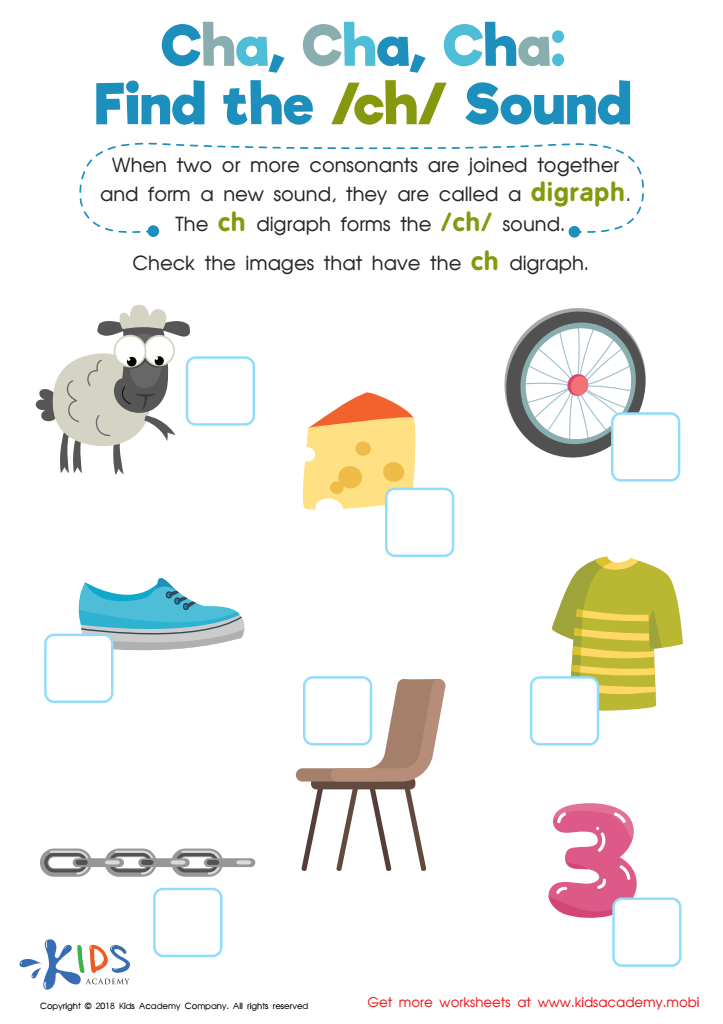
Cha, Cha, Cha: Find the /Ch/ Sound Worksheet
Have your students identify the objects in the images and if they struggle, help them check for the /ch/ digraph. This digraph forms a new sound when two or more consonants are combined, so it can be helpful to point it out to them in the colourful printout.
 Assign to My Students
Cha, Cha, Cha: Find the /Ch/ Sound Worksheet
Worksheet
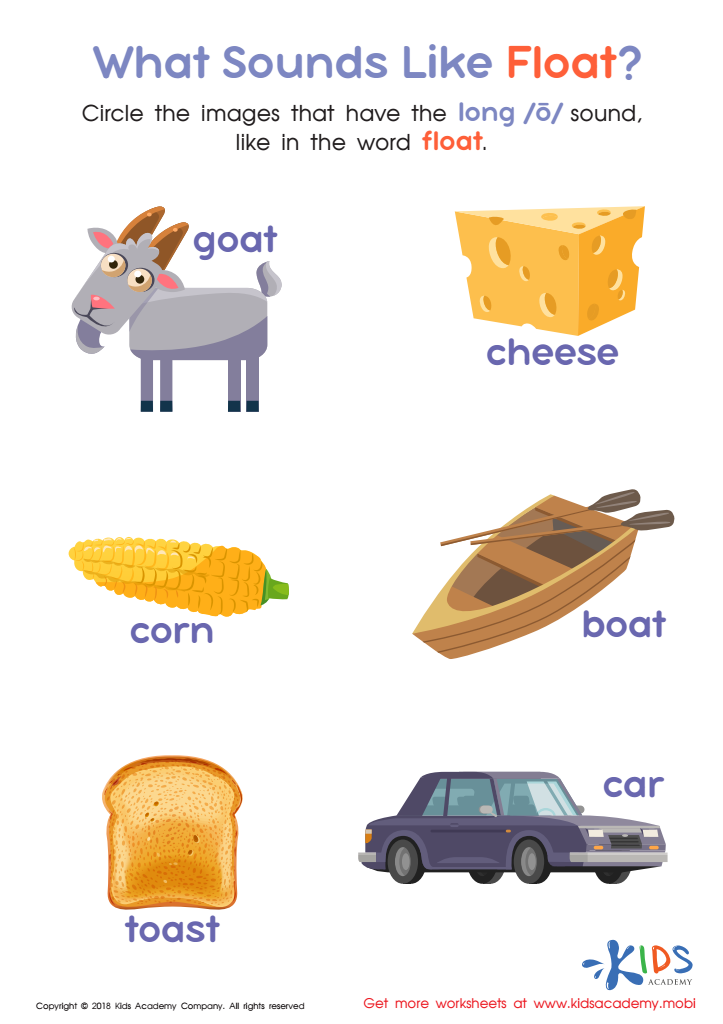
What Sounds Like Float? Worksheet
Help your kids practice the long /o/ sound with words such as 'boat', 'goat' and 'float'. Ask them to identify and circle the images in the worksheet that have the same sound. Award bonus points if they come up with more words with 'oa' spelling!
What Sounds Like Float? Worksheet
Worksheet
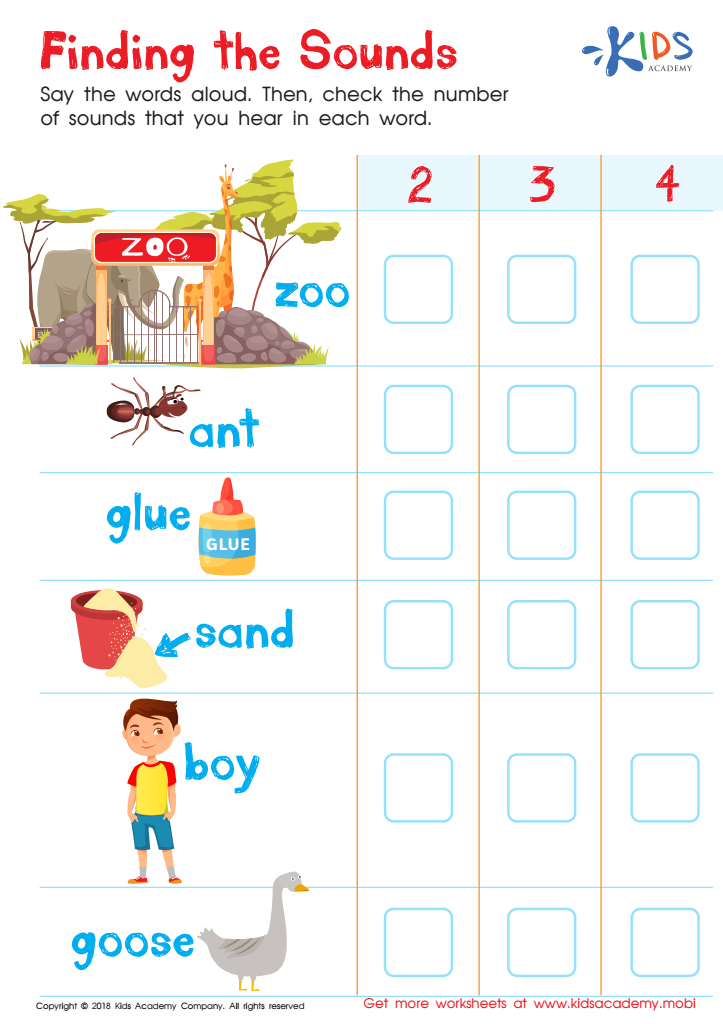
Finding the Sounds Worksheet
This free colorful worksheet assists children in learning words and breaking them down into sounds. It boosts auditory discrimination, phonological awareness and fine motor skills. Picture clues help them read confidently, and they can check the appropriate boxes to practice their reading skills.
Finding the Sounds Worksheet
Worksheet
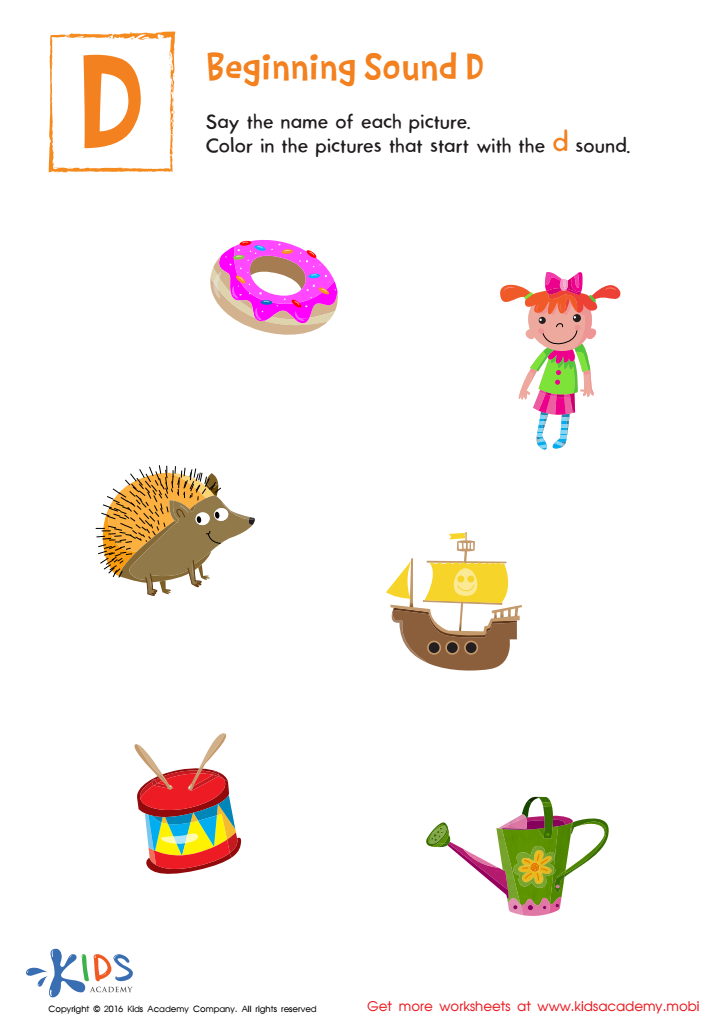
Beginning Sound D Worksheet
Reinforce phonics with this vibrant beginning sound d worksheet! Pictures help kids identify words beginning with 'd' and develop early reading skills. Sounding out each word increases literacy!
Beginning Sound D Worksheet
Worksheet
Join Kids Academy for Free
Who is primarily going to use this learning content?








Letter-sound recognition is a crucial early literacy skill that lays the foundation for children’s reading and writing abilities. For parents and teachers of children aged 3-7, emphasizing normal phonics is vital. Mastery of letter-sound relationships enables children to decode words efficiently, making the reading process smoother and more intuitive.
Understanding phonics helps children develop critical listening and speaking skills, as they learn to manipulate sounds within words. This facility with sounds supports vocabulary growth and enhances comprehension when listening to or reading narratives. Early exposure to phonics remarkably influences a child’s confidence in approaching books, fostering a love for reading that can last a lifetime.
Moreover, strong letter-sound recognition contributes to academic success across all subjects, as reading proficiency impacts performance in math, science, and social studies. Supporting children in their phonics journey results in better preparedness for more complex literacy tasks in later grades.
By prioritizing normal phonics and letter-sound recognition, parents and teachers can cultivate a nurturing environment that promotes literacy development and lays the groundwork for lifelong learning. Investing in these essential skills during early childhood establishes positive academic trajectories and mitigates future literacy challenges.







