Phonics Skills Normal Vowel Blends Worksheets for Ages 3-7
5 filtered results
-
From - To
Enhance your child's reading journey with our engaging Phonics Skills Normal Vowel Blends Worksheets designed for ages 3-7. These interactive worksheets focus on vowel blends, helping young learners build a solid foundation in phonics. Each activity is crafted to make learning fun, using colorful illustrations and kid-friendly language. As children practice blending vowels, they not only improve their reading skills but also boost their confidence in phonetic recognition. Perfect for home, preschool, or kindergarten settings, our worksheets offer a valuable resource for early literacy development. Explore our collection today and watch your child thrive in their phonics skills!
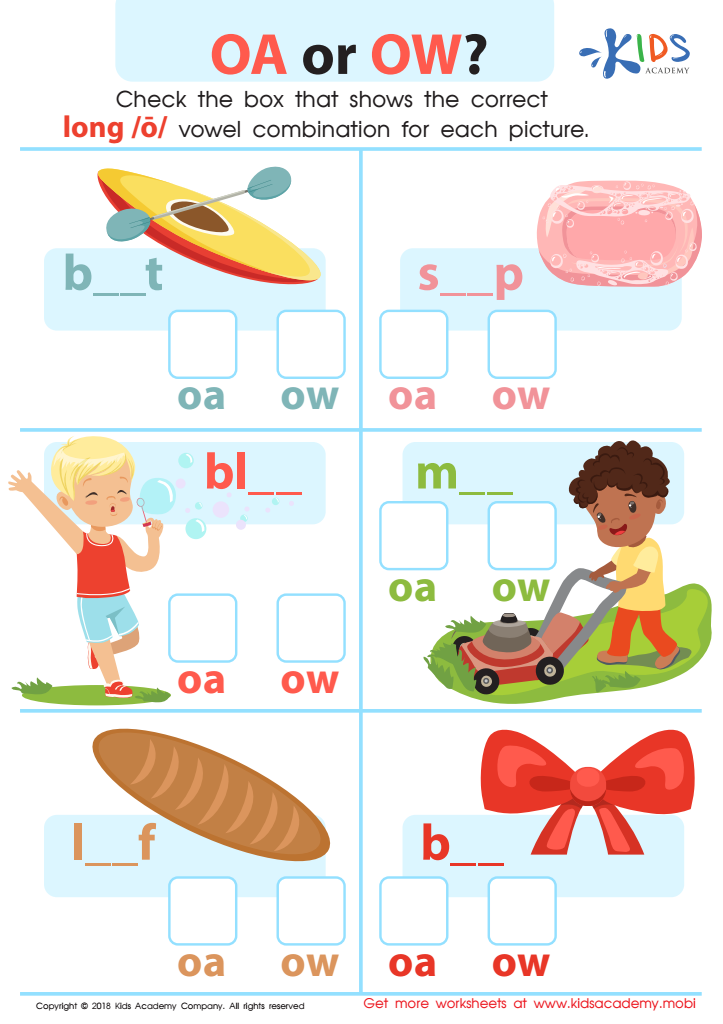
Reading: OA or OW Worksheet
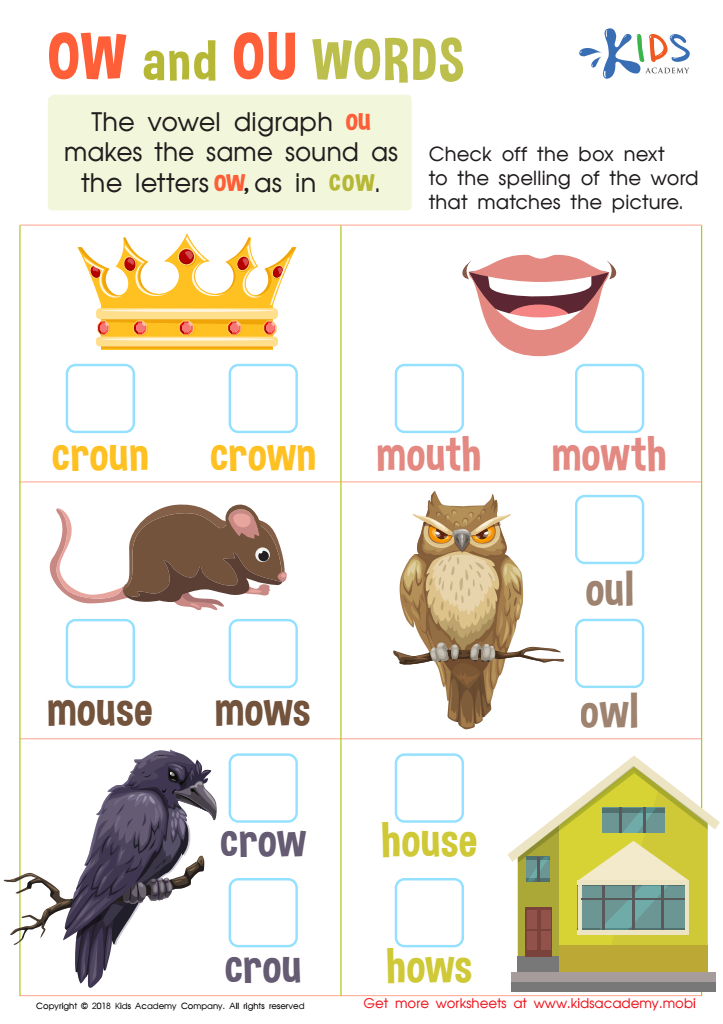
Reading: OW and OU Words Worksheet
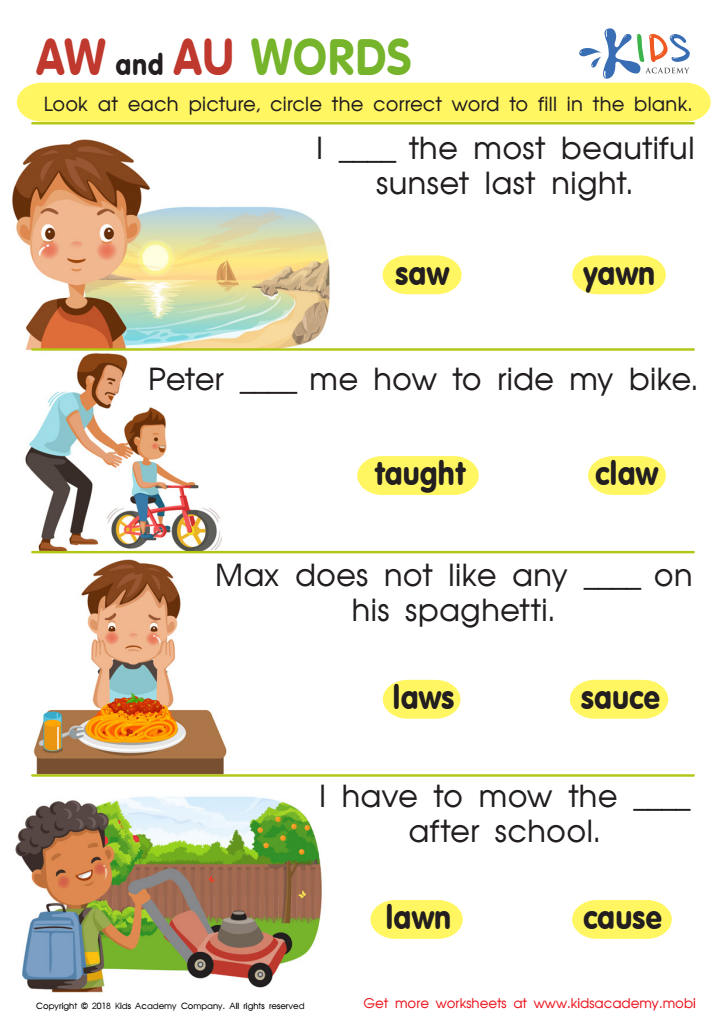
Reading: AW and AU Words Worksheet
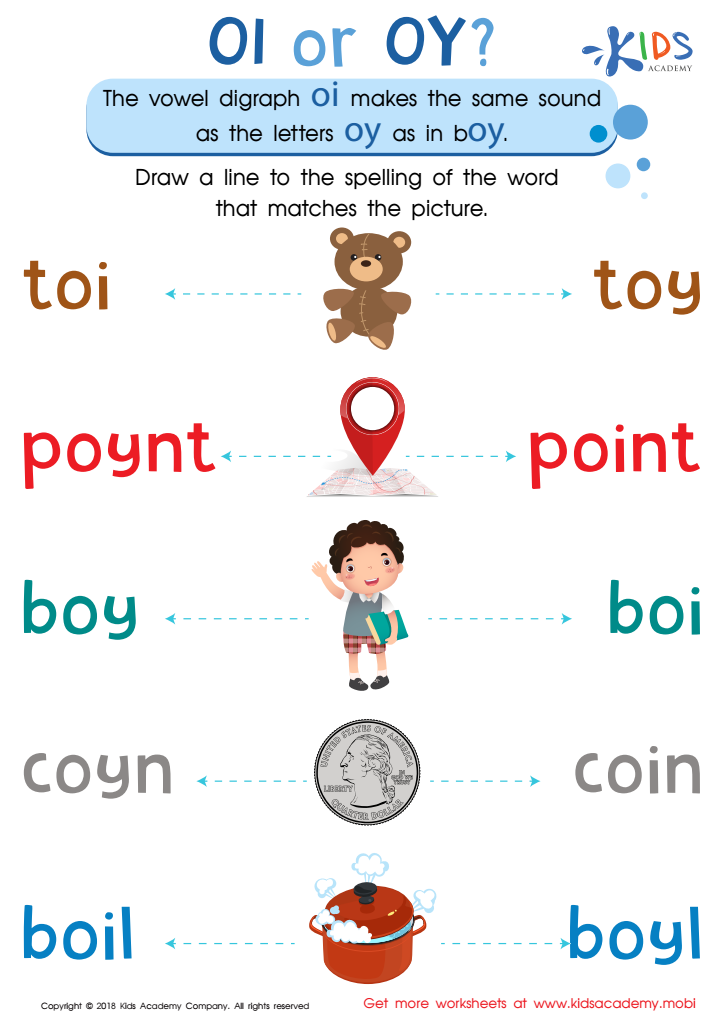
Reading: OI and OY Worksheet

Long and Short E Worksheet
 Assign to My Students





Phonics skills, particularly normal vowel blends, are crucial for children aged 3-7 as they lay the foundation for reading and language development. During these formative years, children are particularly receptive to learning sounds and building words. Understanding vowel blends, such as “ai,” “ea,” and “ou,” enhances literacy by allowing children to decode more complex words and promotes their phonemic awareness—an essential skill for reading fluency.
When parents and teachers focus on phonics, they help children develop the ability to sound out words, leading to better reading comprehension and confidence. As children master normal vowel blends, they become independent readers, opening the door to new knowledge and ideas.
Furthermore, strong phonics skills correlate with overall academic success. Literacy is foundational for learning across subjects, and children with a robust understanding of phonics are more likely to excel in school. By investing time in phonics activities, parents and teachers can create a supportive learning environment, encourage a love for reading, and help children thrive both academically and socially.
In summary, prioritizing vowel blends in early education benefits children immensely, paving the way for lifelong learning and effective communication.








