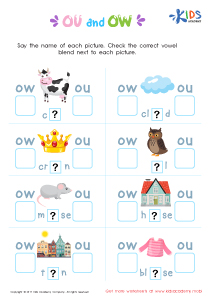
Phonics Skills Normal Vowel Diphthongs Worksheets for Ages 3-7
9 filtered results
-
From - To
Enhance your child's reading skills with our engaging Phonics Skills Normal Vowel Diphthongs Worksheets designed for ages 3-7. These interactive worksheets focus on helping young learners understand and recognize vowel diphthongs, vital components of phonics that support early literacy development. Featuring colorful illustrations and age-appropriate activities, these resources make learning fun and accessible. Each worksheet is crafted to build essential phonetic awareness, improve pronunciation, and develop reading fluency. Perfect for both classroom and solo practice, our worksheets promote independent learning while providing opportunities for sound recognition and blending. Start your child’s phonics journey today with our expertly designed materials!
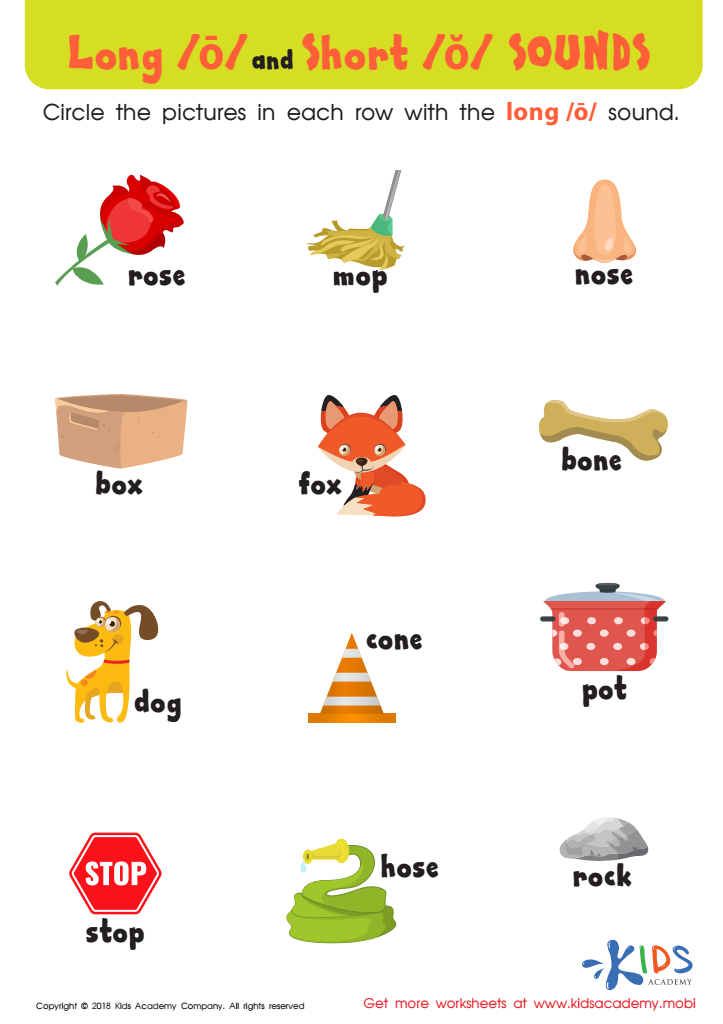
Reading: Long O and Short O Sounds Worksheet
 Assign to My Students
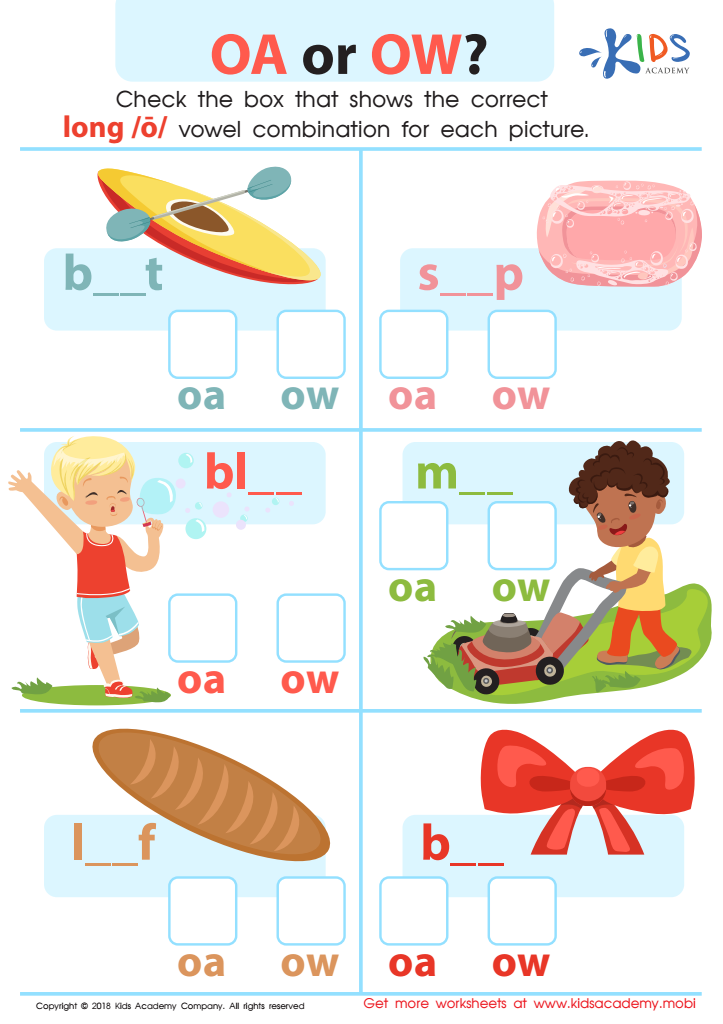
Reading: OA or OW Worksheet
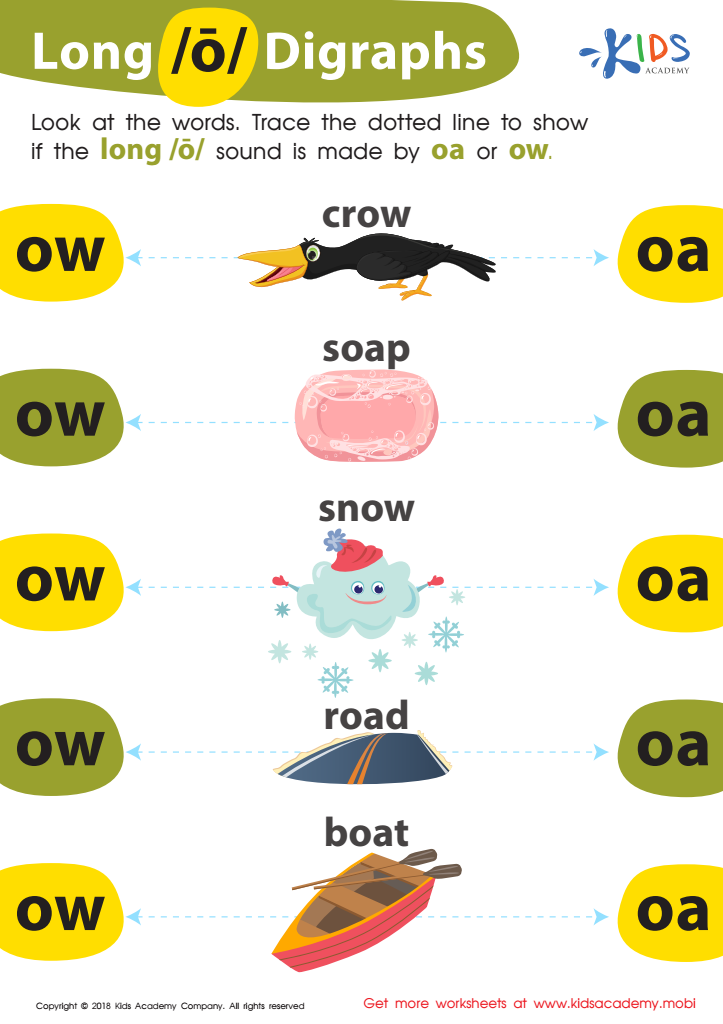
Reading: Long O Digraphs Worksheet
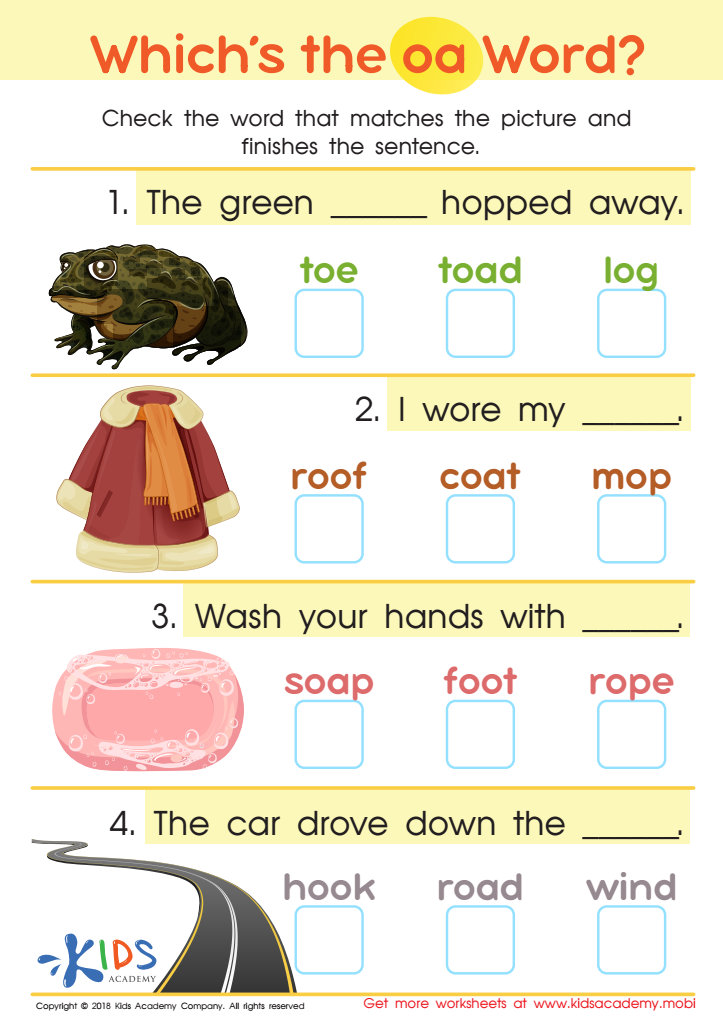
Which's the OA Word? Worksheet
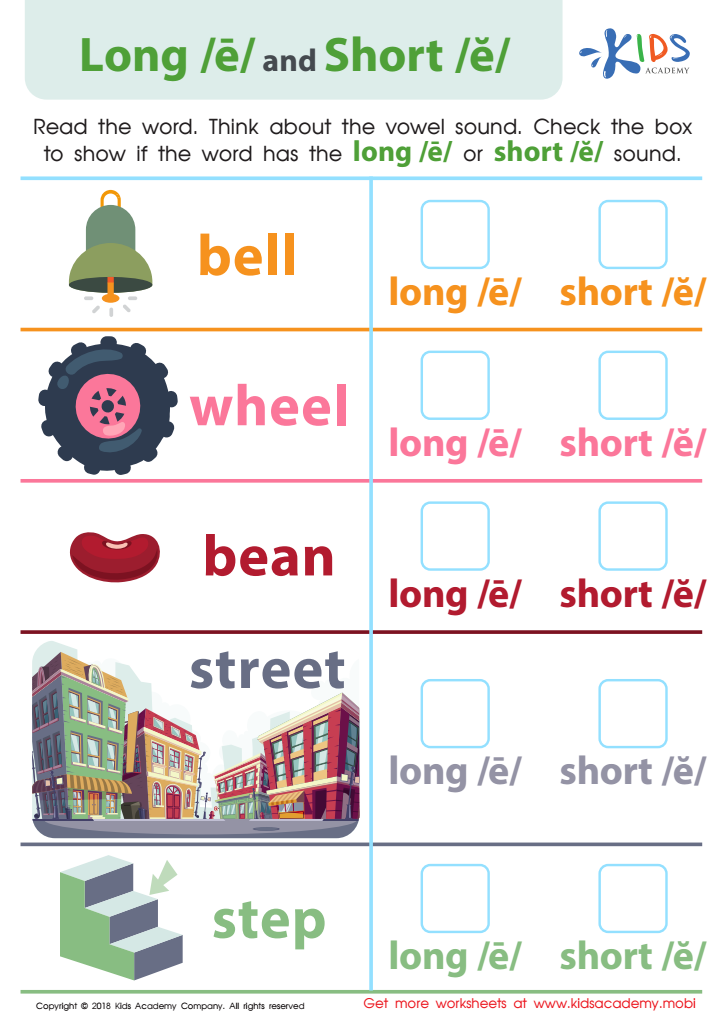
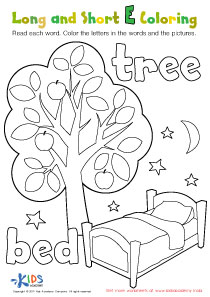
Reading: Long E and Short E Worksheet
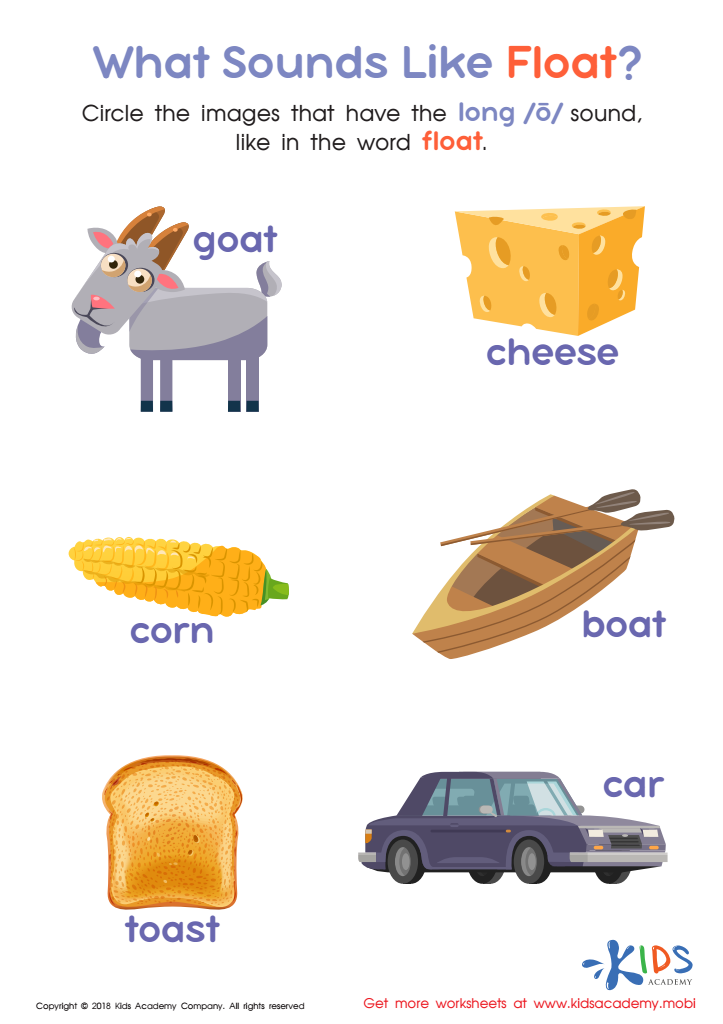
What Sounds Like Float? Worksheet
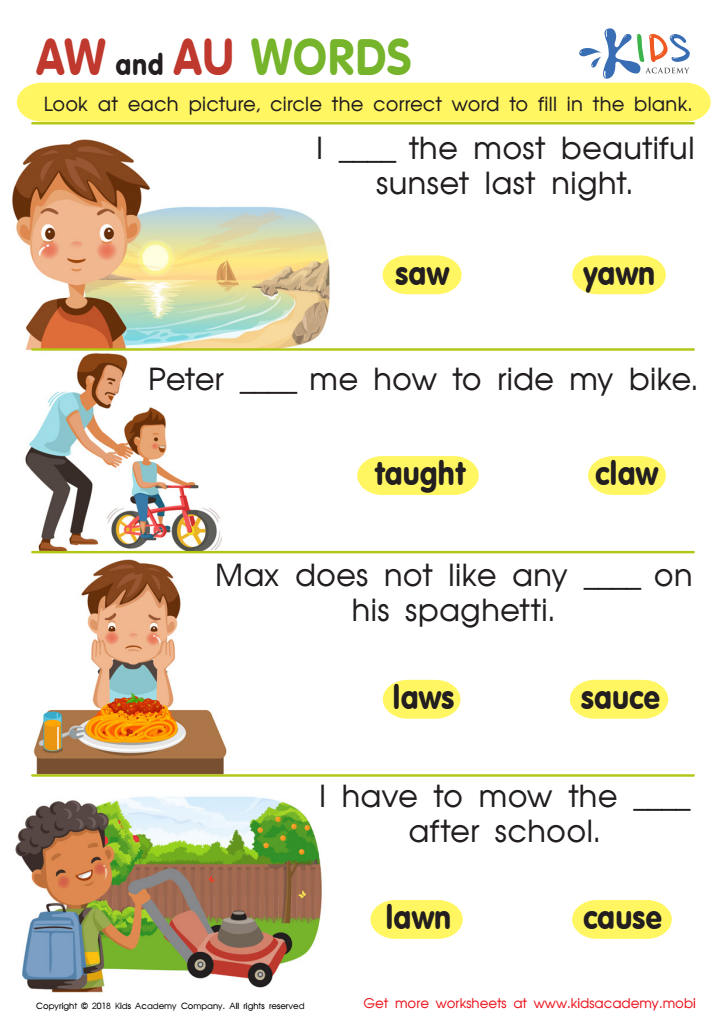
Reading: AW and AU Words Worksheet
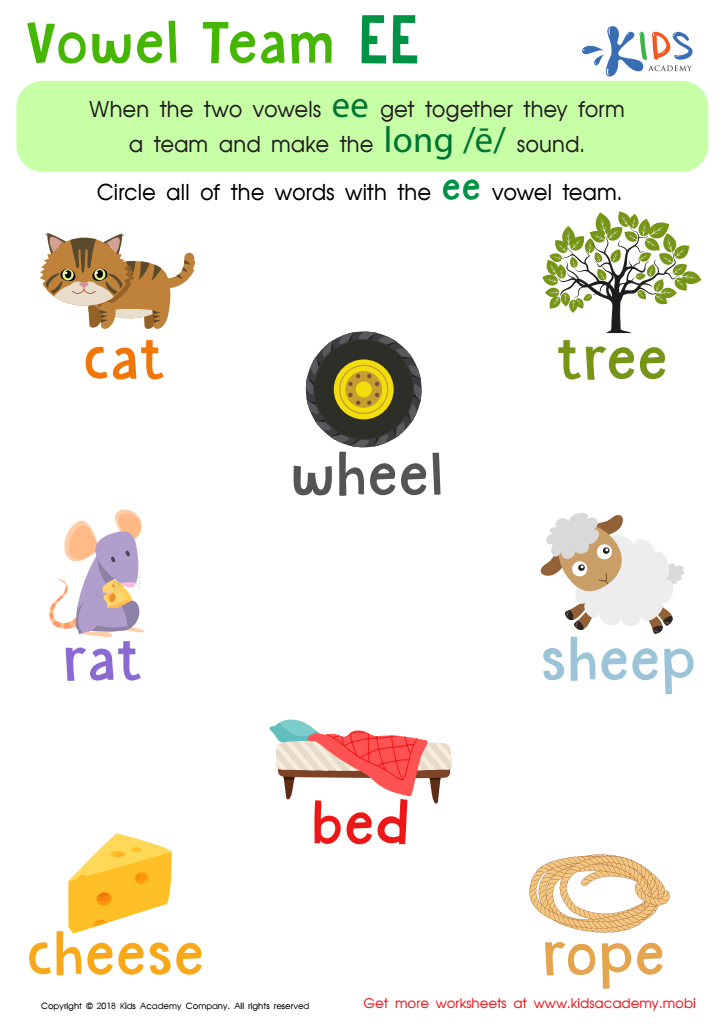
Reading: Vowel Team EE Worksheet
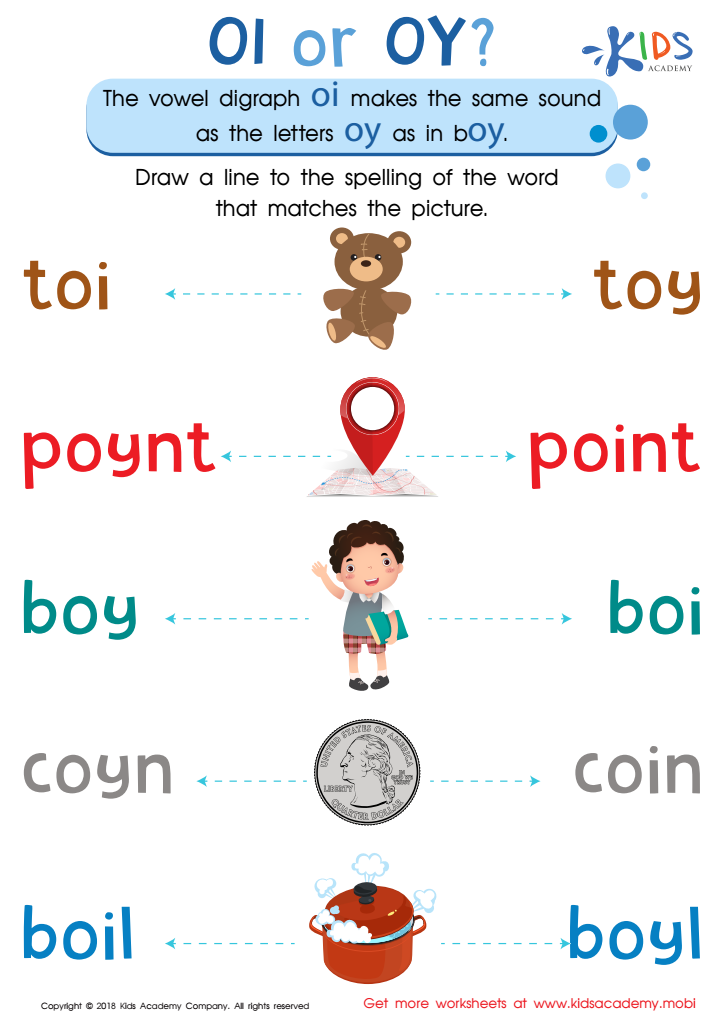
Reading: OI and OY Worksheet


Phonics skills, particularly the understanding of normal vowel diphthongs, are critical for children aged 3-7 as they set the foundation for reading and language development. Diphthongs—combinations of two vowel sounds within a single syllable—can be challenging yet vital components of phonics instruction. Mastery of these sounds enhances phonemic awareness, enabling young learners to decode and articulate words more effectively.
Moreover, a solid grasp of diphthongs contributes to greater reading fluency and comprehension. Children who understand these sounds are better equipped to tackle unfamiliar words, fostering confidence in their reading abilities. This early skill development not only supports language arts but also encourages communication proficiency in daily conversations.
Additionally, incorporating diphthongs into phonics instruction promotes critical thinking as children learn to connect sounds with meanings, a precursor to sophisticated literacy skills. For parents and teachers invested in fostering early literacy, recognizing the importance of diphthongs ensures children develop a comprehensive and nuanced understanding of language.
By prioritizing phonics skills and focusing on elements like normal vowel diphthongs, educators and caregivers can play a pivotal role in setting up children for continued academic success and a lifelong love for reading.