Normal Vowels and Consonants Worksheets for Ages 3-7 - Page 2
25 filtered results
-
From - To
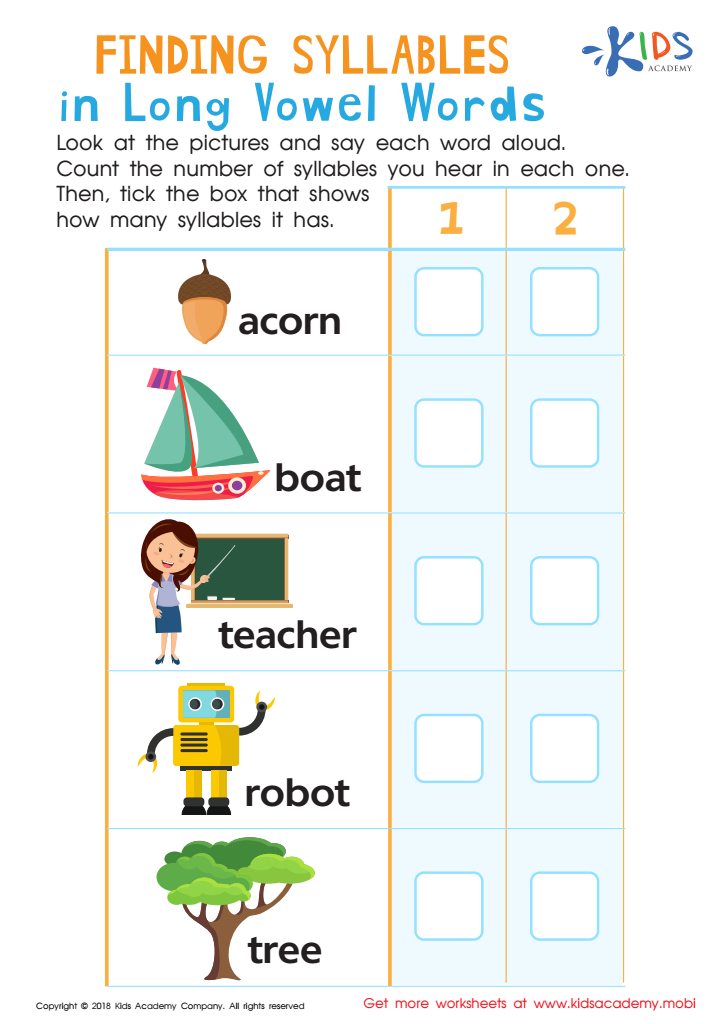
Finding Syllables in Long Vowel Words Worksheet
 Assign to My Students



Understanding normal vowels and consonants is crucial for both parents and teachers of children aged 3-7 because it lays the foundation for literacy and effective communication. During these formative years, children are developing their phonetic awareness, which is pivotal for reading and writing skills. Mastery of vowel and consonant sounds helps them decode words, improving their ability to recognize and engage with written language.
Focusing on vowel and consonant sounds encourages language development. Children learn to differentiate between phonemes—basic units of sound—that form words. This skill enhances their listening ability and promotes articulation, allowing them to express themselves clearly. Moreover, it provides a framework for them to explore spelling and the structure of words.
For children struggling with reading, understanding vowels and consonants can instill confidence. Through playful activities and engaging games centered around these sounds, parents and teachers can create a positive learning environment.
Finally, emphasizing vowels and consonants fosters a love for language and storytelling. By cultivating these skills early, we equip children with the tools they need to thrive academically and socially, preparing them for a successful journey ahead in their education.