Word Recognition Normal Vowels Worksheets for Ages 3-7
6 filtered results
-
From - To
Unlock your child's reading potential with our engaging "Word Recognition Normal Vowels Worksheets" designed for ages 3-7! These fun, interactive worksheets focus on vowel sounds and word recognition, perfectly aligning with early literacy skills. Each activity incorporates colorful illustrations and captivating exercises that make learning enjoyable. From matching words to pictures to completing simple sentences, your young learners will gain confidence in their reading abilities. Ideal for preschool, kindergarten, or at-home learning, our resources foster essential skills while promoting a love for reading. Explore our collection today and empower your child to embark on a lifelong journey of literacy!
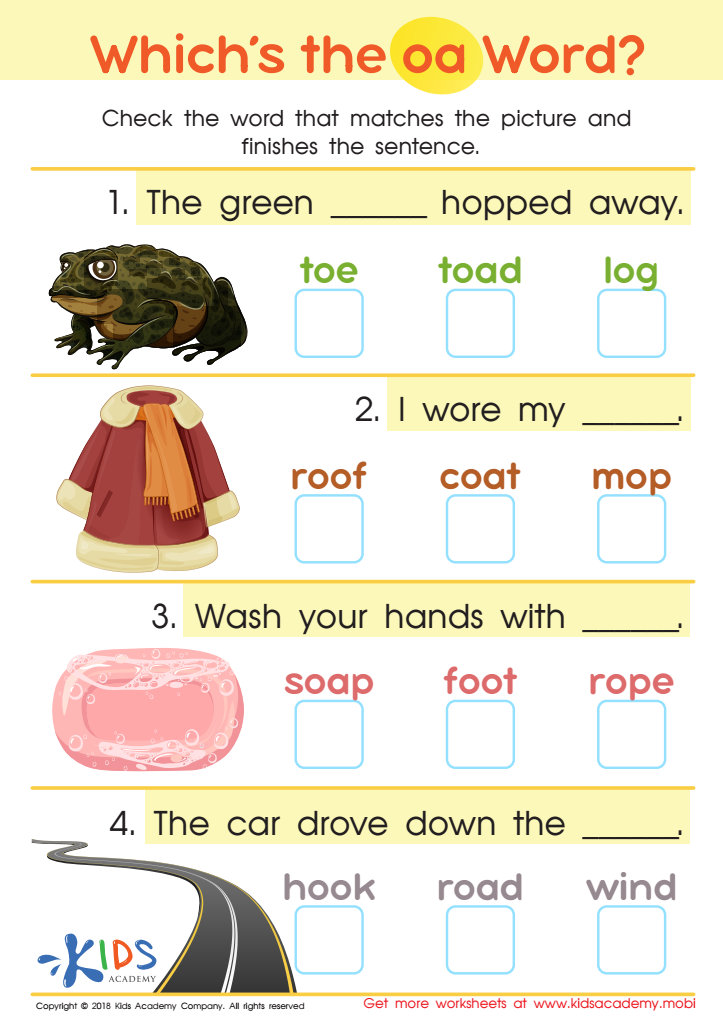
Which's the OA Word? Worksheet
 Assign to My Students
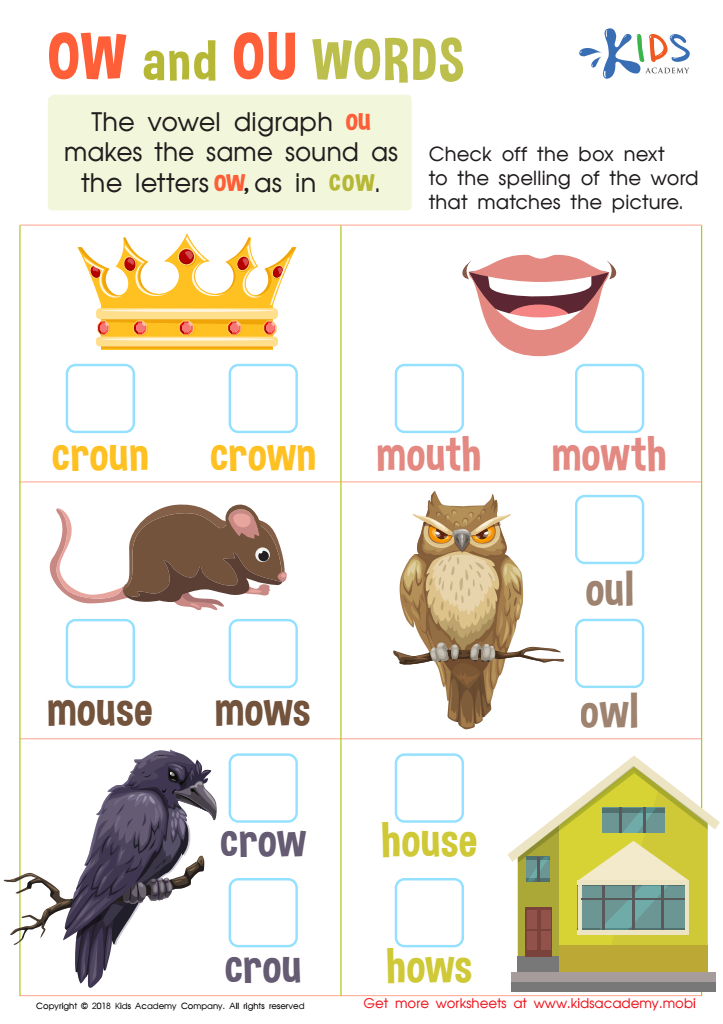
Reading: OW and OU Words Worksheet
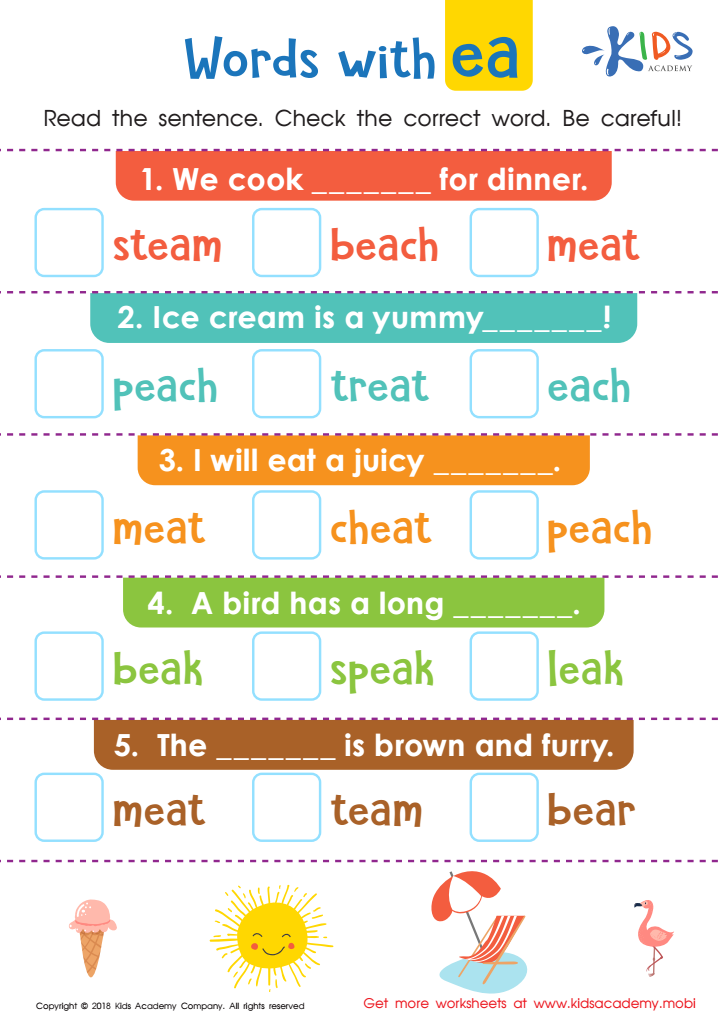
Words with ea Worksheet
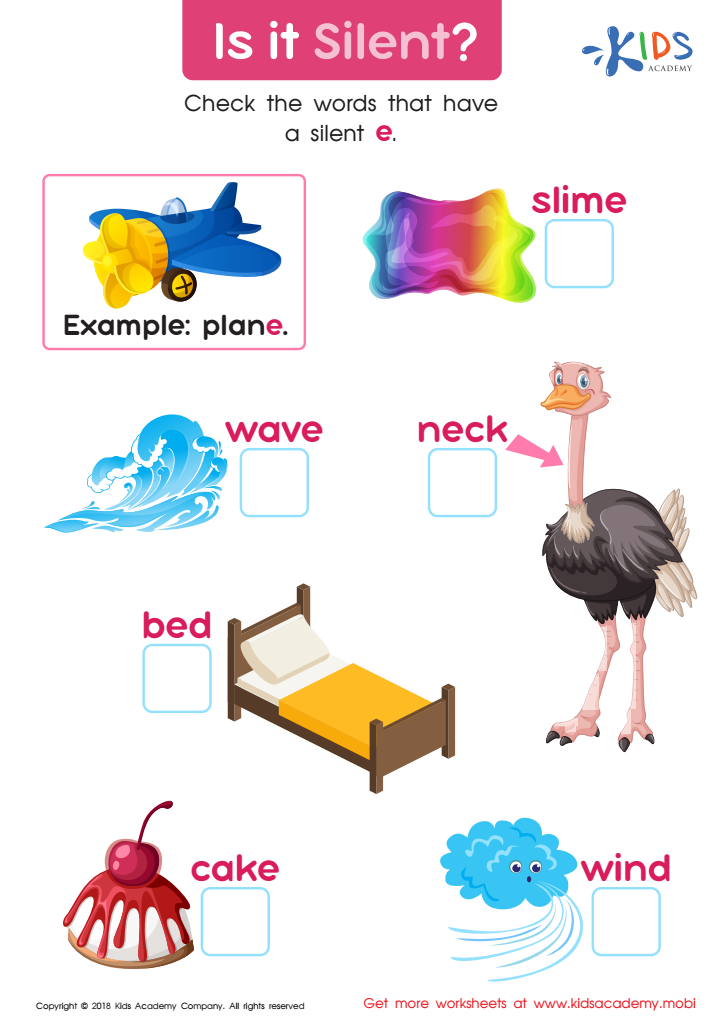
Is It Silent? Worksheet
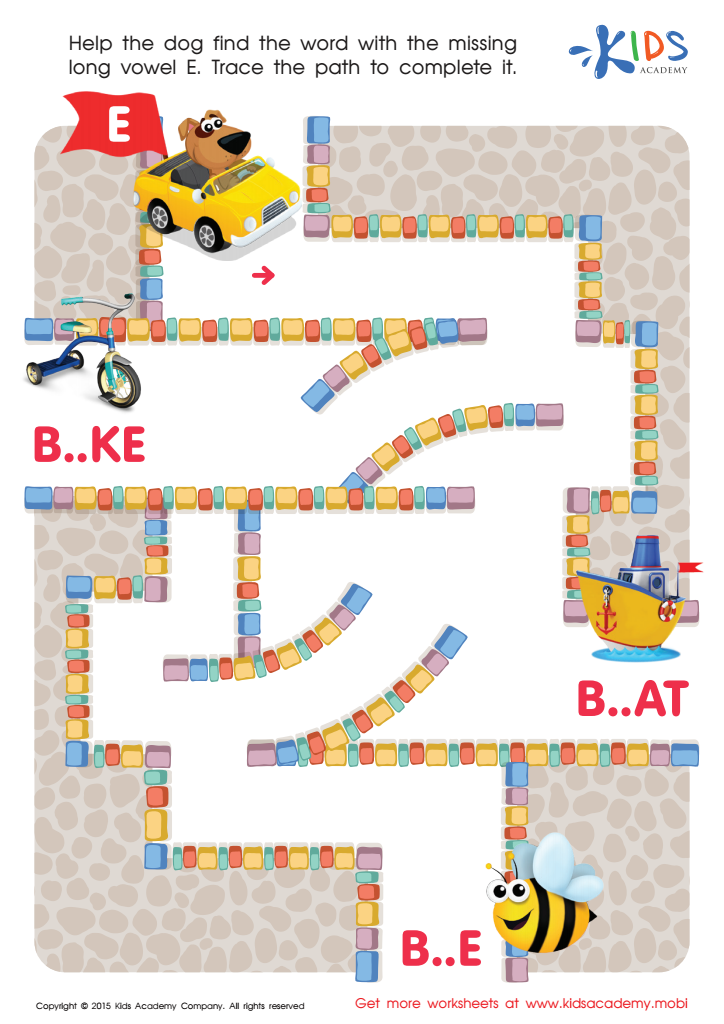
Long Vowel Sound E Worksheet
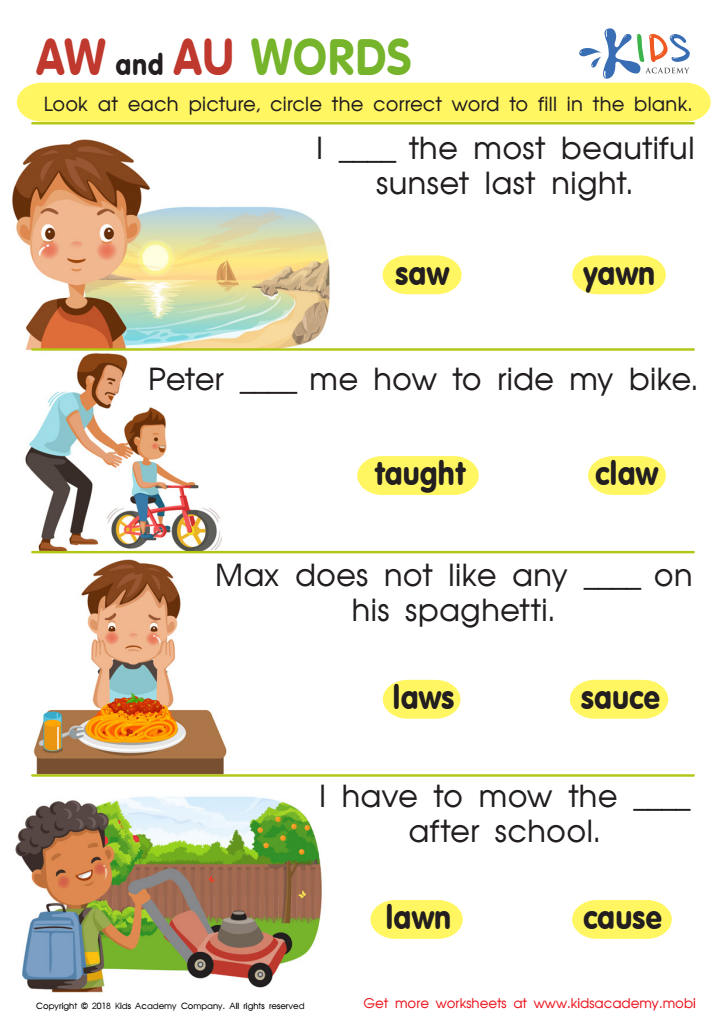
Reading: AW and AU Words Worksheet





Word recognition, particularly with normal vowels, is crucial for children aged 3-7 as it forms the foundation for reading and literacy skills. During these formative years, children are exploring language and developing phonetic awareness. Understanding normal vowels enables them to decode words more efficiently, which facilitates their ability to read independently and comprehend text.
When parents and teachers prioritize word recognition with vowels, they help children build a strong vocabulary and improve their overall communication skills. This early exposure enhances their phonemic awareness, leading to better spelling and writing abilities. Engaging activities focused on vowel sounds allow children to practice distinguishing phonemes, fostering sound differentiation—an essential skill for reading fluency.
Furthermore, strong word recognition skills boost children's confidence. As they master vowel sounds, they become more willing to engage with texts, participate in reading activities, and share stories. Ultimately, focusing on word recognition with normal vowels sets the stage for lifelong learning and academic success. By incorporating fun and interactive methods, such as games and reading aloud, parents and teachers can create a love for literacy that significantly benefits children as they grow. Therefore, prioritizing word recognition not only aids in literacy development but is vital for children’s overall educational journey.






