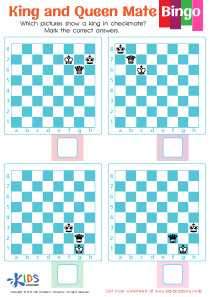
Cognitive Development Normal Chess Worksheets for Ages 3-7
4 filtered results
Difficulty Level
Grade
Age
-
From - To
Subject
Activity
Standards
Unlock your child's potential with our Cognitive Development Normal Chess Worksheets for ages 3-7! These engaging, printable worksheets are designed to enhance critical thinking, problem-solving, and strategic planning skills through the fascinating game of chess. Tailored for young learners, our age-appropriate activities promote cognitive growth in a fun, interactive way. Each worksheet is packed with colorful illustrations and easy-to-follow instructions, making learning enjoyable and effective. Whether in the classroom or at home, these resources will help nurture your child's love for chess while developing essential cognitive skills. Start your chess journey today and watch your child thrive!
Favorites
With answer key
Interactive
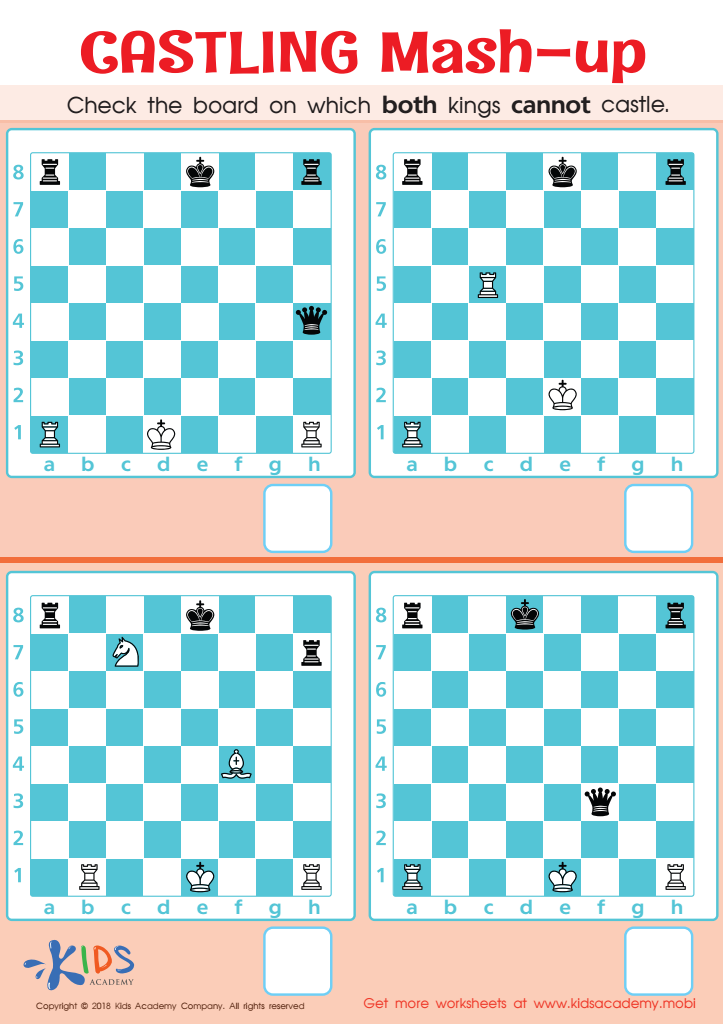
Castling Mash–up Worksheet
Before starting the worksheet, ensure your child understands castling in chess. If not, take time to explain it. Once they have a clear grasp of the rules, help them complete the exercise. Check the board to ensure that neither king can castle.
 Assign to My Students
Castling Mash–up Worksheet
Worksheet
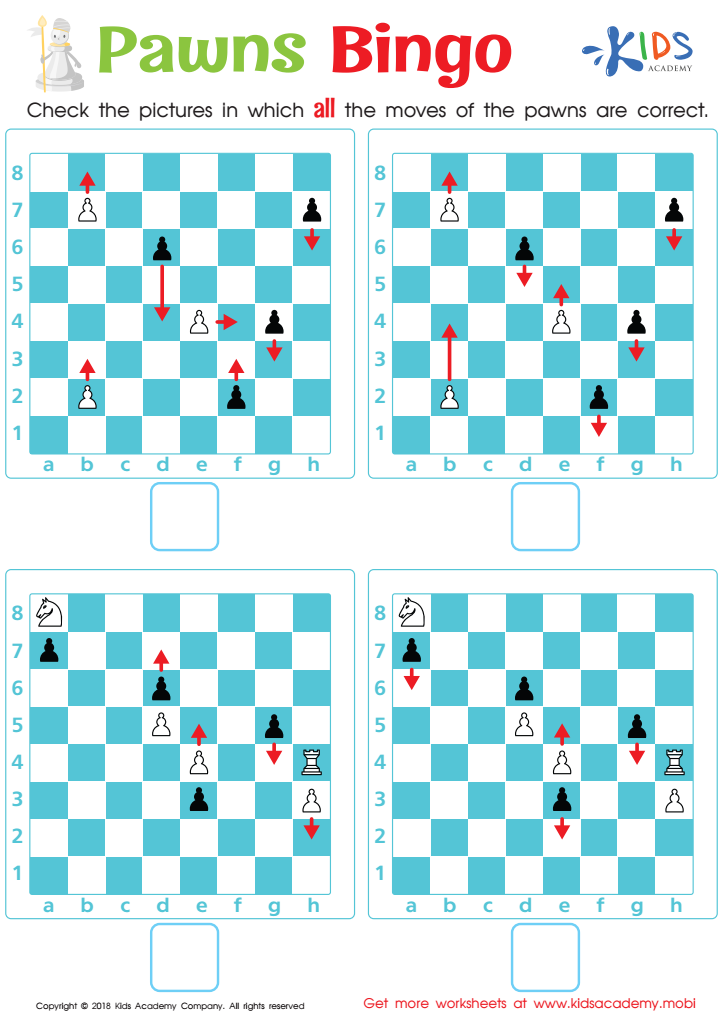
Pawns Bingo Worksheet
Test your students' knowledge of chess pawns. Present them with a worksheet featuring a picture, and ask them to identify the correct pawn moves. Afterward, they'll be better equipped to maneuver strategically on the chessboard.
Pawns Bingo Worksheet
Worksheet
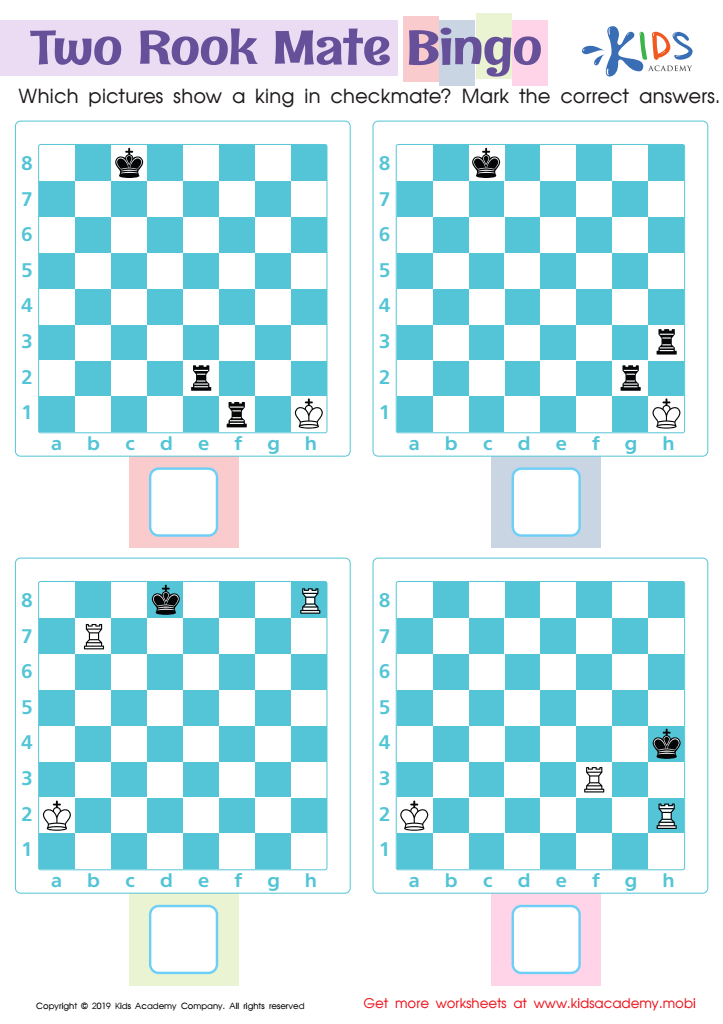
Two Rook Bingo Worksheet
Kids can have fun and strengthen their visual perception skills with Two Rook Mate Bingo. This worksheet challenges them to identify which chess boards show a king in checkmate using the Two Rook Mate strategy. Once they choose the correct one, they get the prize for checkmate! Playing chess helps kids with strategy, logic, and critical thinking.
Two Rook Bingo Worksheet
Worksheet
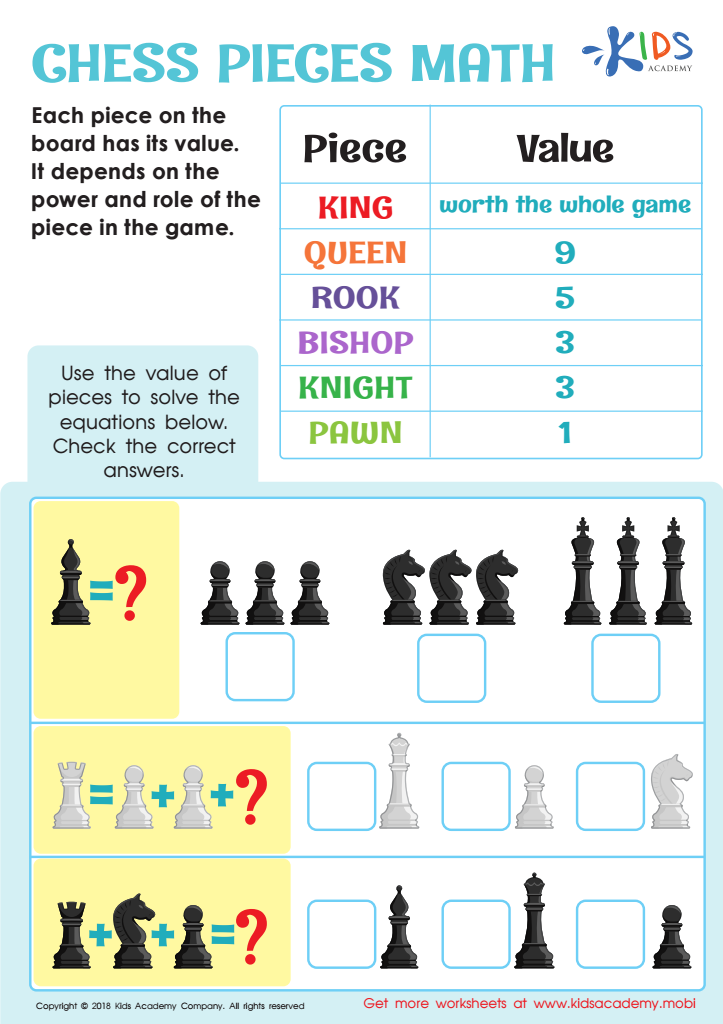
Chess Pieces Math Worksheet
Chess involves math! Each piece has its own value, from the king (worth the entire game) to the queen (9 points), varying according to their power and role. In the worksheet, your child must use these values to solve the equations at the bottom.
Chess Pieces Math Worksheet
Worksheet
Join Kids Academy for Free
Who is primarily going to use this learning content?



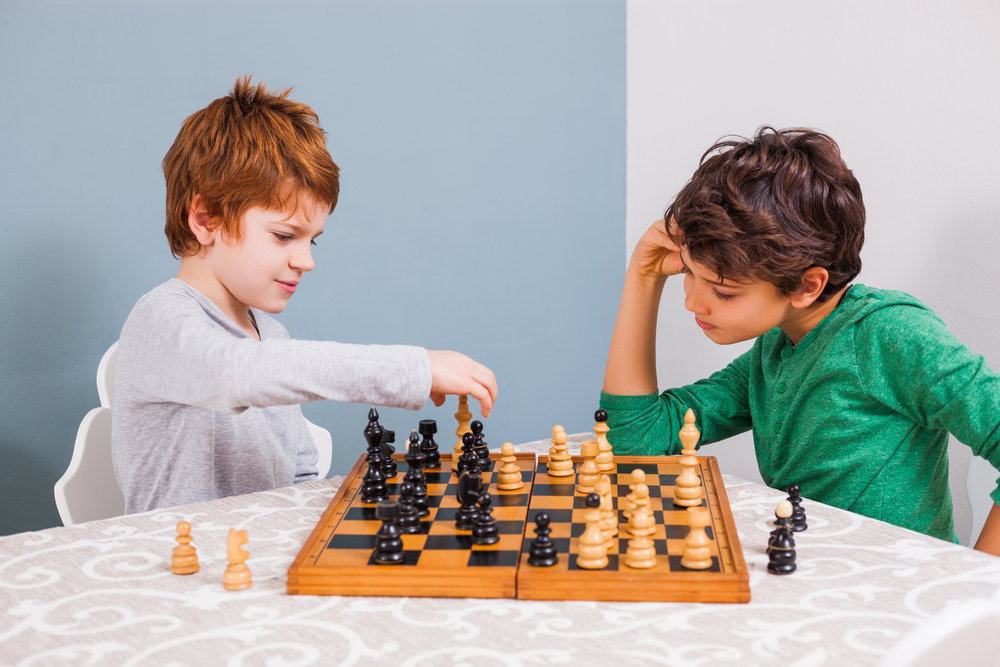



Cognitive development is a crucial aspect of young children's growth, significantly influencing their problem-solving abilities, critical thinking, and overall learning readiness. Introducing concepts of chess to children aged 3-7 can serve as an engaging and effective tool for enhancing these cognitive skills. Chess stimulates logical thinking, spatial awareness, and the ability to anticipate actions and consequences, skills that are foundational for academic success.
Parents and teachers should care about this development as it cultivates analytical reasoning and decision-making. Research indicates that early exposure to strategic games can improve a child's memory and concentration, key components of cognitive development. Furthermore, playing chess can foster social skills like patience, taking turns, and sportsmanship, encouraging cooperative interactions among peers.
Moreover, chess provides a structured environment for children to express themselves and face challenges in a safe setting, offering lessons in resilience and adaptability. By promoting these benefits, parents and teachers can ensure that children not only enjoy the intellectual joys of the game but also build a robust framework for academic and social success. Ultimately, investing time in cognitive activities like chess sets a solid foundation for lifelong learning and personal development.