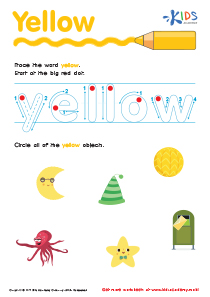
Word Recognition Normal English for Beginners Worksheets for Ages 3-7
3 filtered results
-
From - To
Discover our engaging "Word Recognition Normal English for Beginners" worksheets designed specifically for children ages 3-7. These interactive resources aim to build essential language skills in a fun and friendly way for young learners and ESL students. Each worksheet focuses on developing word recognition through colorful illustrations, context-driven exercises, and hands-on activities that spark curiosity and improve vocabulary. Ideal for home or classroom use, our worksheets cultivate a strong foundation in reading and language comprehension. Perfect for early grade teachers and parents, these tools help foster a love for learning and encourage confidence in young learners as they embark on their language journey.
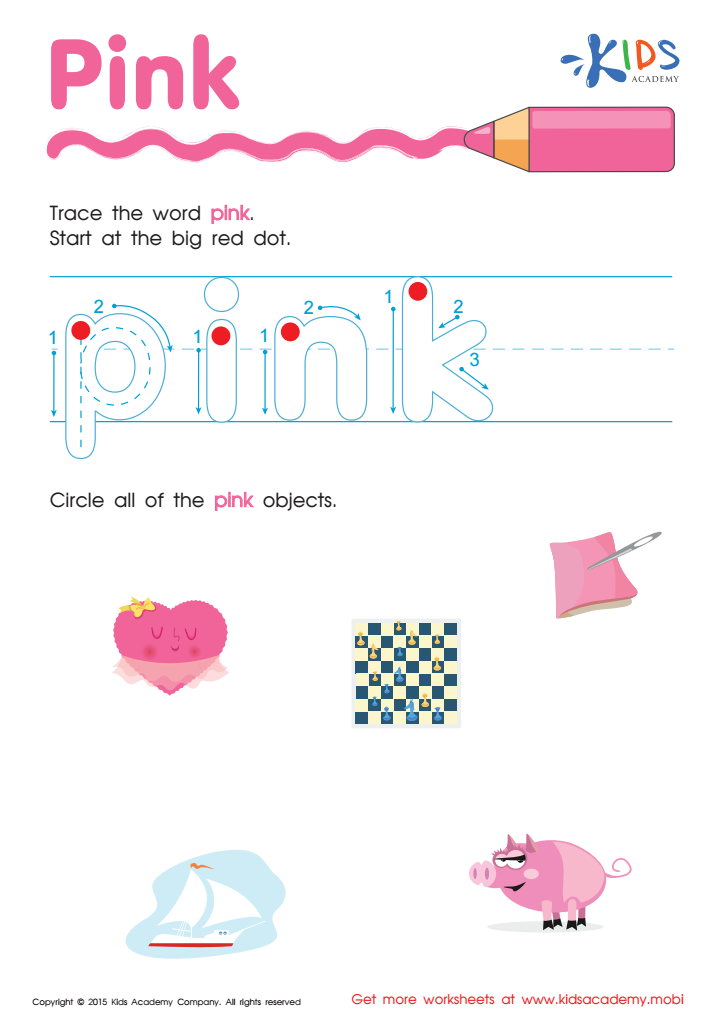
Pink Tracing Color Words Worksheet
 Assign to My Students
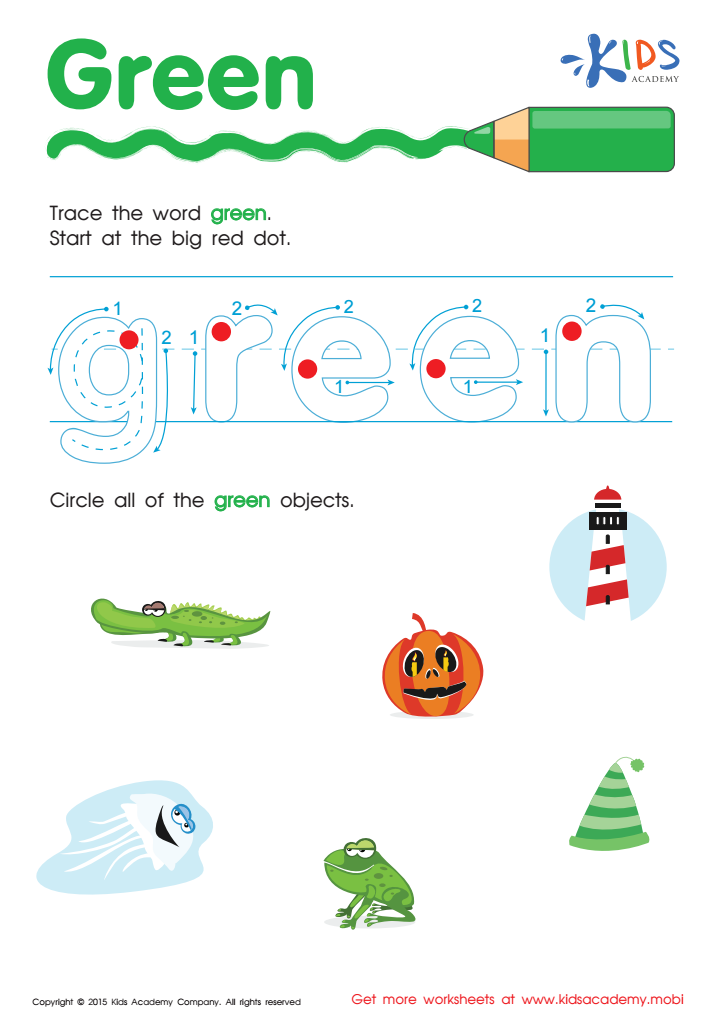
Green Tracing Color Words Worksheet
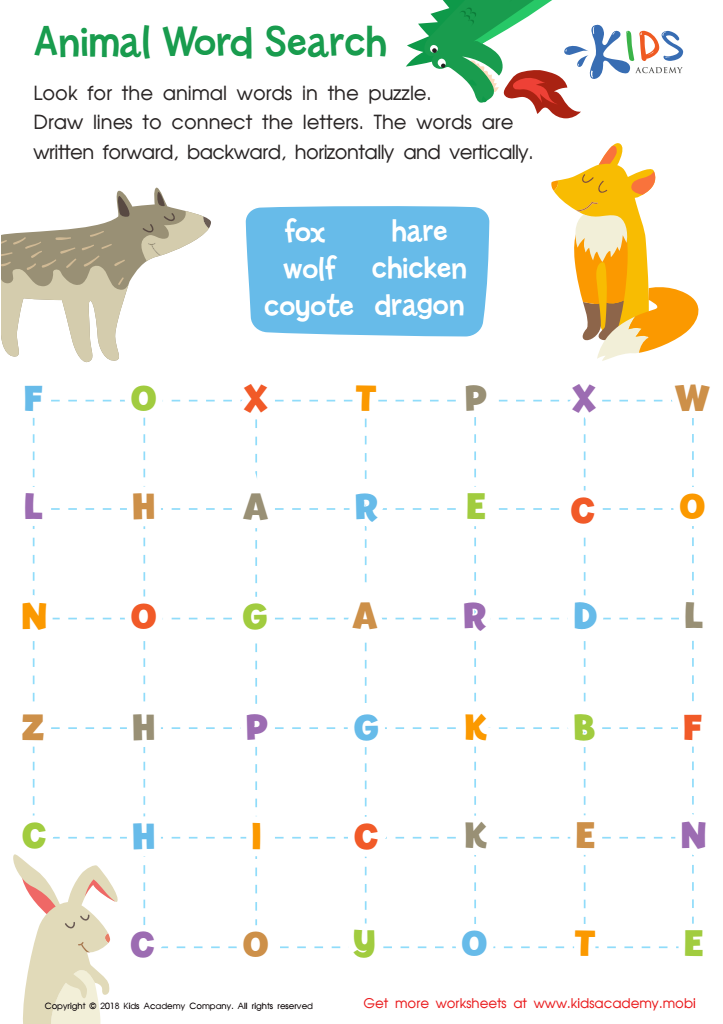
Animal Word Search Worksheet





Word recognition is a critical component of early literacy for children aged 3-7. Parents and teachers should care deeply about this skill because it serves as the foundation for reading and language development. At this age, children are naturally curious and eager to learn; fostering their ability to recognize words not only enhances their reading fluency but also boosts their confidence in communication.
When children can identify words, they begin to make connections between spoken and written language, paving the way for vocabulary expansion and comprehension skills. Word recognition helps children understand that letters and sounds form words, which is essential for reading proficiency later on. Moreover, the ability to recognize common sight words enables children to engage with texts independently, fostering a love for reading.
Supporting word recognition through playful and interactive activities also makes learning enjoyable, leading to greater engagement and retention. For parents and teachers, encouraging word recognition is vital in creating a rich literacy environment that prepares children for future academic success. Ultimately, investing in this foundational skill ensures that children build a solid reading base, promoting lifelong learning and communication skills.