Astronomy basics Normal Worksheets for Ages 3-7
3 filtered results
-
From - To
Introduce young minds to the captivating world of space with our "Astronomy Basics Normal Worksheets for Ages 3-7." These engaging, age-appropriate worksheets help kids explore stars, planets, and other celestial wonders. Offering fun activities, coloring pages, and simple puzzles, our worksheets foster learning and curiosity. Ideal for preschool and early elementary students, our resources support foundational astronomy knowledge and encourage creativity and critical thinking. Perfect for parents, teachers, or homeschooling, these worksheets make discovering the universe an exciting adventure. Inspire a love for science and outer space from an early age with our thoughtfully crafted materials.
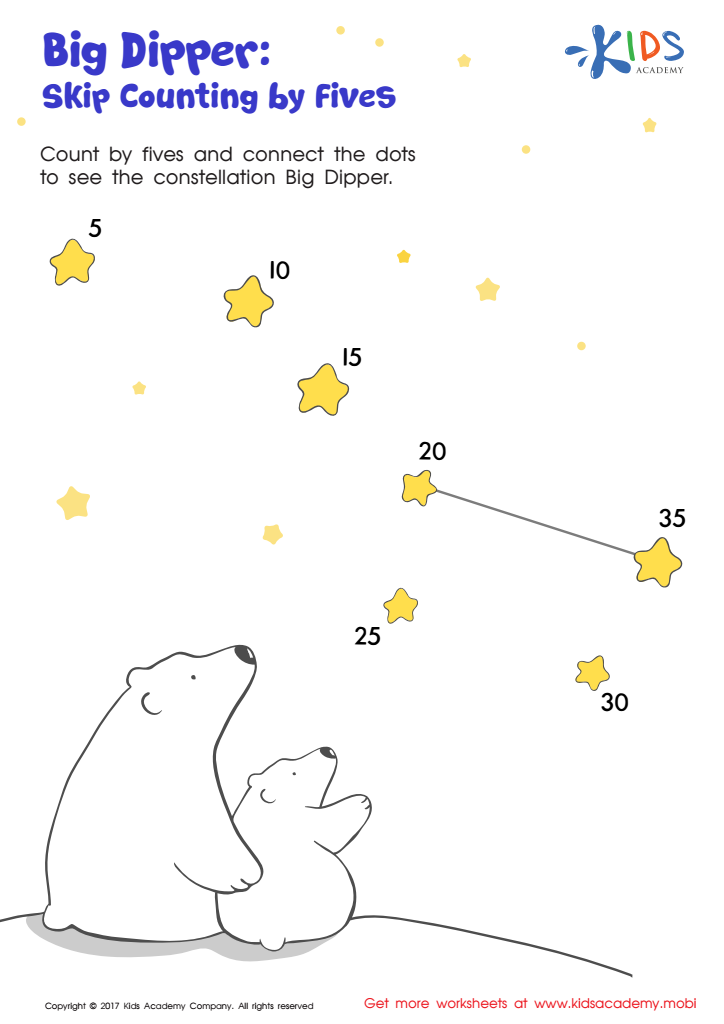
 Assign to My Students
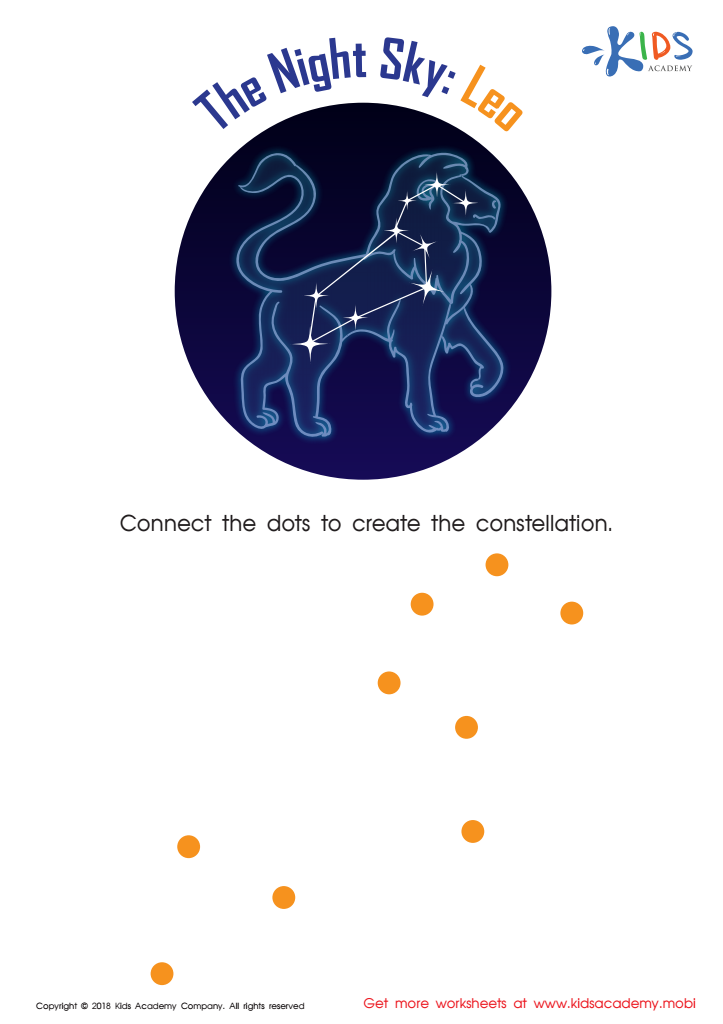
The Night Sky: Leo Worksheet
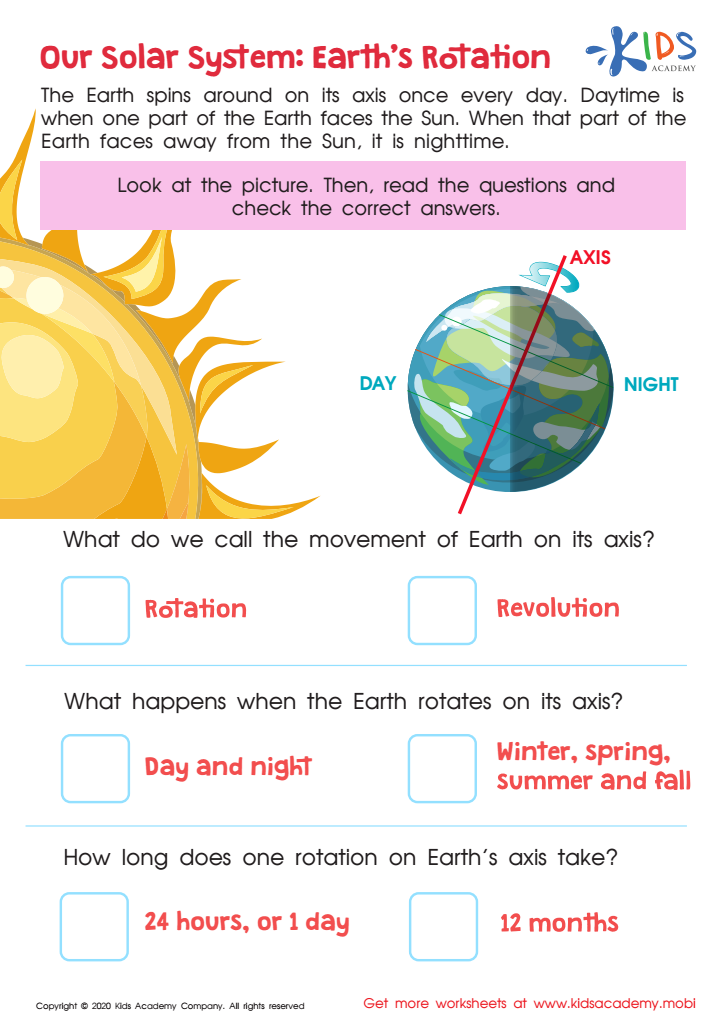
Our Solar System: Earth's Rotation Printable








Parents and teachers should care about introducing astronomy basics to children aged 3-7 because it stimulates curiosity and a sense of wonder about the world. At this formative stage, young children are naturally inquisitive and eager to understand their surroundings. Learning about the sun, moon, stars, and planets can captivate their imagination and foster an early interest in science and the natural world.
Furthermore, basic astronomical concepts, such as day and night or the changing seasons, help children make sense of regular occurrences in their daily lives. Understanding these patterns enhances their observational skills and encourages critical thinking.
Astronomy can also lay the foundation for STEM (science, technology, engineering, and mathematics) education, igniting a passion for these fields from an early age. When children learn about space, they develop problem-solving skills and build a foundation for more complex scientific concepts.
Additionally, astronomy encourages a global perspective and an appreciation for the vastness of the universe, promoting humility and a sense of connectivity with the world. Parents and teachers emphasizing these basics cultivate an awe and respect for the natural environment, ultimately contributing to children's overall cognitive and emotional development.








