Capitalization rules Normal Worksheets for Ages 3-7
3 filtered results
-
From - To
Help young learners master the basics of writing with our "Capitalization Rules Normal Worksheets for Ages 3-7"! These engaging worksheets are tailored to teach children the foundational rules of capitalization, such as capitalizing the first letter of sentences, proper nouns, and the pronoun “I”. Perfect for both classroom and home use, these activities combine fun and learning, using colorful illustrations and simple exercises. Our resources are designed to build confidence and enhance early literacy skills, ensuring kids develop strong writing habits from the start. Foster a love for writing with Kids Academy’s expertly crafted capitalization worksheets!
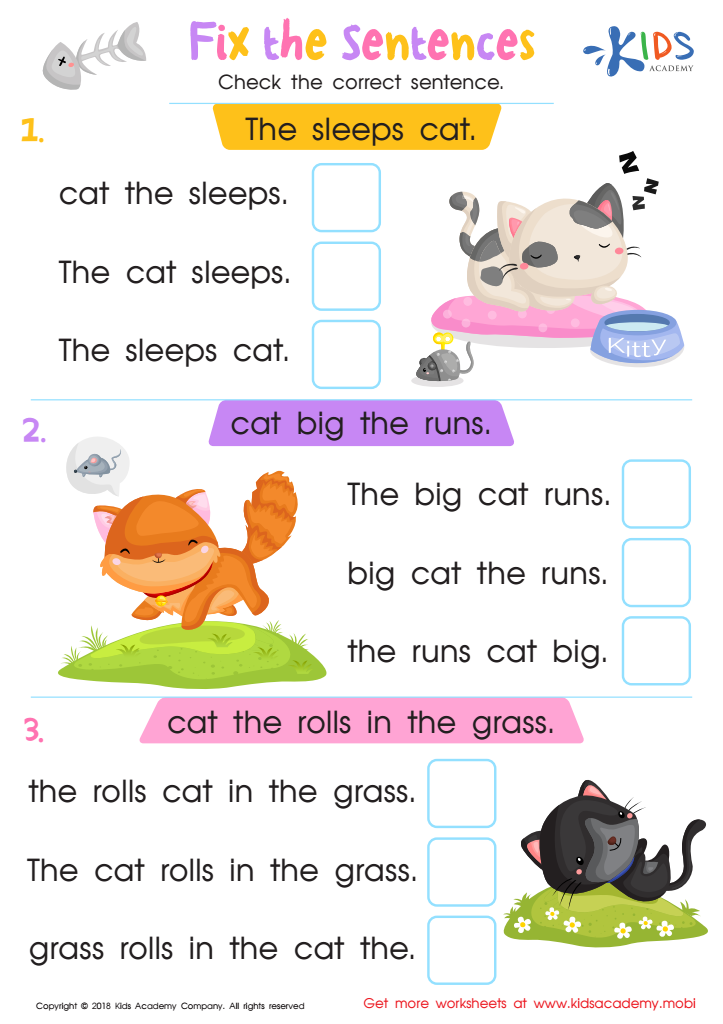
Fix the Sentences Worksheet
 Assign to My Students
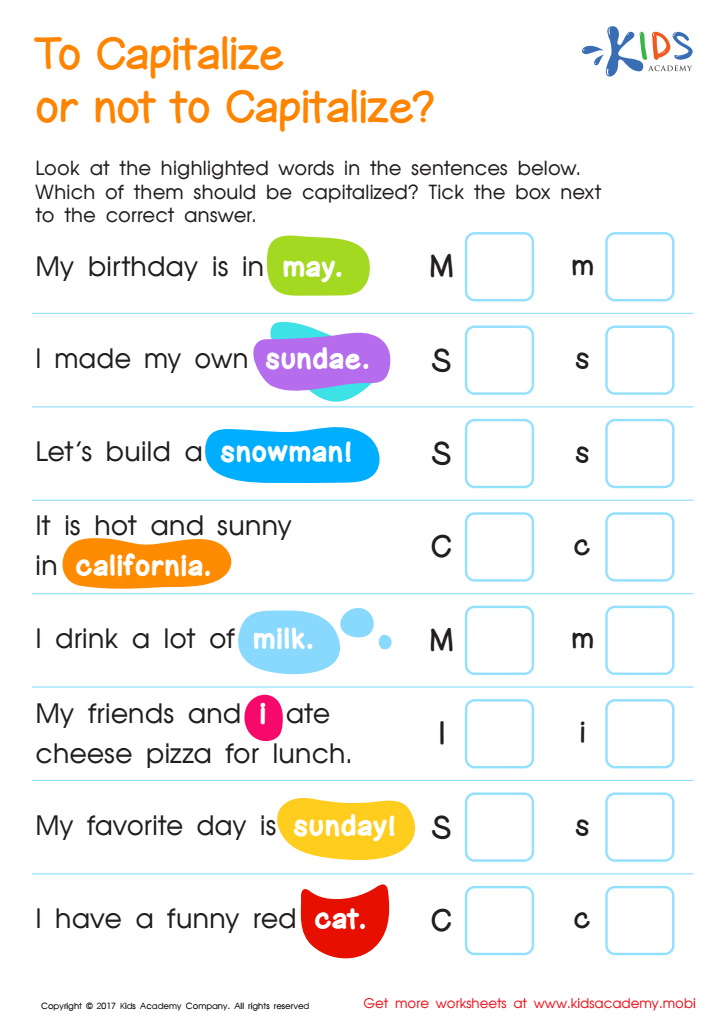
Capitalization: To Capitalize or Not? Printable
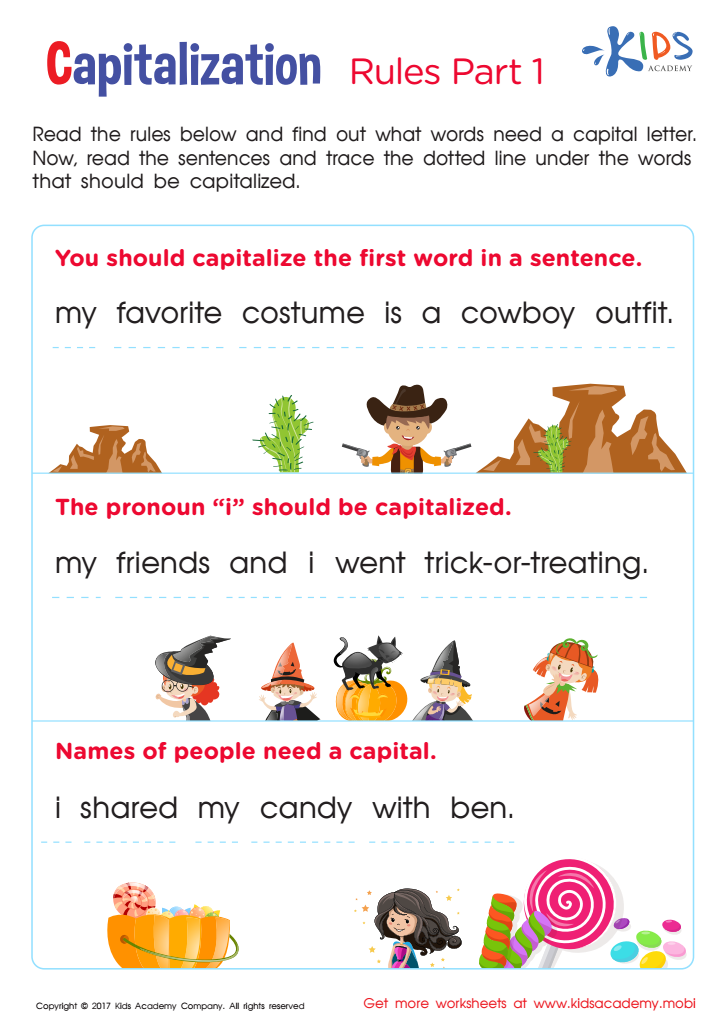
Capitalization Rules: Part 1 Worksheet






At the early stages of literacy, ages 3 to 7, learning proper capitalization rules is essential for several reasons and parents and teachers should care about it greatly. Firstly, understanding capitalization helps children develop consistency and accuracy in their writing, which is foundational for effective communication. When a child learns to capitalize the first letter of sentences and proper nouns, they begin to grasp the structure and rules that govern the English language, aiding in reading comprehension and writing clarity.
Secondly, teaching capitalization at a young age promotes good writing habits. These formative years are critical for imprinting the conventions of written language which, when internalized early, become second nature to children as they grow older. Correct capitalization conveys respect for the written word and shows that a child understands and adheres to language norms, important for academic success and future professional environments.
Last but not least, capitalization helps to avoid misunderstandings. Proper nouns differentiate between common nouns and draw attention to specific names and places, facilitating clearer and more precise communication. For example, understanding the difference between "I" and "i" can profoundly impact the readability and meaning of a child's written work.
By caring about capitalization rules, parents and teachers lay the groundwork not just for basic literacy but for effective lifelong communication skills.








