Conversion skills Normal Worksheets for Ages 3-7
3 filtered results
-
From - To
Explore our engaging "Conversion Skills Normal Worksheets" designed for children ages 3-7! These interactive resources facilitate a deep understanding of measurement conversions, helping young learners master essential mathematical concepts. Perfect for both classroom and home learning, our worksheets provide a playful approach that's tailored to early learners. With fun activities, clear instructions, and captivating visuals, kids will develop their conversion skills in a supportive environment. Embrace creativity and critical thinking as children learn to compare quantities, understand different units, and apply their knowledge in relatable contexts. Start building a strong mathematical foundation with our thoughtfully crafted worksheets today!
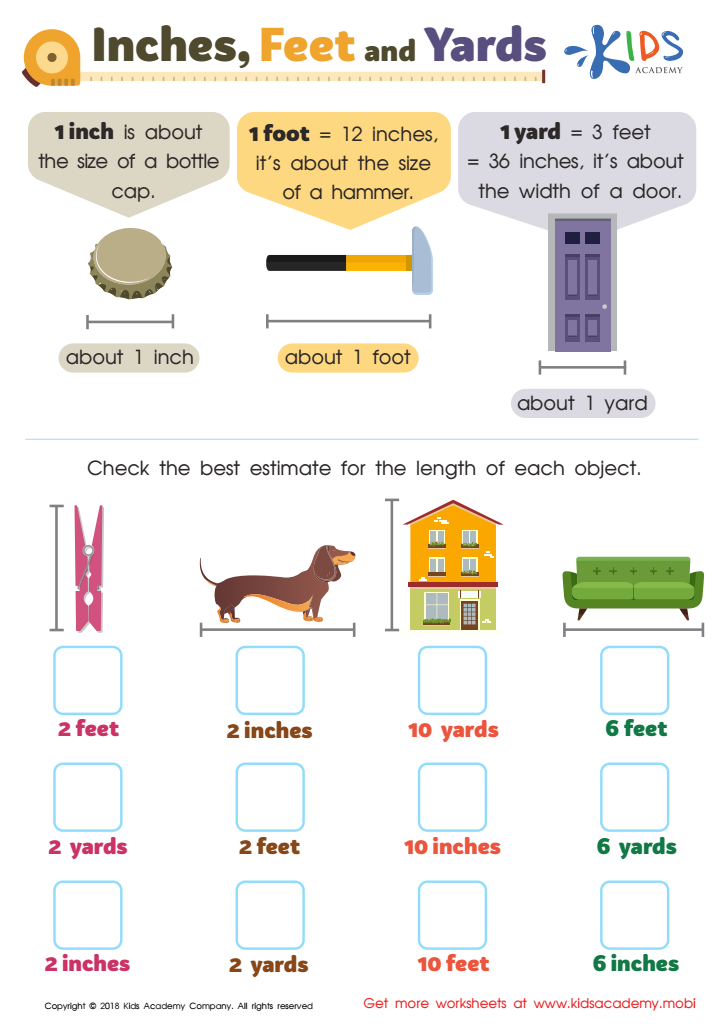
Inches, Feet and Yards Worksheet
 Assign to My Students
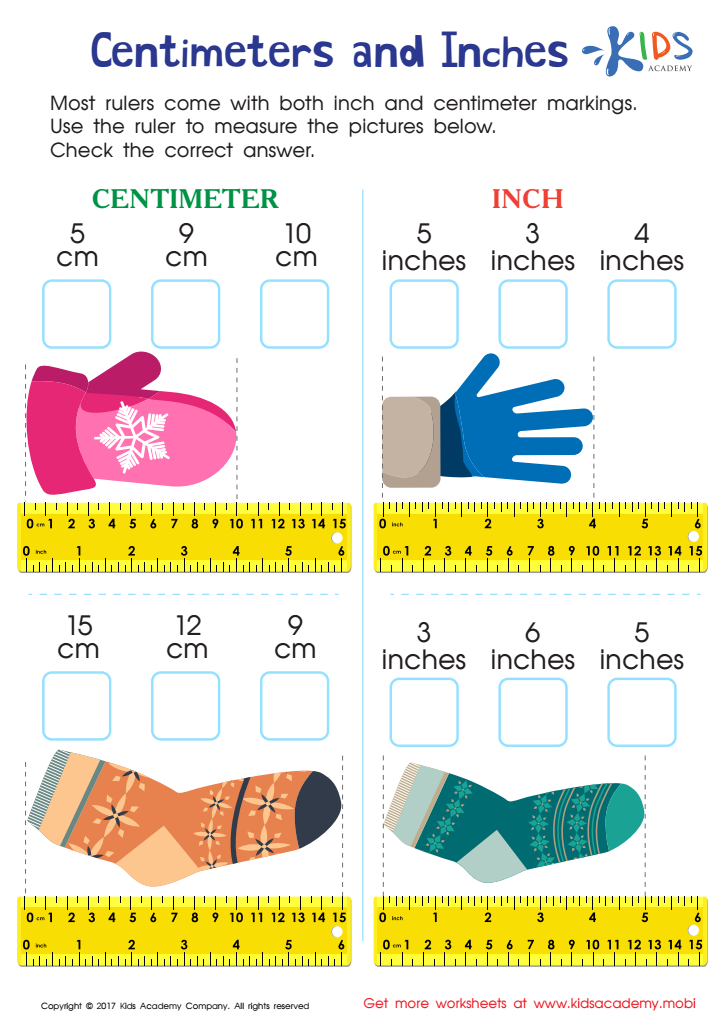
Centimeters and Inches Worksheet
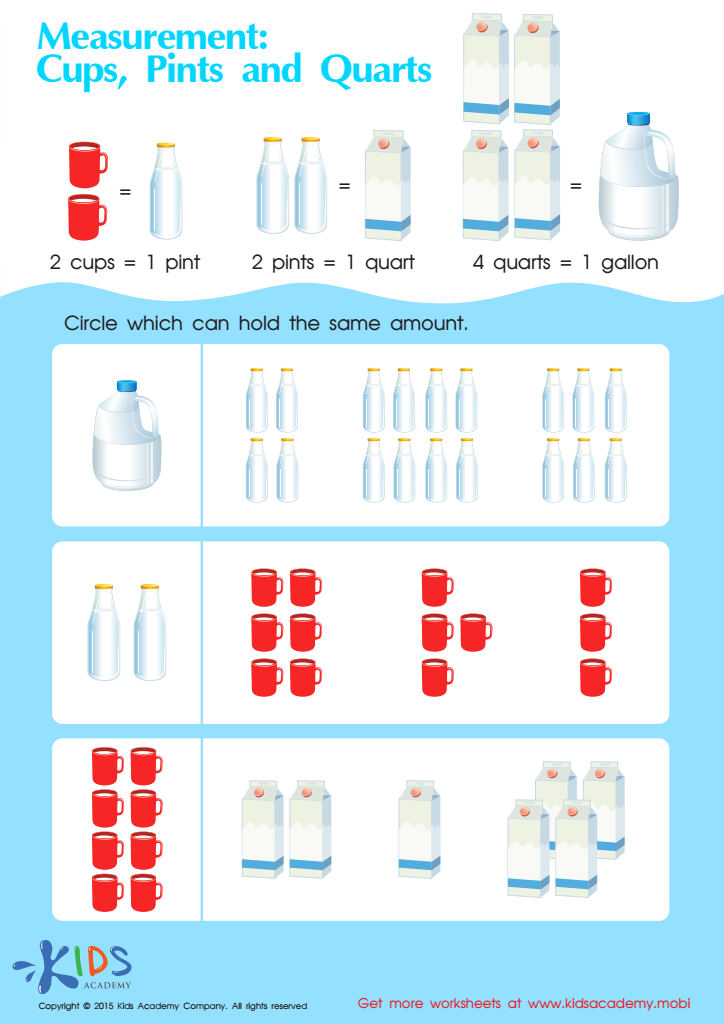
Cups, Pints and Quarts 2 Worksheet






Parents and teachers should care about conversion skills for children ages 3-7 as these foundational skills are crucial for cognitive development and everyday functioning. Conversion skills refer to the ability to understand and utilize different forms of measurements, transformations, and operations involving numbers, shapes, and symbols in various contexts.
During this developmental stage, children are naturally curious and eager to understand the world around them. Teaching conversion skills fosters critical thinking by encouraging them to compare, contrast, and manipulate information, nurturing their problem-solving abilities. This skill is applicable not only in mathematics but also in real-life situations, such as cooking, shopping, and understanding time and distance.
Moreover, instilling these skills early on builds confidence and prepares children for more complex concepts they will encounter in later years, ensuring a stronger mathematical foundation. Children develop better spatial awareness and reasoning, essential for literacy and STEM fields. Engagement in fun, interactive activities that promote conversion skills can strengthen the bond between parents and children, making learning a group experience. By prioritizing these skills, parents and educators set the stage for lifelong learning and positive academic attitudes that benefit children's overall development.








