Division practice Normal Worksheets for Ages 3-7
4 filtered results
-
From - To
Discover our engaging Division Practice Normal Worksheets designed for children aged 3 to 7! These worksheets are perfect for introducing young learners to the concept of division in a fun and interactive way. With colorful illustrations and age-appropriate exercises, kids can explore basic division through simple visuals and relatable scenarios. Our worksheets encourage critical thinking and promote early math skills, making learning enjoyable. Ideal for parents and teachers alike, these resources help reinforce division concepts at home or in the classroom. Start your child’s math journey today with our easy-to-use printable worksheets tailored for early learners!
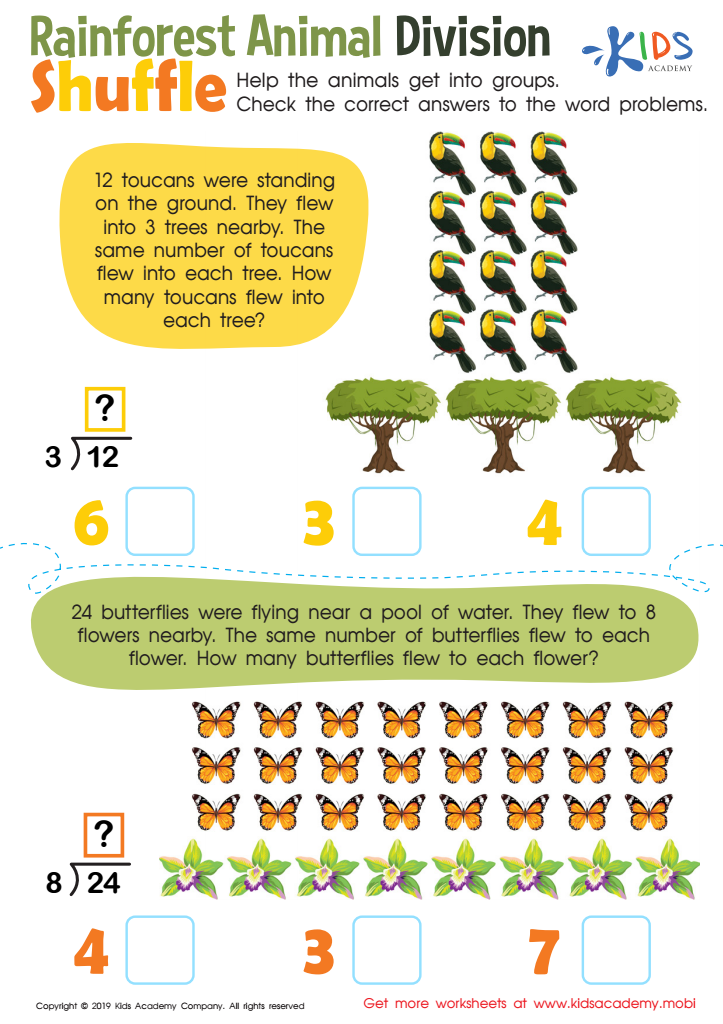
Rainforest Animal Division Worksheet
 Assign to My Students
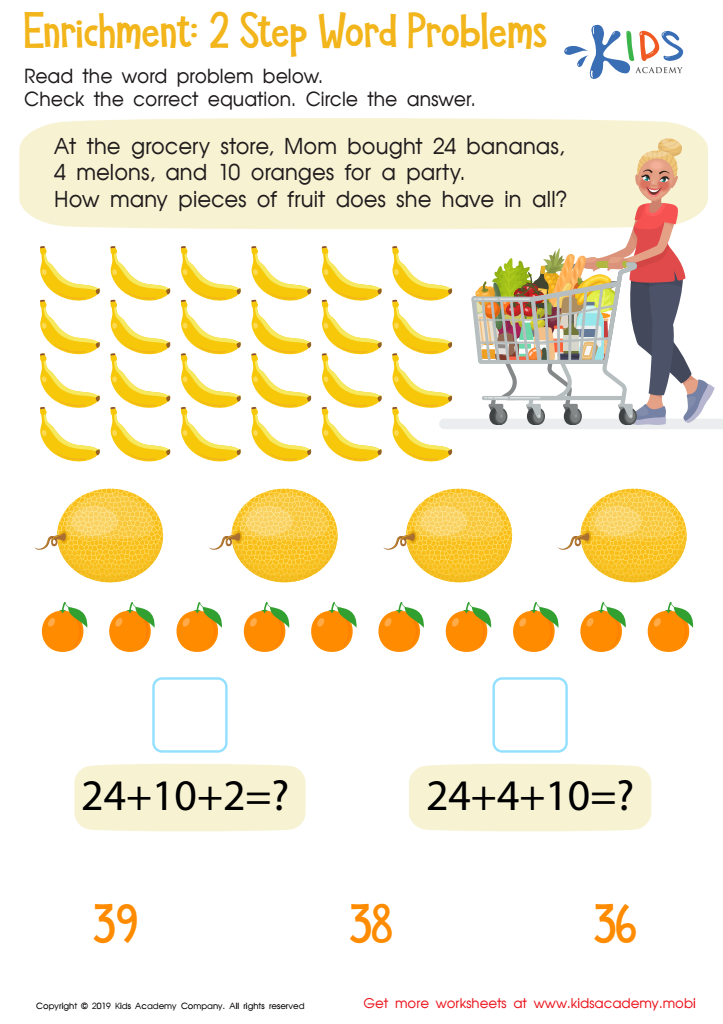
Enrichment -2 Step Word Problems Worksheet
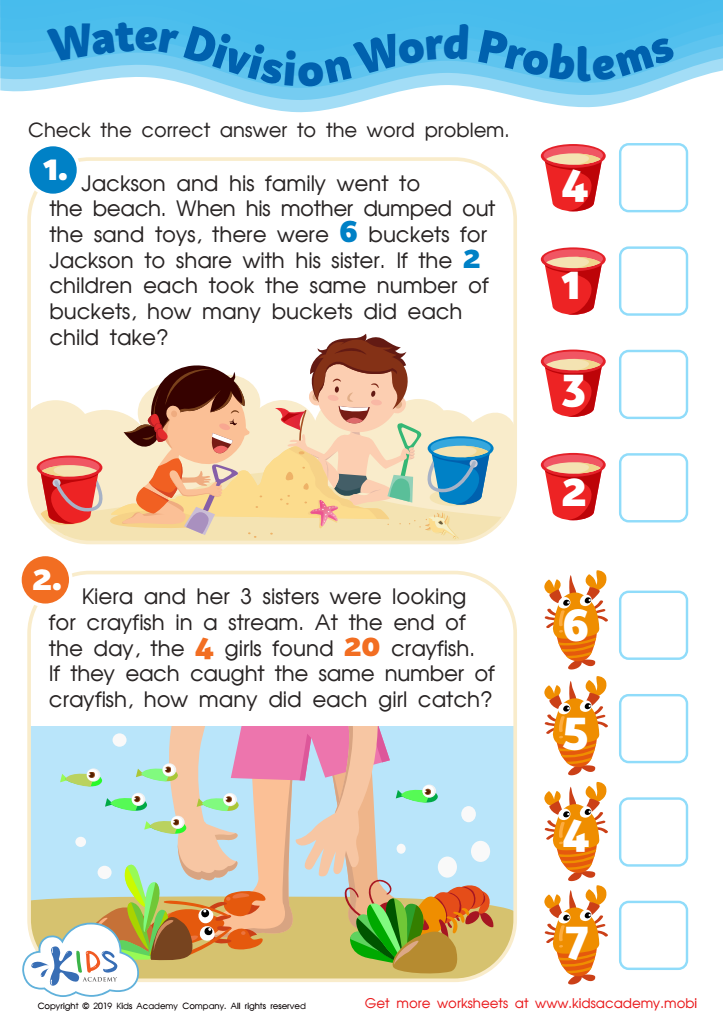
Water Division Word Problems Worksheet
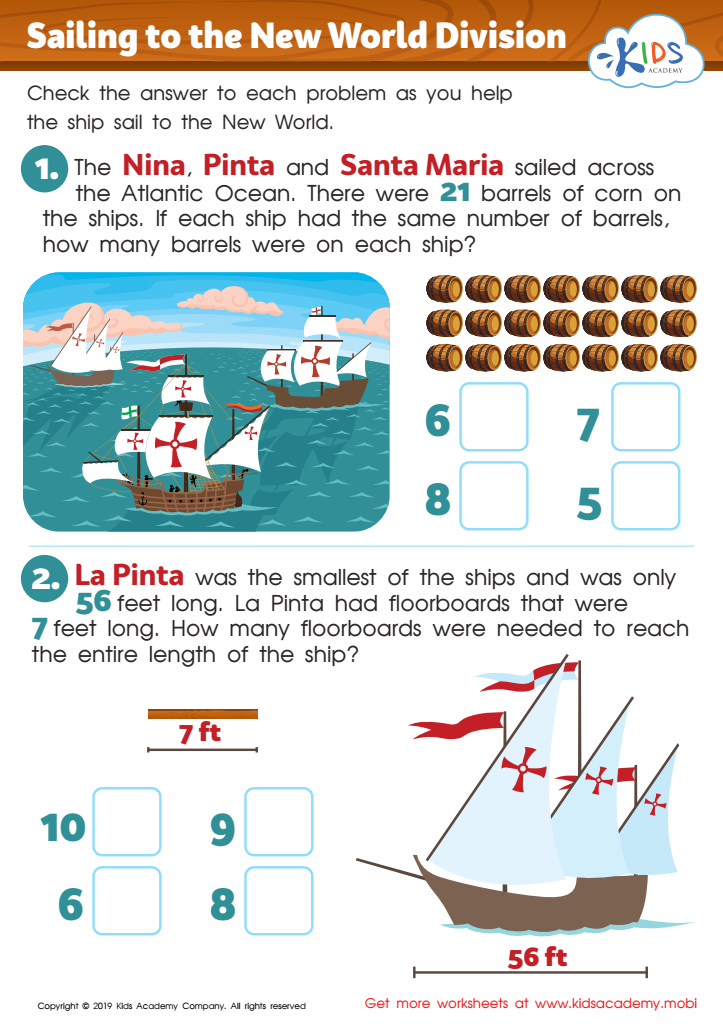
Sailing to the New World Division Worksheet






Division practice is essential for children aged 3-7 as it lays the groundwork for their mathematical understanding and problem-solving skills. Although it may seem advanced for younger learners, introducing division concepts early through fun activities helps children grasp the idea of sharing and grouping, which are fundamental to division.
Children in this age range are naturally curious and learn best through play and hands-on experiences. Engaging them in activities that involve dividing objects into smaller groups fosters collaboration, enhances cognitive development, and sharpens fine motor skills. For example, using tangible items like fruit or toys encourages children to physically split the items, making the abstract concept of division more tangible and understandable.
Moreover, teaching division alongside addition and subtraction helps form a strong foundational skill set, creating a smoother transition to more complex mathematical concepts in later grades. It also instills confidence in their abilities since they become adept at problem-solving and critical thinking.
Parents and teachers play a pivotal role in making math enjoyable and relatable. By prioritizing early division practice, they not only enhance children's mathematical fluency but also promote a lifelong appreciation for learning and exploration in the subject. Ultimately, nurturing these skills early on sets students up for success in academics and beyond.








