Enhance reading skills Normal Worksheets for Ages 3-7
3 filtered results
-
From - To
Welcome to our "Enhance Reading Skills Normal Worksheets" specifically designed for children ages 3-7. Our engaging worksheets help young learners develop essential reading skills in a fun and interactive way. Featuring vibrant illustrations and age-appropriate activities, these worksheets cover phonics, sight words, and comprehension strategies. Each printable resource is crafted to boost literacy while fostering a love for reading. Parents and educators can easily integrate these worksheets into daily learning routines, ensuring a balanced approach to literacy development. Explore our collection today and empower your child with the confidence they need to become proficient readers!
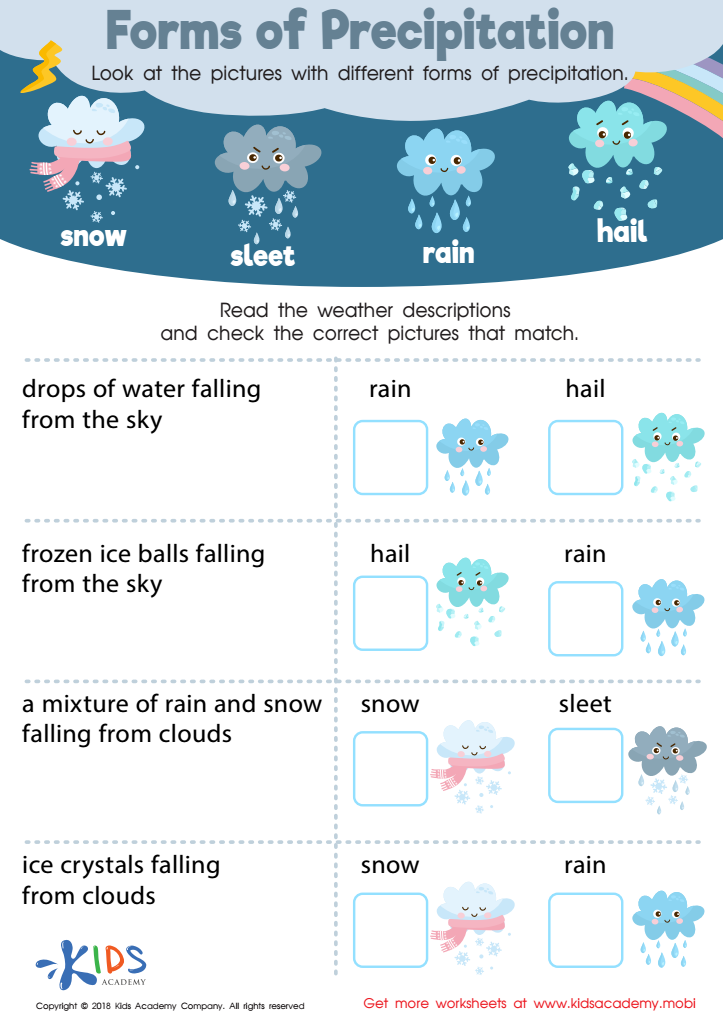
Forms of Precipitation Worksheet
 Assign to My Students
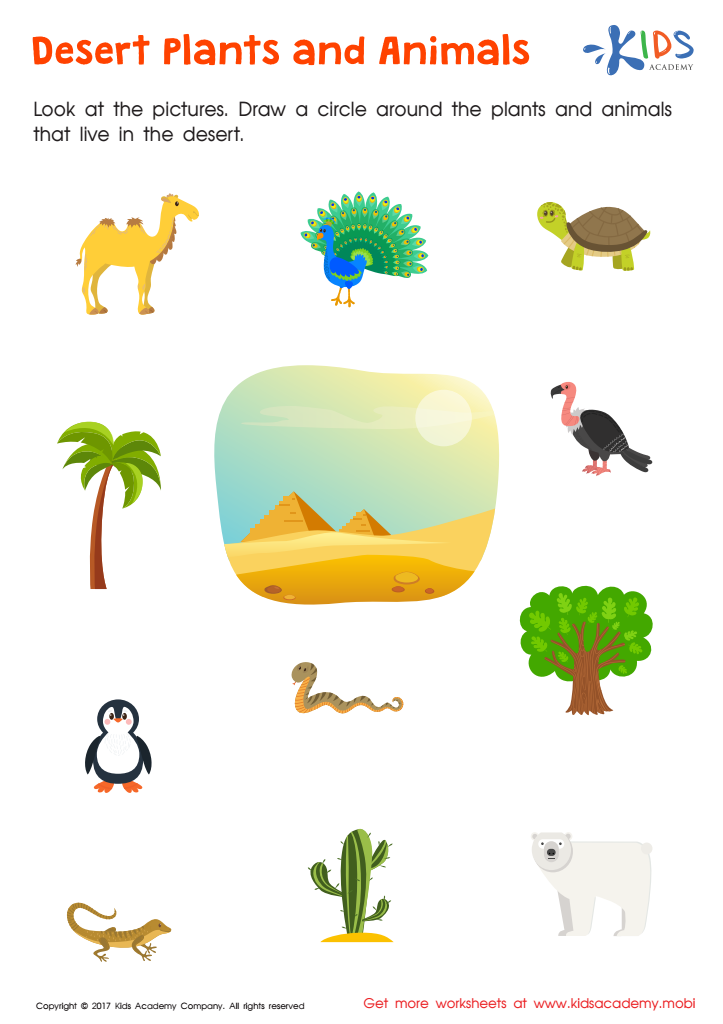
Desert Plants Animals Printable
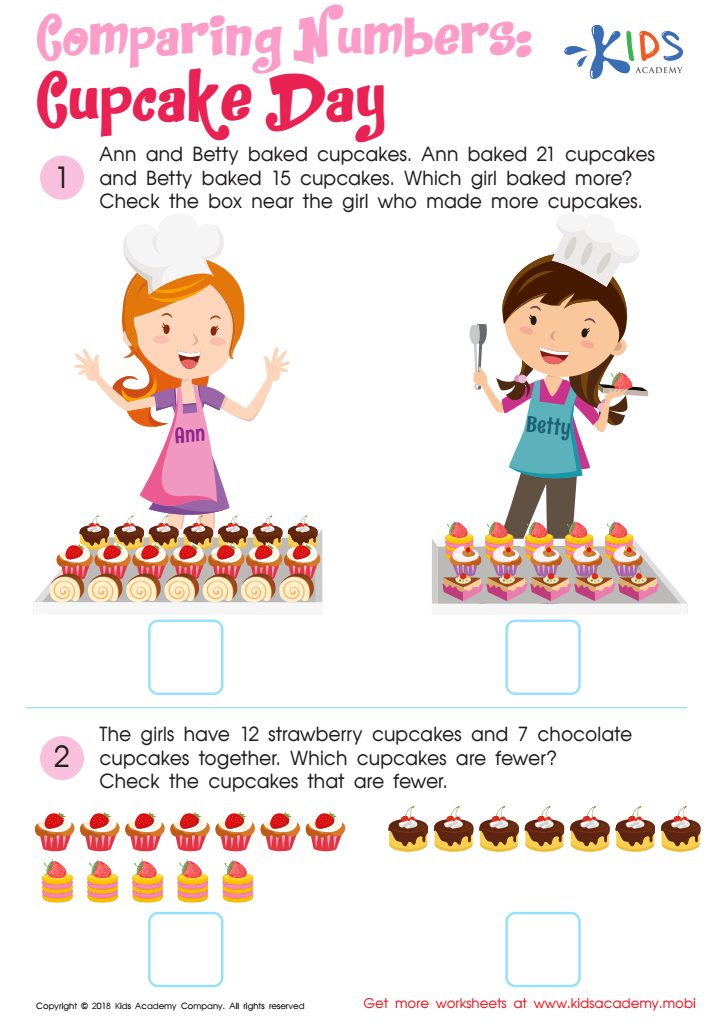
Cupcake Day Worksheet








Enhancing reading skills for children ages 3-7 is crucial for several reasons. During these formative years, children are developing foundational language and cognitive abilities that will impact their future learning. Strong reading skills foster a love for literature, stimulate imagination, and nurture critical thinking. Engaging with books helps young learners acquire vocabulary, comprehension, and listening skills, all of which are essential for academic success.
Moreover, early literacy experiences can significantly influence a child's self-esteem and confidence. When children are supported in their reading journeys, they are more likely to feel competent and capable in their academic pursuits. This positive reinforcement can shape their attitudes toward learning and education throughout their lives.
Additionally, research shows that early reading proficiency correlates with later academic achievements, particularly in math and science. Parents and teachers play a pivotal role by providing access to diverse reading materials, encouraging daily reading habits, and creating a supportive environment.
By investing in early reading skills, adults are not only setting children on a path toward academic success but also empowering them with the tools they need to navigate the world. Ultimately, fostering reading skills in young children contributes to their overall development and prepares them for a lifetime of learning.








