Knowledge application Normal Worksheets for Ages 3-7
3 filtered results
-
From - To
Explore our "Knowledge Application Normal Worksheets" designed specifically for ages 3-7. These engaging and thoughtfully crafted worksheets help young learners enhance their understanding by applying knowledge across various subjects. Tailored to promote critical thinking and creativity, our resources feature fun activities that encourage exploration and discovery. With colorful illustrations and age-appropriate tasks, children will delight in learning while developing essential skills. Perfect for teachers, parents, or homeschoolers, these worksheets ensure kids enjoy the learning process. Start inspiring a lifelong love of knowledge today with our curated selection of knowledge application worksheets, and watch your little ones thrive!
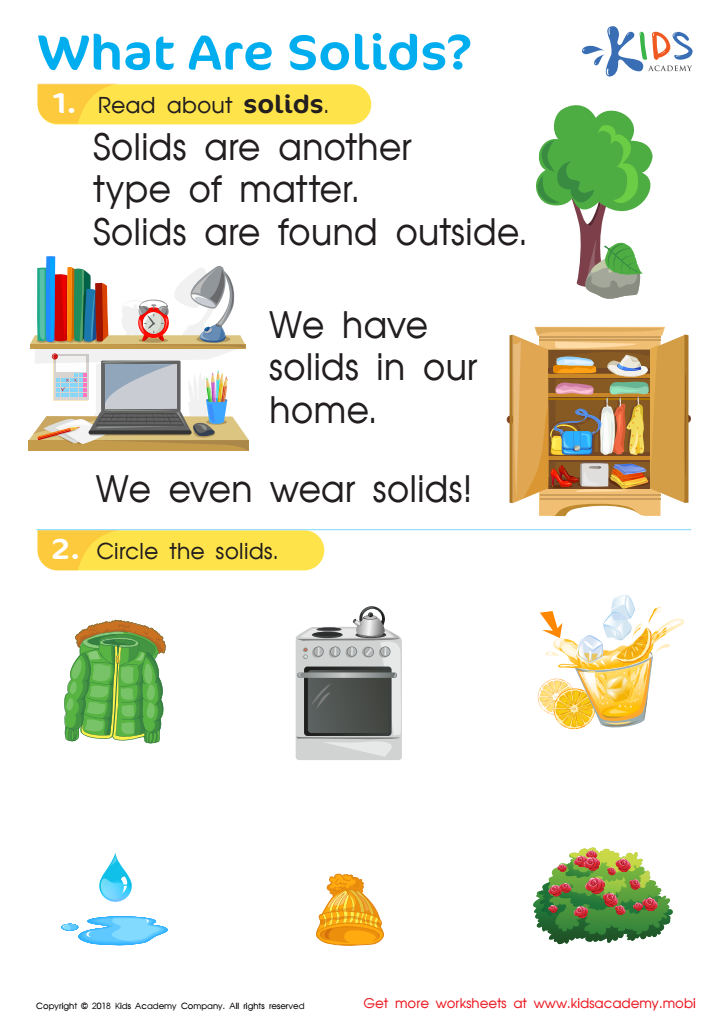
What Are Solids? Worksheet
 Assign to My Students
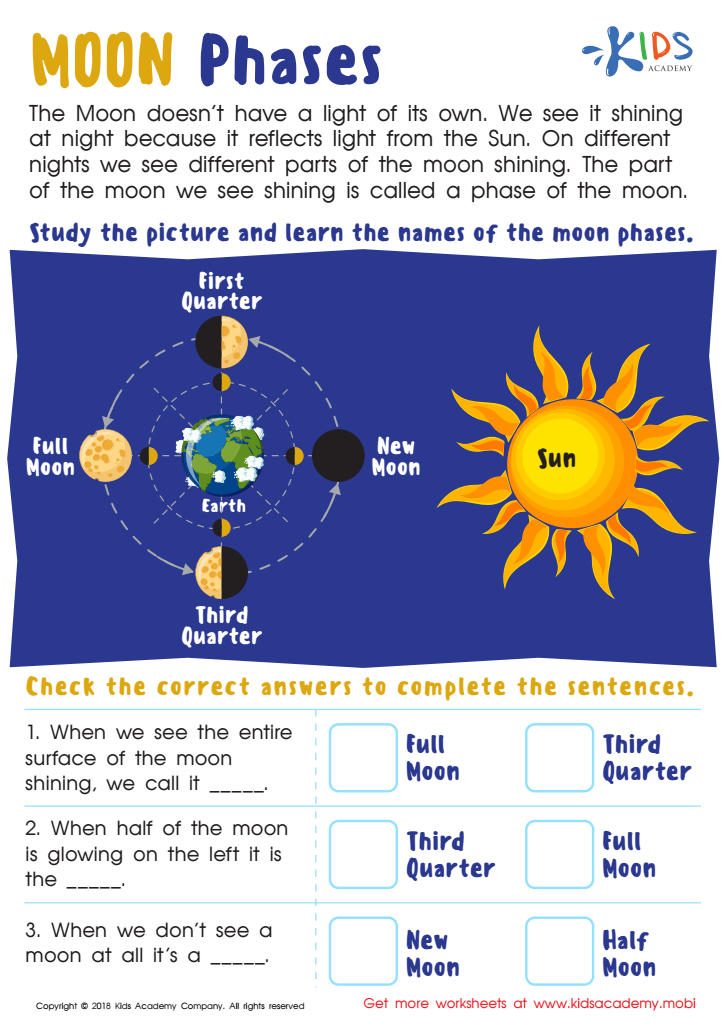
Moon Phases Worksheet
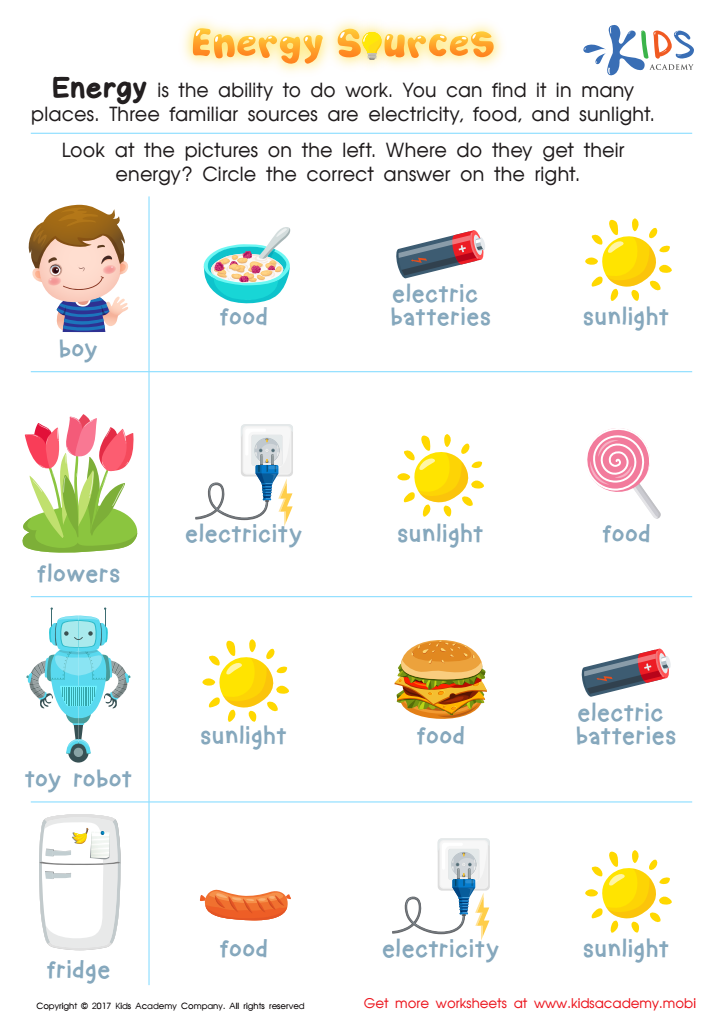
Energy Sources Printable







Knowledge application normal (KAN) for ages 3-7 is vital for early childhood development, as it fosters critical thinking, problem-solving, and the ability to apply learned concepts in real-life situations. During these formative years, children transition from learning basic concepts to applying them in various contexts, making this stage crucial for their cognitive development.
Parents and teachers should care about KAN because it encourages children to explore, experiment, and understand the world around them. It promotes curiosity and a love for learning, elements that are essential for future academic success. When children learn to apply knowledge, they develop confidence and independence in their abilities, which fosters a positive self-image.
Furthermore, emphasizing knowledge application helps children improve social skills through collaboration and communication during group activities. By engaging in discussions and sharing ideas, children learn the importance of perspective-taking and empathy. This holistic development shapes well-rounded individuals who can navigate challenges effectively.
In a rapidly changing world, the skill to apply knowledge across different domains is paramount. Parents and teachers play a critical role in creating environments that encourage these experiences, laying a strong foundation for lifelong learning and adaptation in various settings.








