Practicing arithmetic operations Normal Worksheets for Ages 3-7
3 filtered results
-
From - To
Discover our engaging Normal Worksheets designed for children ages 3-7, focused on practicing arithmetic operations. Our worksheets provide a fun and interactive way for young learners to master basic addition and subtraction skills through colorful illustrations and age-appropriate activities. Each worksheet is crafted to promote logical thinking and problem-solving, making arithmetic intuitive and enjoyable. Tailored to diverse learning styles, these resources help build a strong mathematical foundation, preparing kids for more advanced concepts in the future. Explore our collection today and watch your child gain confidence and proficiency in arithmetic while having fun! Perfect for home or classroom use!
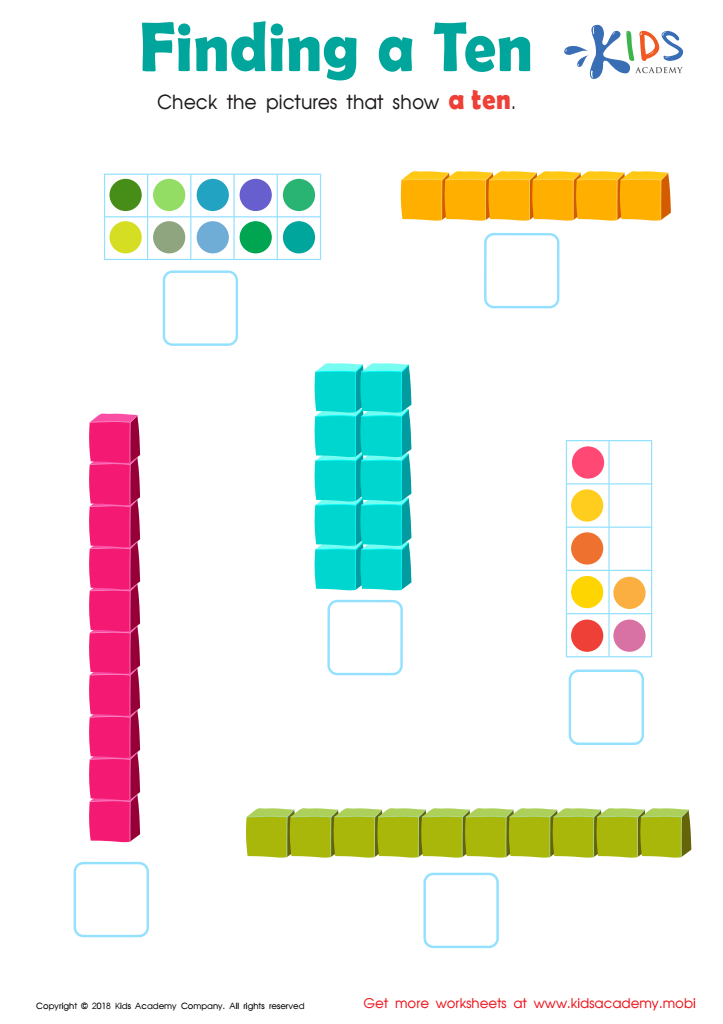
Finding a Ten Worksheet
 Assign to My Students
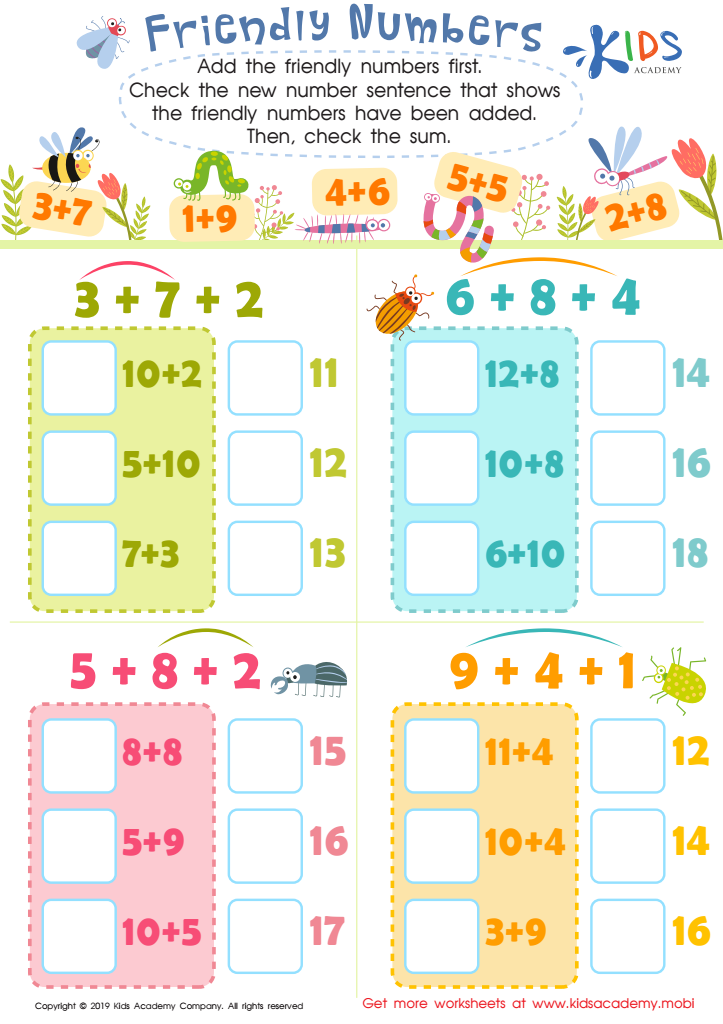
Friendly Numbers Worksheet
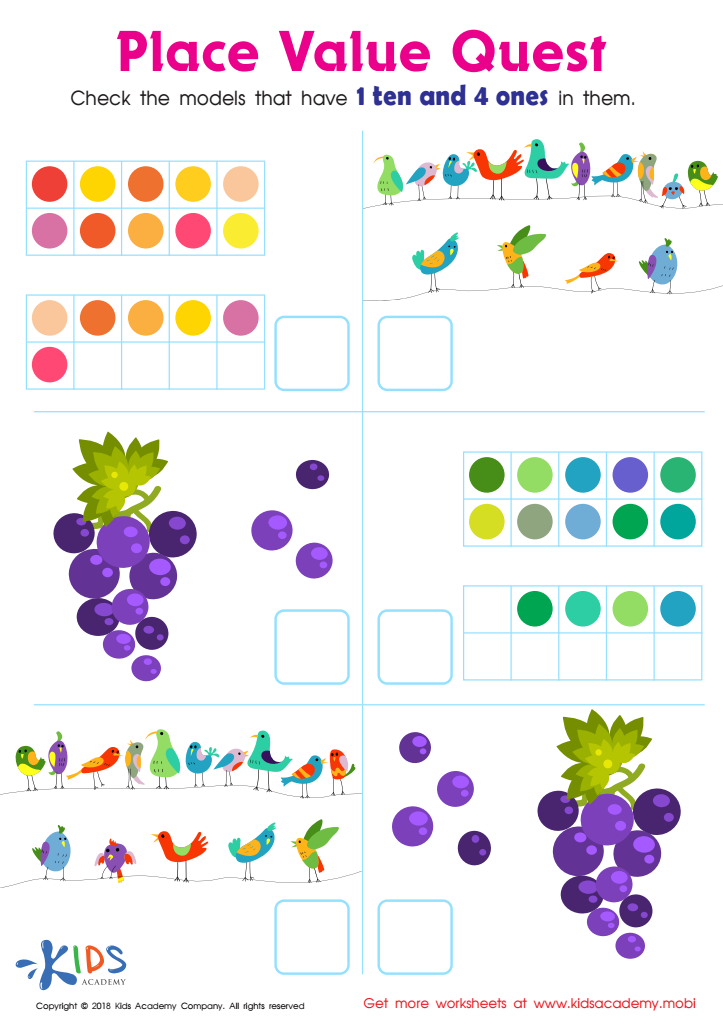
Place Value Quest Worksheet







Practicing arithmetic operations is crucial for children aged 3-7 as it forms the foundation for their mathematical understanding. During these formative years, children are naturally curious and eager to learn. Engaging them in arithmetic not only enhances their numeracy skills but also fosters critical thinking and problem-solving abilities.
Firstly, mastering basic arithmetic helps children develop confidence in their mathematical skills, which is vital for future learning. When children practice counting, addition, subtraction, and even simple multiplication, they begin to see patterns and relationships, which enriches their overall cognitive development.
Furthermore, arithmetic operations help with everyday life skills. Recognizing numbers and understanding quantity enable children to manage simple tasks, such as sharing snacks or counting toys. These experiences make math relevant and enjoyable, instilling a positive attitude towards learning.
For parents and teachers, supporting arithmetic practice is essential in nurturing a child's academic success. Engaging activities like games, rhymes, and hands-on learning can make math fun and alleviate anxiety often associated with the subject. Ultimately, fostering early arithmetic skills lays the groundwork for future mathematical proficiency, enabling students to thrive as they progress in their education. Emphasizing these practices early on encourages lifelong learners who appreciate mathematics.








