Science vocabulary expansion Normal Worksheets for Ages 3-7
4 filtered results
-
From - To
Enhance your child's understanding of scientific concepts with our engaging Science Vocabulary Expansion Normal Worksheets, designed specifically for ages 3-7. These worksheets are perfect for early learners, offering a fun and interactive way to expand their vocabulary while exploring scientific topics. Through colorful illustrations and age-appropriate exercises, children will develop essential language skills and familiarity with scientific terms. Our resources encourage curiosity and support critical thinking, laying a strong foundation for future learning in science and beyond. Empower your child's educational journey with these carefully crafted worksheets that make learning enjoyable and effective. Download your free worksheets today!
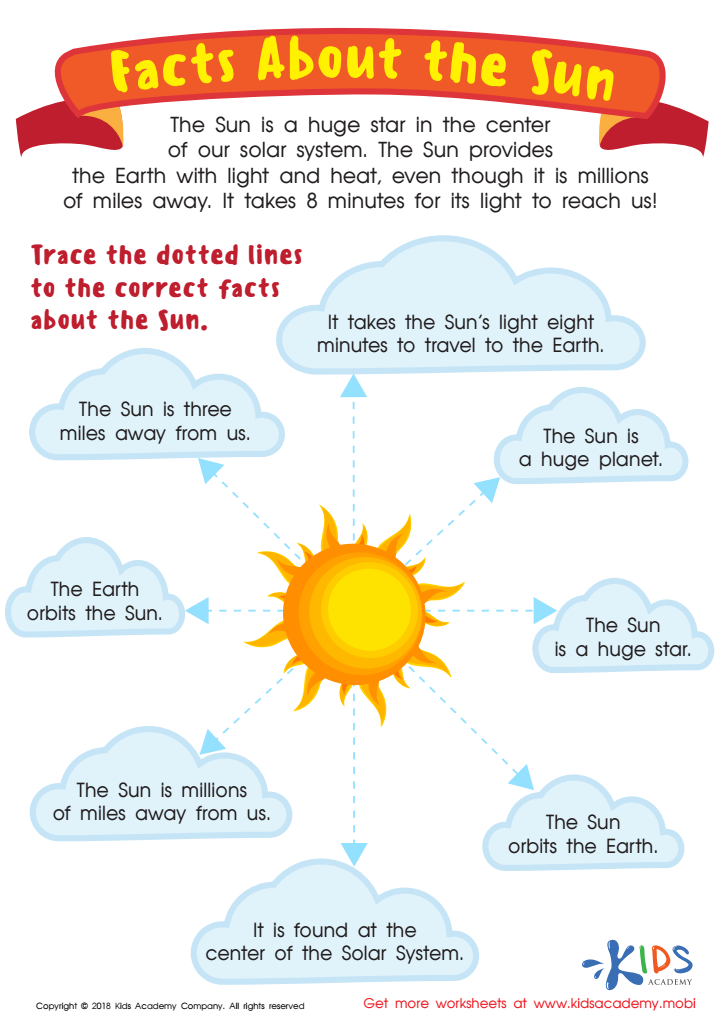
Facts About the Sun Worksheet
 Assign to My Students
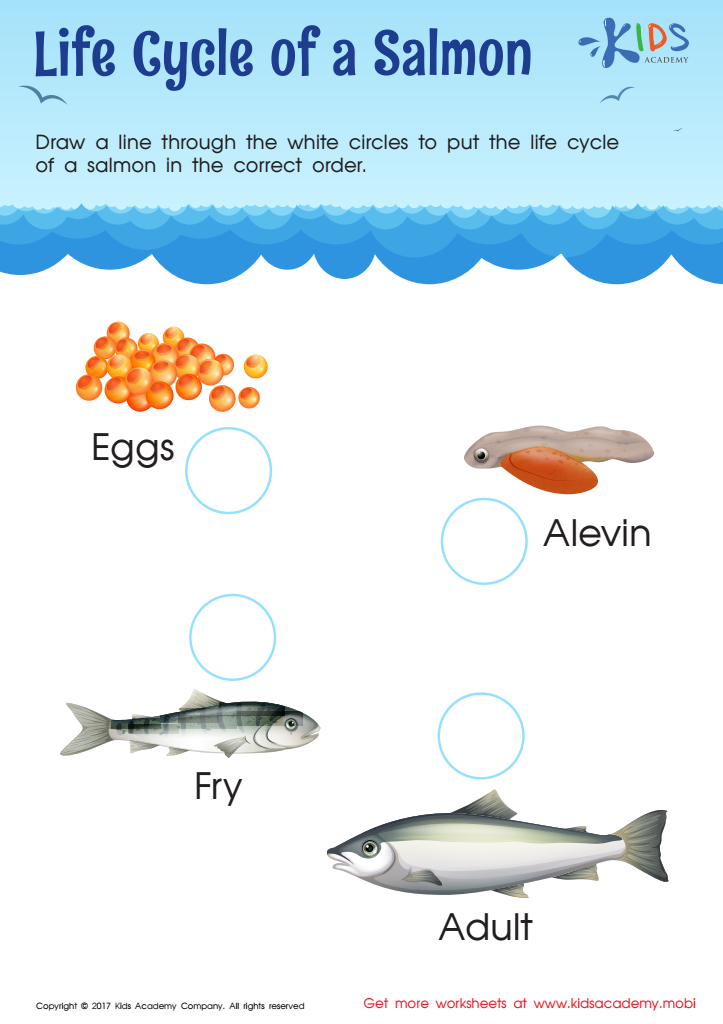
Cycle Of Salmon Worksheet
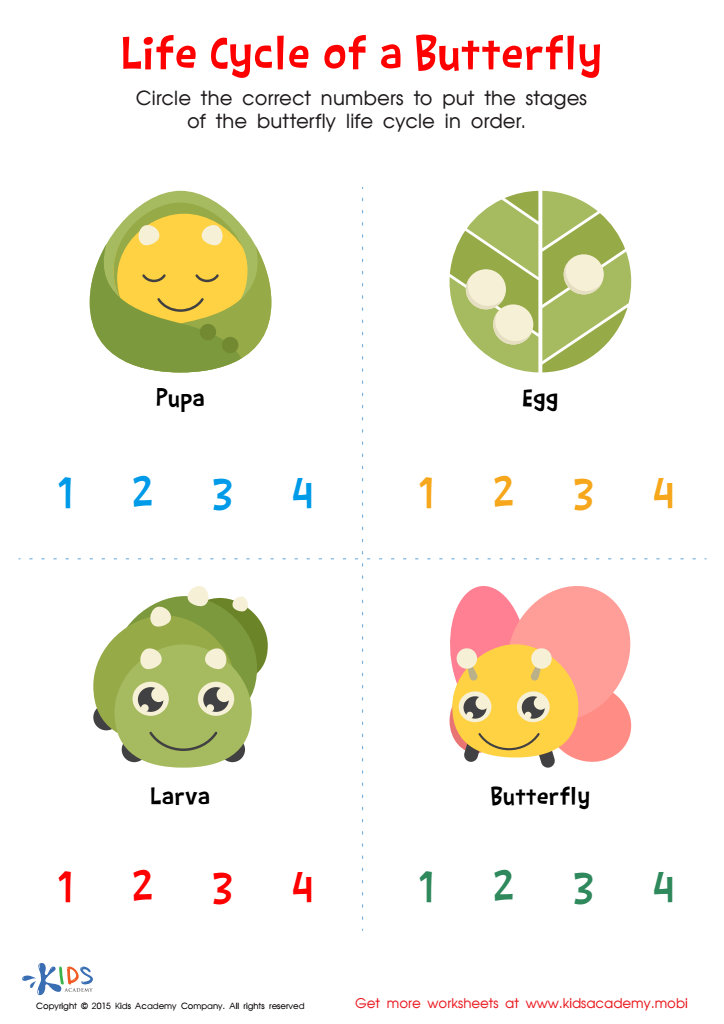
Life Cycle of Butterfly Printable
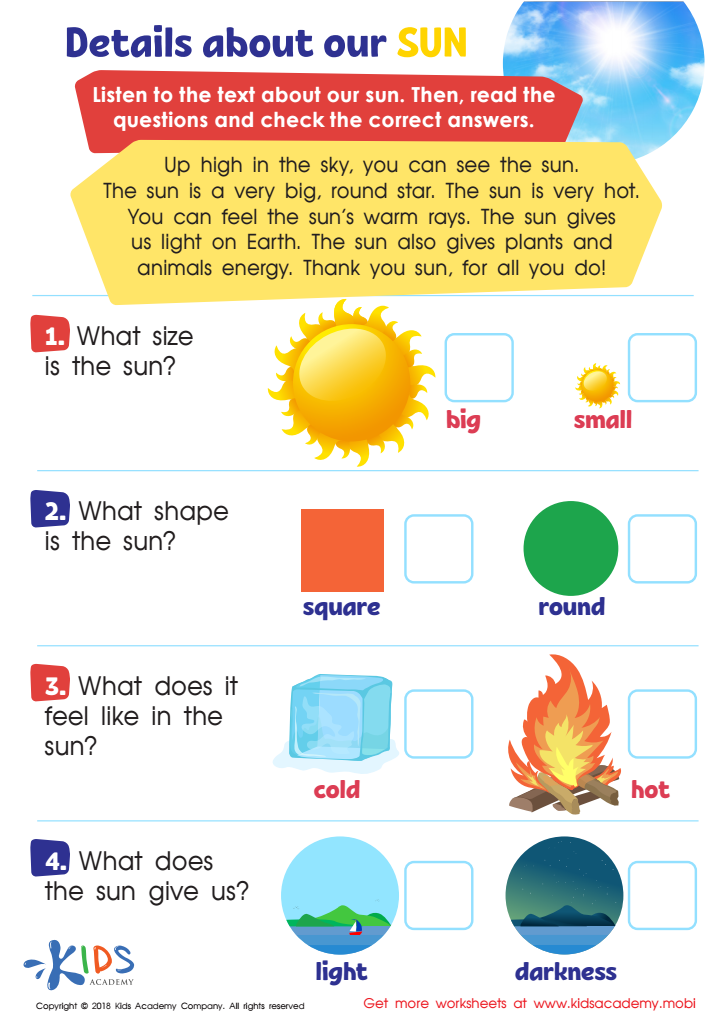
Details About Our Sun Worksheet








Expanding science vocabulary for children aged 3-7 is crucial for their cognitive and linguistic development. At this young age, children are naturally curious about the world around them, and introducing scientific terms enhances their ability to articulate observations, ask questions, and engage in discussions. A rich vocabulary allows them to express complex thoughts and emotions, leading to better comprehension of science concepts.
Additionally, scientific literacy is foundational for future learning. When children are exposed to science vocabulary early on, they build confidence in their abilities to understand and explore scientific principles. This not only fosters a love for science but also prepares them for more advanced concepts in later schooling.
Moreover, parents and teachers play a vital role in this vocabulary expansion. They can engage children through hands-on activities, storytelling, and playful interactions that incorporate science terms. This not only supports language development but also encourages critical thinking and inquiry skills. The use of interactive and context-rich learning experiences helps make vocabulary acquisition meaningful and memorable.
In essence, nurturing science vocabulary lays the groundwork for lifelong learning, curiosity, and a deeper understanding of the world, making it essential for both parents and educators to prioritize this aspect of early education.








