Syllable identification Normal Worksheets for Ages 3-7
4 filtered results
-
From - To
Our Syllable Identification Normal Worksheets are designed specifically for children aged 3-7. These engaging and educational printable worksheets help young learners develop crucial early literacy skills by teaching them how to identify and count syllables in simple words. The activities are colorful, interactive, and age-appropriate, making learning fun and effective. Whether your child is just beginning their reading journey or looking to reinforce their phonological awareness, our syllable identification worksheets provide a strong foundation. Perfect for home or classroom use, these resources offer a delightful way to support your child's language development! Download now and watch your child's confidence soar.
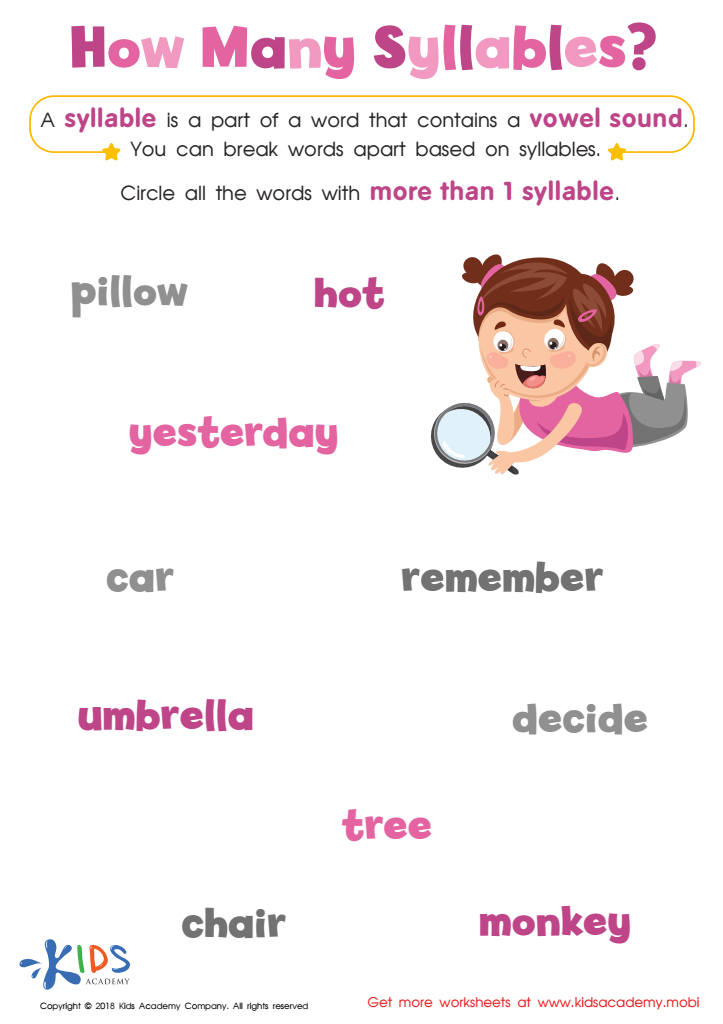
Reading: How Many Syllables Worksheet
 Assign to My Students
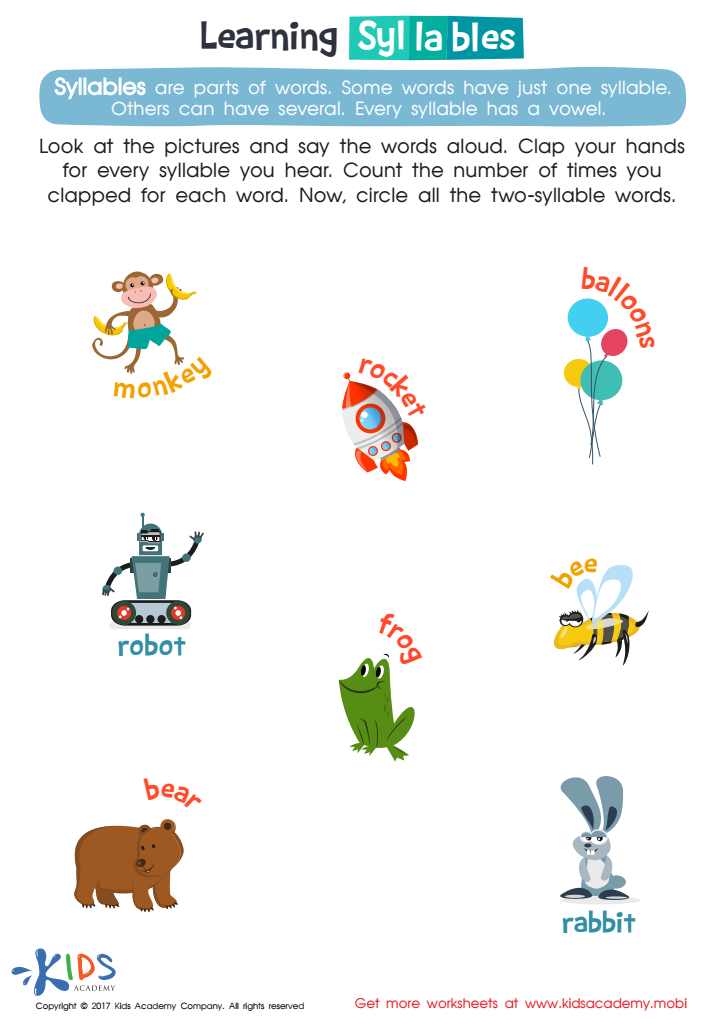
Learning Syllables Word Structure Worksheet
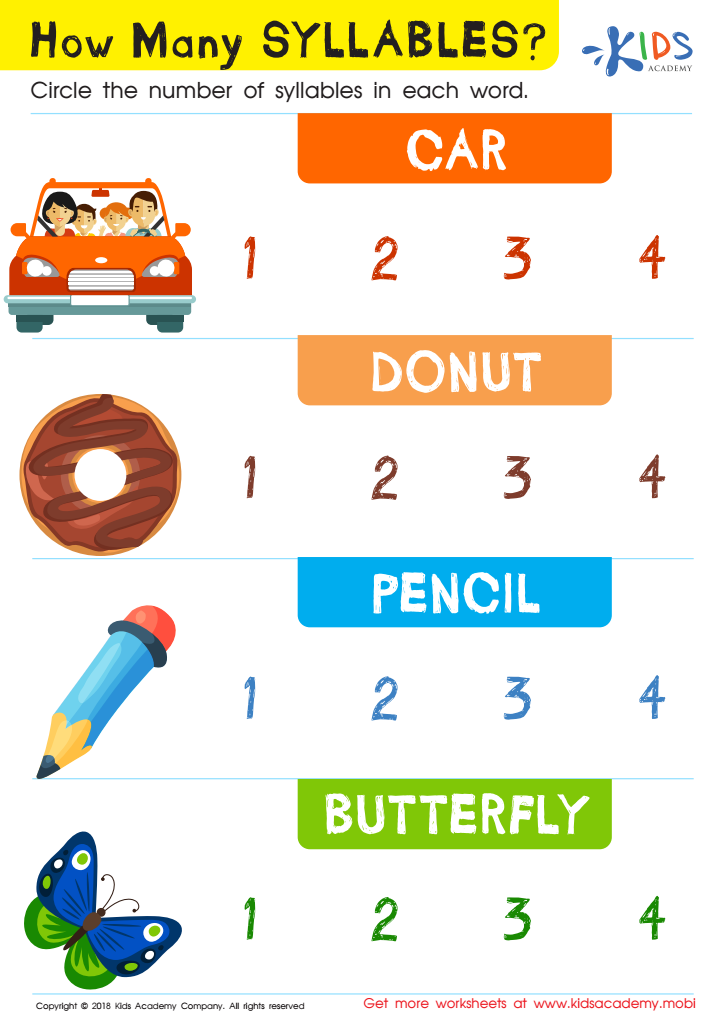
How Many Syllables? Worksheet
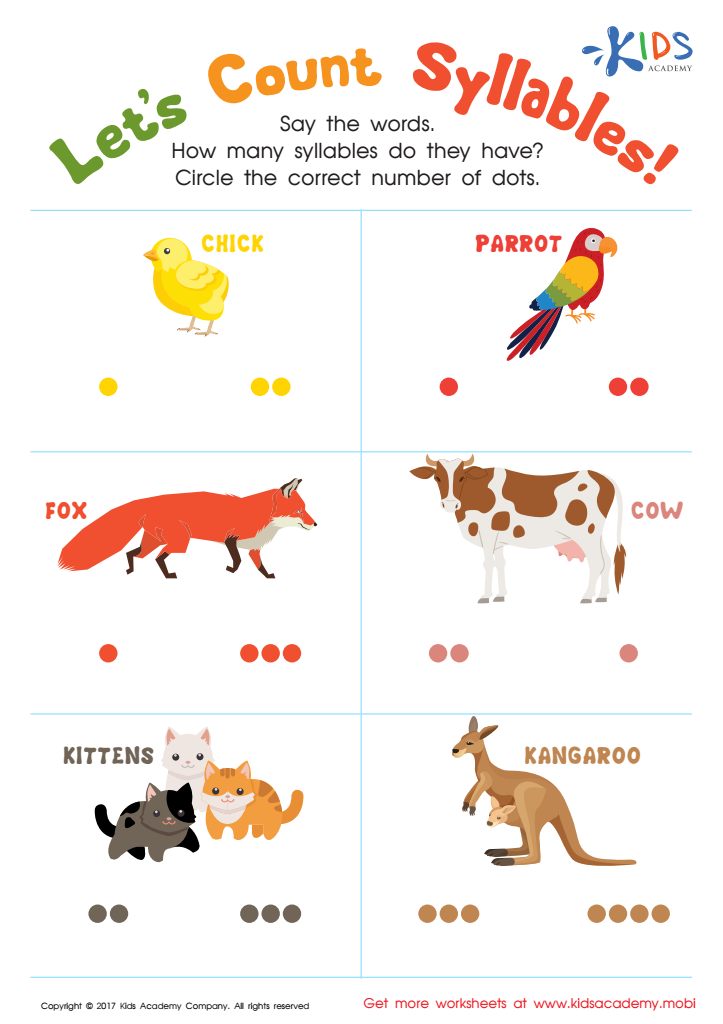
Lets Count Syllables Worksheet








Syllable identification is an essential foundational skill in early literacy development, providing a crucial stepping stone for young children aged 3-7 as they begin their journey in reading and writing. When parents and teachers focus on helping children identify syllables, they are fostering an awareness of the structure and rhythm of language, which is vital for phonological awareness—a key predictor of future reading success.
Intuitively grasping syllables aids children in breaking down words into manageable parts, making it easier for them to decode unfamiliar words and improve their spelling. This skill not only bolsters their reading fluency but also enhances their pronunciation and vocabulary as they become more comfortable manipulating different parts of words. Understanding syllable patterns and structures can lead to better word recognition and spelling efficacy, which are critical steps in developing overall literacy.
Moreover, engaging in syllable activities can be fun and interactive, reinforcing a child's love for language and learning. Through clapping hands, tapping beats, or using visual aids, educators and parents can create an effective and enjoyable learning experience. Prioritizing syllable identification supports cognitive development and forms a strong foundation for more complex linguistic abilities, ensuring children are well-prepared for future academic challenges.








