
Understanding context Normal Worksheets for Ages 3-7
5 filtered results
Difficulty Level
Grade
Age
-
From - To
Subject
Activity
Standards
"Understanding Context Normal Worksheets for Ages 3-7" offer a fun and engaging way for young learners to master the art of context comprehension. These worksheets are meticulously crafted to suit the developmental stages of children between ages 3 and 7, featuring age-appropriate activities and colorful illustrations. Kids will enhance their critical thinking and reading comprehension skills through exercises that require them to infer meaning from pictures, sentences, and short stories. Empower your child with the ability to understand and deduce context effectively, setting a strong foundation for future language and learning skills. Perfect for both classroom and at-home learning.
Favorites
With answer key
Interactive
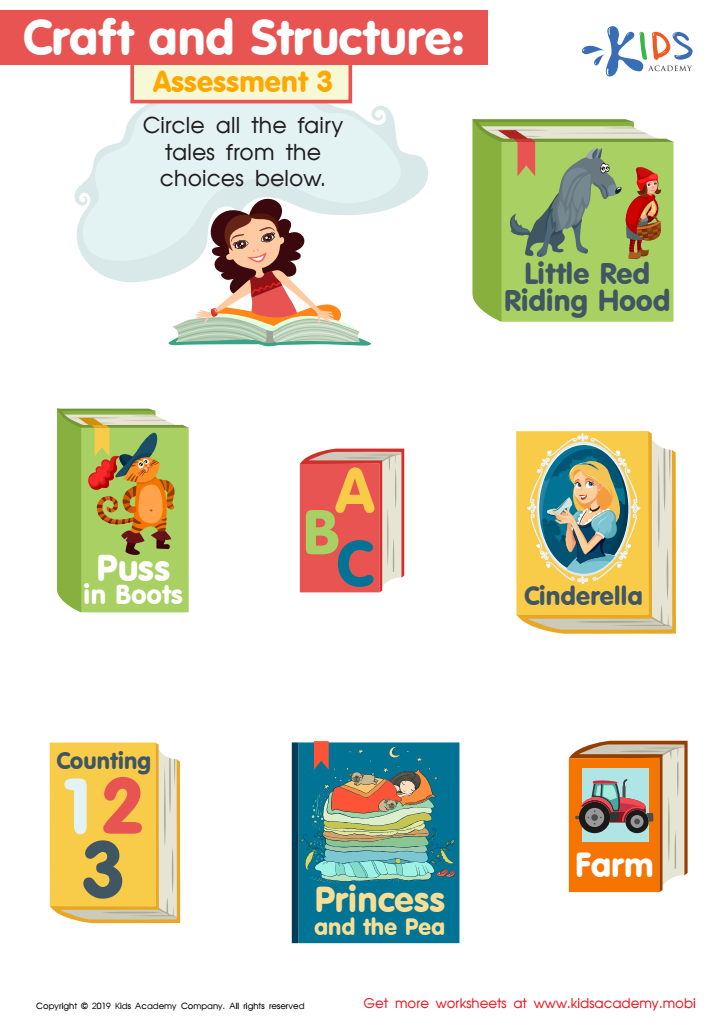
Craft and Structure: Assessment 3 Worksheet
Before starting the worksheet, ask your kids to recall their favorite bedtime stories. What characters and events can they remember? Four popular children's stories are hidden among pictures of other objects - help them search and circle the fairy tales in this PDF.
 Assign to My Students
Craft and Structure: Assessment 3 Worksheet
Worksheet
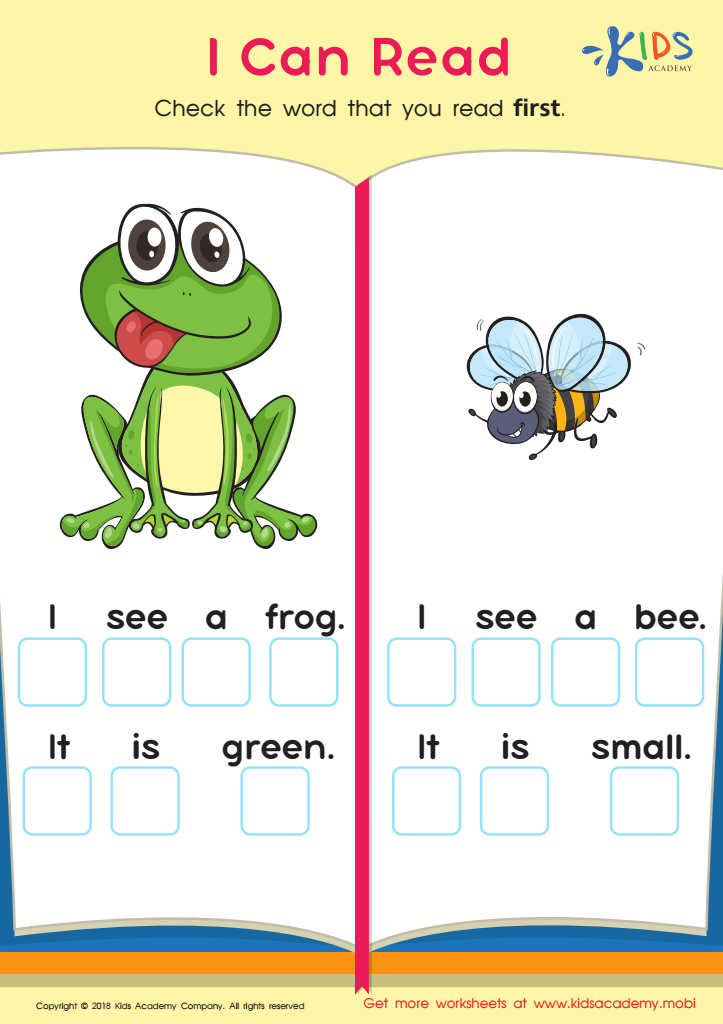
I Can Read Worksheet
Test your child's reading skills with this fun worksheet. See how well they know one-letter, two-letter, and five-letter words. Ask your little one to read the sentences and tick the word they identify first. It's a great way to track their progress and help them become more confident readers.
I Can Read Worksheet
Worksheet
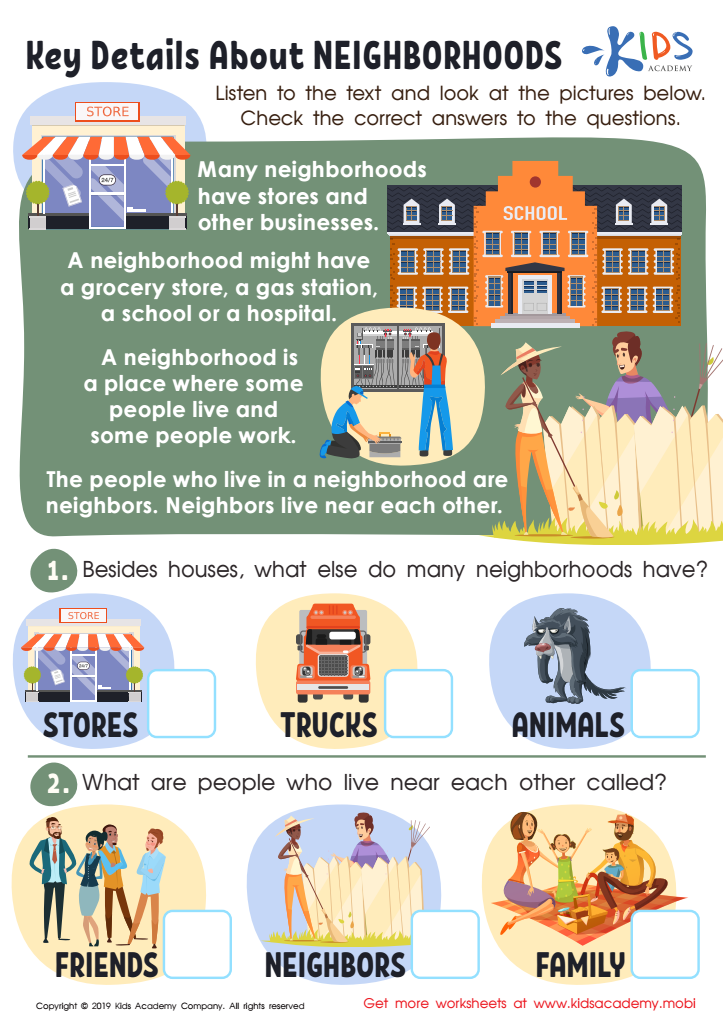
Key Details Neighborhoods Worksheet
This worksheet helps your child strengthen reading comprehension by teaching them to pull out key details and store them in their memory. It includes words and pictures that demonstrate how the two can work together to create better understanding. As they learn about a neighborhood, they'll practice these skills by answering comprehension questions.
Key Details Neighborhoods Worksheet
Worksheet
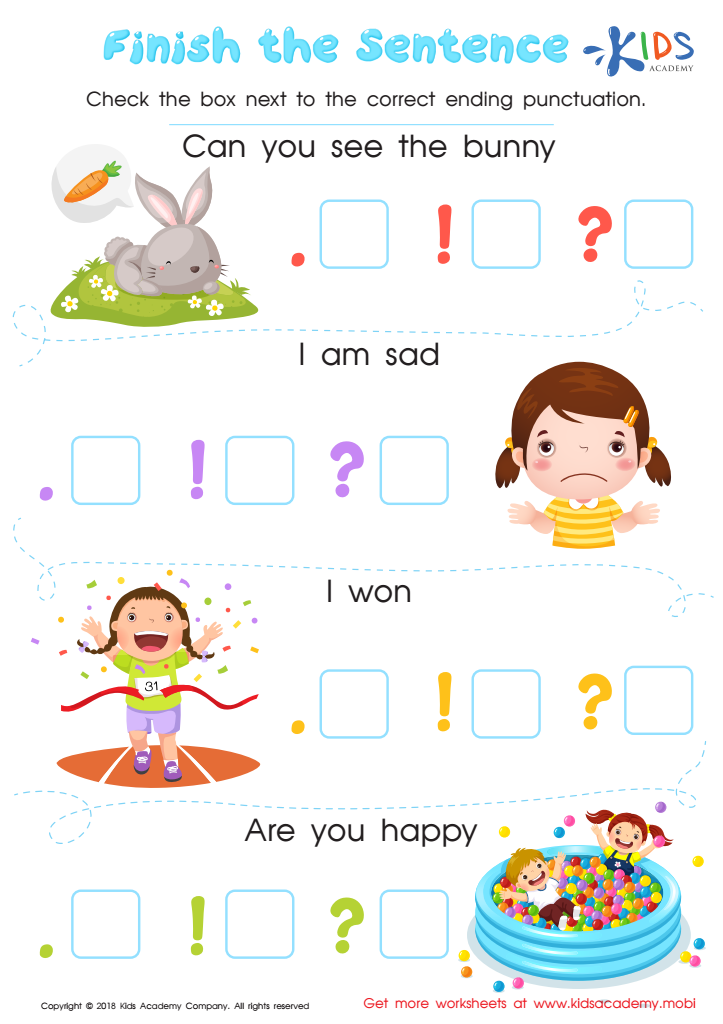
Finish the Sentence Worksheet
If your students have difficulty with punctuation, have them read sentences aloud and check the box next to the correct ending punctuation with this simple worksheet. Punctuation signals the tone and meaning of sentences. It helps students understand what is being communicated.
Finish the Sentence Worksheet
Worksheet
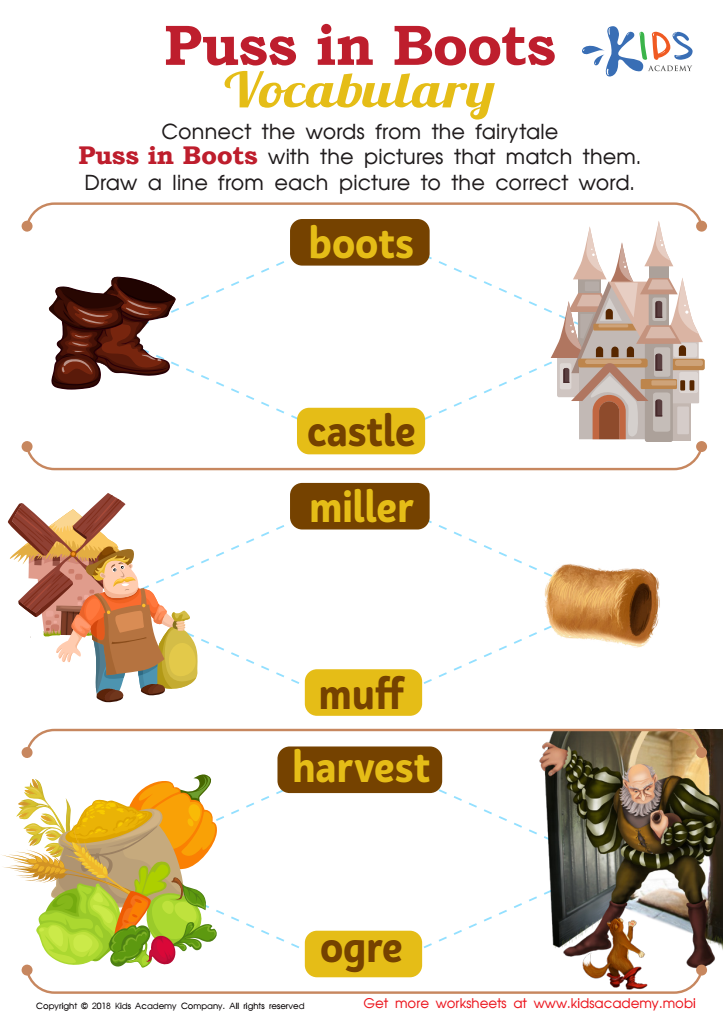
Puss in Boots Vocabulary Worksheet
Let your kids enjoy story-telling while learning at the same time. Help them learn from the fairytale, Puss in Boots, by connecting words from the worksheet with the matching pictures. Ask them to draw a line between each picture and corresponding word to build their vocabulary.
Puss in Boots Vocabulary Worksheet
Worksheet
Join Kids Academy for Free
Who is primarily going to use this learning content?








Understanding context is essential for parents and teachers who work with children ages 3-7 because it significantly impacts their cognitive and social development. During these formative years, children are constantly learning about the world around them, and context helps them make sense of what they see, hear, and experience.
Context guides children in understanding the meaning and relevance of words, phrases, and actions in different settings. For instance, recognizing that a word like "bat" can refer to a flying mammal in one context and a piece of sports equipment in another is crucial for language development. Moreover, context helps children interpret social cues and behaviors, which is vital for building relationships and navigating social environments.
By understanding the norms and expectations of various contexts, children learn appropriate behaviors suitable for different situations—whether it’s sharing toys during playtime or listening quietly during storytime. This understanding fosters adaptability and emotional intelligence, making children more confident and competent in various environments.
Parents and teachers who emphasize the importance of contextual understanding also help children develop critical thinking and problem-solving skills. Recognizing contextual clues enhances their ability to draw inferences, understand narratives, and predict outcomes, thereby forming a solid foundation for future academic and social success.








