Understanding history Normal Worksheets for Ages 3-7
3 filtered results
-
From - To
"Understanding History Normal Worksheets for Ages 3-7" offers engaging and educational activities tailored for young learners. These printable worksheets from Kids Academy help children grasp essential historical concepts through age-appropriate exercises and interactive tasks. Designed to develop a foundational understanding of history, the materials cover various topics and encourage curiosity and critical thinking. Ideal for both parents and educators, these worksheets provide a fun way to introduce young children to the past while building important learning skills. Download and explore a wealth of resources to make history fascinating and accessible for your little ones.
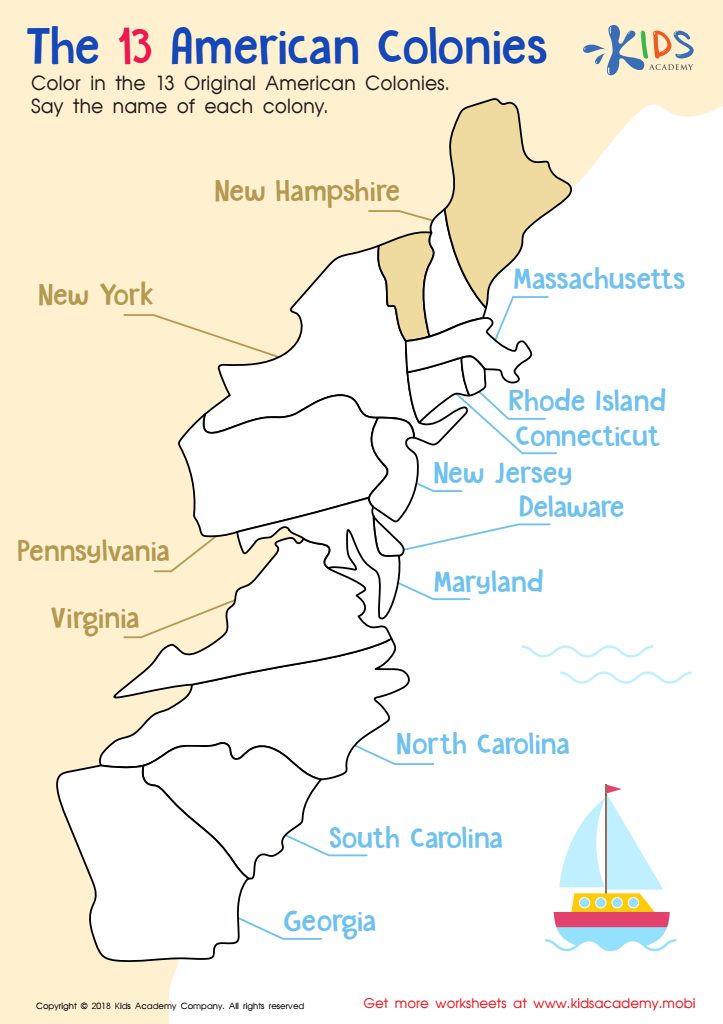
The 13 American Colonies Worksheet
 Assign to My Students
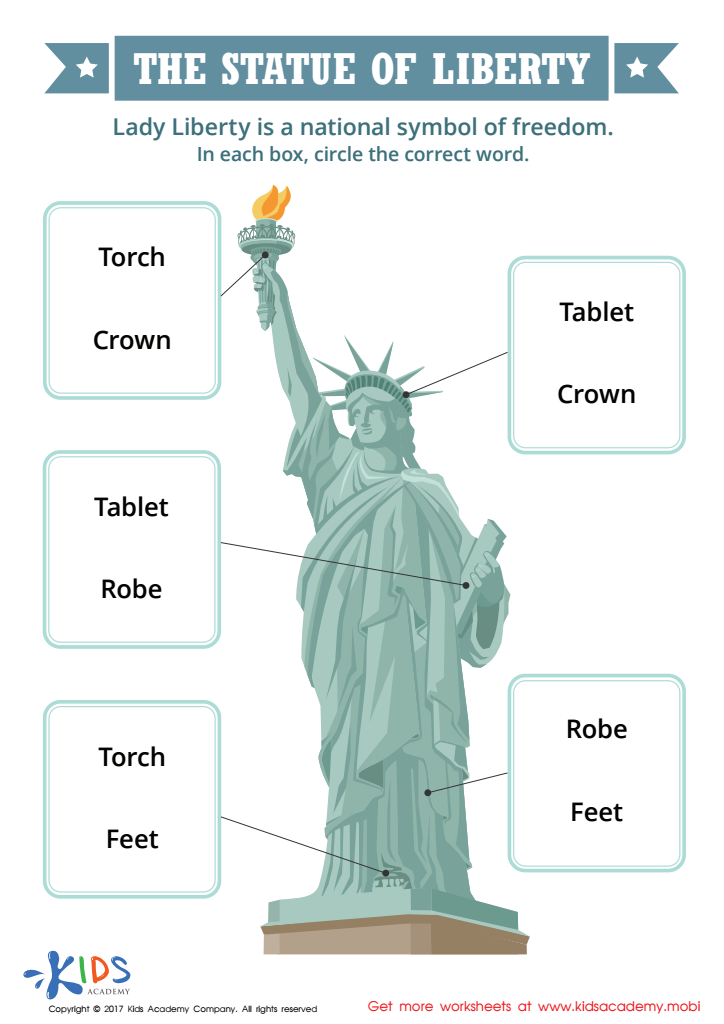
The Statue of Liberty Printable
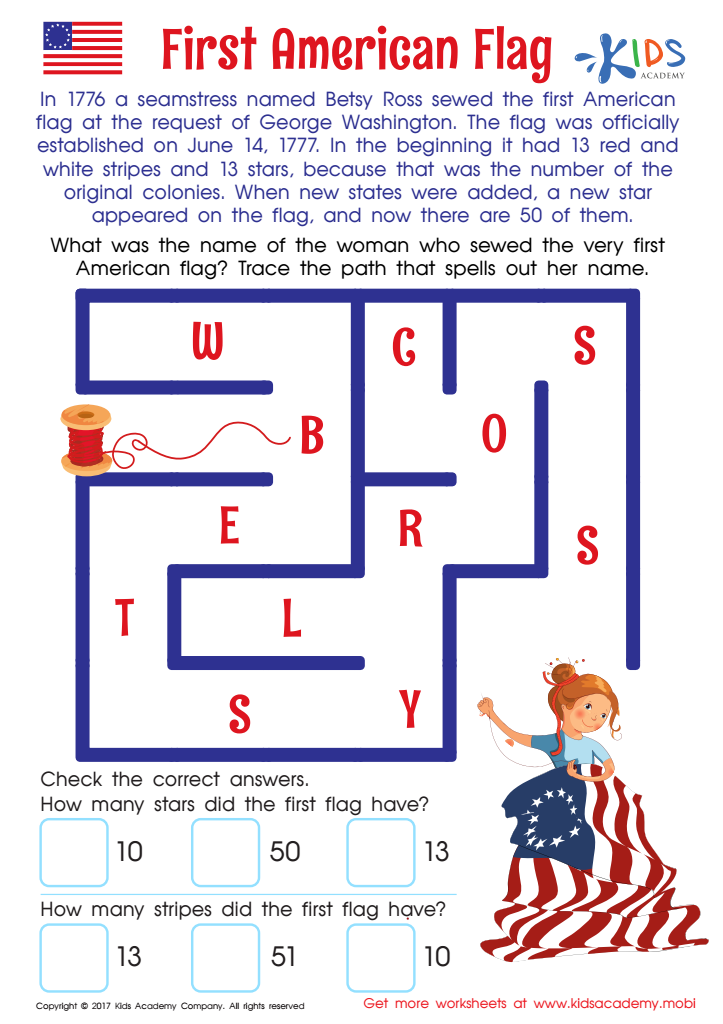
First American Flag Worksheet






Understanding history, even in a basic form, is highly beneficial for children ages 3-7 as it lays the foundation for cognitive and social development. Teaching history at an early age helps children comprehend time and sequence, fostering key skills like critical thinking and problem-solving. For instance, understanding the concept of "past, present, and future" assists young minds in grasping more complex academic concepts later on.
Furthermore, historical tales and anecdotes, when simplified, can ignite curiosity and imagination, encouraging a lifelong love of learning. Additionally, history often involves stories of diverse cultures and traditions, which can cultivate empathy, tolerance, and an appreciation for diversity in young children. This can be especially crucial in today’s globally interconnected world.
Similarly, historical narratives often include moral lessons about courage, justice, and responsibility. By understanding these narratives, children can develop strong ethical values and social awareness. Teachers and parents who integrate history into early education are also helping children form connections between their own experiences and the wider world, fostering a sense of identity and belonging.
In summary, incorporating history into the early learning curriculum goes beyond mere knowledge acquisition; it significantly contributes to the holistic development of young children, setting a strong developmental path for academic and social competence.








