Understanding plant growth Normal Worksheets for Ages 3-7
3 filtered results
-
From - To
Explore the wonders of nature with our "Understanding Plant Growth" Normal Worksheets, designed specifically for children ages 3-7. These educational resources aim to engage young learners in the fascinating world of plants, helping them discover how seeds grow into leaves and flowers through interactive activities. Our worksheets incorporate colorful illustrations and simple explanations, making learning both fun and comprehensible. Perfect for home or classroom use, these printables encourage curiosity about the environment, instilling a love for nature. Foster early science skills in your child while sparking their imagination and creativity with these delightful and informative worksheets on plant growth!
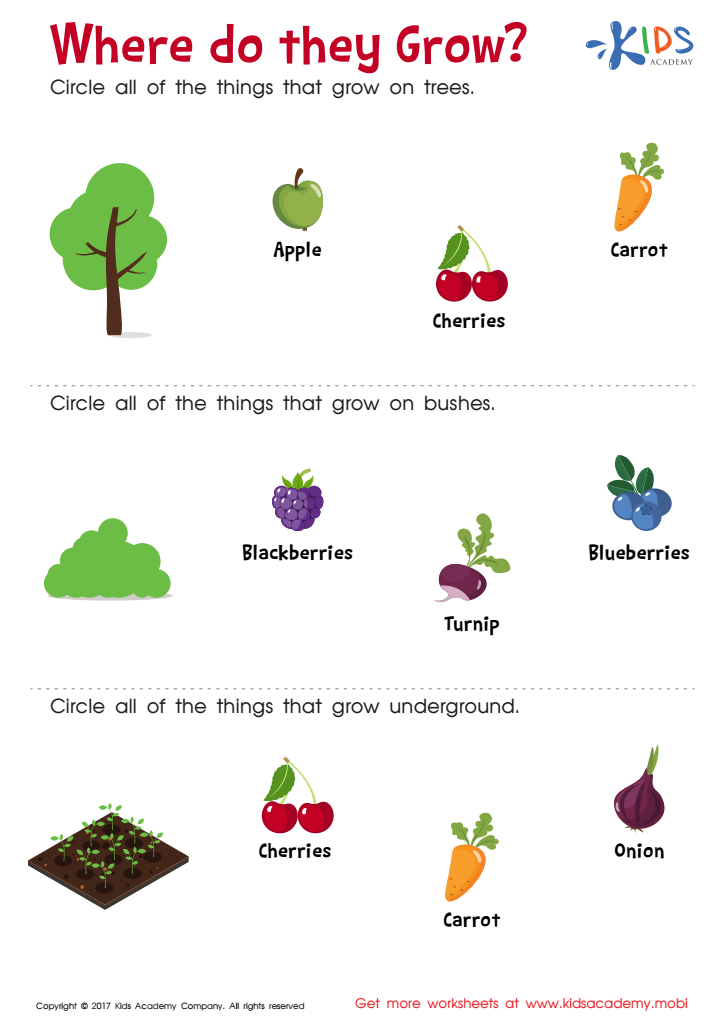
Where Do They Grow Worksheet
 Assign to My Students
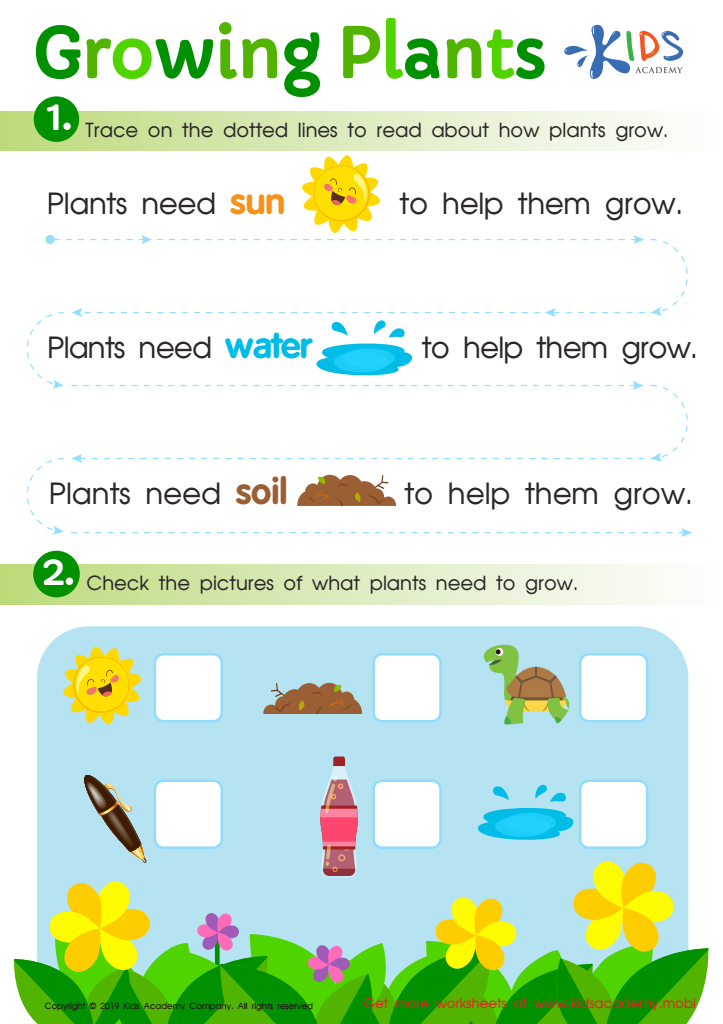
Growing Plants Worksheet
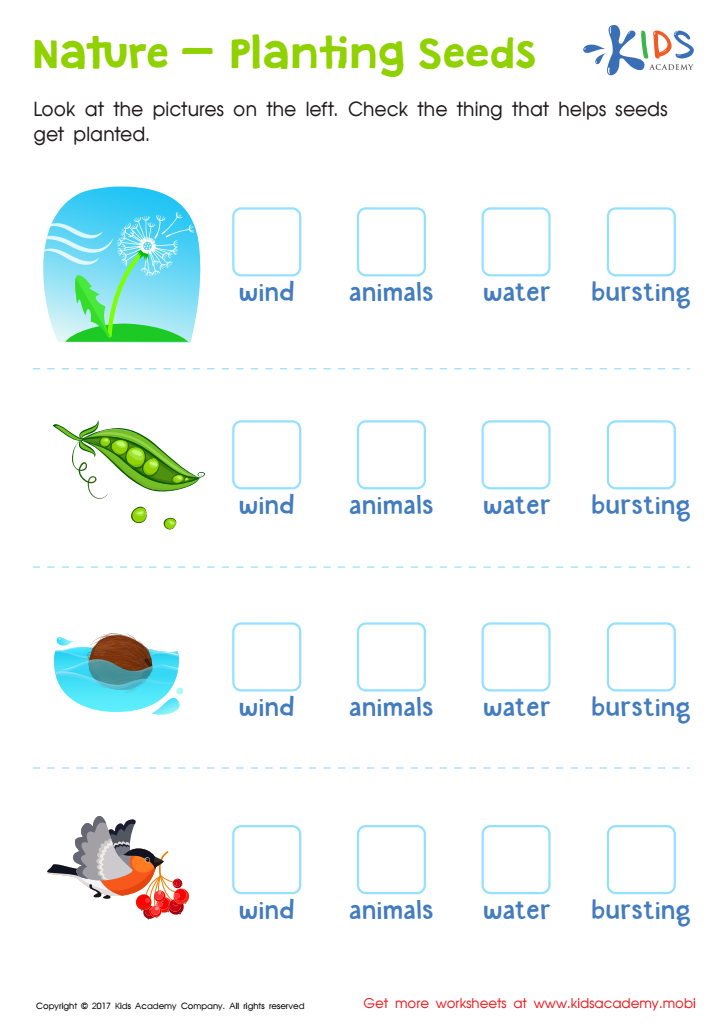
Nature Planting Seeds Worksheet








Understanding plant growth is crucial for children aged 3-7 as it lays the foundation for their appreciation of nature and awe of science. At this age, children are naturally curious about the world around them, and introducing them to the process of plant growth helps satisfy that curiosity. Engaging with plants allows children to explore basic concepts such as living things, their needs, and the environment.
Furthermore, learning about plants encourages responsibility and nurturing skills, as children observe the effects of their care and attention on a living organism. This hands-on experience enhances fine motor skills through activities such as planting seeds, watering plants, and measuring growth.
Additionally, discussing plant growth can promote an understanding of key ecological concepts, such as food chains, photosynthesis, and the importance of green spaces for our ecosystem, fostering respect for nature and sustainability. Simple gardening activities can also be integrated into lessons, creating an enjoyable learning experience that reinforces concepts of science, literacy, and numeracy.
Overall, understanding plant growth cultivates a sense of curiosity, responsibility, and environmental awareness, making it essential for parents and teachers to introduce and nurture this concept during the early educational years.








