Understanding prefixes Normal Worksheets for Ages 3-7
4 filtered results
-
From - To
Our "Understanding Prefixes" printable worksheets are designed for children ages 3-7, supporting early learning and foundational language skills. These engaging, colorful activities help young learners grasp the basics of prefixes while enhancing vocabulary, reading comprehension, and critical thinking. Ideal for preschool and primary students, the worksheets include a variety of exercises that make learning prefixes enjoyable and effective. By incorporating fun and easy-to-follow tasks, like matching and fill-in-the-blanks, children can develop a strong understanding of how prefixes modify word meanings. These worksheets are perfect for at-home practice, classroom activities, or supplementary learning.
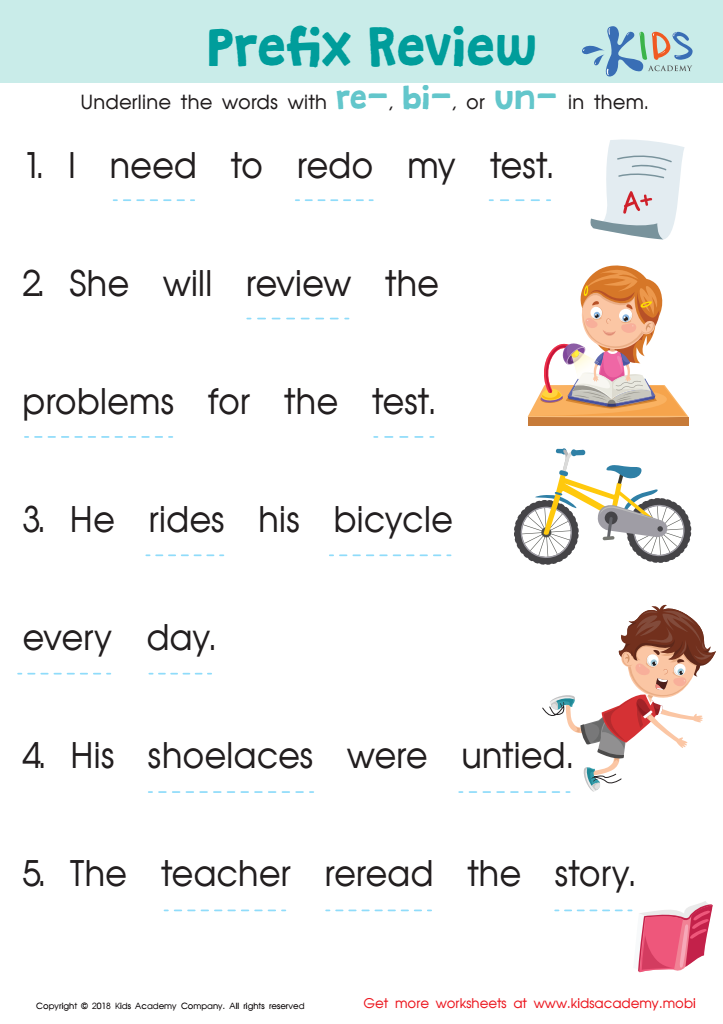
Prefix Review Worksheet
 Assign to My Students
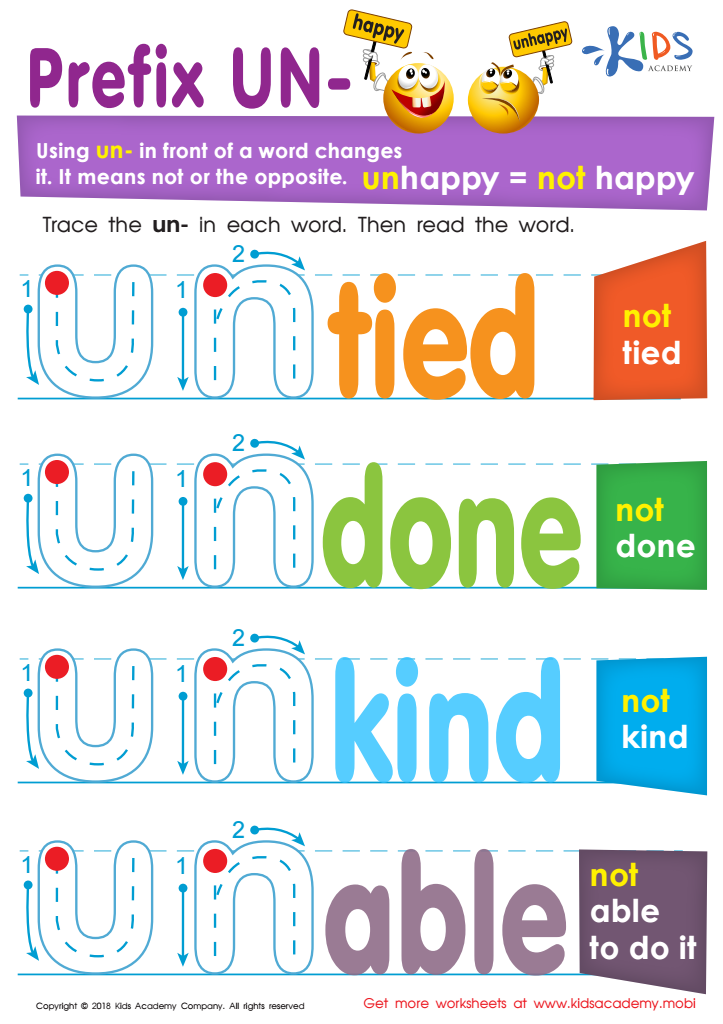
Prefix Un- Worksheet
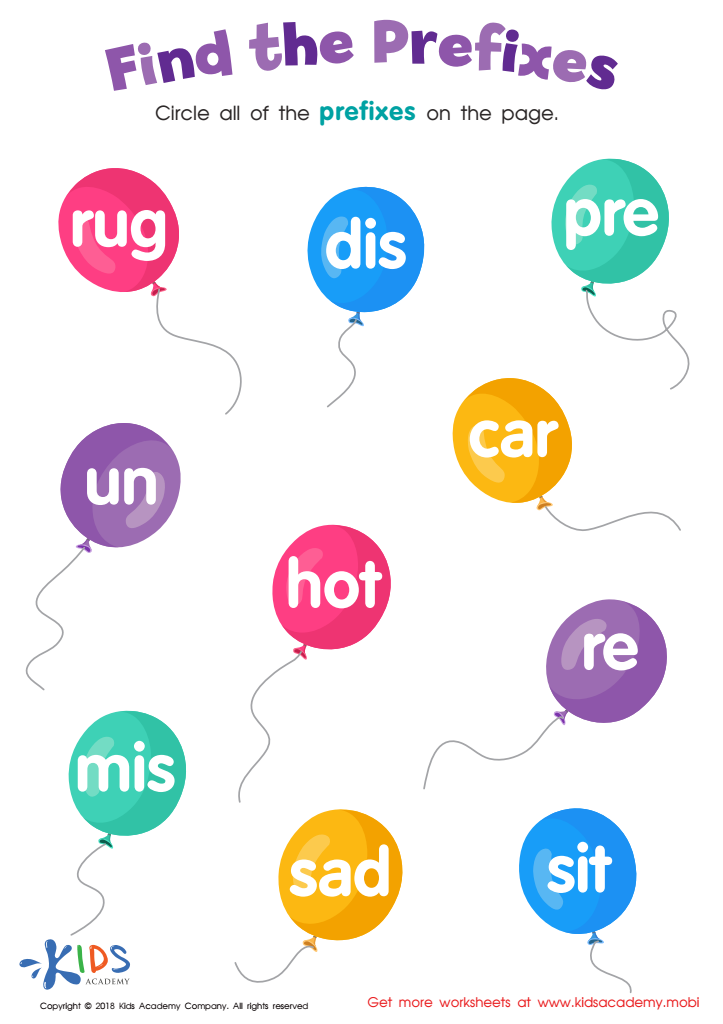
Reading: Find the Prefixes Worksheet
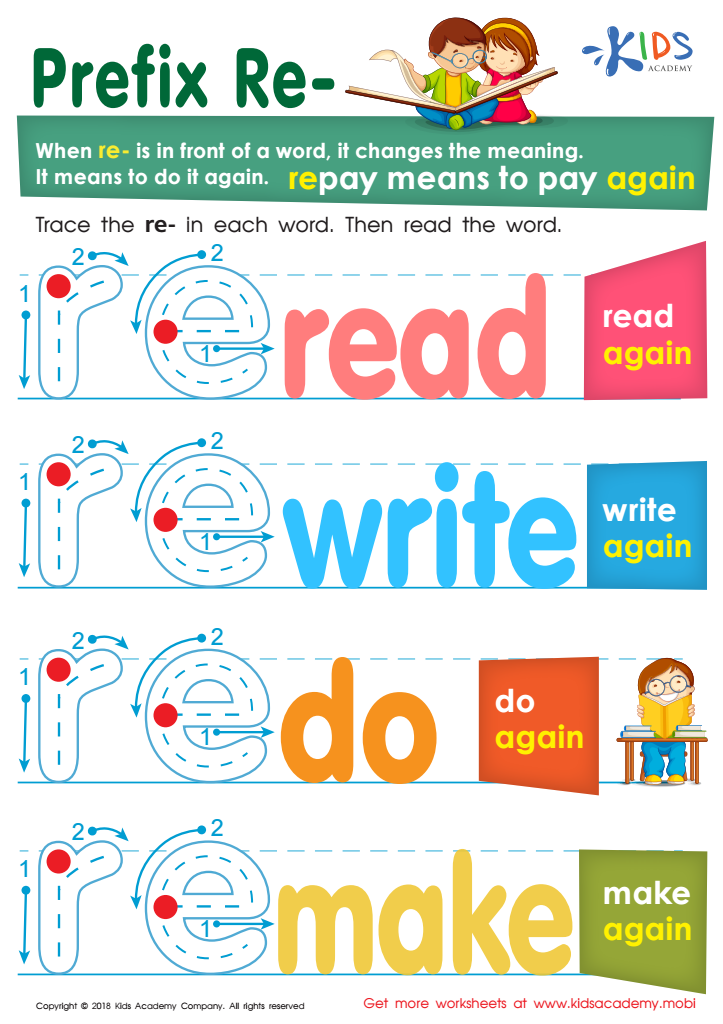
Prefix Re- Worksheet








Understanding prefixes is essential for young children's language development and literacy skills. At ages 3-7, children are in a critical period of vocabulary acquisition, and learning about prefixes can significantly enhance their word comprehension and reading abilities.
Prefixes are like building blocks that, when added to the base words, change the meaning and extend the vocabulary. For example, understanding that 'un-' can turn 'happy' into 'unhappy' helps children grasp more complex concepts easily. This kind of word play boosts their cognitive flexibility, allowing them to decode new words and appreciate the nuanced meanings without always needing to memorize individual words.
Moreover, early exposure to prefixes lays the foundation for future learning. In the higher grades, students will encounter more complex texts, where recognizing prefixes will aid in the interpretation of unfamiliar words, thus making them more confident readers.
For teachers and parents, incorporating prefix learning into daily language activities can make a huge difference. Simple practices like prefix games or reading books with a focus on prefixed words can be both educational and fun. This can also foster a child's curiosity, making learning an enjoyable and continuous process.
In essence, mastering prefixes equips children with critical linguistic tools, setting them on a path to academic success and effective communication.








