
Word Formation Normal Worksheets for Ages 3-7
3 filtered results
Difficulty Level
Grade
Age
-
From - To
Subject
Activity
Standards
Discover our engaging "Word Formation Normal Worksheets" designed for children ages 3-7! These thoughtfully crafted activities help young learners grasp the building blocks of language. Through fun, interactive exercises, kids will practice blending sounds, forming words, and expanding their vocabulary. Ideal for both classroom and home settings, these worksheets support early literacy and cognitive development. Each page is thoughtfully designed to captivate and educate, making the learning process both enjoyable and effective. Unlock your child's language potential with our vibrant and educational worksheets today! Explore now and give your little ones a head start in mastering word formation.
Favorites
With answer key
Interactive
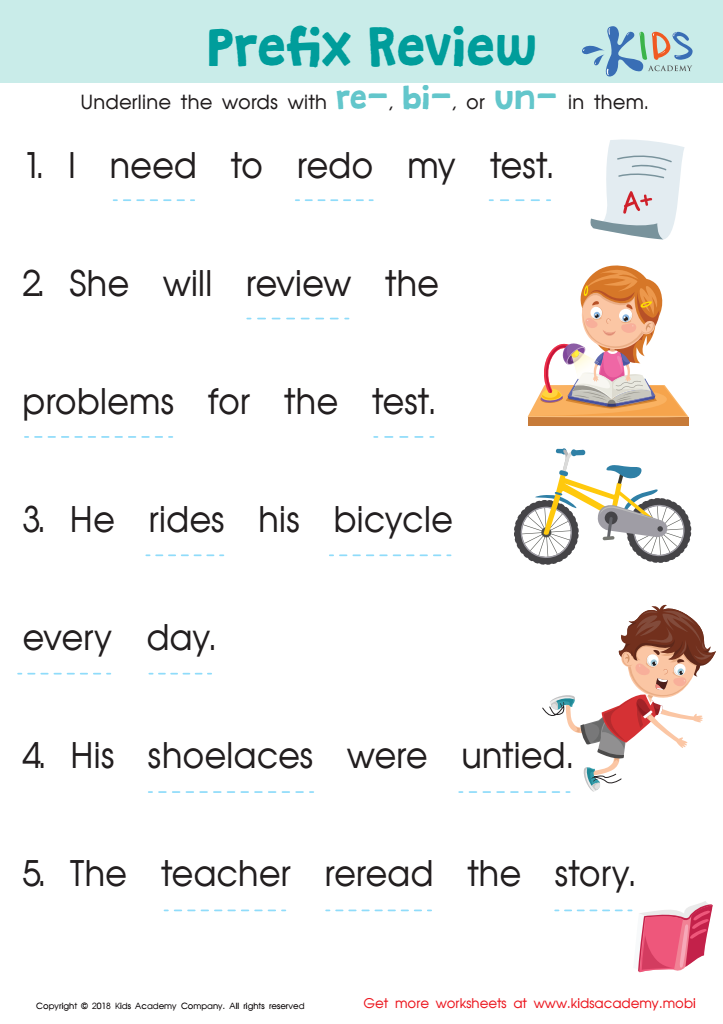
Prefix Review Worksheet
Learning prefixes is key for effective communication. Help your child master re-, bi-, and un- with a Kids Academy worksheet. Ask them to go through each sentence, underlining words with one of the prefixes. This will help them appreciate how prefixes alter the meaning of a root word.
 Assign to My Students
Prefix Review Worksheet
Worksheet
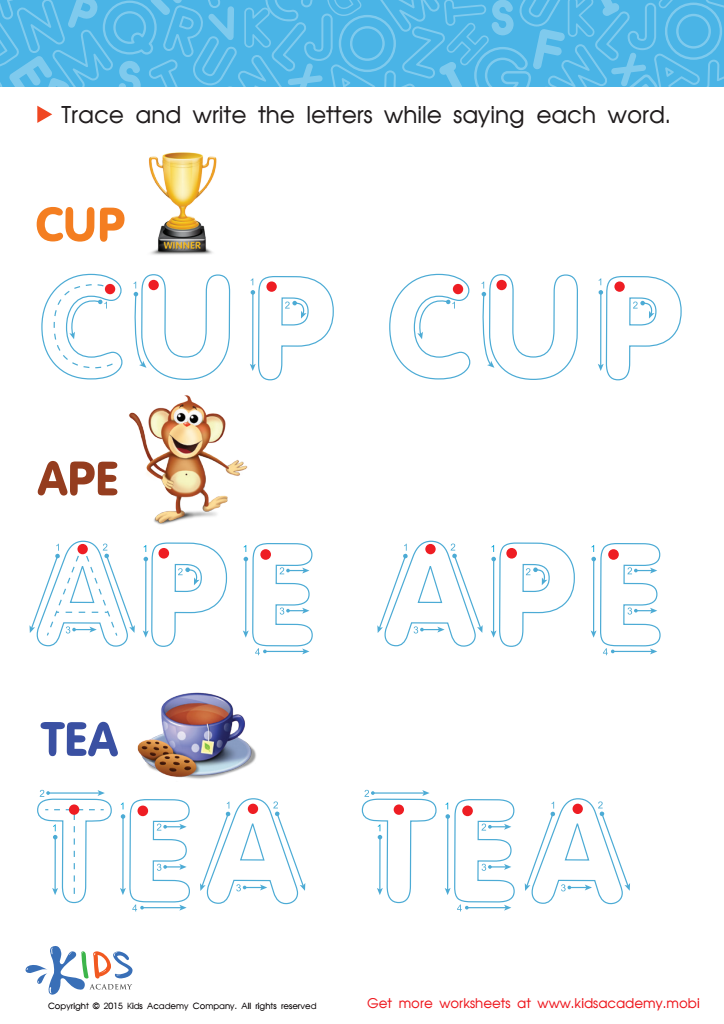
A Cup, an Ape and Tea Spelling Worksheet
Check out Kids Academy's new English vocab worksheet! You'll find three lines with three words each. Practice your pronunciation and writing by writing them one by one. We have more free spelling word worksheets on our website, so download and practice today!
A Cup, an Ape and Tea Spelling Worksheet
Worksheet
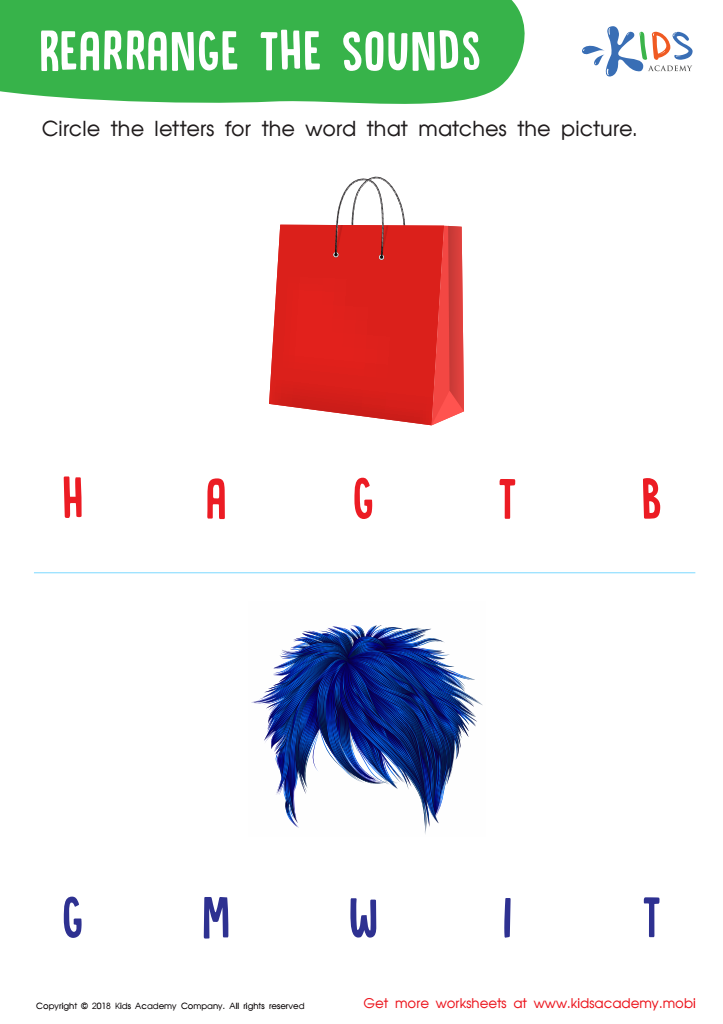
Rearrange the Sounds Worksheet
Ask students if they can identify the objects in the worksheet and spell the words. Guide them to find and circle the letters that match the picture. This exercise should be easy-peasy for advanced spellers.
Rearrange the Sounds Worksheet
Worksheet
Join Kids Academy for Free
Who is primarily going to use this learning content?




.jpg)


Word formation is a crucial aspect of language development, particularly for children aged 3-7, as these early years are foundational for communication and literacy skills. This period is marked by rapid growth in vocabulary and language comprehension, making it an essential time for children to learn how words are formed, including prefixes, suffixes, and root words. Proper understanding of word formation enables children to decode and construct new words, enhancing their reading and writing abilities.
Engaging with word formation activities helps children recognize patterns in language, which is vital for reading fluency and comprehension. It fosters curiosity and love for language, encouraging children to explore and play with words. This exploration supports cognitive development and sharpens problem-solving skills.
For parents and teachers, focusing on word formation normal aligns with guiding children towards effective communication. As children learn to combine word parts and understand their meanings, they develop better oral and written expression. This is fundamental in educational success across all subjects.
Moreover, a strong grasp of word formation in the early stages sets the groundwork for mastering more complex language and literacy skills in later years. Thus, parents and teachers play a pivotal role in nurturing this aspect of development, ultimately contributing to a child's overall academic achievement and confidence in communication.








