Basic Arithmetic Normal Addition & Subtraction Worksheets for Ages 3-7
6 filtered results
-
From - To
Welcome to our Basic Arithmetic Normal Addition & Subtraction Worksheets for Ages 3-7! Our engaging worksheets are designed to enhance early math skills through fun and interactive activities. Perfect for preschool and early elementary learners, these resources introduce fundamental addition and subtraction concepts in a visually appealing format. Each worksheet features colorful designs and age-appropriate exercises that help children develop confidence and proficiency in math. With a variety of difficulty levels, your child will enjoy hands-on practice that reinforces their learning. Explore our collection to support your child's journey in mastering basic arithmetic at home or in the classroom!
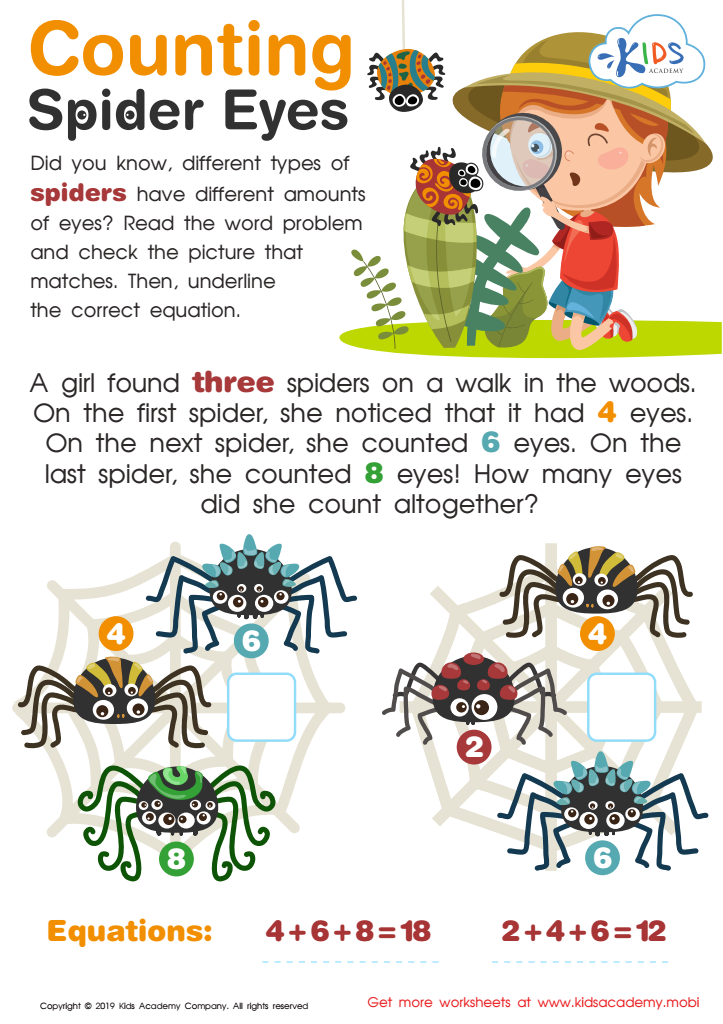
Counting Spider Eyes Worksheet
 Assign to My Students
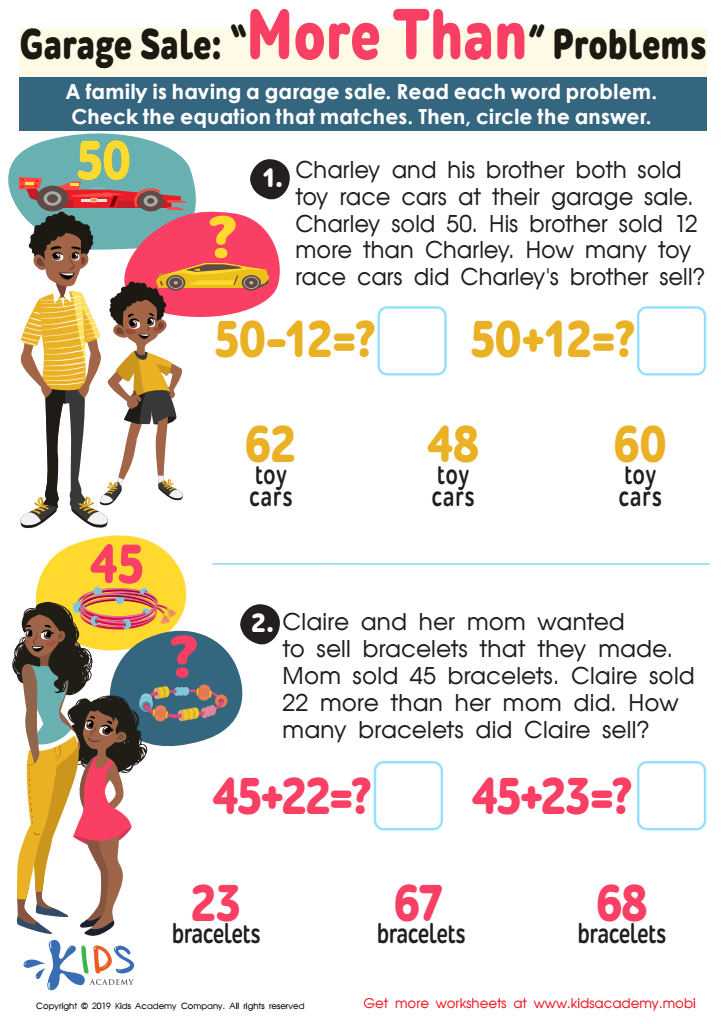
Garage Sale - More yhan Worksheet
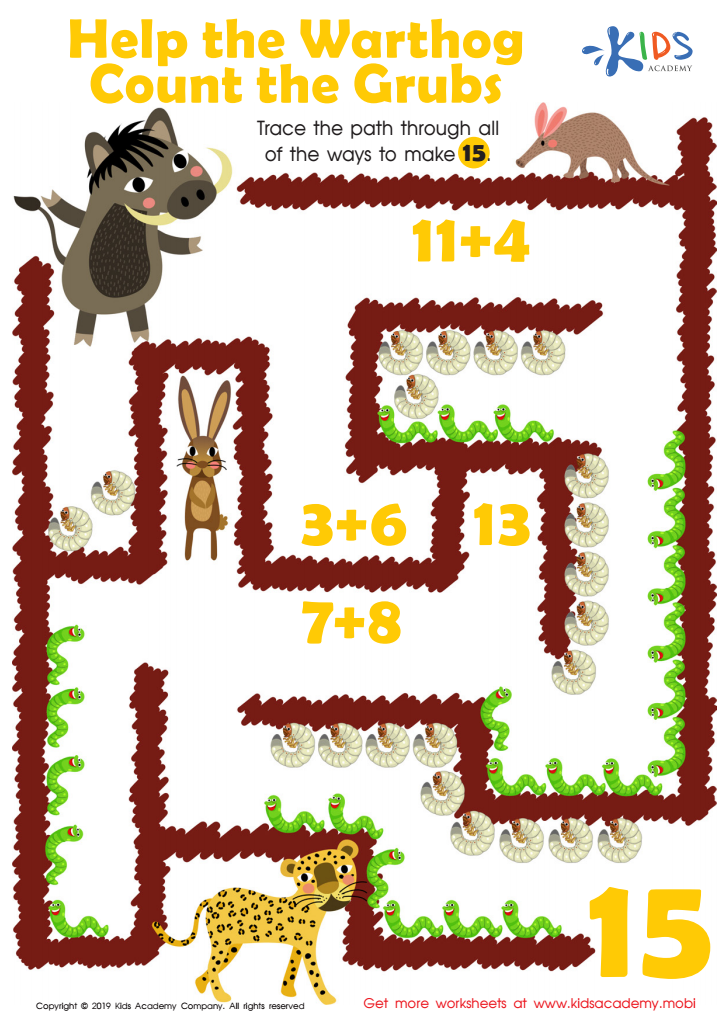
Help the Warthog Count the Grubs Worksheet
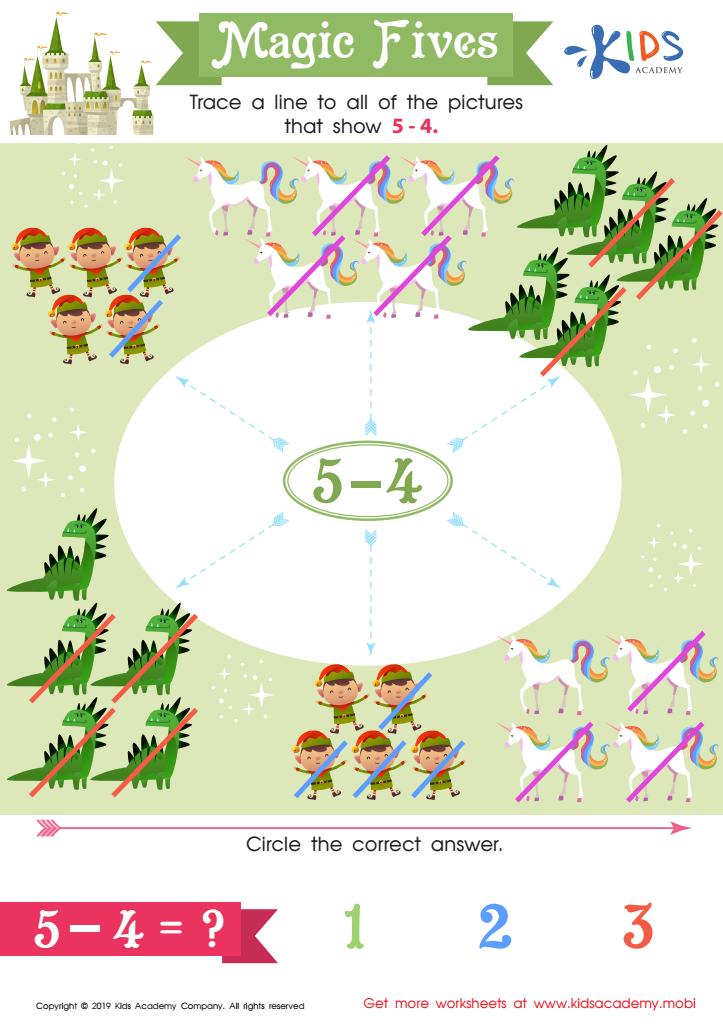
Magic Fives Worksheet
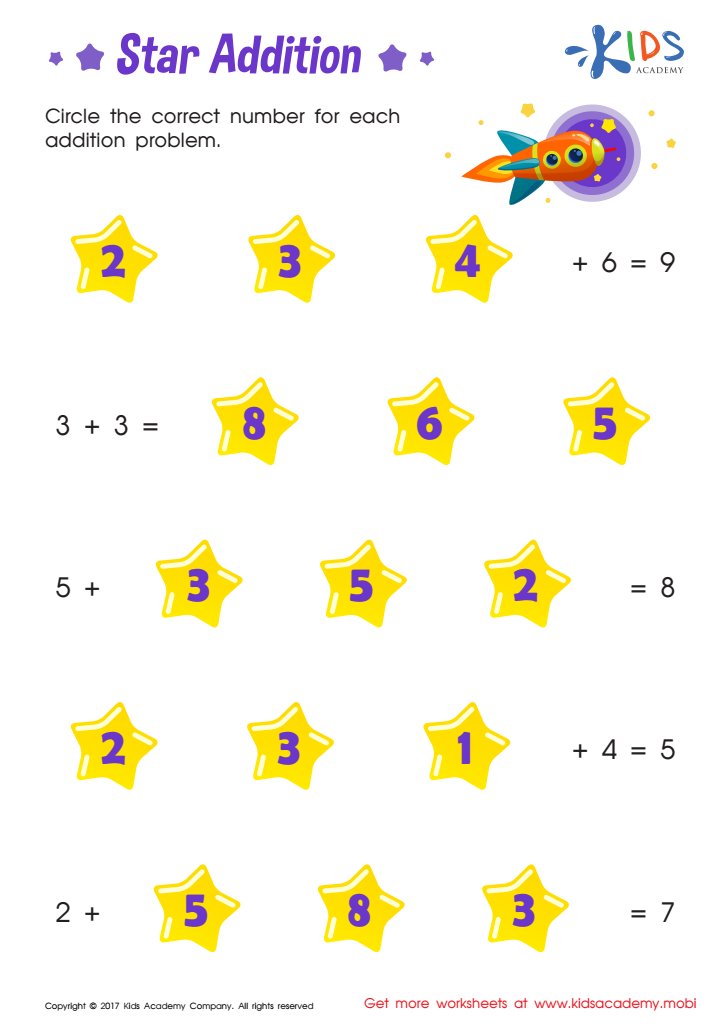
Star Addition Printable
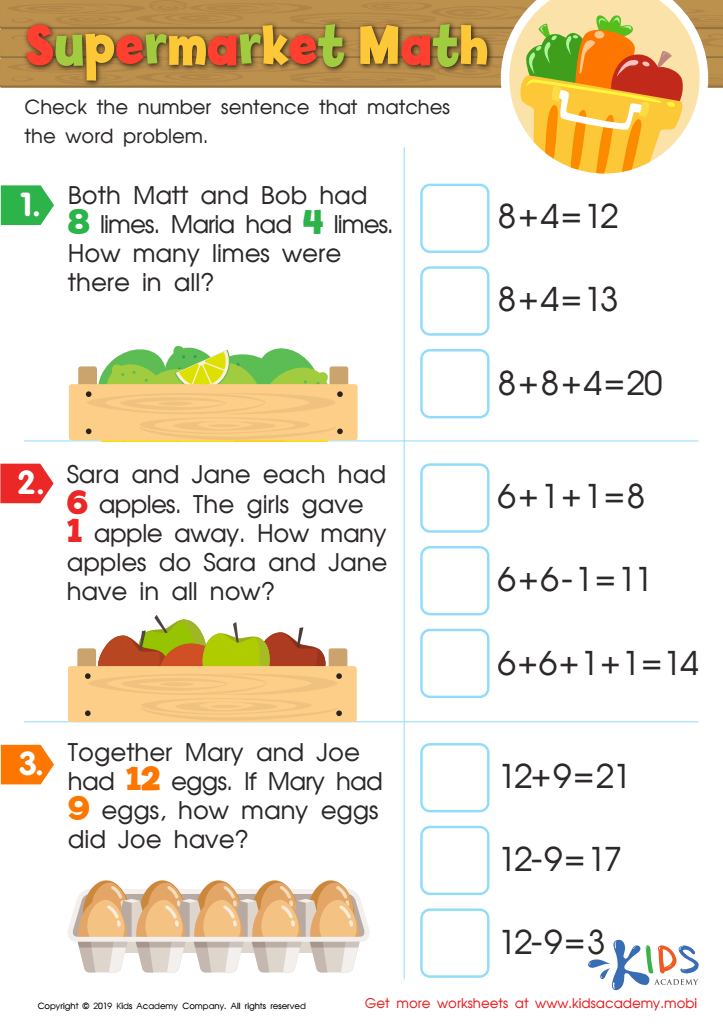
Supermarket Math Worksheet








Basic arithmetic, specifically normal addition and subtraction, is fundamental for children aged 3-7 as it forms the basis for their critical thinking and problem-solving skills. During these formative years, children develop cognitive abilities that impact their future academic success. Understanding addition and subtraction helps them grasp essential concepts of quantities, comparisons, and relationships in everyday situations.
Teaching children arithmetic facilitates their ability to link math with real-life scenarios, such as counting objects, sharing snacks, or understanding time. These early experiences cultivate a positive attitude towards math, countering common misconceptions that may arise later. By integrating arithmetic into daily activities, parents and teachers can make learning enjoyable and relevant, enhancing children's engagement and interest in the subject.
Moreover, foundational arithmetic skills lay the groundwork for more advanced mathematical concepts encountered in later grades. A strong grasp of addition and subtraction also supports literacy development, as children learn to follow instructions, analyze problems, and communicate solutions effectively.
Ultimately, fostering proficiency in basic arithmetic equips children with essential skills necessary for their overall development, making it crucial for parents and teachers to prioritize this aspect of learning in early childhood education.








