
Color Identification Normal Addition & Subtraction Worksheets for Ages 3-7
4 filtered results
Difficulty Level
Grade
Age
-
From - To
Subject
Activity
Standards
Discover the perfect resource for teaching young learners ages 3-7 with our Color Identification Normal Addition & Subtraction Worksheets. Designed to make math fun and engaging, these vibrant worksheets combine basic math skills with color identification activities. Children will enjoy solving simple addition and subtraction problems while enhancing their ability to recognize and associate colors. Ideal for preschool and early elementary students, our printable worksheets support cognitive development, fine motor skills, and foundational math understanding. Parents and teachers love the ease of use and effectiveness in promoting a love for learning. Transform math practice into a delightful adventure today!
Favorites
With answer key
Interactive
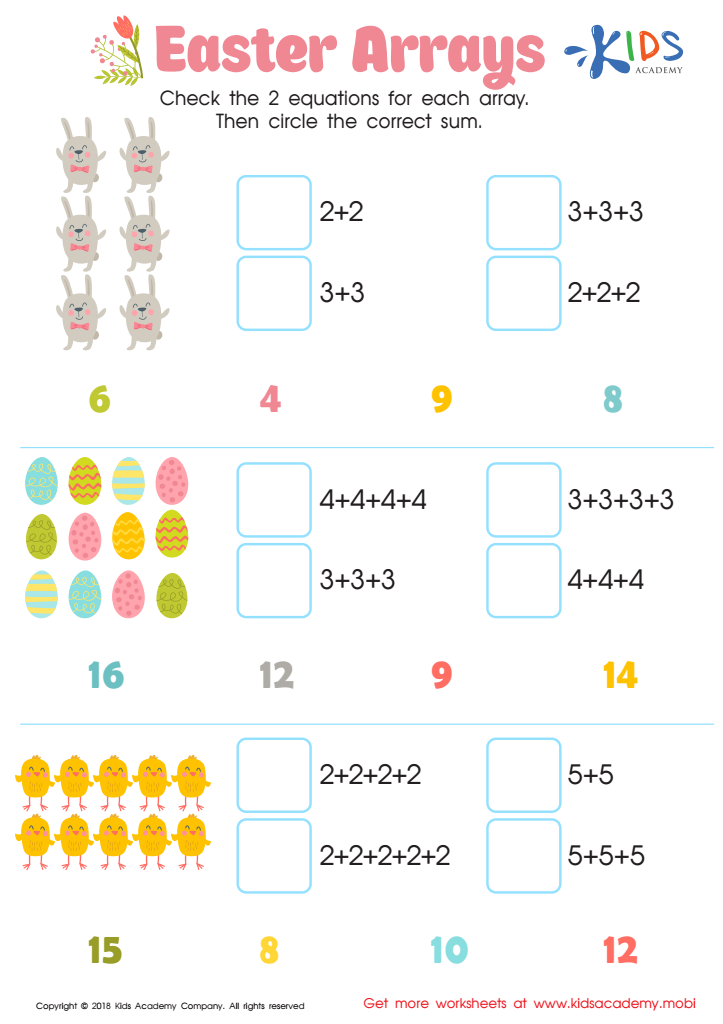
Easter Arrays Worksheet
Does your child love Easter? Do they adore the Easter bunny and egg hunts? Help them have fun with this worksheet! Go through it with them and check the equations for each array. Then, have them circle the correct sum. It's a great way to make the holiday extra exciting!
 Assign to My Students
Easter Arrays Worksheet
Worksheet
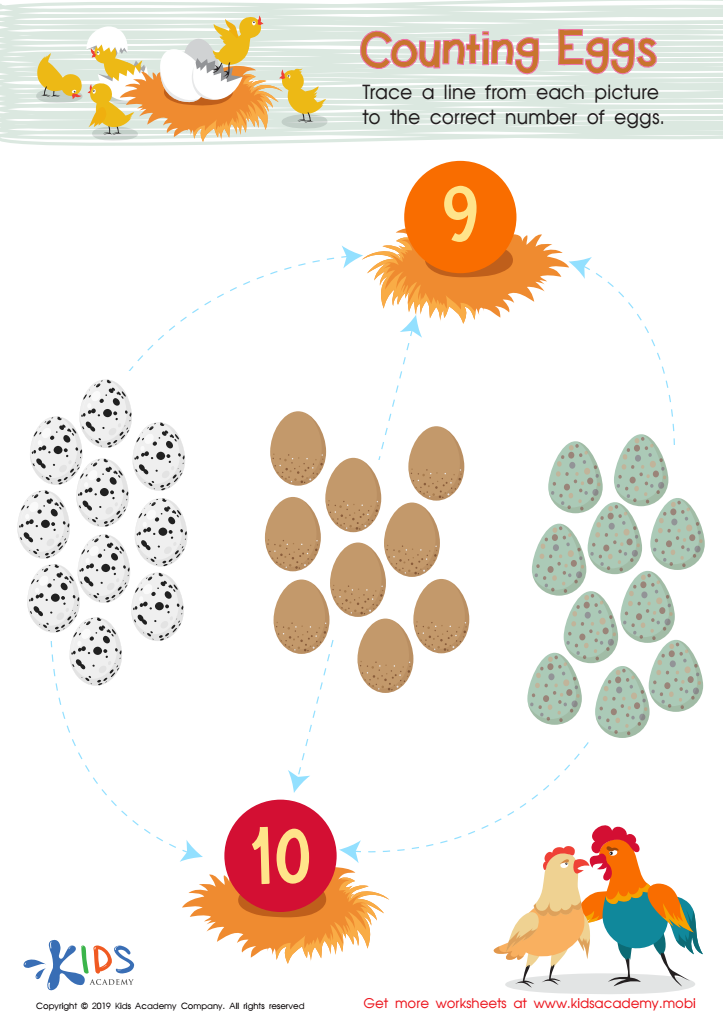
Counting Eggs Worksheet
This worksheet is great for teaching kindergarteners to count and add numbers. It includes colorful pictures of eggs with numbers to trace. Help students count the eggs and draw a line to the right number. This will make learning fun and easy!
Counting Eggs Worksheet
Worksheet
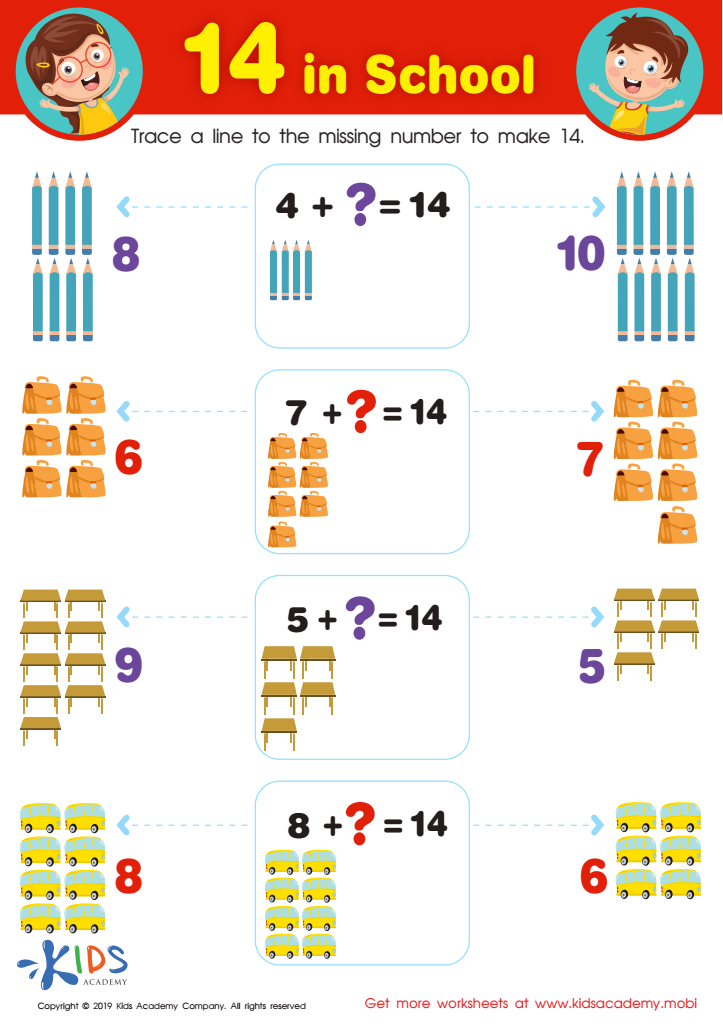
14 in School Worksheet
Remind your kids that adding different sets of numbers can give the same total (e.g. 2+3=5, 4+1=5). Ask them for more examples. Afterwards, work through the exercise. Help them count the objects and trace a line to the missing number that makes the total 14.
14 in School Worksheet
Worksheet
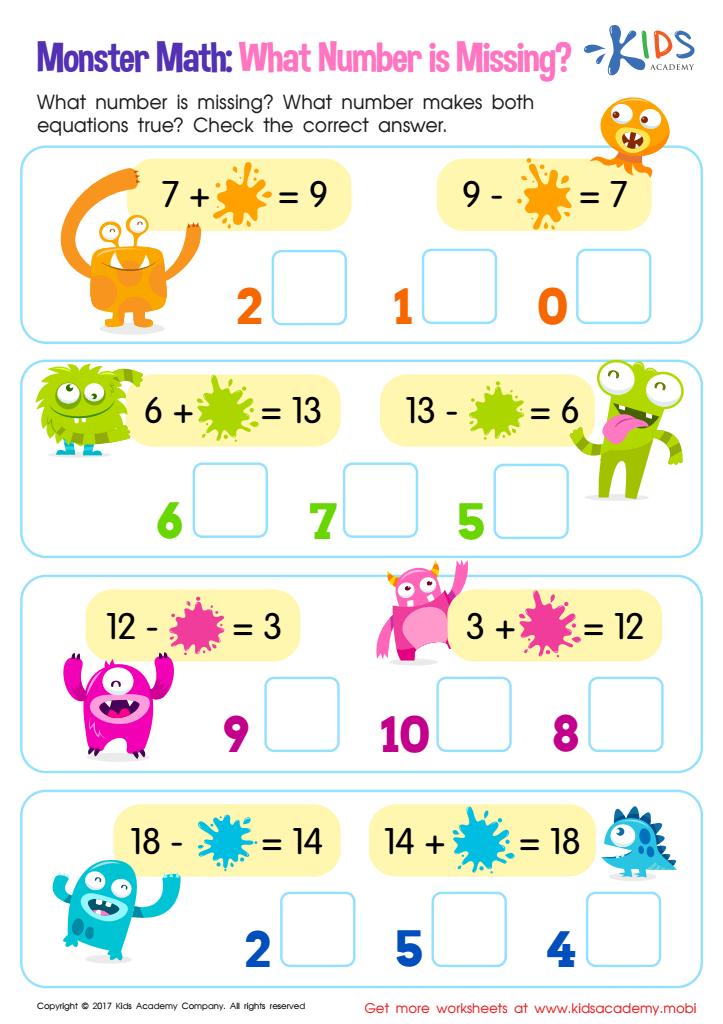
Missing Number: Monster Math Worksheet
Engage your child in monster math fun with a worksheet! They'll need to use their counting, addition and subtraction skills to solve equations on both sides. On the left side, they must complete an addition problem and on the right, the equation is in subtraction form. Assist them in selecting the right number out of the given options to make both equations true.
Missing Number: Monster Math Worksheet
Worksheet
Join Kids Academy for Free
Who is primarily going to use this learning content?








Color identification and early arithmetic skills form foundational pillars in a child’s cognitive development, making them crucial for children aged 3-7. Understanding colors is often one of the first forays into organized learning that children encounter. Recognizing colors enhances visual perception and categorization skills, which are essential for most learning tasks. Being able to identify and name colors also boosts children's expressive vocabulary, enabling them to communicate more effectively and describe the world around them more accurately.
When combined with basic addition and subtraction, color identification can profoundly strengthen a child’s numeracy skills. Manipulating objects through color-coded addition and subtraction enhances both number sense and problem-solving abilities. For example, red apples can be used to teach basic counting, and then the same colored apples can help illustrate simple arithmetic operations. This visual and hands-on method is particularly effective for young learners.
Both parents and teachers should recognize that these early educational experiences with color and mathematical concepts set the stage for more complex learning. Mastery in these areas also supports the development of fine motor skills, pattern recognition, and logical reasoning. Above all, engaging children in fun, visually stimulating activities fosters a love for learning and can build their confidence in engaging with other educational content.








