Filters

8 filtered results

Clear all filters
Favorites
With answer key
Interactive

8 filtered results

Difficulty Level

Grade


Enhance your child's fine motor skills and build a solid math foundation with our expertly designed Normal Addition & Subtraction Worksheets for Ages 3-7. Our worksheets, available on Kids Academy, combine fun and education, helping young learners develop hand-eye coordination and precision while practicing basic arithmetic. Engaging activities include tracing numbers, connecting dots, and solving simple math problems to stimulate cognitive development. Perfect for parents and educators, these resources cater to various learning styles, ensuring every child has the opportunity to excel in math while strengthening essential fine motor abilities. Explore and download now to support early learning success!

Check out this FREE Trial Lesson on Addition & Subtraction for age 3-7!

Add within 20 and Memorize all Sums

Favorites
With answer key
Interactive
  • 3-7
  • Fine Motor Skills
  • Addition & Subtraction
  • Normal
Valentine’s Day word problem PDF worksheet

Valentines Day 2 Printable

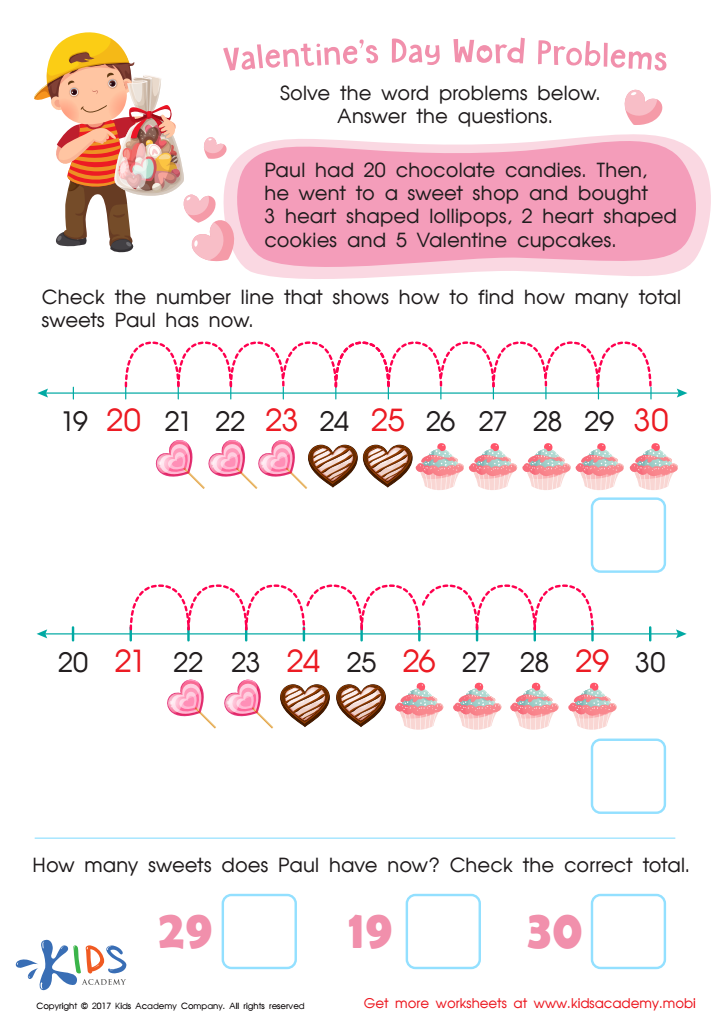
This PDF worksheet uses a number line to help solve the problems. Your child will be ready for Valentine's Day after completing it. Counting and adding from 20 is also reinforced.
Valentines Day 2 Printable
Worksheet
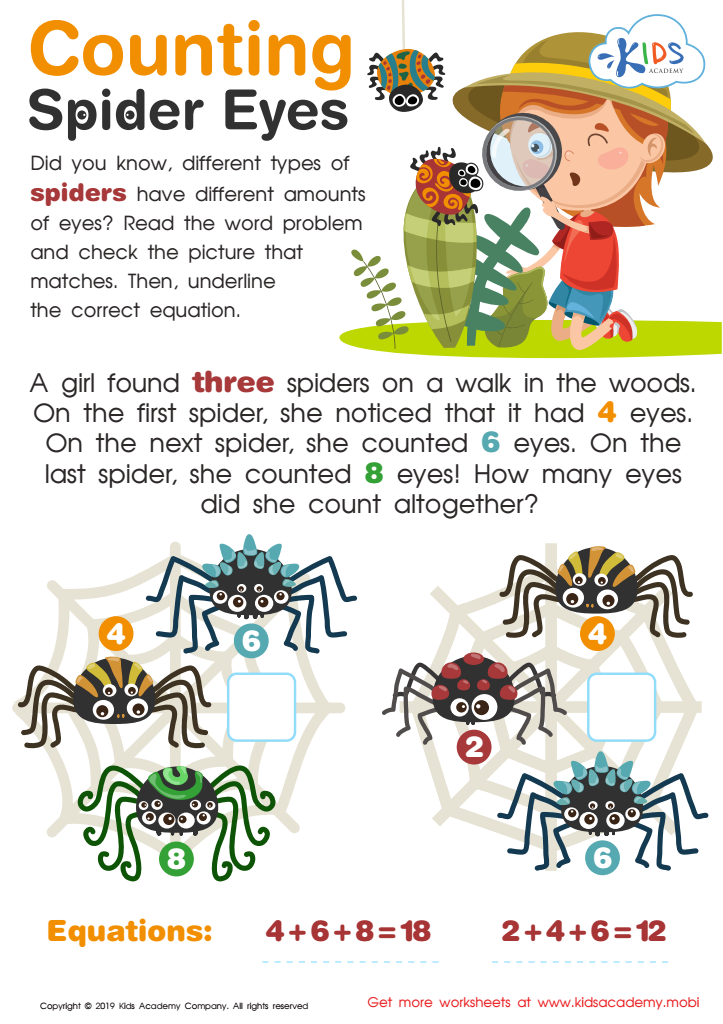
Counting Spider Eyes Worksheet

Counting Spider Eyes Worksheet

Did you know different spiders have different eye numbers? Kids will love learning this fact and solving the spider word problems on this free worksheet! Word problems promote a deeper understanding of the concept, plus they get to add up the spiders’ eyes while solving addition problems with more than one addend. Fun and math all in one!
Counting Spider Eyes Worksheet
Worksheet
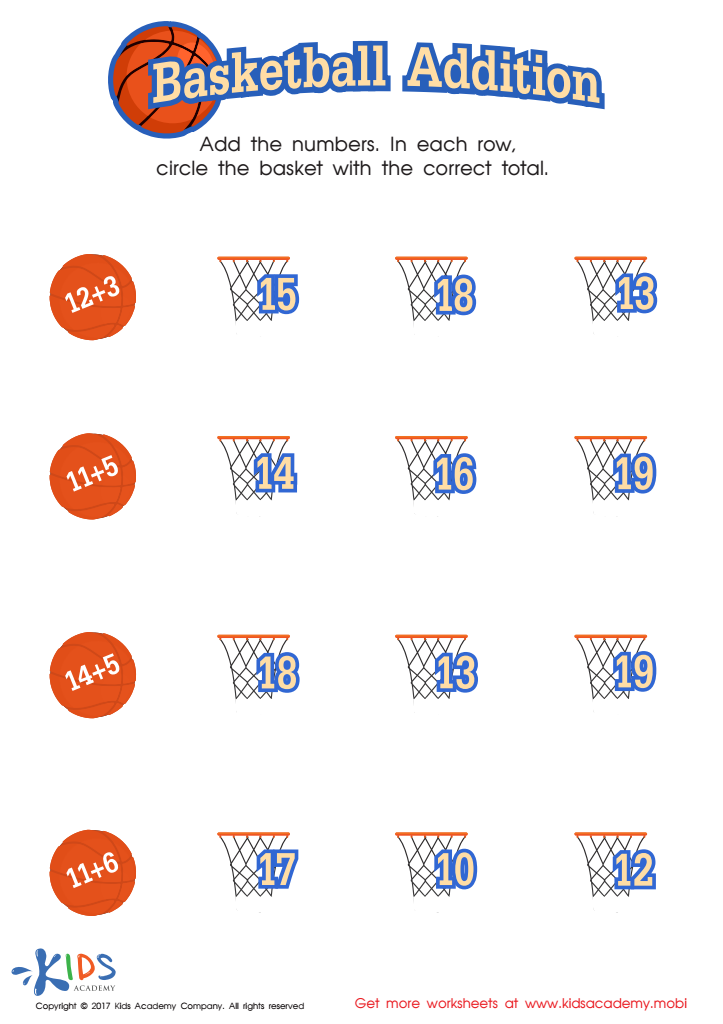
Basketball Addition Worksheet

Basketball Addition Worksheet

Basketball Addition Worksheet
Worksheet
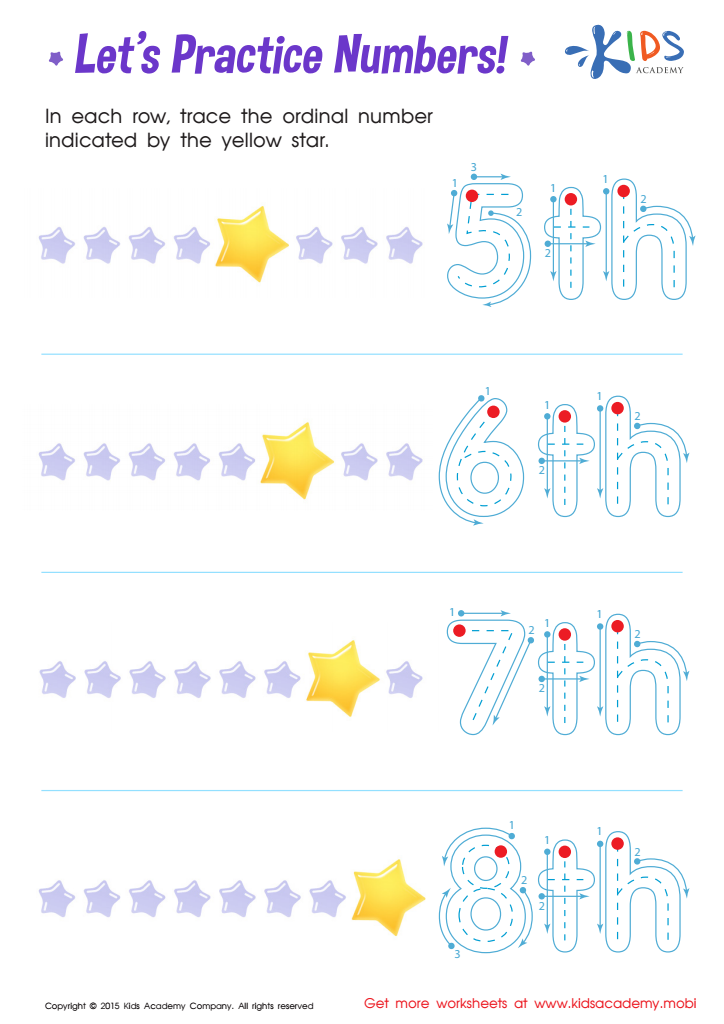
Practice Ordinal Numbers Worksheets PDF
Ordinal Numbers: Let's Practice Numbers Printable
Worksheet
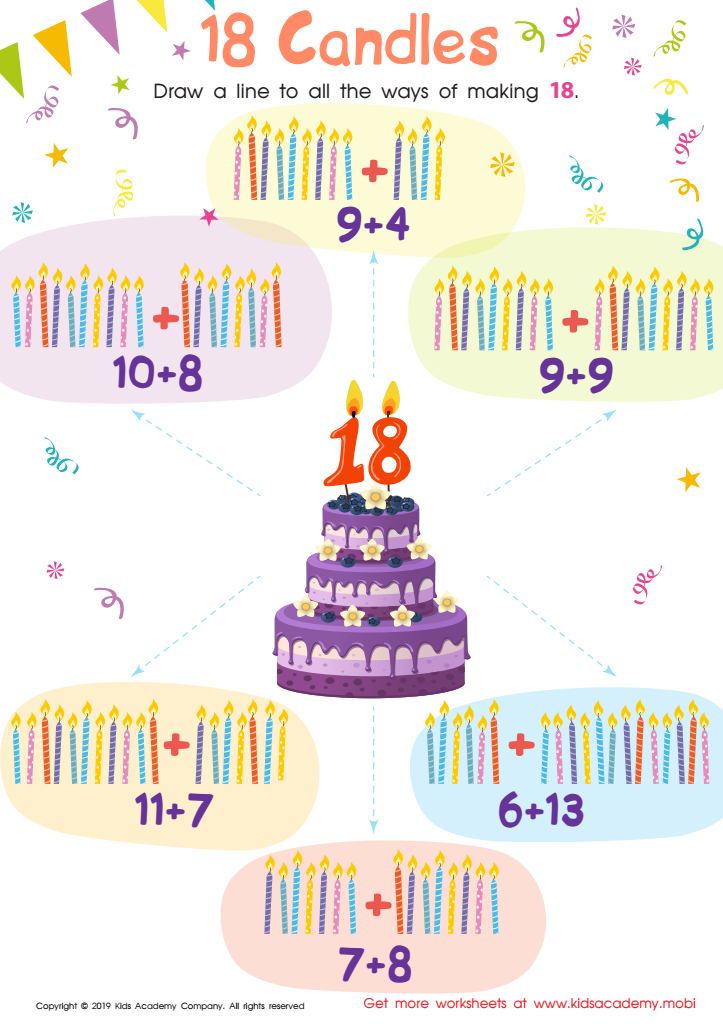
18 Candles Worksheet

18 Candles Worksheet

This worksheet is great for introducing your students to addition and subtraction. Help your kids solve the simple equations on it and draw a line from the birthday cake with 18 on it to all the solutions. Practice like this will prepare them to tackle more complex math problems.
18 Candles Worksheet
Worksheet
Counting Eggs Worksheet

Counting Eggs Worksheet

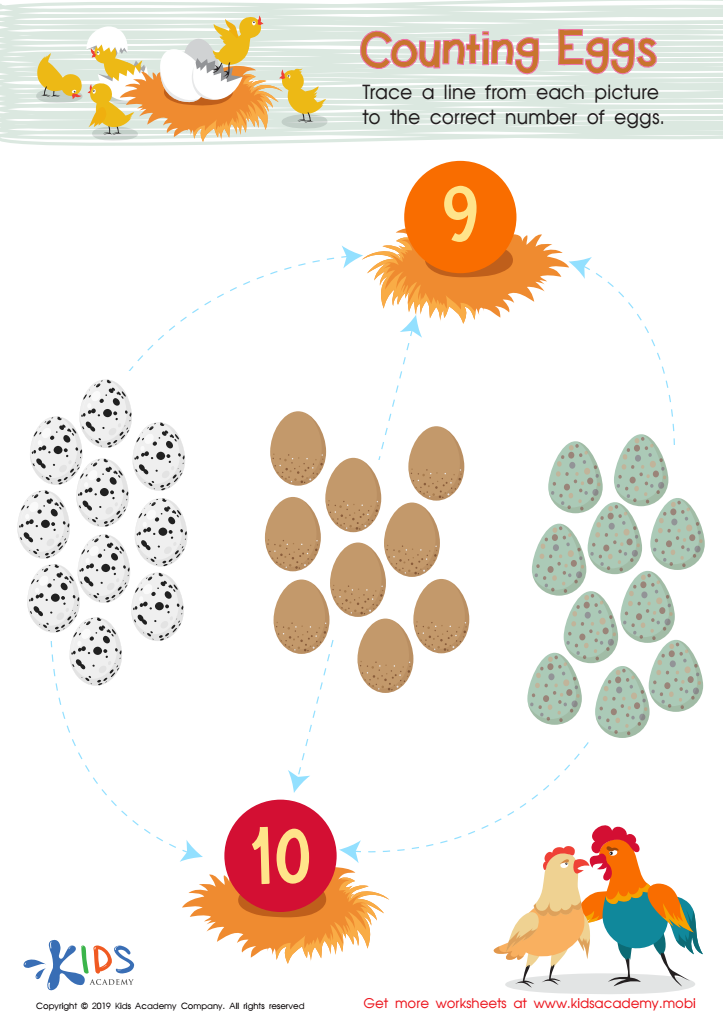
This worksheet is great for teaching kindergarteners to count and add numbers. It includes colorful pictures of eggs with numbers to trace. Help students count the eggs and draw a line to the right number. This will make learning fun and easy!
Counting Eggs Worksheet
Worksheet
Help the Bee Find 16 Flowers Worksheet

Help the Bee Find 16 Flowers Worksheet

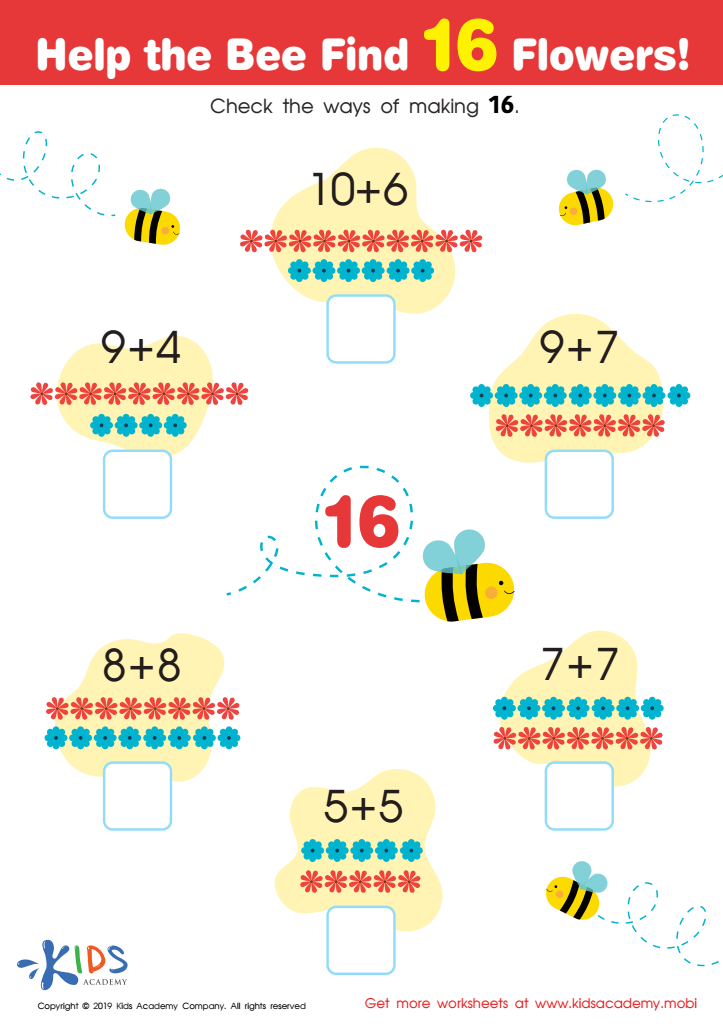
Ask your students to count as high as they can. Show them that different numbers can equal the same figure with examples like 2+2=4 and 3+1=4. Ask for more examples, then help the bees find 16 flowers by checking the ways of making 16.
Help the Bee Find 16 Flowers Worksheet
Worksheet
Addition Robot Sorter Worksheet


Addition Robot Sorter Worksheet

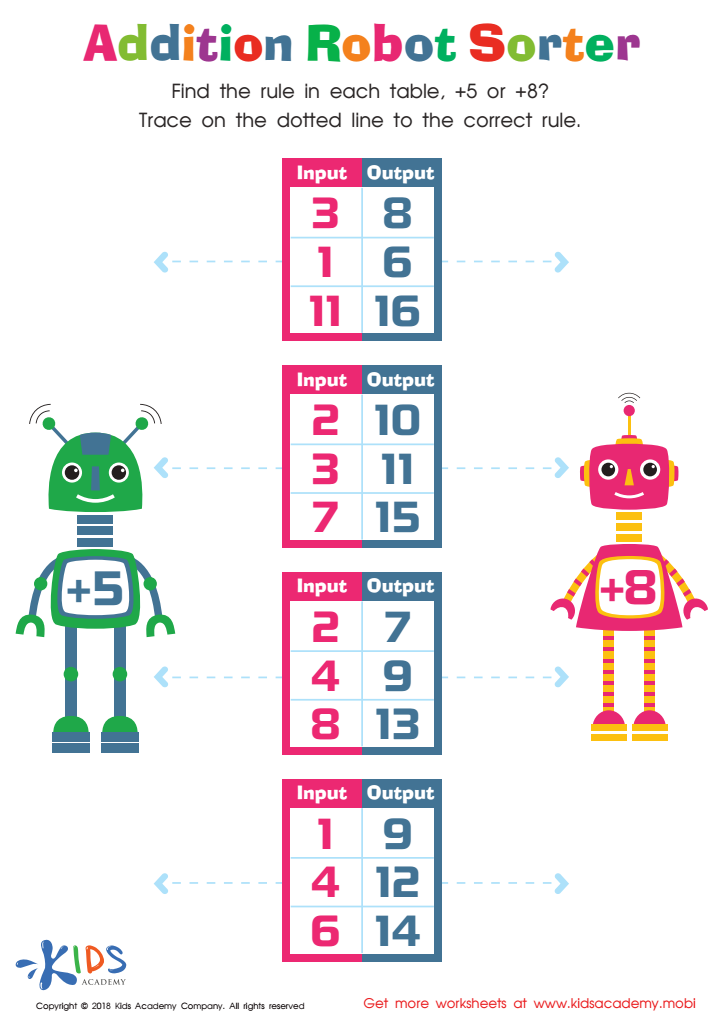
This worksheet helps your child understand addition. Have them trace the dotted lines to the correct equations: +8 and +5. It's a great way to aid their mathematical comprehension and get them comfortable with adding equations.
Addition Robot Sorter Worksheet

Worksheet


Fine motor skills refer to the ability to make movements using the small muscles in our hands and wrists. For children aged 3-7, mastering these skills is crucial as it lays the foundation for many essential tasks they'll encounter in school and daily life. Learning to write requires fine motor coordination; this includes holding a pencil correctly and forming letters and numbers accurately. Moreover, engaging in normal addition and subtraction exercises at this age helps develop numerical understanding and cognitive skills.

During this foundational period, parents and teachers need to foster these abilities because they support language development, self-care routines like dressing and feeding, and building independence. These skills also enhance hand-eye coordination, which is important for more complex tasks and school readiness.

Moreover, as children practice addition and subtraction, they not only learn about numbers and counting but also develop logical thinking and problem-solving skills, which are pivotal for academic success. Regular practice with activities such as drawing, puzzles, and games that involve counting can make learning enjoyable and effective.

In summary, focusing on fine motor skills and basic math operations from ages 3 to 7 not only equips children with essential life skills but also creates a strong foundation for future educational achievements.