Normal Fractions of Shapes Worksheets for Ages 3-7
5 filtered results
-
From - To
Introduce your children to the basics of fractions with our engaging and colorful Normal Fractions of Shapes Worksheets for Ages 3-7. Perfect for preschoolers and early elementary students, these worksheets utilize simple shapes to break down the concept of fractions such as halves, quarters, and thirds in an easy-to-understand manner. Each worksheet is thoughtfully crafted to make learning fun and interactive, helping young learners grasp the fundamentals of dividing shapes into equal parts. Equip your little ones with valuable math skills they'll build on for years to come with these delightful and educational printables.
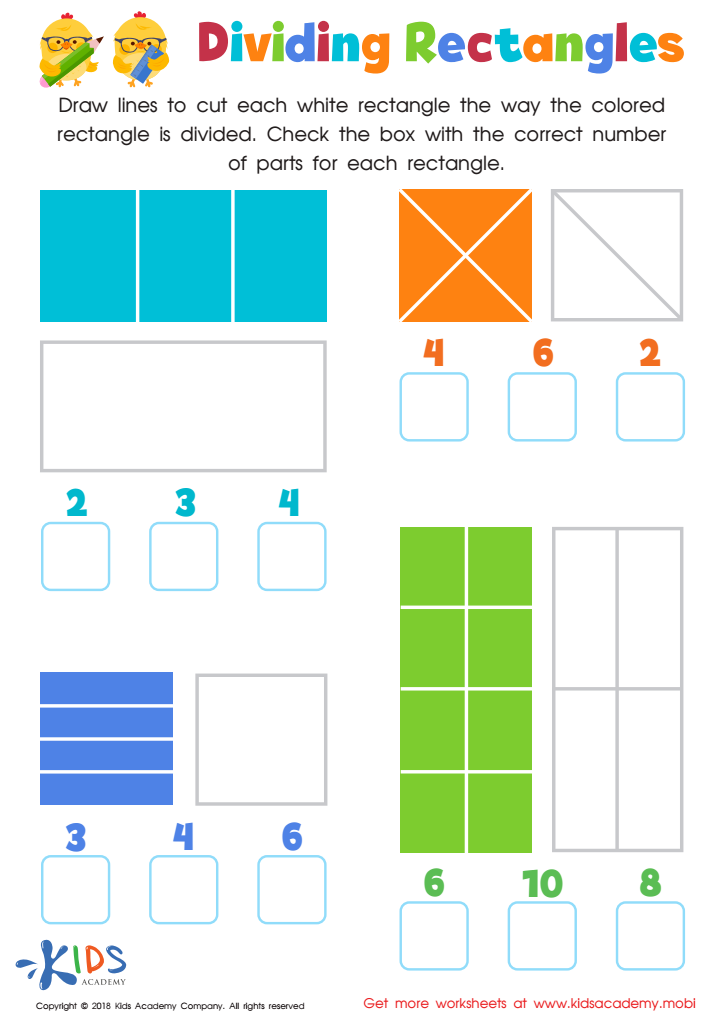
Dividing Rectangles Worksheet
 Assign to My Students
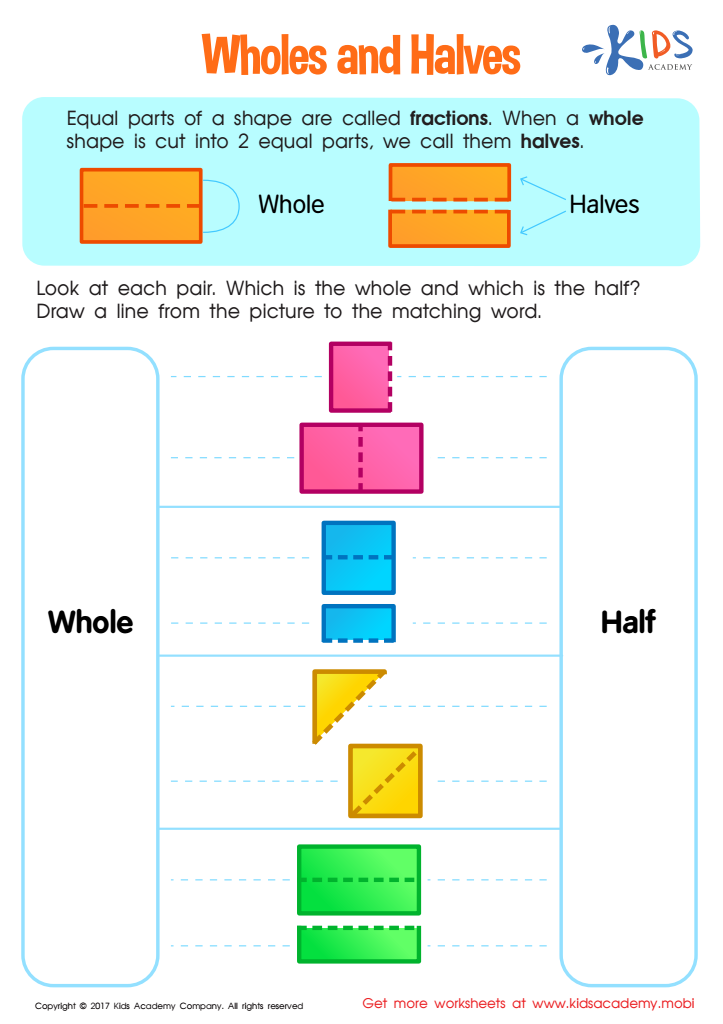
Wholes and Halves Worksheet
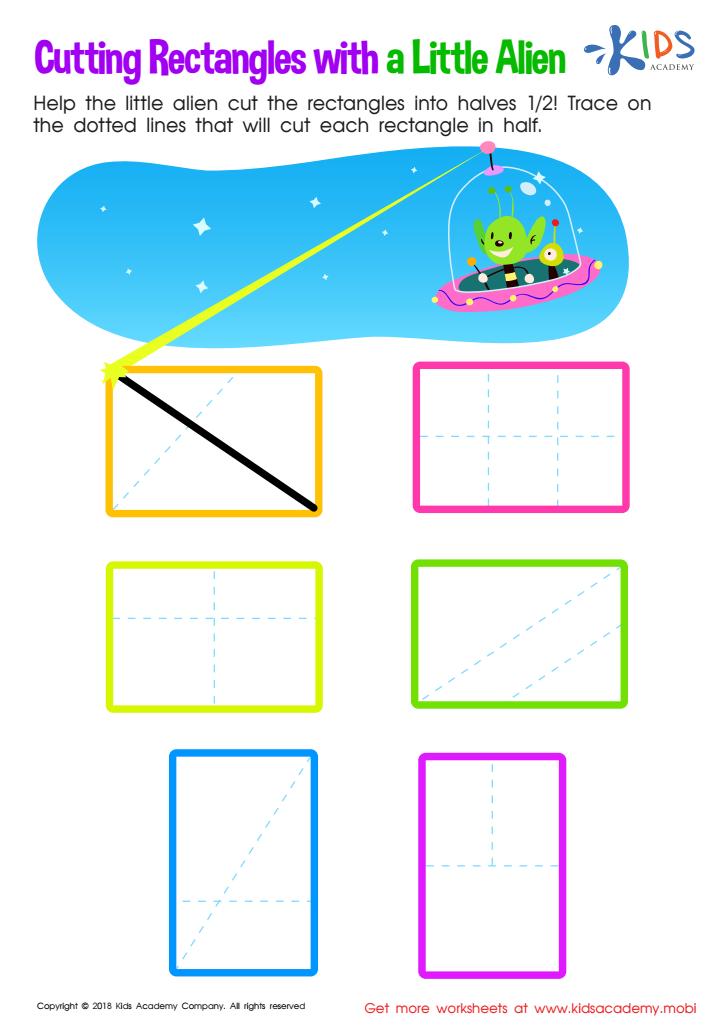
Cutting Rectangles with Alien Worksheet
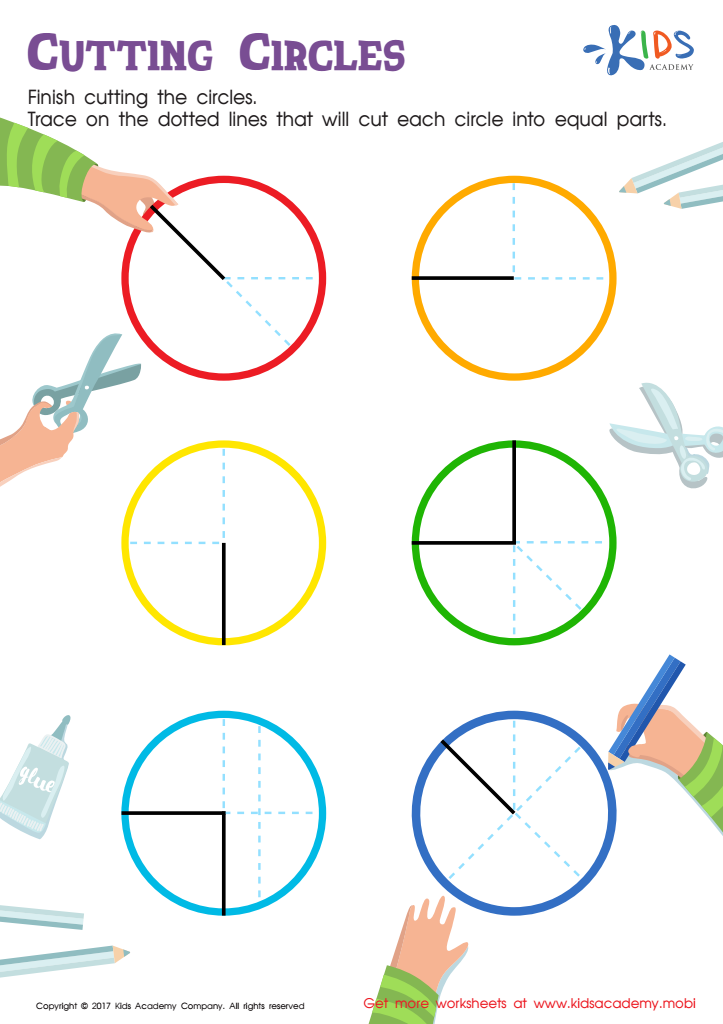
Cutting Circles Worksheet
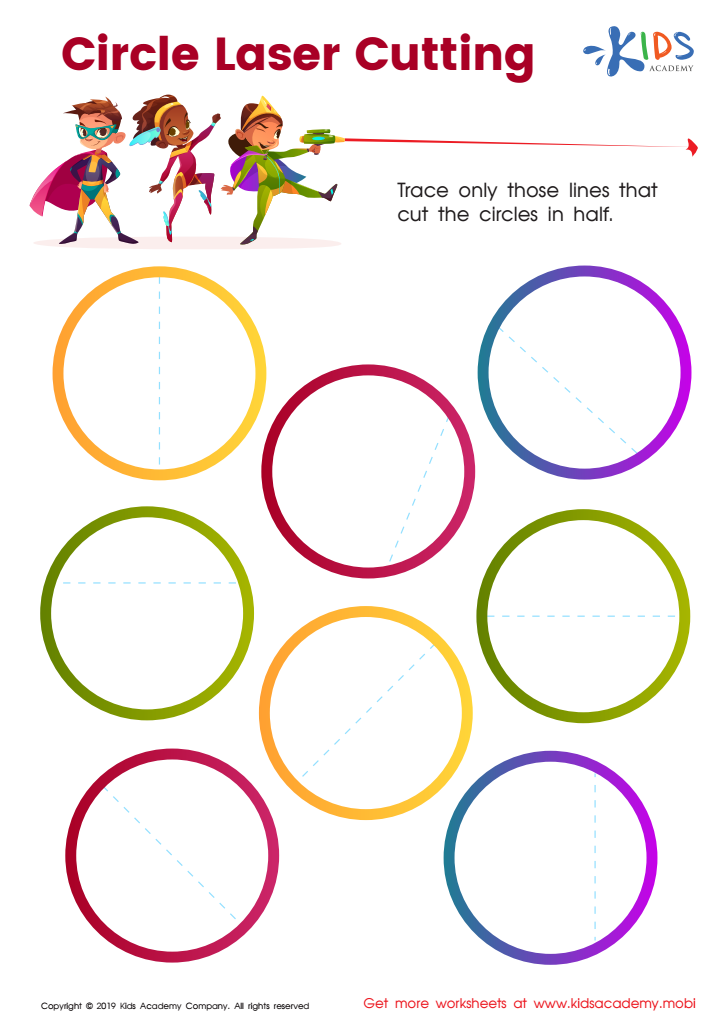
Circle Laser Cutting Worksheet








Understanding normal fractions of shapes is foundational for children aged 3-7 because it cultivates essential mathematical concepts and cognitive skills. Parents and teachers play a crucial role in introducing these concepts early on, integrating fun activities involving shapes and fractions into daily learning.
First, recognizing basic fractions through shapes helps demystify the concept of parts making up a whole. When children see a shape like a circle or square divided into equal parts, they begin to grasp what one-half, one-quarter, and other fractions represent. This visual and hands-on approach lays a vital groundwork for more complex mathematical learning in later years.
Additionally, engaging with normal fractions of shapes boosts problem-solving abilities. Kids learn to approach problems logically, understand spatial relationships, and think critically about how shapes and parts fit together. This not only enhances their math skills but also promotes cognitive development in areas such as symmetry, patterns, and proportionality.
Finally, these activities often involve coloring, cutting, or interactive games, making learning fractions enjoyable. When parents and teachers actively participate, it reinforces the child's confidence and enthusiasm for math. Ultimately, a strong early grasp of normal fractions can pave the way for a more in-depth and successful academic journey in mathematics.