
Basic measurement concepts Normal Math Worksheets for Ages 3-7
3 filtered results
Difficulty Level
Grade
Age
-
From - To
Subject
Activity
Standards
Explore the world of measurement with our engaging Normal Math Worksheets, designed for children ages 3-7. These fun and interactive resources introduce basic measurement concepts, helping young learners grasp essential skills such as length, width, weight, and height. Through vibrant visuals and relatable activities, children will develop their understanding of sizes, comparisons, and attributes in a playful manner. Perfect for home or classroom use, these worksheets foster critical thinking and problem-solving abilities while making learning enjoyable. Equip your child with a solid mathematical foundation by exploring our collection of basic measurement practice designed specifically for early education. Start the adventure today!
Favorites
With answer key
Interactive
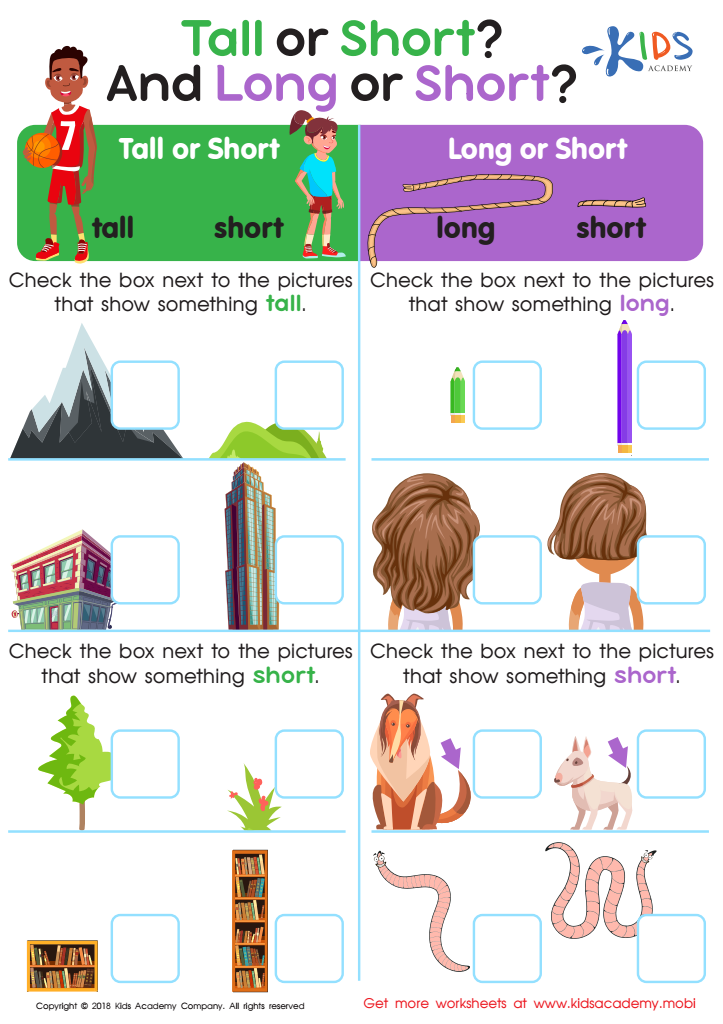
Tall or Short and Long or Short? Worksheet
This worksheet is fun and helpful for kids to understand the difference between height and length. With pictures of familiar objects, they can compare and choose the box with the right answer. This helps them gain skills and a better foundation for future measuring.
 Assign to My Students
Tall or Short and Long or Short? Worksheet
Worksheet
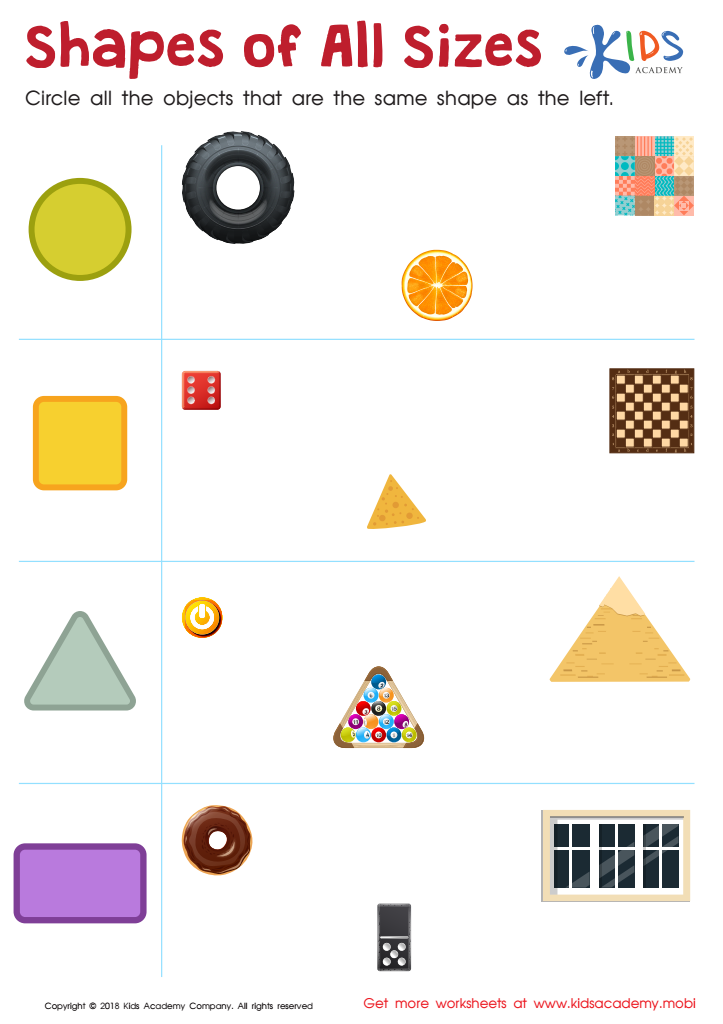
Shapes of All Sizes Worksheet
Students will have fun comparing basic shapes to familiar objects with this worksheet. It's an excellent way to help them recognize similarities in geometric shapes, building strong foundations for understanding congruence and similarity.
Shapes of All Sizes Worksheet
Worksheet
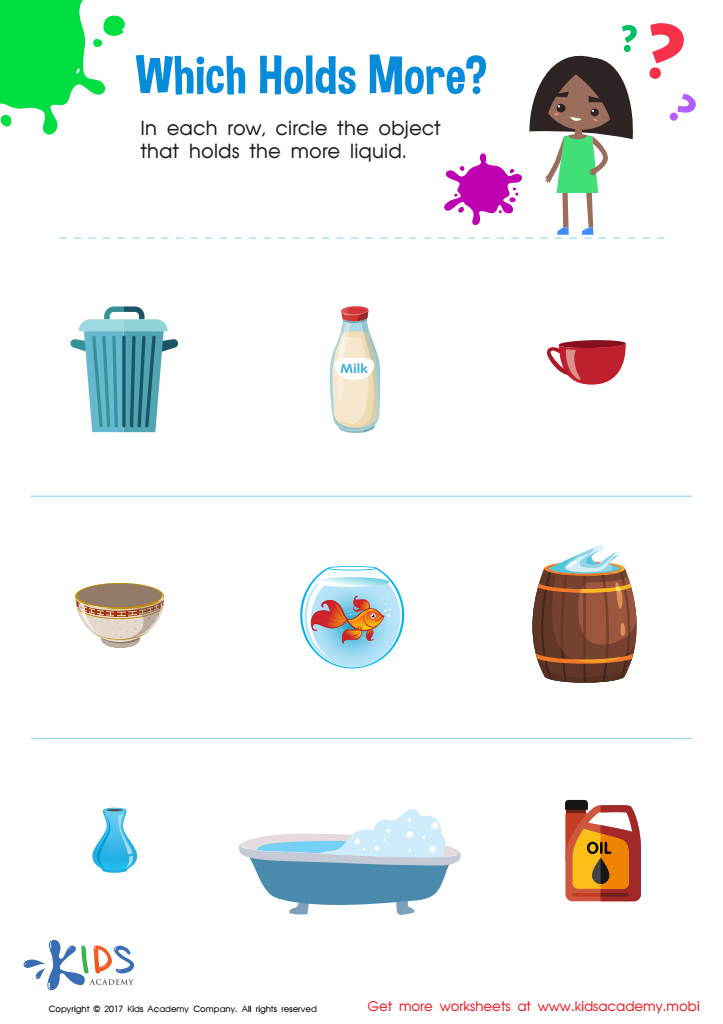
Which Holds More: Capacity Worksheet
Kids learn volume with containers of different capacities, such as mugs and barrels, and understand which can hold more liquid. A fun and interactive way to teach essential math concepts.
Which Holds More: Capacity Worksheet
Worksheet
Join Kids Academy for Free
Who is primarily going to use this learning content?







Teaching basic measurement concepts in early mathematics is crucial for children aged 3-7, as these foundational skills support their overall cognitive development. Understanding concepts like length, weight, volume, and time helps children make sense of the world around them. For parents and teachers, this knowledge empowers children to develop critical thinking and problem-solving skills that are vital for academic success.
Incorporating measurement into everyday activities creates engaging learning experiences. For instance, cooking can introduce concepts of volume, while outdoor play can explore length and height. These practical applications not only make measurements tangible but also foster a sense of curiosity and exploration in young learners.
Also, early mastery of measurement concepts equips children with the necessary tools for future learning in mathematics and science. As they progress through school, these early experiences will enhance their understanding of more complex subjects like geometry and data analysis.
Furthermore, the social and emotional skills developed during collaborative measurement activities promote teamwork and communication. By nurturing these abilities, parents and teachers set the stage for a lifelong passion for learning. Thus, investing time in teaching basic measurement concepts reaps significant academic, social, and emotional rewards for young children.








