Filters

7 filtered results

Clear all filters
Favorites
With answer key
Interactive

7 filtered results

Difficulty Level

Grade


Welcome to our Color Recognition Normal Math Worksheets designed for children ages 3-7! These engaging and vibrant worksheets help young learners develop essential color recognition skills while integrating foundational math concepts. Through fun activities, kids will enjoy sorting, identifying, and matching colors, building confidence in their abilities. Perfect for homeschooling or classroom use, our worksheets cater to diverse learning styles and are aligned with early childhood education standards. Watch as your child explores the colorful world around them while enhancing their cognitive and fine motor skills. Download our worksheets today to spark creativity and make learning fun!

Check out this FREE Trial Lesson on Math for age 3-7!

Sorting Objects By Colors

Favorites
With answer key
Interactive
  • 3-7
  • Color recognition
  • Math
  • Normal
8 Petals Worksheet
8 Petals Worksheet

8 Petals Worksheet

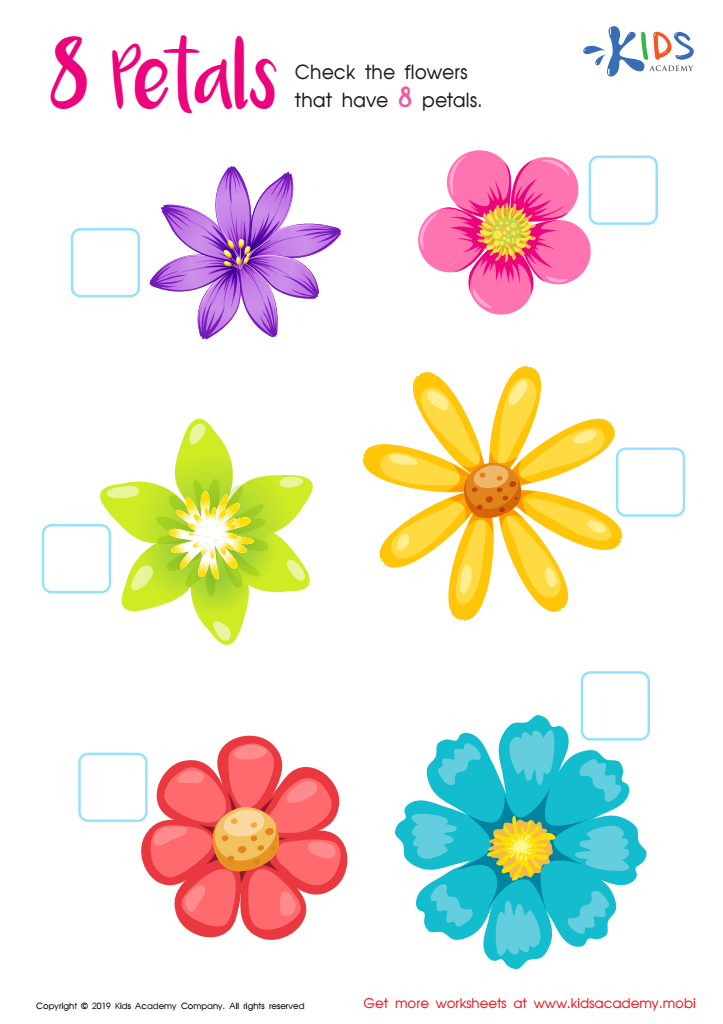
Help your children master counting with this fun worksheet. It's filled with colorful flowers and they must count the petals and check the flowers with 8 petals. It's a great way to practice their counting skills and have some fun too!
8 Petals Worksheet
Worksheet
Seashell Collectors Worksheet

Seashell Collectors Worksheet

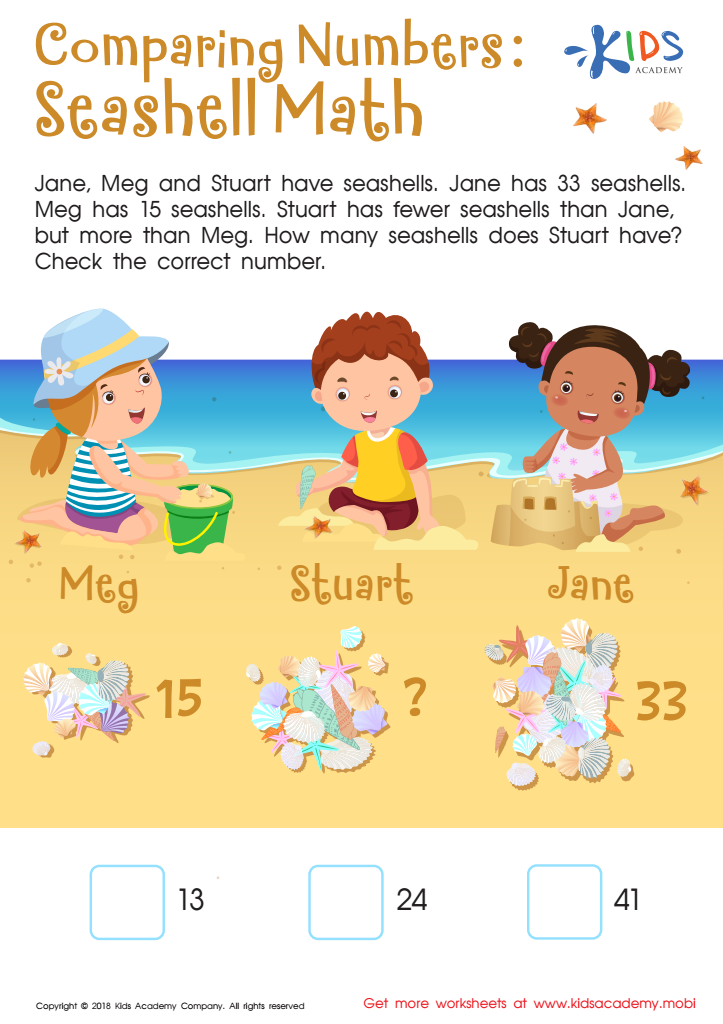
Bring beach fun into math with this printable worksheet! Carefully read the text with your child and figure out how many seashells Stuart has - more than Meg's, less than Jane's. Forget boring indoor math; your child won't want to miss out on this fun activity!
Seashell Collectors Worksheet
Worksheet
Sort the Same Group 2 Different Ways: Cars Worksheet
Sort the Same Group 2 Different Ways: Cars Worksheet

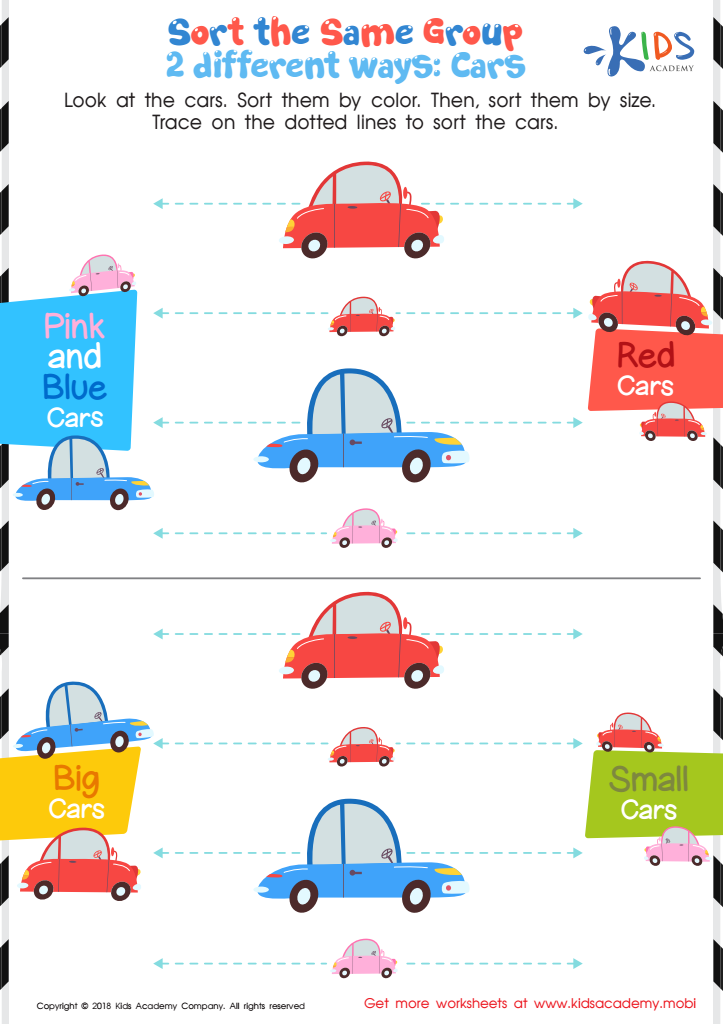
Look at the pictures with your child. Can they identify the objects? Ask them to sort the cars first by color and then size. Assist them to trace the dotted lines to sort the cars by color and size. This worksheet lets you easily assess your child's color and size organization skills.
Sort the Same Group 2 Different Ways: Cars Worksheet
Worksheet
Free Preschool Color Matching Worksheet

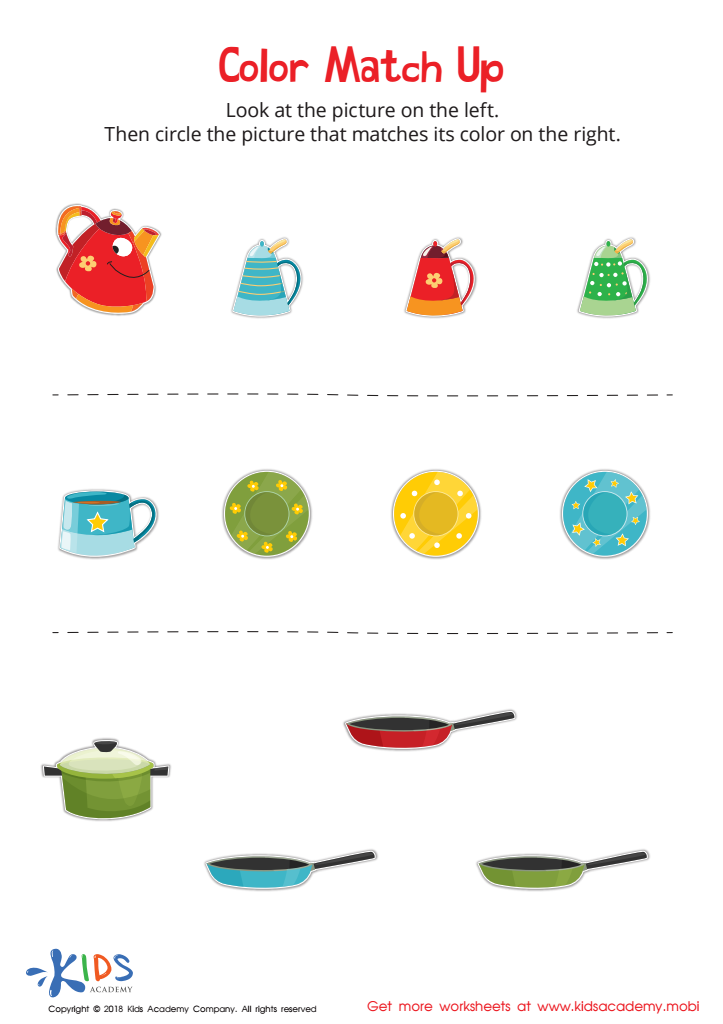
Color Match Up Worksheet

Color Match Up Worksheet
Worksheet
Ordinal Numbers Worksheet for Kids

Ordinal Numbers: Math Fun Worksheet

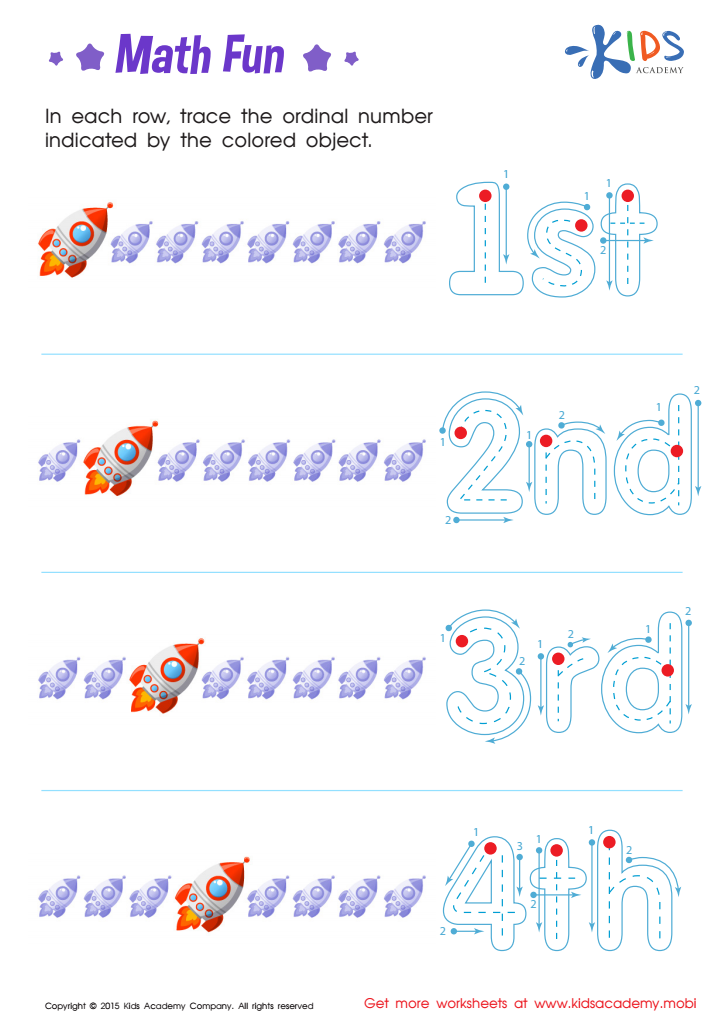
Have fun learning ordinal numbers with our spaceship worksheet! Kids learn best while having fun and with repetition. Featuring vibrant spaceships, your child will understand placement, recognize and write ordinal numbers, and make connections. Understanding ordinal numbers leads to more advanced math concepts. Get your math whiz ready for preschool with our addition/subtraction worksheets! Have fun learning ordinal numbers and master them in no time!
Ordinal Numbers: Math Fun Worksheet
Worksheet
Gingerbread Man Geometry Maze Worksheet

Gingerbread Man Geometry Maze Worksheet

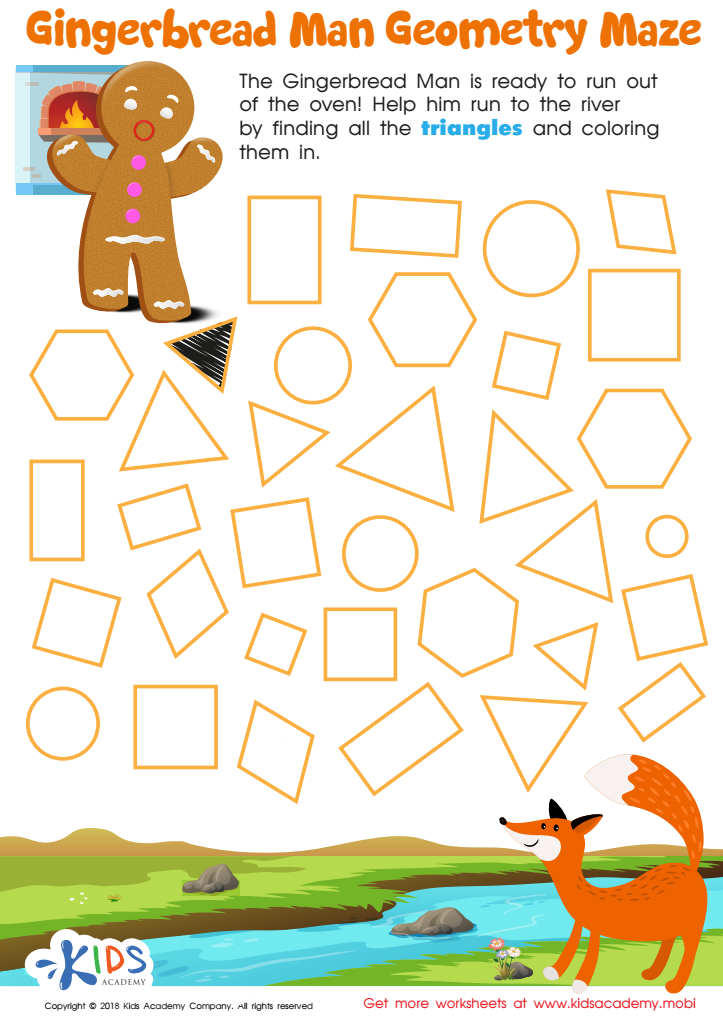
Help a beloved character escape the oven! Kids race through a sea of geometrical shapes, searching for triangles of various sizes. With this free worksheet, they can have fun while learning about similarity of geometrical shapes concepts. Run, run, run as fast as they can!
Gingerbread Man Geometry Maze Worksheet
Worksheet
Sort and Count Candy Worksheet


Sort and Count Candy Worksheet

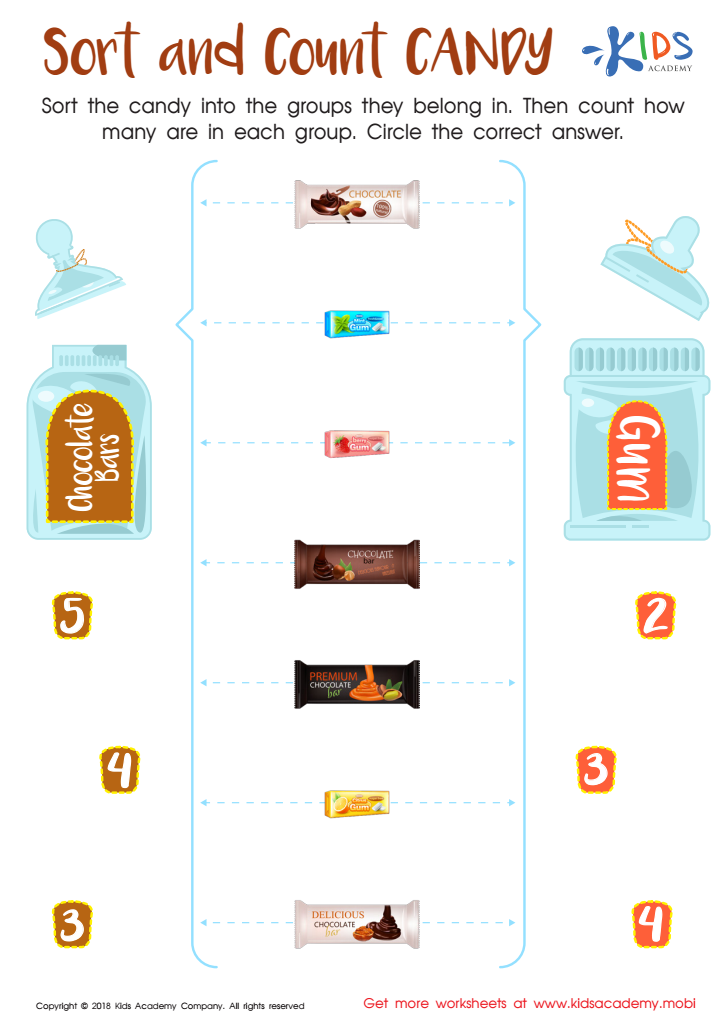
Sort chocolate and candy with your kids! Help them use recognizable items and pictures to sort, practice counting with one-to-one representation, and develop their fine motor skills with the traceable lines. Download this free worksheet to get started. Yum!
Sort and Count Candy Worksheet

Worksheet


Color recognition and basic math skills are foundational components of early childhood education. For children aged 3-7, learning to identify colors is crucial not only for developing their visual perception but also for enhancing cognitive skills such as categorization and association. Recognizing colors helps children make connections with the world around them, improving their language skills as they learn to describe and articulate what they see.

Incorporating normal math concepts, such as counting, sorting, and recognizing patterns, during this developmental stage is equally important. Math lays the groundwork for problem-solving abilities and logical thinking. When children engage with colors through counting objects or grouping like colors, they learn to identify numerical relationships while also fostering creativity.

Parents and teachers play an essential role in promoting these skills as they enrich children's learning experiences through interactive activities. Games involving colors and numbers can stimulate curiosity and encourage exploration. Engaging with these concepts not only enhances developmental milestones but also gives children a sense of accomplishment. Early proficiency in color recognition and basic math leads to greater confidence as they navigate academic challenges later in life, paving the way for lifelong learning and success. Supporting these areas in early education can have lasting benefits for children's overall development.