Comparative analysis Normal Math Worksheets for Ages 3-7
3 filtered results
-
From - To
Explore our comprehensive collection of Normal Math Worksheets designed for children ages 3-7. This comparative analysis focuses on key learning skills such as counting, number recognition, and basic addition and subtraction. Our worksheets provide engaging activities that help young learners develop essential mathematical concepts through fun exercises. Each resource is tailored to different age levels and abilities, ensuring that children can learn at their own pace. With colorful illustrations and interactive tasks, these worksheets make math enjoyable and approachable for little learners. Start fostering a strong foundation in math today with our expertly crafted worksheets!
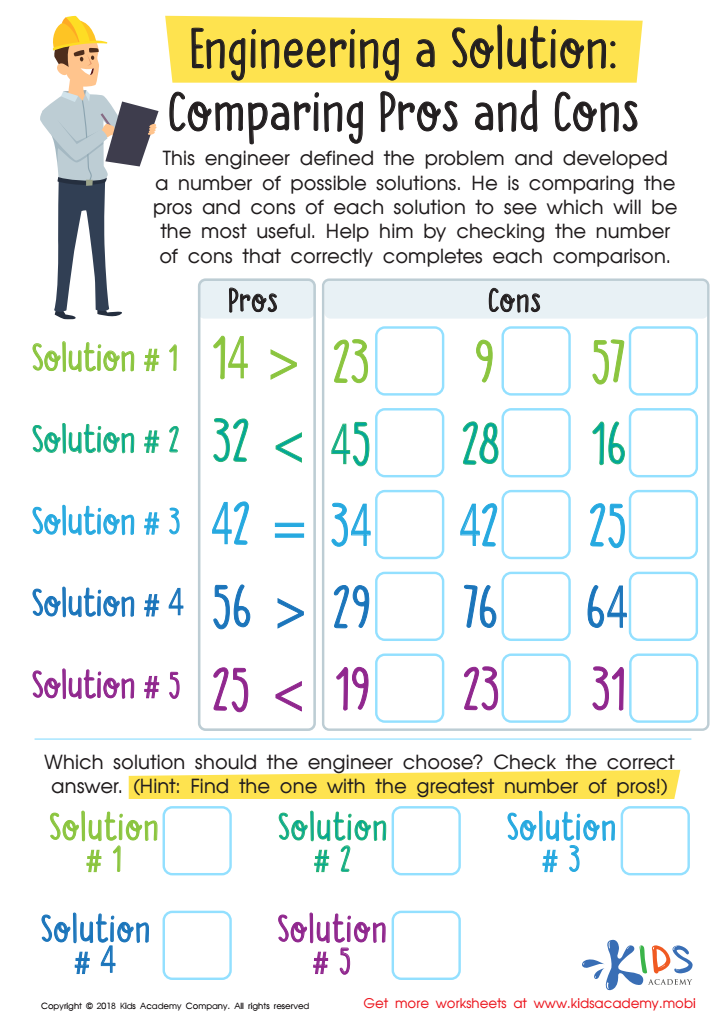
Engineering a Solution: Comparing Pros and Cons Worksheet
 Assign to My Students
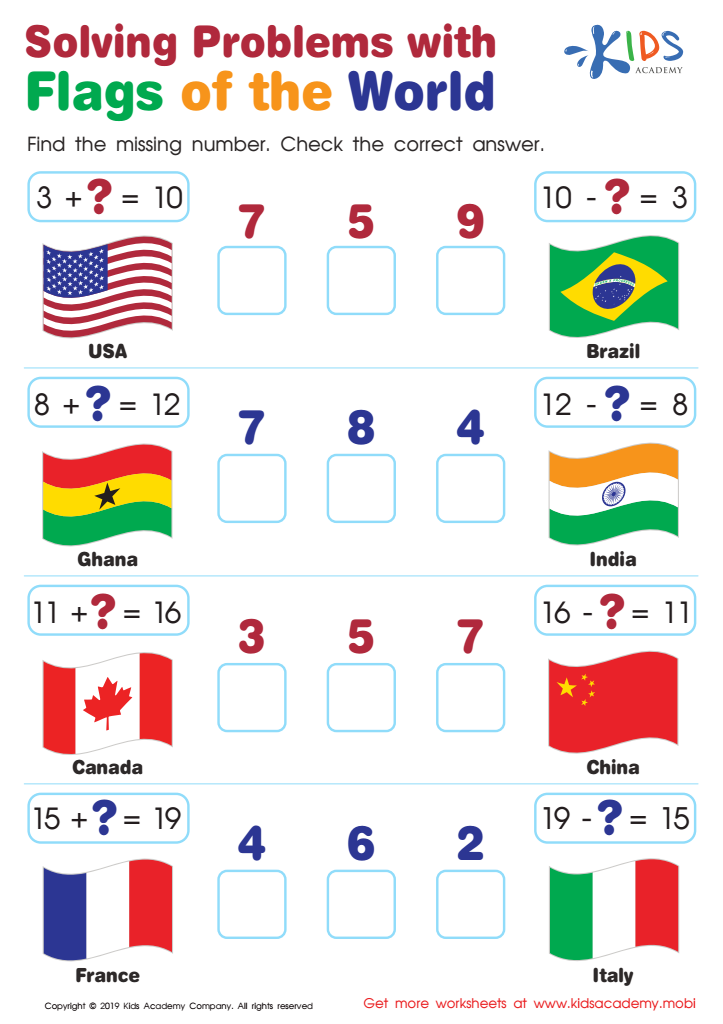
Solving Problems with Flags of the World Worksheet








Comparative analysis of normative math skills for children aged 3-7 is vital for parents and teachers for several reasons. Firstly, it establishes a benchmark for developmental milestones, helping caregivers understand what mathematical skills are typically expected at specific ages. By recognizing age-appropriate skills, parents and educators can tailor their teaching methods and developmental activities, ensuring they provide the necessary support for each child’s learning journey.
Additionally, comparative analysis facilitates early intervention. Identifying potential delays in mathematical understanding or skill acquisition can prompt timely support, preventing any long-term struggles with math. Statistically, fixing gaps early on can lead to increased confidence and academic success, as foundational math skills are crucial for future learning across subjects.
Moreover, such analysis helps inform curriculum design, helping educators create age-appropriate materials that engage and challenge students effectively. It fosters a shared understanding among parents and teachers regarding realistic expectations, leading to stronger home-school partnerships.
Finally, embracing normative skills encourages a growth mindset, promoting the idea that everyone can develop math abilities with practice and perseverance. This holistic approach not only aids math mastery but also nurtures critical thinking, problem-solving, and persistence—skills essential for lifelong learning.








