Comparison Skills Normal Math Worksheets for Ages 3-7
3 filtered results
-
From - To
Enhance your child's learning with our Comparison Skills Normal Math Worksheets, designed for ages 3-7. These engaging worksheets help young learners grasp fundamental concepts such as "more than," "less than," and "equal to." Each activity promotes critical thinking and enhances number sense in a fun, interactive way. With colorful illustrations and age-appropriate challenges, children will enjoy honing their comparison skills while building confidence in math. Perfect for home or classroom use, our resources support early math education and make learning enjoyable. Explore a variety of worksheets that cater to your child's developmental stage and watch them thrive in their mathematical journey!
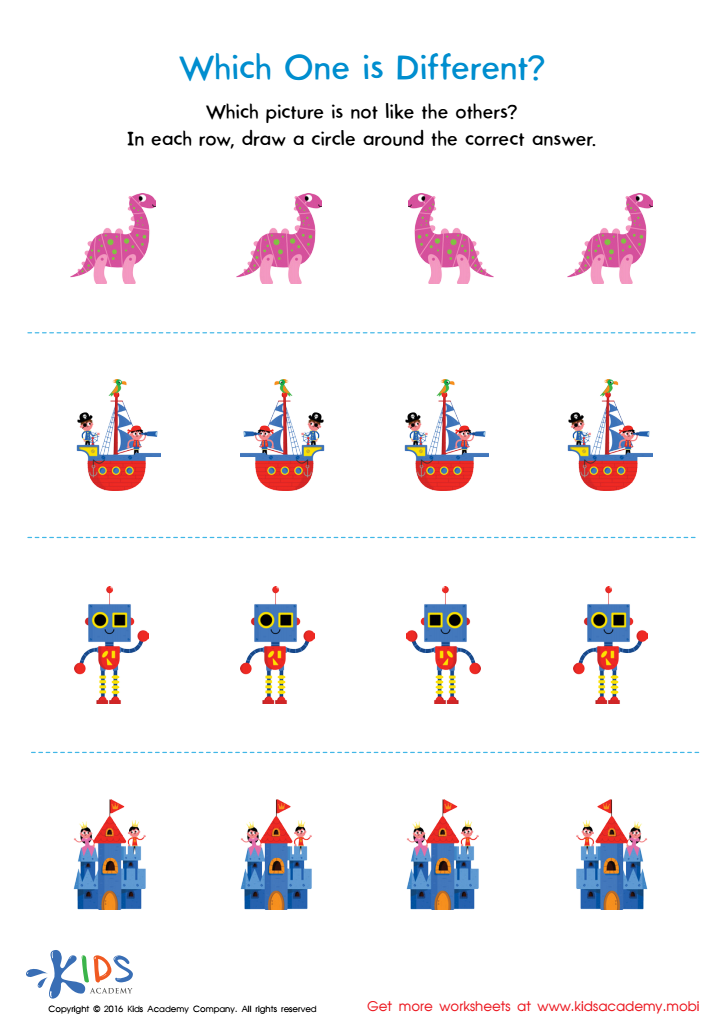
Which One Is Different Worksheet
 Assign to My Students
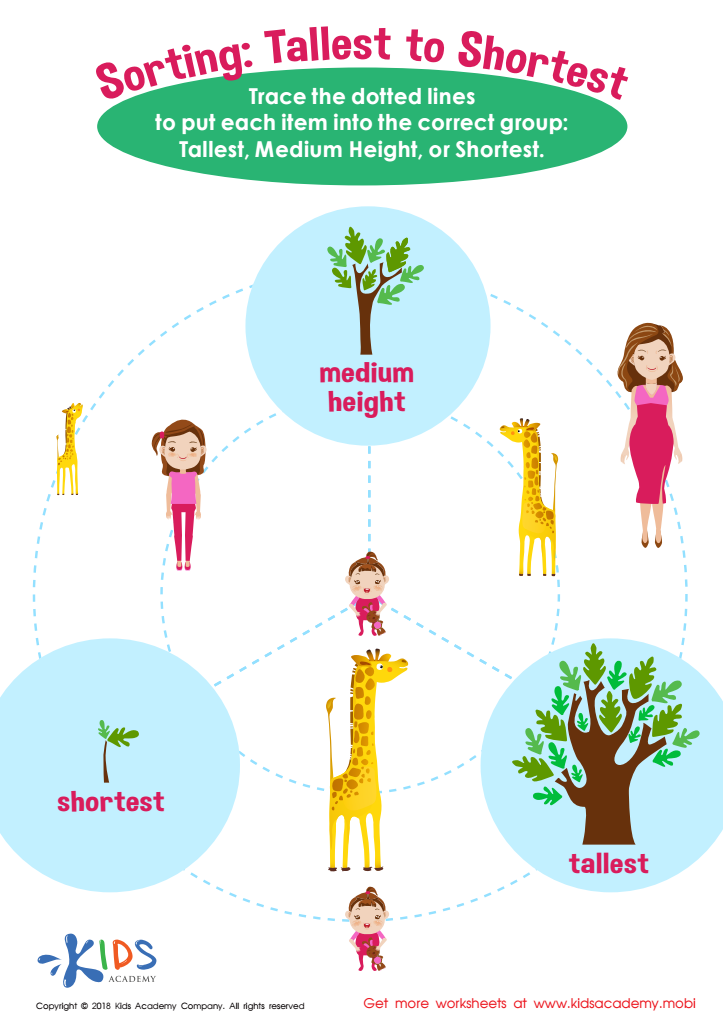
Sorting: Tallest to Shortest Worksheet



%20(1).jpg)



Comparison skills are a fundamental aspect of early mathematical development for children ages 3-7. These skills allow children to discern differences and similarities between objects based on measurable attributes like size, weight, and quantity. For parents and teachers, fostering comparison skills is crucial as it lays the groundwork for more complex mathematical concepts, such as addition, subtraction, and understanding more abstract concepts like fractions.
By engaging children in activities that promote comparison—like sorting toys, comparing heights, or measuring items—adults can enhance their children's logical reasoning and critical thinking abilities. Moreover, these activities naturally align with children's exploratory nature, making learning fun and engaging.
Early mastery of comparison skills not only boosts mathematical confidence but also nurtures problem-solving skills that extend beyond math. Children become adept at making judgments, evaluating situations, and reasoning through challenges. This holistic development contributes to success in everyday encounters and fosters lifelong learning patterns.
Ultimately, if parents and teachers prioritize comparison skills, they are not only supporting mathematical fluency but also empowering children with essential life skills to navigate an increasingly complex world. Emphasizing these skills early creates a solid foundation for academic achievement and personal growth.








