Conversion skills Normal Math Worksheets for Ages 3-7
3 filtered results
-
From - To
Our "Conversion Skills Normal Math Worksheets for Ages 3-7" are perfect for young learners. These engaging worksheets help children grasp essential math concepts such as measurement conversions, currency values, and temperature differences. Designed to make learning fun and interactive, our worksheets cater to different developmental stages within this age range. With vibrant visuals and age-appropriate challenges, kids can build solid foundational math skills efficiently. Whether at home or in the classroom, these worksheets are an excellent resource for promoting confidence and competence in math from a young age. Enhance your child's learning journey with Kids Academy’s trusted educational materials.
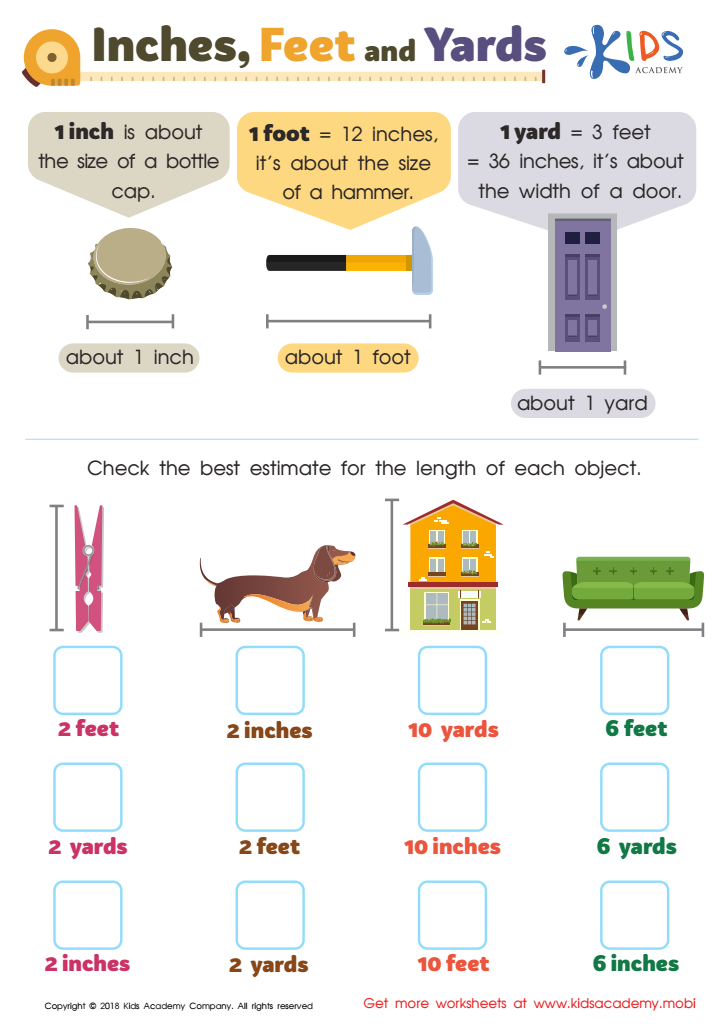
Inches, Feet and Yards Worksheet
 Assign to My Students
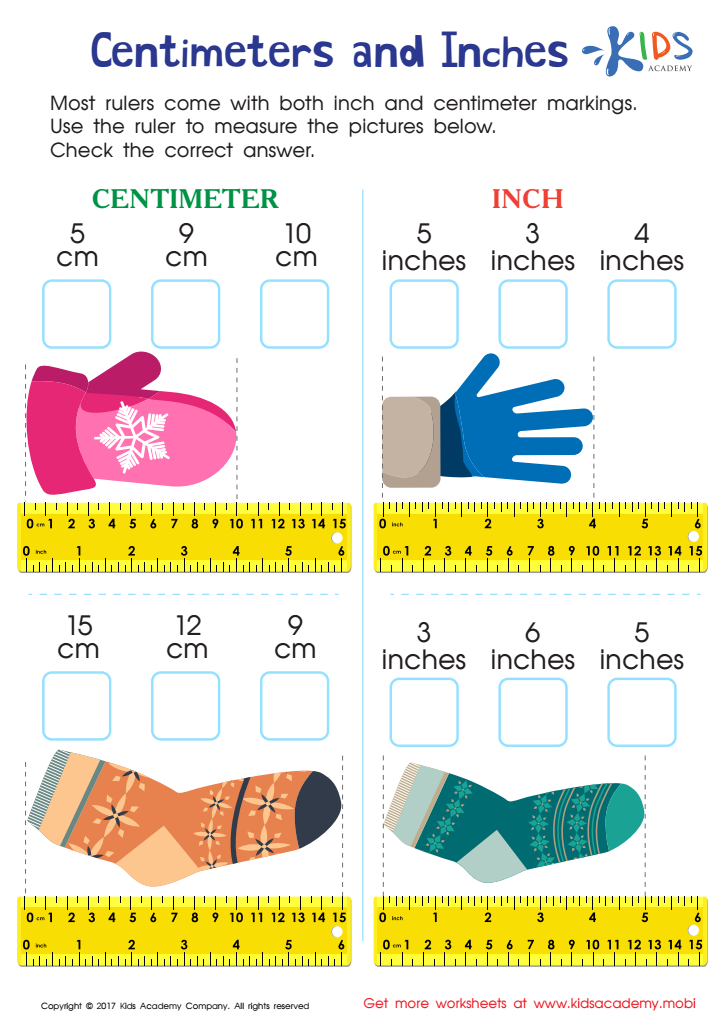
Centimeters and Inches Worksheet
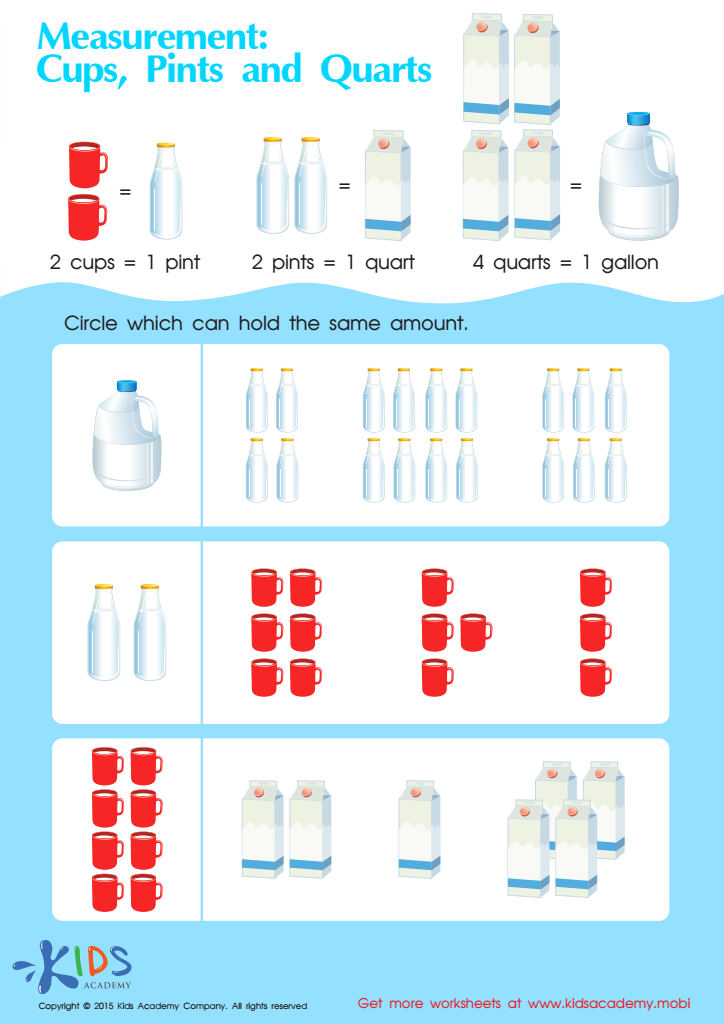
Cups, Pints and Quarts 2 Worksheet








Parents and teachers should prioritize teaching conversion skills in normal math to children aged 3-7 because these foundational skills are crucial for their overall cognitive development and future academic success. During these early years, children's brains are particularly receptive to learning and forming neural connections. Introducing basic conversion concepts—such as understanding different units of measurement (time, length, volume) and how they relate—can foster strong numerical reasoning skills.
Mastering conversion skills at a young age enhances problem-solving abilities and critical thinking. For instance, when children learn to convert minutes to hours or inches to feet, they start to grasp the practical applications of math in everyday life, making it relevant and engaging. Moreover, these skills build a solid mathematical foundation that will be essential as they progress to more complex topics in school.
Additionally, developing these skills boosts confidence and nurtures a positive attitude towards learning. When children successfully navigate conversion problems, they gain a sense of accomplishment that encourages persistence and curiosity. Thus, by focusing on conversion skills in early math education, parents and teachers set the stage for lifelong mathematical competence and enthusiasm, ensuring children are well-equipped for future academic and real-world challenges.








