Enhancing problem-solving skills Normal Math Worksheets for Ages 3-7
4 filtered results
-
From - To
Enhance early math skills and critical thinking with our specially designed problem-solving worksheets for ages 3-7. These engaging activities focus on developing foundational math abilities, using colorful and interactive exercises tailored for young learners. Our worksheets cover a range of topics, from counting and number recognition to basic addition and shape identification, fostering an environment that encourages curiosity and analytical thinking. Perfect for both classroom use and at-home practice, these worksheets help build confidence and promote a lifelong love of math. Give your child a head start with fun, educational resources that make learning math enjoyable and effective.
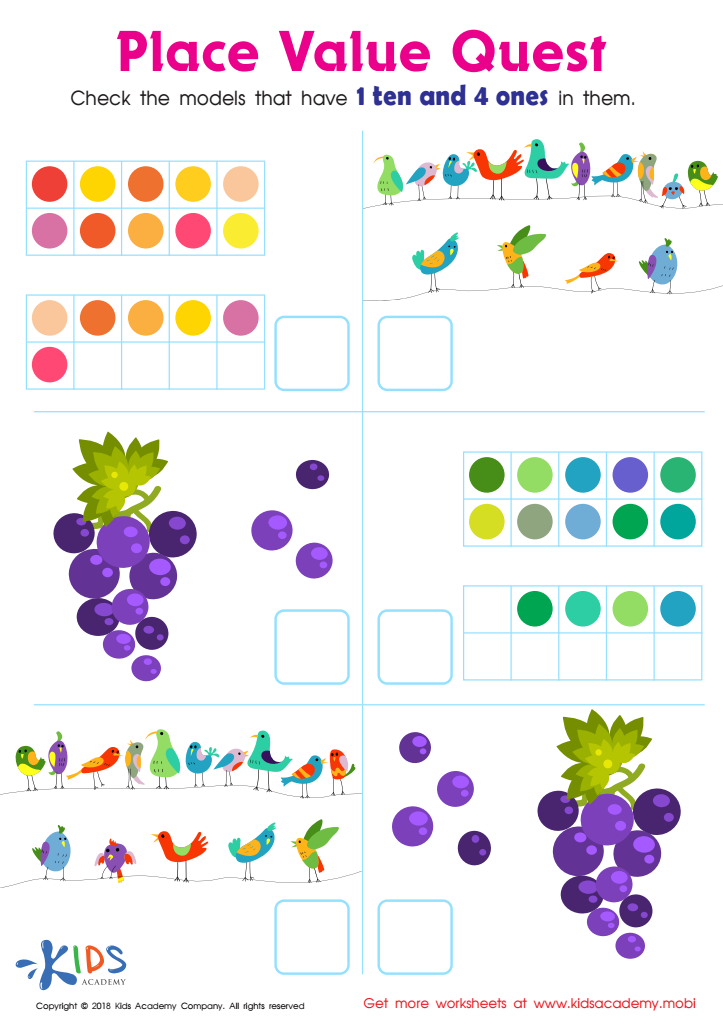
Place Value Quest Worksheet
 Assign to My Students

Daisy Subtraction Quest Worksheet
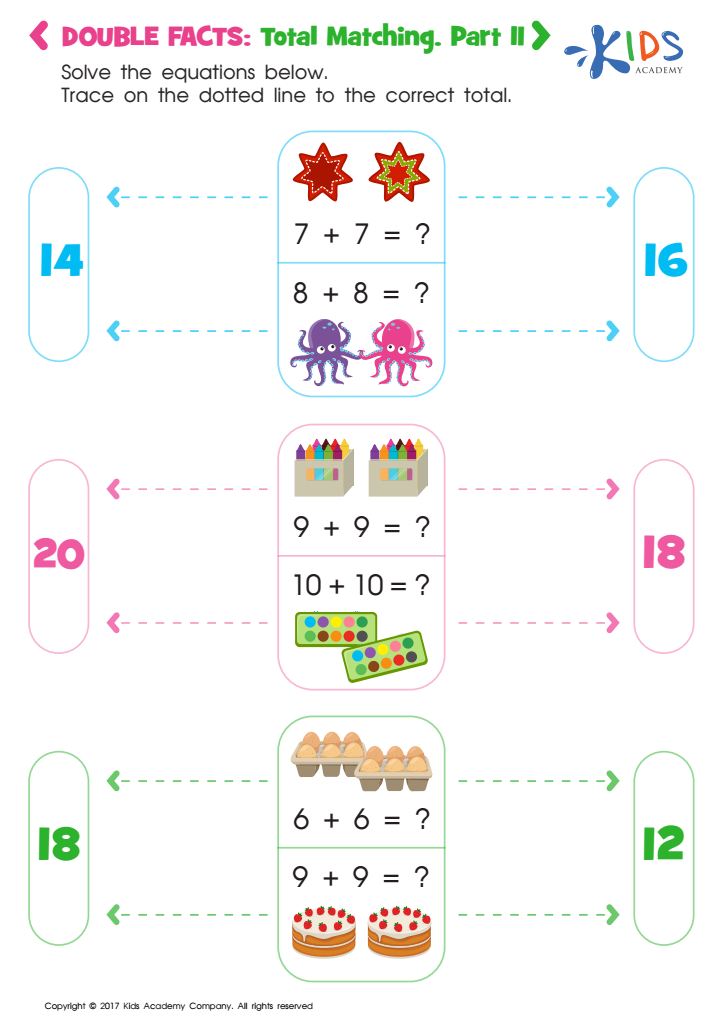
Double Facts: Total Matching 2 Worksheet
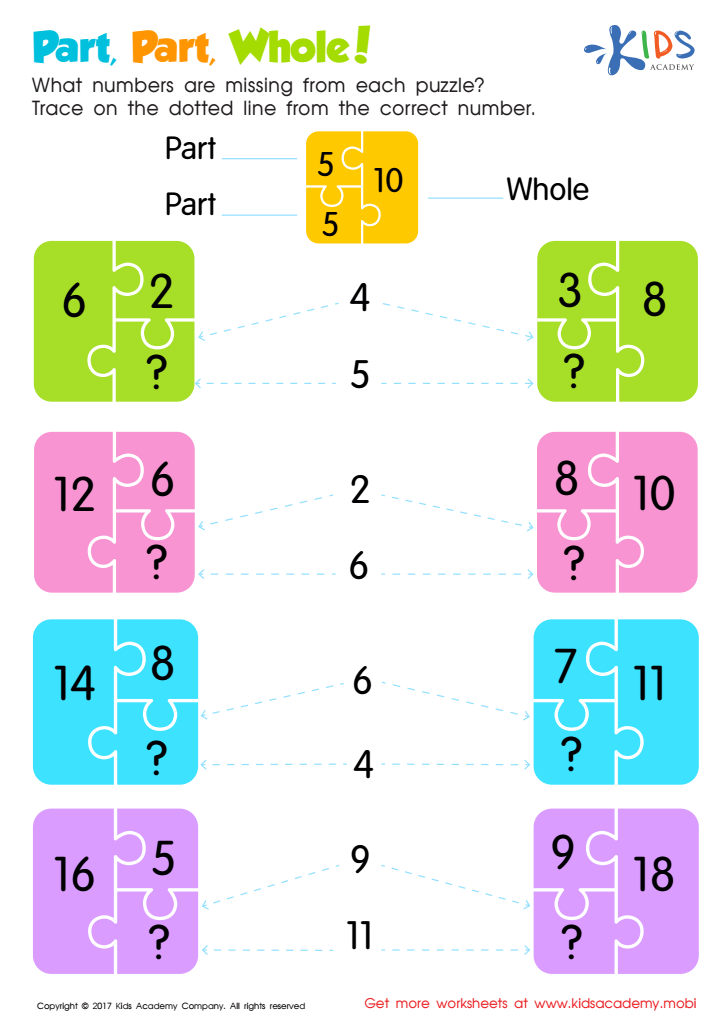
Part, Part, Whole Worksheet








Enhancing problem-solving skills in young children, ages 3-7, through basic math activities is crucial for their cognitive development and future academic success. At this developmental stage, children's brains are highly receptive and adaptable. By engaging in problem-solving exercises, they learn to think critically, develop perseverance, and improve their analytical skills. These foundational abilities are not just applicable to math, but to everyday situations and other scholastic subjects as well.
Parents and teachers play a vital role in nurturing these skills. For parents, integrating simple math puzzles and games into daily routines can make learning enjoyable and contextually relevant. Teachers, on the other hand, can create a supportive classroom environment where children are encouraged to explore, ask questions, and find solutions individually or collaboratively. This kind of engagement not only boosts their confidence but also fosters a lifelong love for learning.
Furthermore, early exposure to problem-solving in math equips children with the ability to approach complex problems with a structured mindset. This is particularly beneficial as educational demands increase. In essence, prioritizing problem-solving skills during these formative years lays a strong foundation that supports both academic and personal growth, ultimately preparing children for the challenges of an increasingly complex world.








