Math problem-solving Normal Math Worksheets for Ages 3-7
3 filtered results
-
From - To
Introducing our specially designed Math Problem-Solving Normal Math Worksheets for Ages 3-7, perfect for developing early math skills. These engaging and colorful worksheets are thoughtfully crafted to build a strong mathematical foundation through fun problem-solving activities. From counting and basic arithmetic to understanding shapes and patterns, each worksheet offers age-appropriate challenges to develop critical thinking and problem-solving skills. Perfect for both classroom and at-home learning, our worksheets provide a supportive environment for young learners to explore math concepts and gain confidence in their abilities. Foster a love for math with these interactive and educational printables!
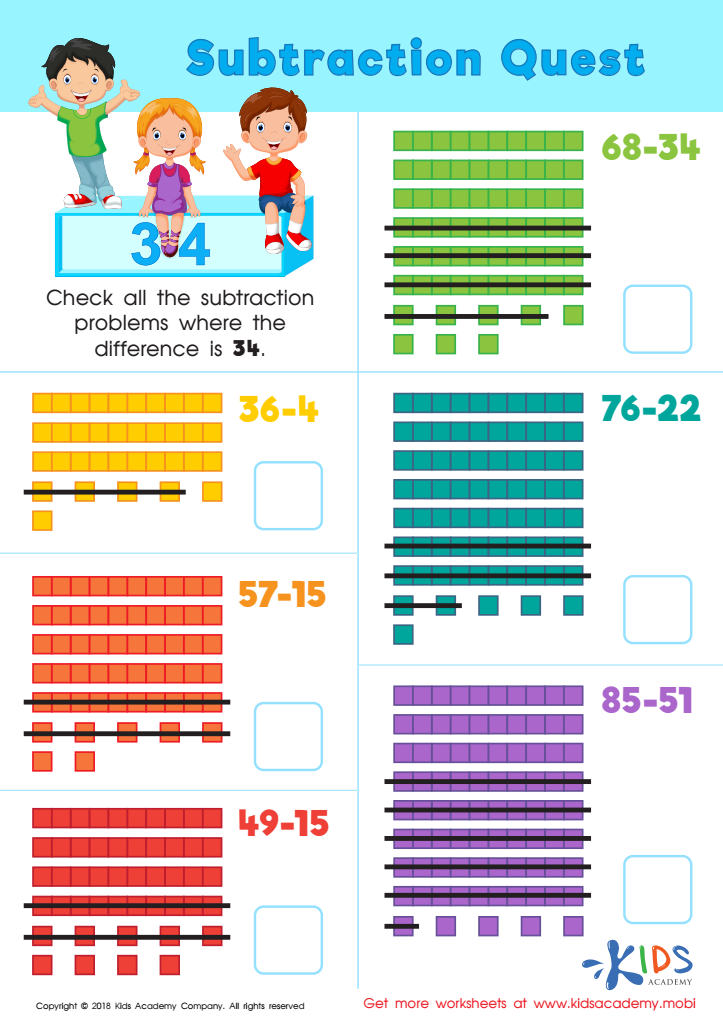
Subtraction Quest Worksheet
 Assign to My Students
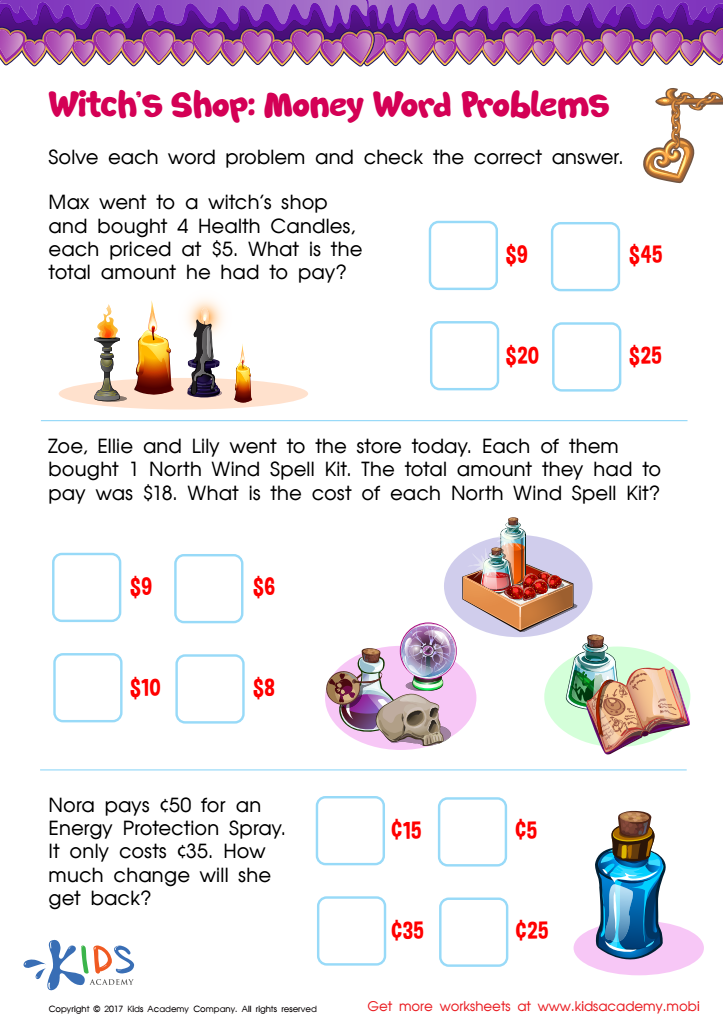
Money Word Problems Printable
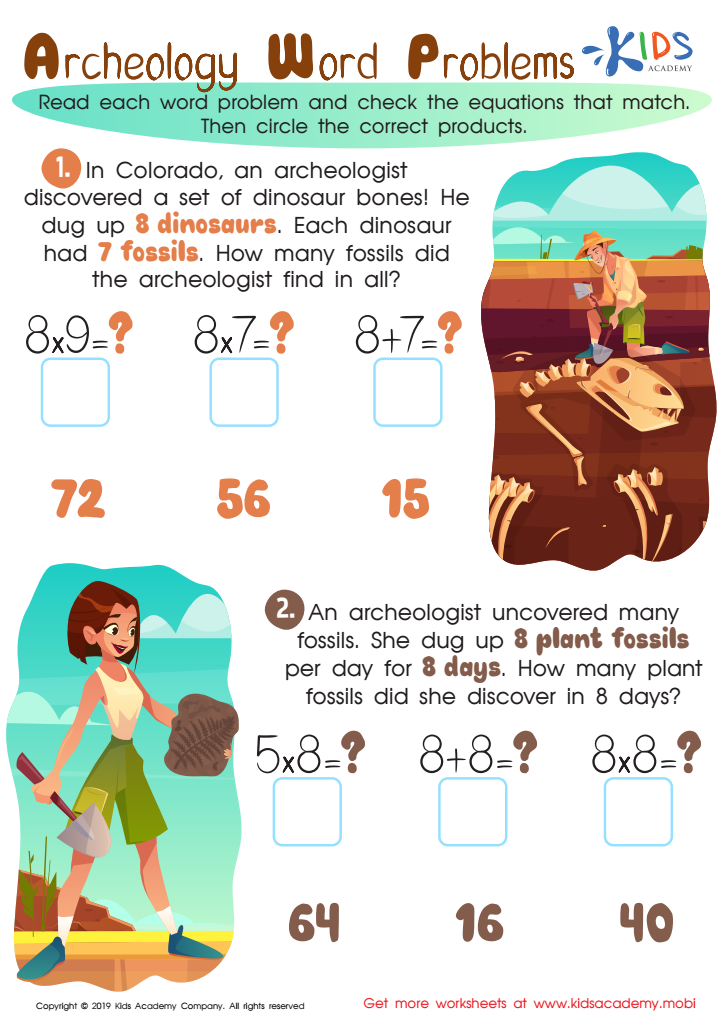
Archeology Word Problems Worksheet







Math problem-solving is crucial for children aged 3-7 as it lays the foundation for their cognitive, social, and academic development. At this tender age, engaging in math problem-solving nurtures critical thinking and introduces basic concepts that are fundamental for future learning. When children solve math problems, they learn to reason, evaluate solutions, and develop perseverance— skills that are essential in everyday life.
Moreover, early exposure to math helps in fostering a positive attitude toward the subject, countering the common anxiety or aversion that can develop later. By integrating math into play and daily activities, parents and teachers can make learning fun and natural, helping children associate math with enjoyment rather than stress.
Additionally, problem-solving in math goes beyond numbers. It encourages pattern recognition, spatial awareness, and logical sequencing, which are beneficial for language acquisition and literacy. For example, activities like counting objects, recognizing shapes, and sorting contribute to a child’s ability to classify and organize information.
Furthermore, math problem-solving fosters social skills. Group activities and cooperative problem-solving teach children to communicate ideas, listen to others, and work collaboratively towards a common goal.
In summary, early math problem-solving is an essential component of holistic development, setting the stage for a confident, capable, and curious learner.








