Mental math practice Normal Math Worksheets for Ages 3-7
5 filtered results
-
From - To
Boost your child's math confidence with our engaging Mental Math Practice worksheets, tailored for ages 3-7! These thoughtfully designed worksheets foster essential math skills in an enjoyable way, enhancing mental calculation and number sense. With a variety of activities that include addition, subtraction, and more, children will develop their problem-solving abilities while having fun. Our printable resources cater to different learning styles and help reinforce classroom knowledge at home. Inspire a love for math early on, and watch your young learner thrive as they tackle each worksheet with enthusiasm. Get started today for a head start in math mastery!
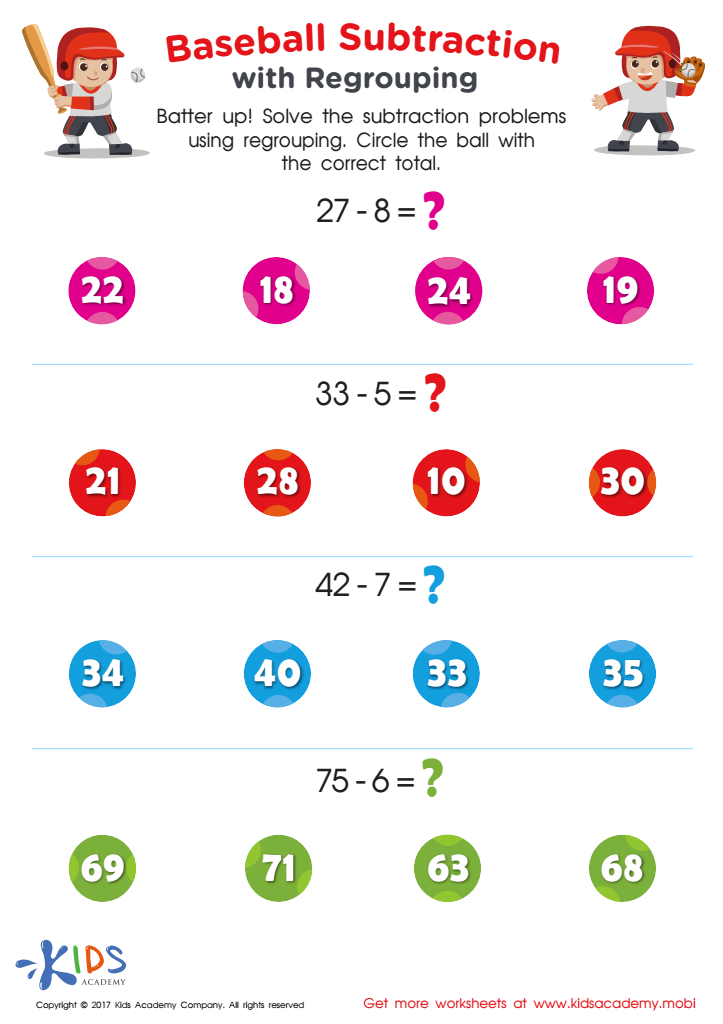
Subtraction With Regrouping for 2nd Grade Worksheet
 Assign to My Students
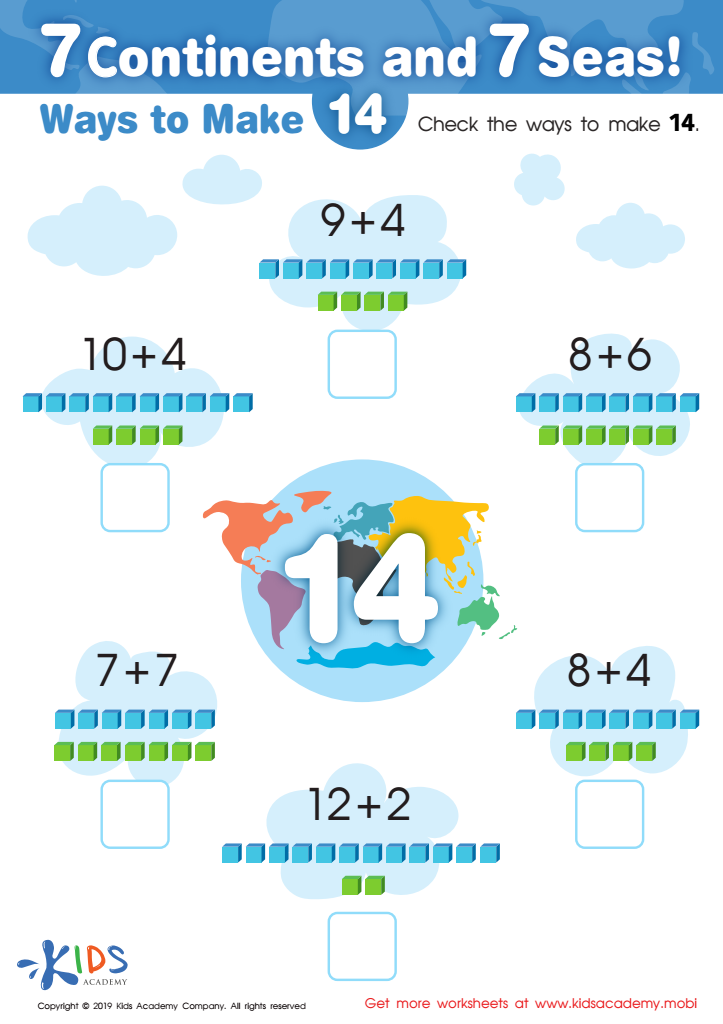
7 Continents and 7 Seas Worksheet
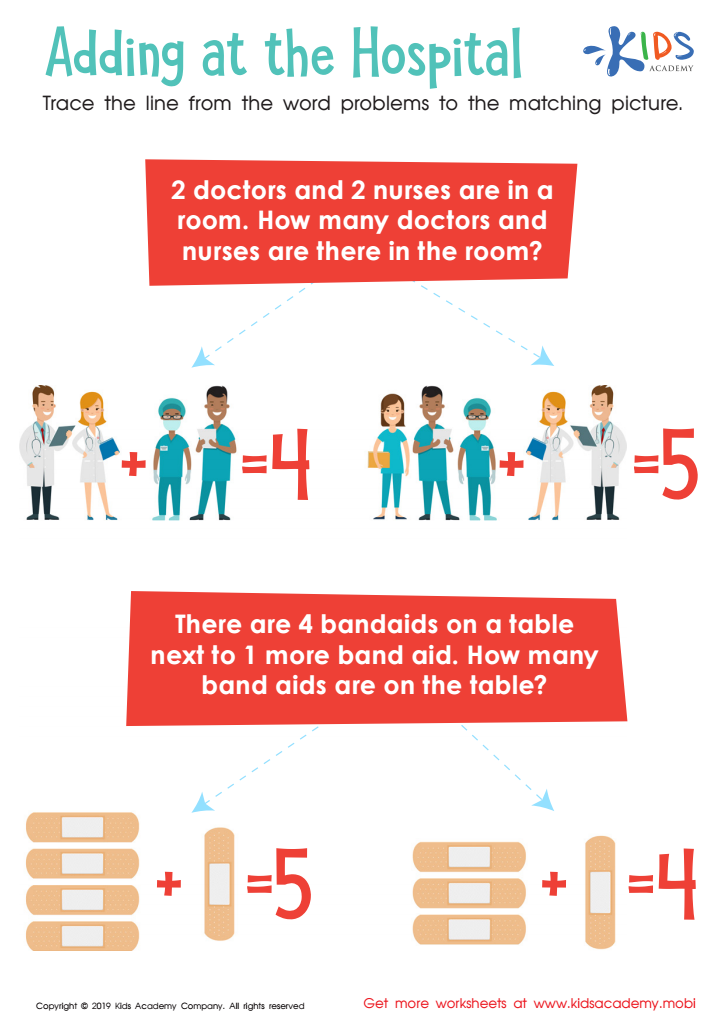
Adding at the Hospital Worksheet
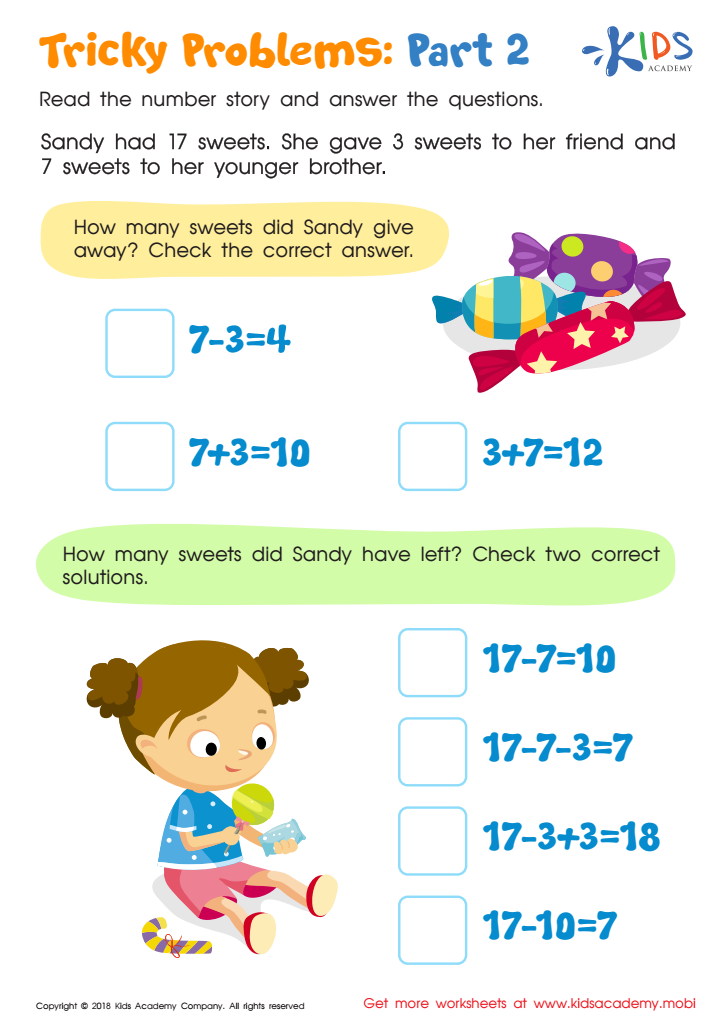
Tricky Problems Worksheet: Part 2
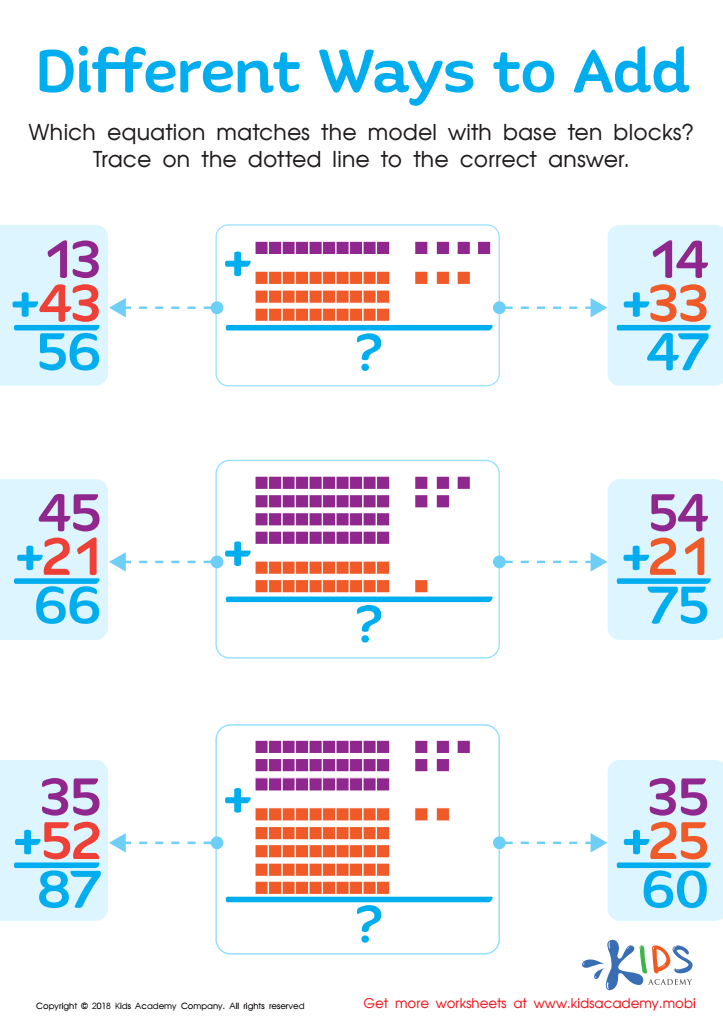
Different Ways to Add Worksheet








Mental math practice is crucial for children aged 3 to 7, offering a foundation for their overall mathematical understanding and cognitive development. Engaging in mental math enhances children’s number sense, enabling them to visualize quantities and understand basic math concepts without relying solely on manipulation of physical objects or calculators.
Parents and teachers should care about fostering mental math skills because this practice strengthens problem-solving abilities and promotes critical thinking. It encourages children to explore various ways to reach answers, thus enhancing their creativity in approaching tasks. Additionally, mental math boosts confidence, as children learn to trust their instincts and reasoning processes, leading to a positive attitude toward math in general.
Furthermore, mental math aligns with early literacy skills; just as reading requires practice to improve fluency and comprehension, math proficiency grows through routine mental exercises. It prepares children for more complex mathematical concepts in later years and supports their performance in standardized tests. Overall, prioritizing mental math helps establish a strong academic foundation, instilling a lifelong love for learning and equipping children with skills necessary for success in an increasingly numerically-driven world.








