Number comparison Normal Math Worksheets for Ages 3-7
5 filtered results
-
From - To
Explore our engaging Number Comparison Normal Math Worksheets designed specifically for children aged 3-7! These worksheets support early learners in developing essential math skills through fun and interactive activities that promote number recognition, comparison, and counting. With colorful illustrations and age-appropriate challenges, kids will enjoy identifying larger and smaller numbers while building their confidence in math. Perfect for classroom use or at-home learning, our worksheets foster a solid foundation for future math concepts. Give your child the tools they need to succeed with these delightful worksheets that make learning math an enjoyable adventure!
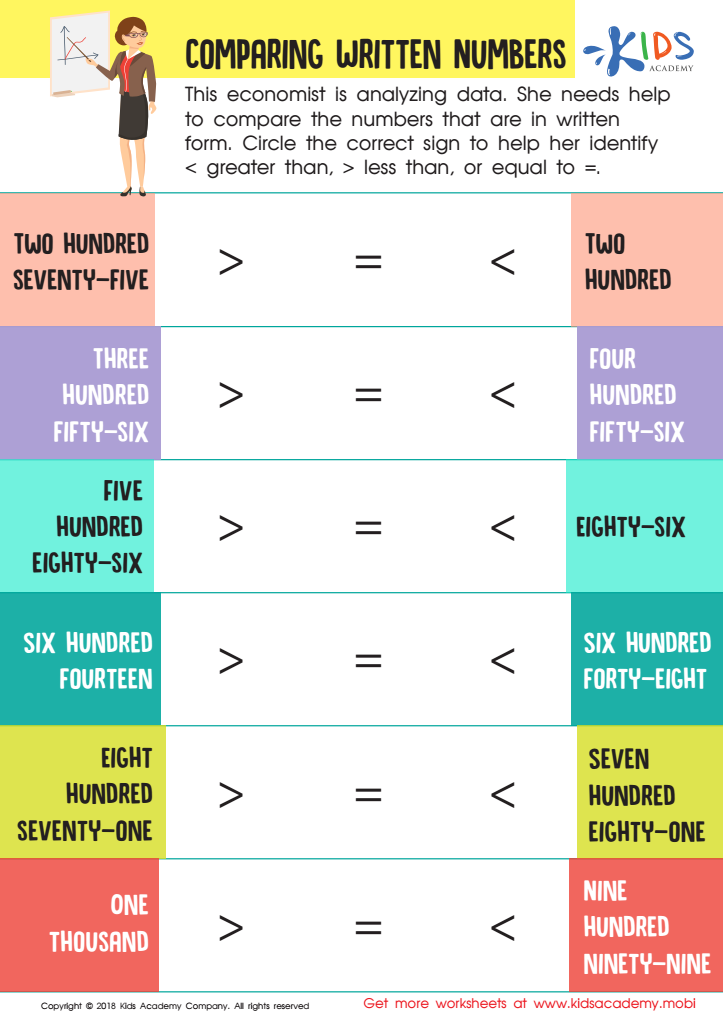
Comparing Written Numbers Worksheet
 Assign to My Students
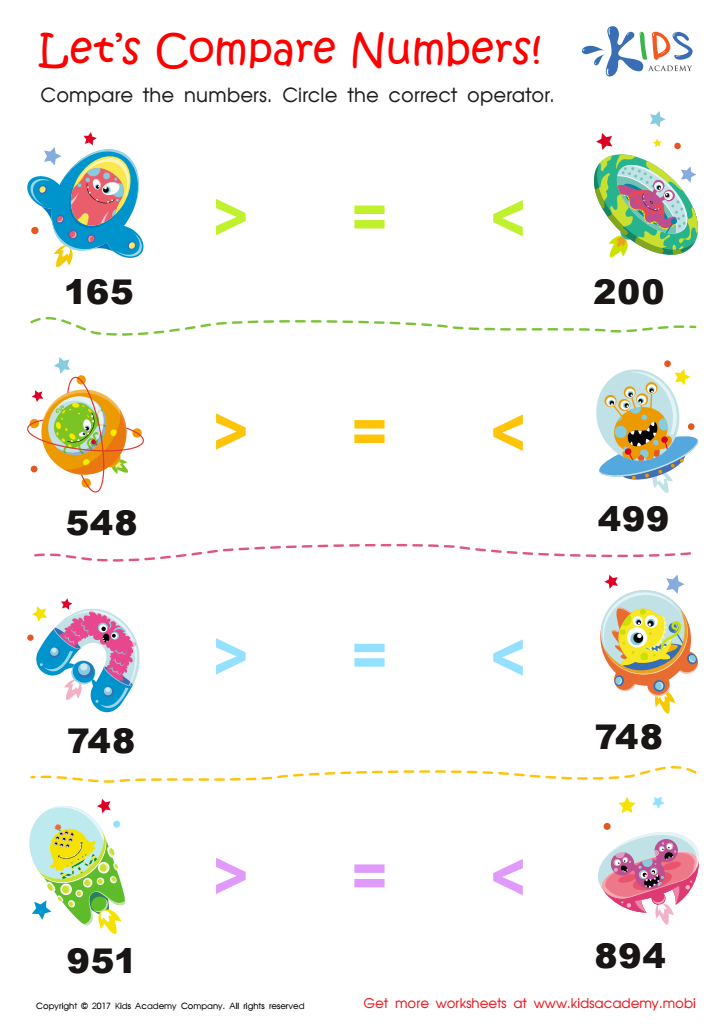
Comparing Numbers Worksheet for 2nd Grade
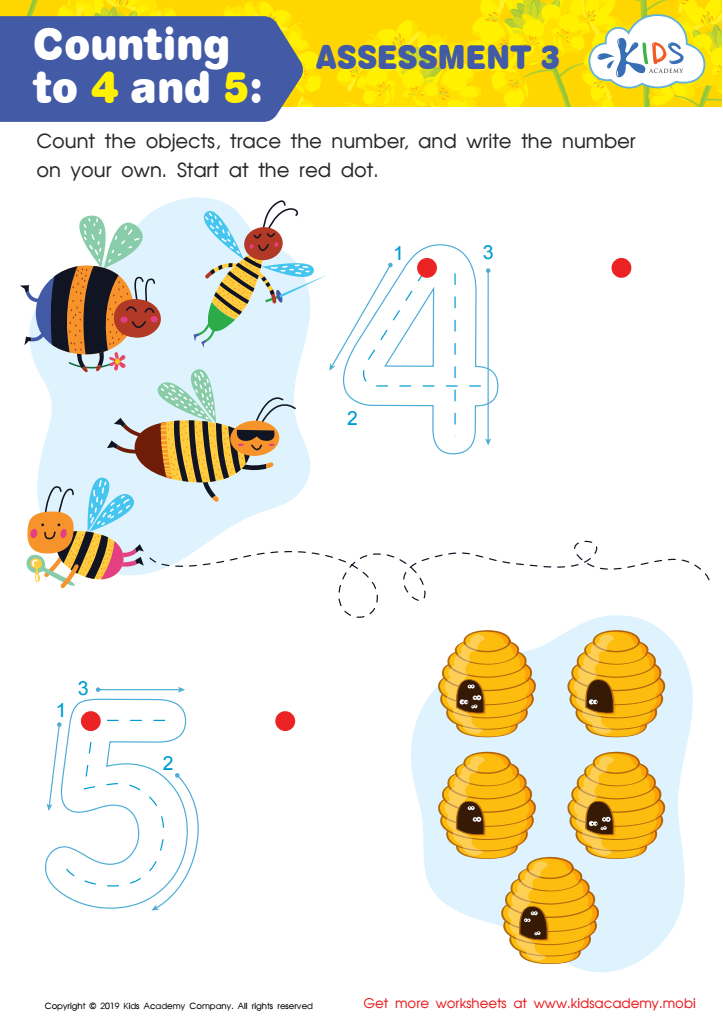
Counting to 4 and 5: Assessment 3 Worksheet
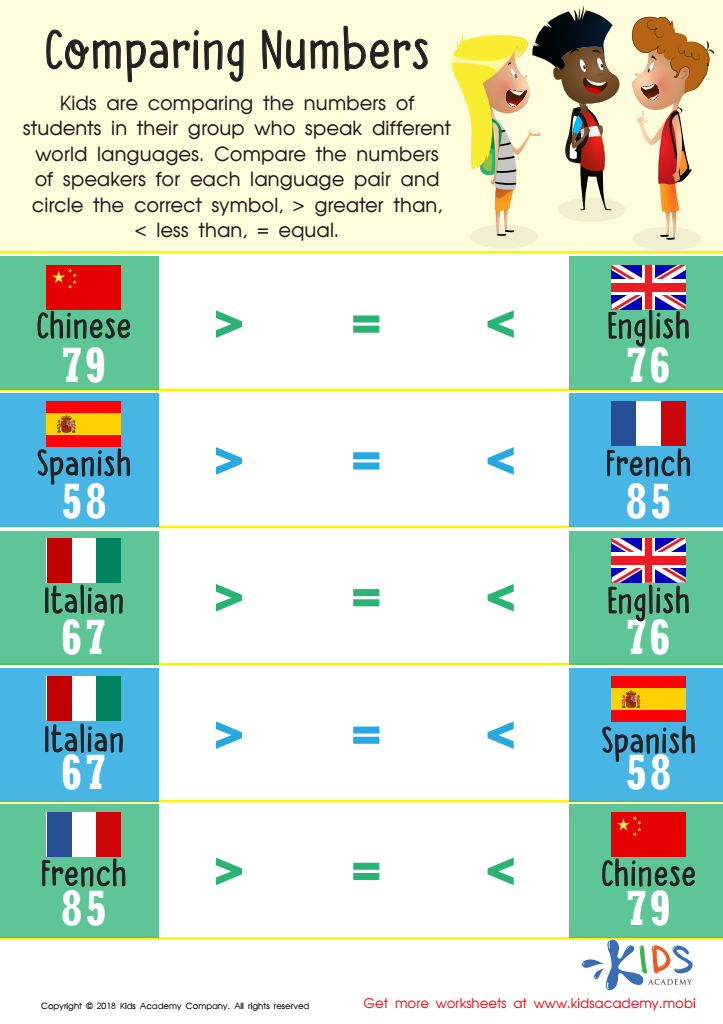
Comparing Numbers Worksheet for 1st Grade
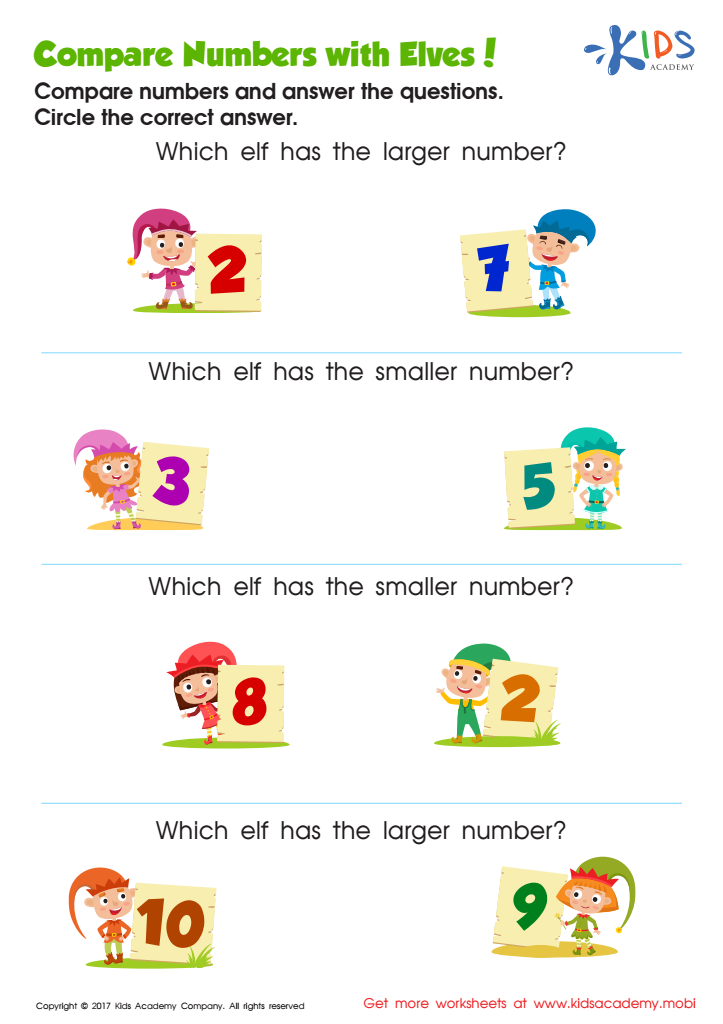
Comparing Numbers Worksheet for Kindergarten






Number comparison, the ability to identify which of two numbers is larger or smaller, is an essential foundational skill for young learners aged 3-7. It's not just a math concept; it's a critical cognitive ability that influences a child's overall academic performance. When children grasp number comparison, they develop a more robust understanding of quantity, which lays the groundwork for future mathematical concepts such as addition, subtraction, and place value.
Parents and teachers should care about number comparison for several reasons. First, it enhances critical thinking and problem-solving skills as children learn to analyze and compare quantities. This skill promotes confidence in their math abilities, which can lead to a positive attitude towards learning. Second, number comparison fosters early numeracy skills that are integral in everyday situations, from managing money to understanding time.
Third, incorporating number comparison activities in the classroom or at home encourages interactive and engaging learning experiences. This can strengthen bonds between children and adults while making math enjoyable. Ultimately, nurturing this fundamental skill will not only support children's mathematical development but will also help build a strong educational foundation that will serve them well throughout their academic journey.








