Spatial reasoning Normal Math Worksheets for Ages 3-7
3 filtered results
-
From - To
Introducing our Spatial Reasoning Normal Math Worksheets for ages 3-7, designed to enhance young learners' critical thinking and problem-solving skills! Our engaging worksheets include a variety of fun activities that promote spatial awareness through exciting puzzles, pattern recognition, and shape manipulation exercises. These worksheets help children accurately visualize and interpret their surroundings, laying the foundational math skills necessary for future success. Perfect for home or classroom use, our tailored resources encourage creativity and cognitive development while aligning with developmental milestones. Stimulate your child's learning journey and watch their confidence soar as they explore the world of spatial reasoning!
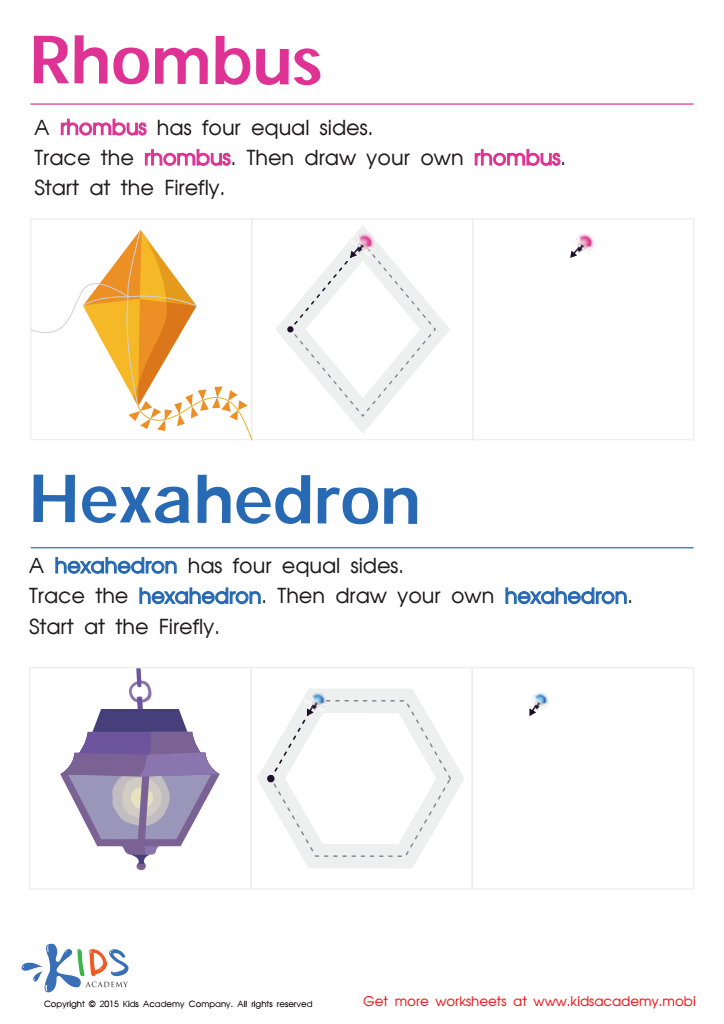
Draw a Rhombus And a Hexahedron Printable
 Assign to My Students
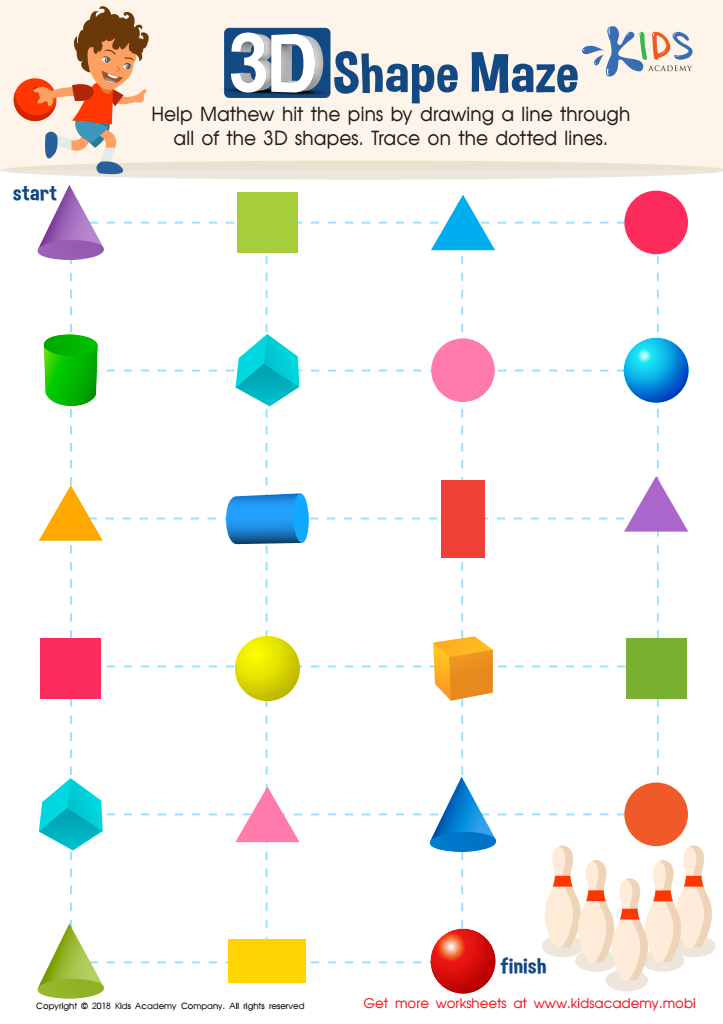
Shapes Maze Geometry Worksheet
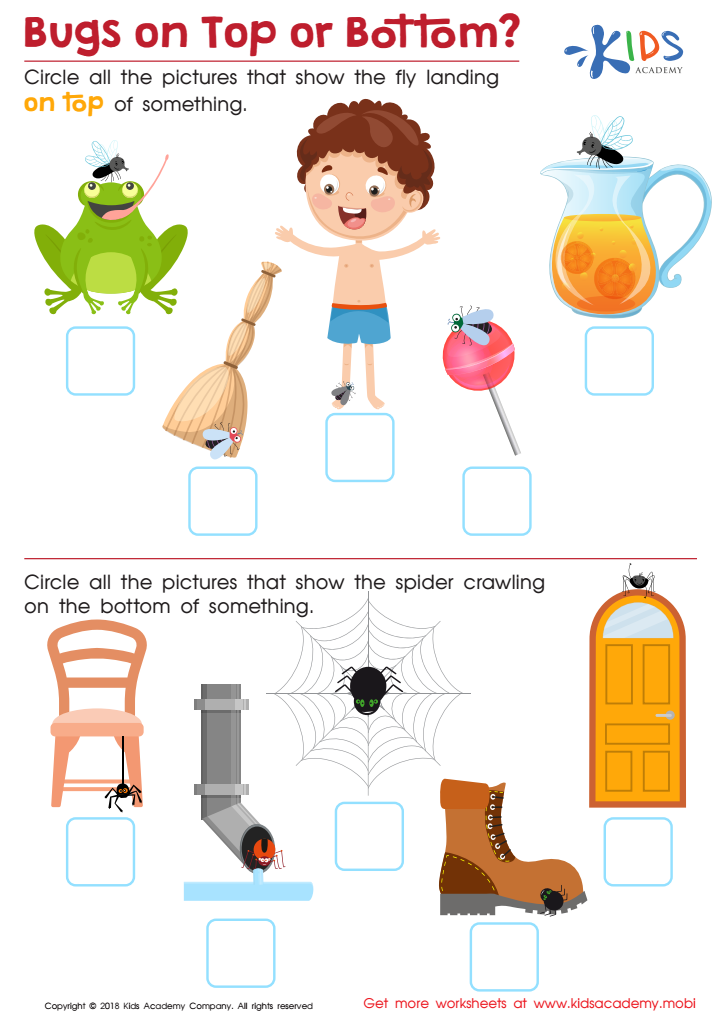
Bugs on Top or Bottom? Worksheet


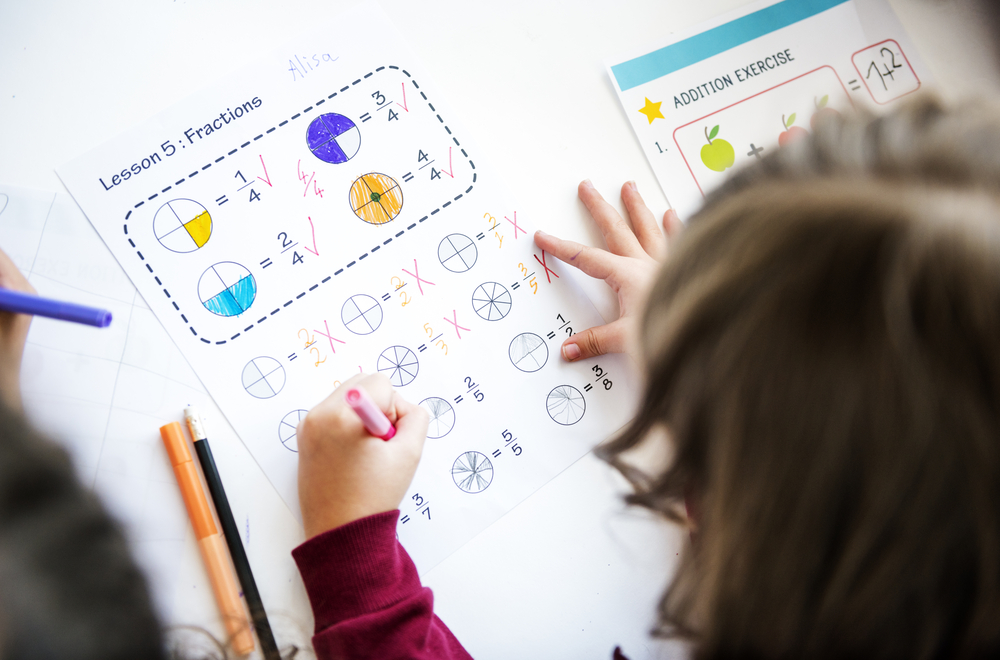


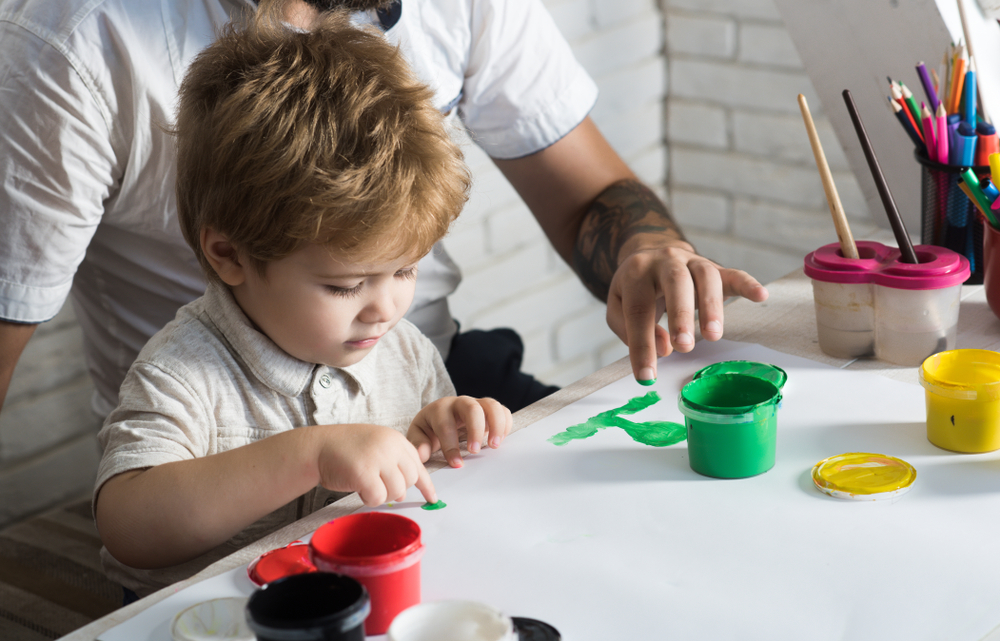
Spatial reasoning is a crucial skill that develops in young children and serves as a foundational element for later mathematical understanding and problem-solving. For children aged 3-7, spatial reasoning involves the ability to visualize, manipulate, and analyze shapes and objects, which can influence their proficiency in geometry, measurement, and even algebra.
Parents and teachers should care about this type of reasoning because it impacts overall academic success and cognitive development. Children with strong spatial skills are better equipped to understand mathematical concepts, which can lead to improved performance in school. Early exposure to activities that enhance spatial reasoning, such as puzzles, building blocks, and shape sorting, can foster crucial brain development at a time when neural pathways are forming rapidly.
Moreover, spatial reasoning is closely linked to everyday tasks and real-world applications, including map reading, navigation, and understanding graphs or charts. By promoting exercises and interactive experiences that develop spatial awareness, parents and teachers can prepare children to meet the challenges of both math and science subjects in the future. Nurturing these skills early promotes confidence and enhances critical thinking, setting a strong educational foundation for lifelong learning.








