
Understanding comparisons Normal Math Worksheets for Ages 3-7
4 filtered results
Difficulty Level
Grade
Age
-
From - To
Subject
Activity
Standards
Enhance your child’s early math skills with our "Understanding Comparisons Normal Math Worksheets for Ages 3-7" from Kids Academy! These engaging, printable worksheets are designed specifically for young learners to grasp fundamental concepts of comparisons, such as bigger vs smaller, longer vs shorter, and more_vs_less. Through fun activities incorporating colorful visuals and relatable scenarios, children will gain confidence in distinguishing size, length, and quantity. Boost your child's critical thinking and problem-solving abilities while making learning enjoyable with our expertly crafted resources tailored for kids aged 3 to 7. Explore our collection today to support your child's educational journey!
Favorites
With answer key
Interactive
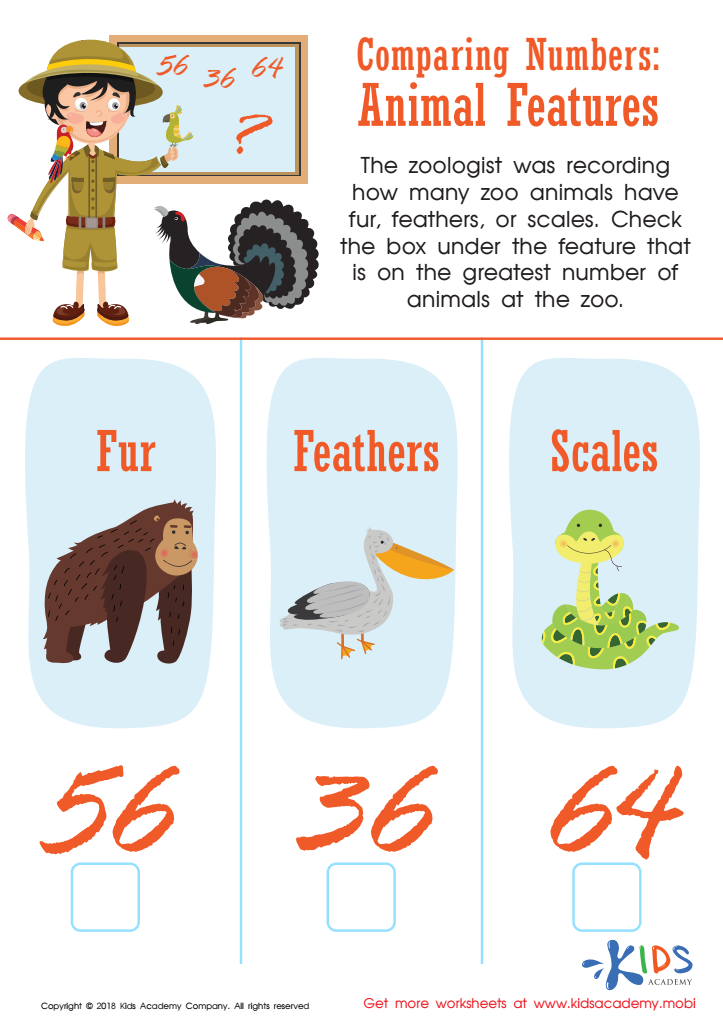
Animal Features Worksheet
Let your kids join a budding zoologist! They can count zoo animals' fur, feathers or scales, then use numbers and comparison to check the box with the most friends. The PDF will captivate them and help them understand how the value of '6' changes based on its position.
 Assign to My Students
Animal Features Worksheet
Worksheet
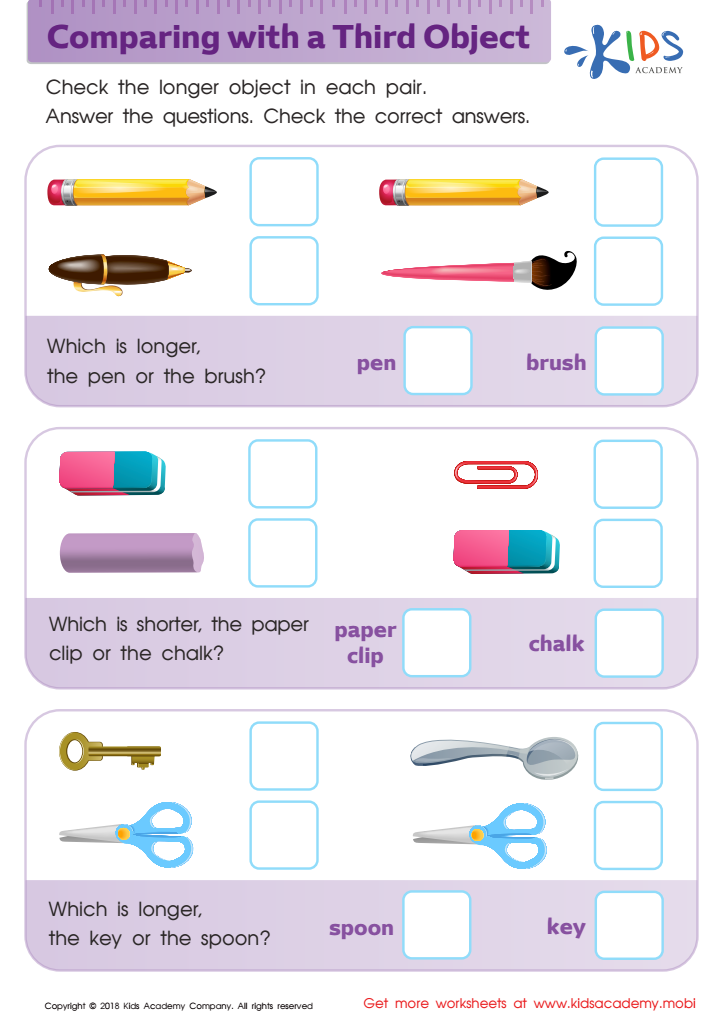
Comparing with a Third Object Worksheet
Help your child master measurement skills with this free downloadable math worksheet! Ask them to compare each pair of objects, checking the box for the longer one. Then, read the question and compare the objects across the pairs before ticking the box and continuing to the next group of pictures.
Comparing with a Third Object Worksheet
Worksheet
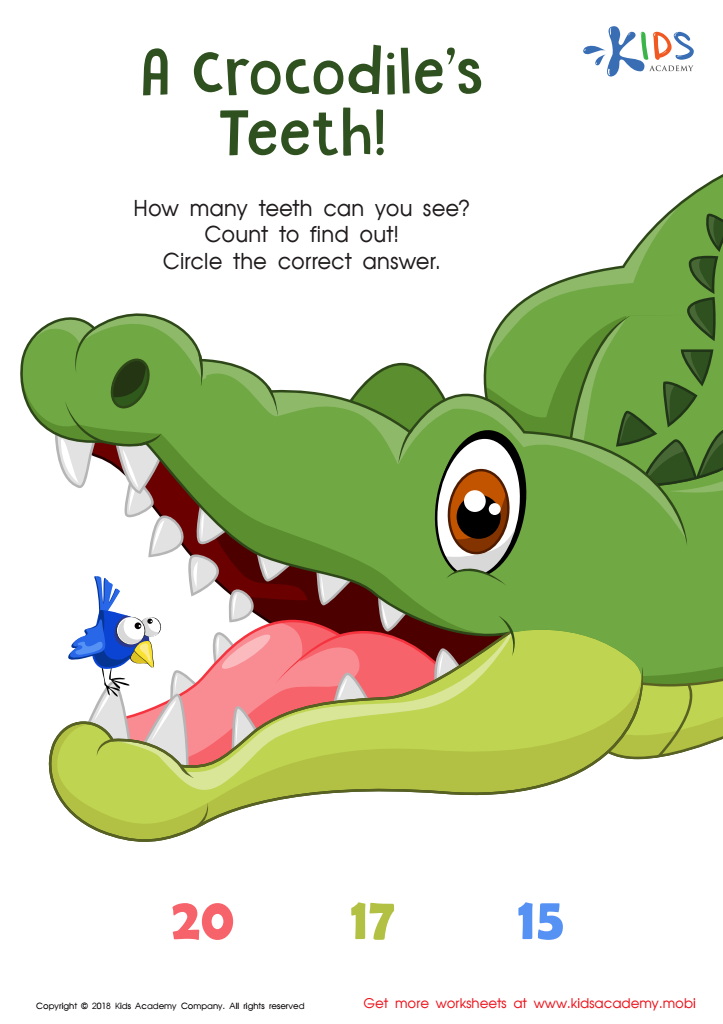
A Crocodile's Teeth Worksheet
Show your child the animal image and ask them to identify it. If they watch animal shows, they'll likely be interested. Count the teeth together, then look at the options and help them circle the right one.
A Crocodile's Teeth Worksheet
Worksheet
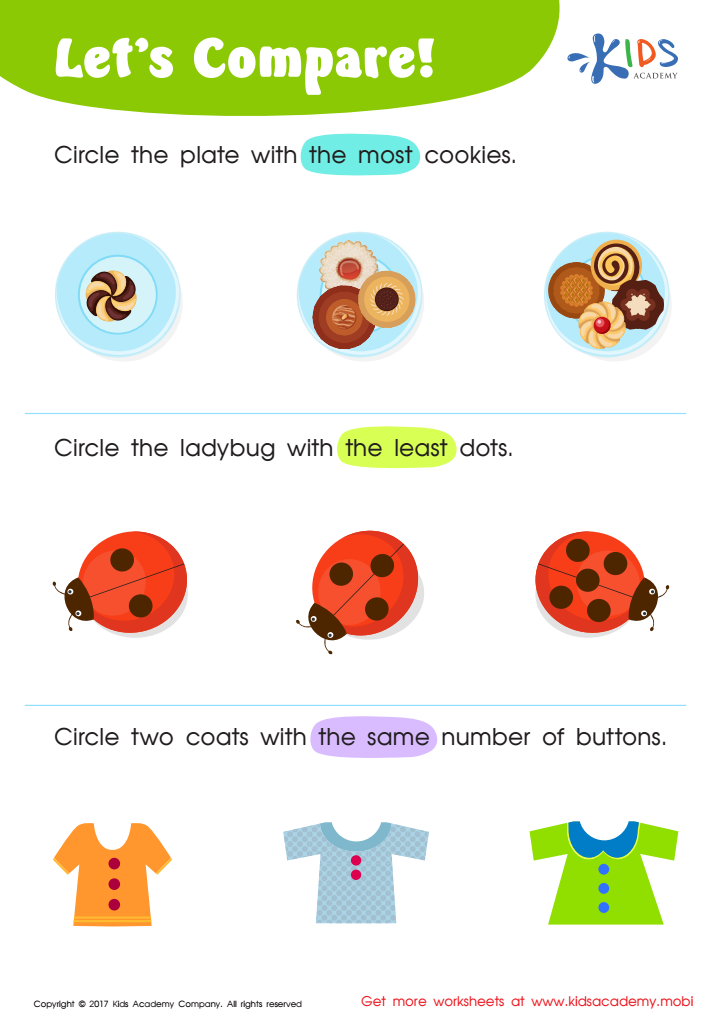
Matching: Classifying Toys by Size Worksheet
.
Have your young one's observation and counting skills ready for this worksheet; carefully look through the images and count the objects, then circle the plates with the least, most or equal number of patterns. Pay attention and have good counting abilities to make this task easy.
Matching: Classifying Toys by Size Worksheet
Worksheet
Join Kids Academy for Free
Who is primarily going to use this learning content?








Understanding comparisons in early math is essential for children aged 3-7 because it forms the foundation for more complex mathematical concepts they will encounter later. At this age, children are naturally curious and learning to compare objects, sizes, numbers, and quantities helps develop their cognitive skills, critical thinking, and problem-solving abilities.
For parents and teachers, fostering this understanding can aid children in recognizing patterns, understanding relationships, and developing a sense of order—all fundamental aspects of math. For instance, when children compare the heights of two blocks or the amounts of two snacks, they learn to observe differences and similarities, which is crucial for categorization and logical reasoning.
Moreover, these early comparisons are not limited to math but also spill over into daily life skills. Understanding how to compare enables children to make informed choices, understand sequences, and follow directions more effectively.
Educational research consistently shows that early math skills are a strong predictor of later academic achievement. Therefore, invest time in nurturing a child’s ability to make comparisons in meaningful, engaging ways is crucial. It sets a solid foundation for their academic journey and builds confidence in tackling more advanced mathematical challenges in the future.








