Visual discrimination Normal Matching Worksheets for Ages 3-7
3 filtered results
-
From - To
Boost your child's visual discrimination skills with our fun and engaging Normal Matching Worksheets, designed for ages 3-7. These worksheets help young learners differentiate between various shapes, sizes, and patterns, enhancing their ability to recognize and compare images. Ideal for developing critical cognitive skills, our printable activities make learning enjoyable and interactive. Perfect for both classroom and home use, these beautifully illustrated worksheets support foundational math concepts and prepare kids for more advanced tasks. Explore our collection today and watch your child’s observational abilities flourish as they match, sort, and classify with confidence!
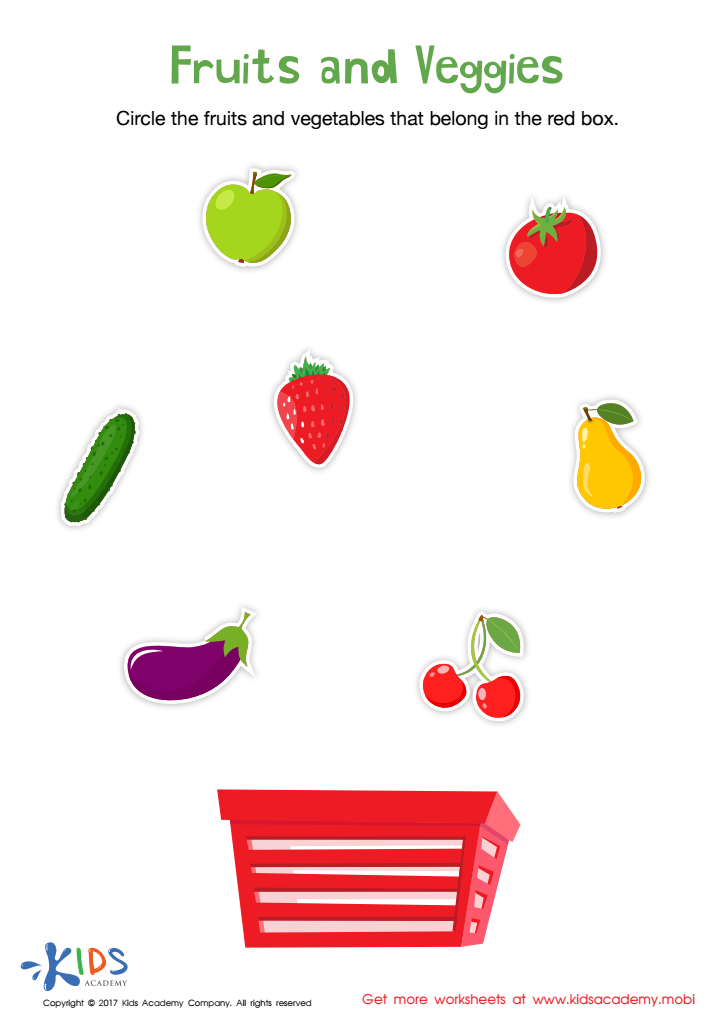
 Assign to My Students
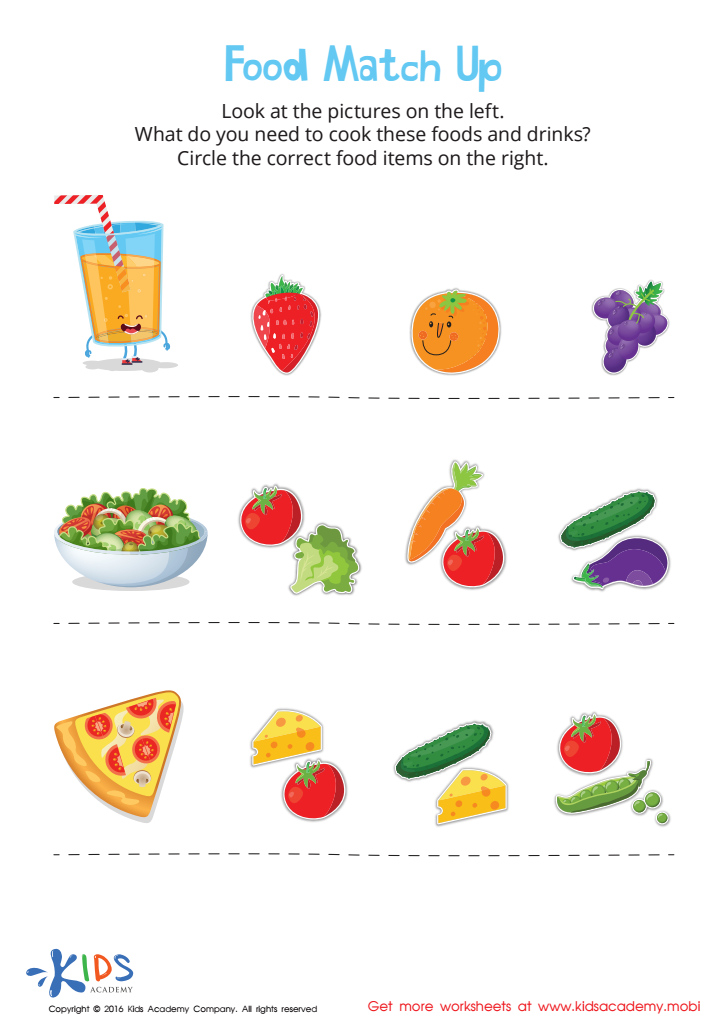
Food Match Up Worksheet
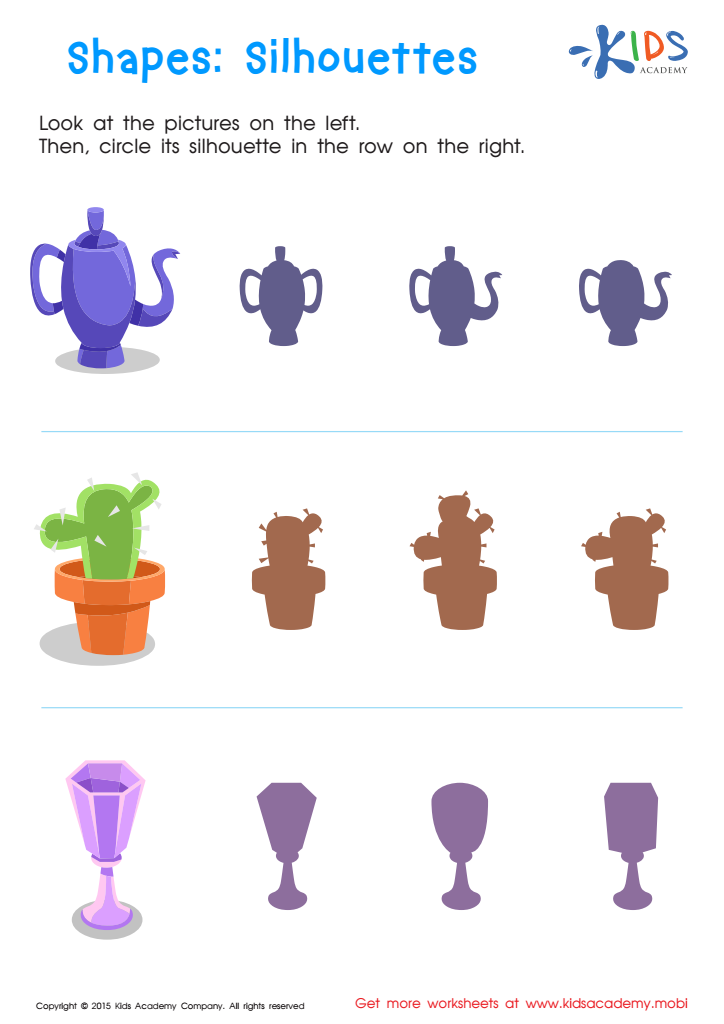
Silhouettes – Shapes Worksheet







Visual discrimination matching is crucial for children aged 3-7 and warrants special attention from parents and teachers. This foundational skill is the ability to recognize differences and similarities in visual stimuli, such as shapes, patterns, colors, letters, and numbers. Developing strong visual discrimination skills is integral for many aspects of a child's future learning and daily life.
For literacy, it's essential: distinguishing between similar-looking letters (e.g., 'b' vs. 'd' or 'p' vs. 'q') is fundamental for reading accuracy. Children who struggle with visual discrimination might find it challenging to differentiate letters and words, affecting their reading and writing fluency. Similarly, in numeracy, recognizing numbers and understanding math symbols rely on these skills, contributing to math foundation.
Good visual discrimination enables children to navigate their environments safely and efficiently, honing their spatial awareness and ability to follow visual instructions like puzzles and matching games. These skills bolster logical thinking and problem-solving abilities, enhancing academic performance.
Emphasizing visual discrimination through engaging activities like matching games, sorting exercises, and drawing tasks can make learning enjoyable. Parents and teachers should integrate these practices into routine learning to cultivate proficient visual discrimination skills, setting a strong groundwork for academic success and everyday competence.








