
Fine Motor Skills Normal Sorting Worksheets for Ages 3-7
3 filtered results
Difficulty Level
Grade
Age
-
From - To
Subject
Activity
Standards
Enhance your child's fine motor skills with our engaging Normal Sorting Worksheets designed for ages 3 to 7. These worksheets focus on developing essential hand-eye coordination and dexterity through fun sorting activities. Kids will enjoy sorting various objects based on colors, sizes, and shapes, fostering both creativity and cognitive abilities. Ideal for early learners, our carefully crafted sheets provide interactive learning experiences that keep your little ones engaged while building crucial skills. Whether at home or in the classroom, these worksheets serve as a valuable resource for educators and parents alike. Download now and inspire joyful learning!
Favorites
With answer key
Interactive
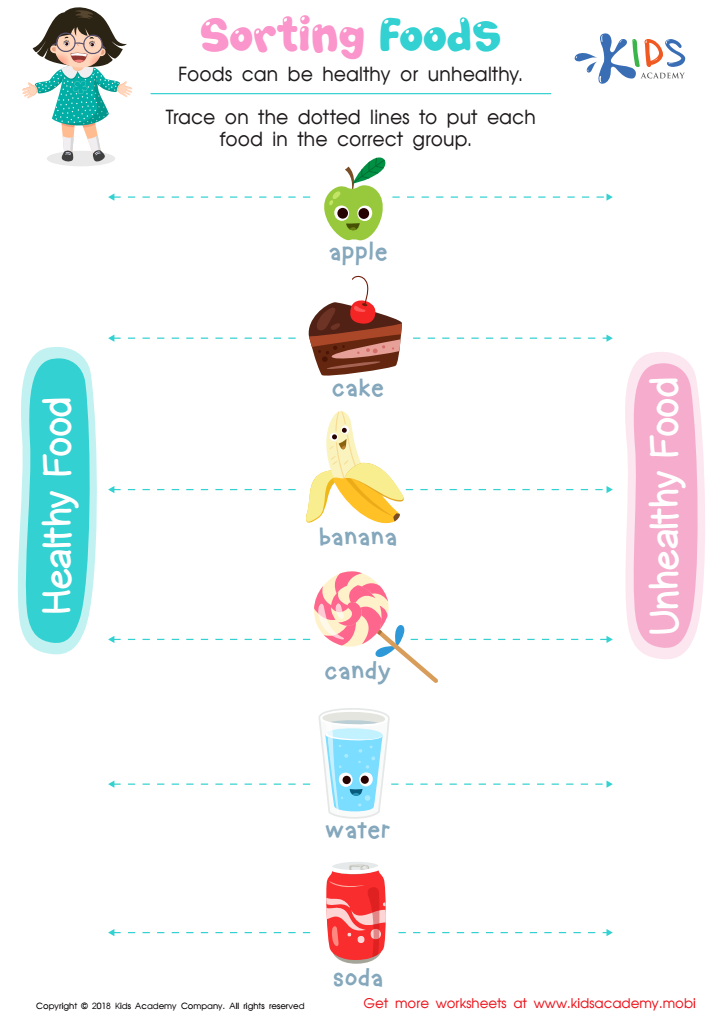
Sorting Food Worksheet
This delightful worksheet boosts critical thinking and fine motor skills. Kids use prior knowledge and pictures to sort foods into healthy and unhealthy groups. Tracing lines support accurate sorting and matching. Enjoy fun and free learning!
 Assign to My Students
Sorting Food Worksheet
Worksheet
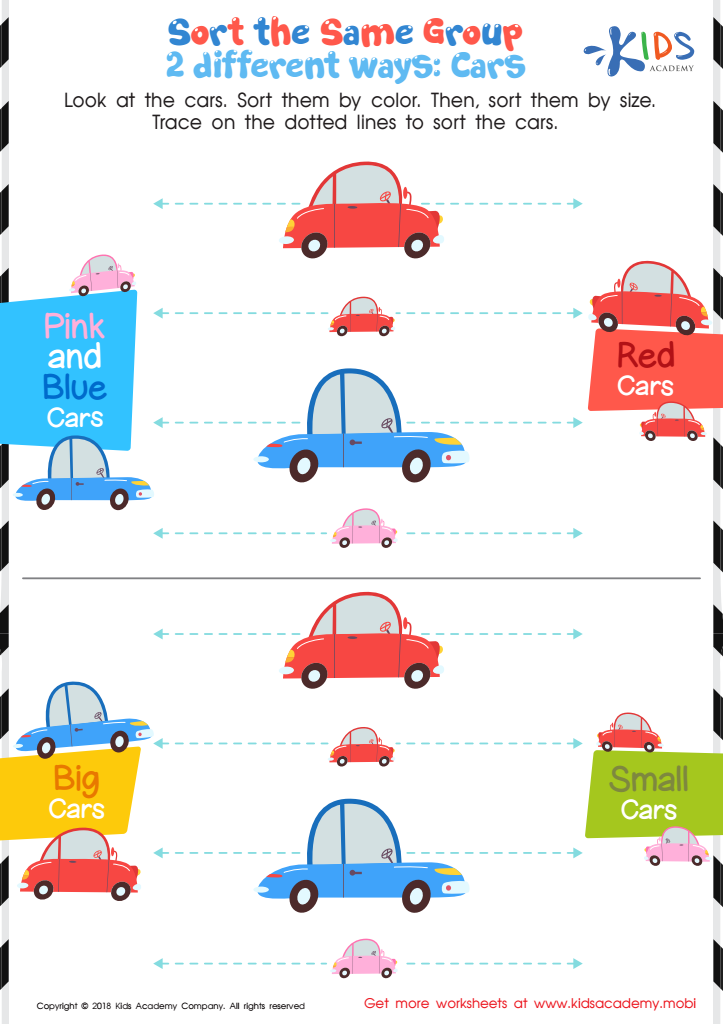
Sort the Same Group 2 Different Ways: Cars Worksheet
Look at the pictures with your child. Can they identify the objects? Ask them to sort the cars first by color and then size. Assist them to trace the dotted lines to sort the cars by color and size. This worksheet lets you easily assess your child's color and size organization skills.
Sort the Same Group 2 Different Ways: Cars Worksheet
Worksheet
Join Kids Academy for Free
Who is primarily going to use this learning content?








Fine motor skills are crucial for children's overall development and daily functioning. For children aged 3-7, normal sorting activities play a vital role in enhancing these skills. Such activities involve manipulating small objects, which strengthens hand-eye coordination, finger dexterity, and hand strength. Parents and teachers should care about this progression as it lays the foundation for more complex tasks, such as writing, painting, and using tools.
Additionally, sorting activities help develop cognitive skills. Children learn to categorize objects based on different attributes, fostering critical thinking and problem-solving abilities. Engaging in these activities also promotes social skills, particularly when done in groups. Children learn to communicate, share, and collaborate as they sort objects together.
Moreover, fine motor development influences a child's confidence and self-esteem. When children successfully engage in tasks that require precision, it boosts their sense of achievement and encourages them to take on new challenges. Therefore, prioritizing normal sorting and other fine motor activities is essential for parents and teachers. It equips children with the necessary skills to navigate their environment effectively, both in academic settings and everyday life, preparing them for lifelong success.








