Normal Time Worksheets for Ages 3-7
5 filtered results
-
From - To
Introduce the concept of time to children with our engaging Normal Time Worksheets for ages 3-7! Designed to make learning fun, these worksheets help young learners grasp the fundamentals of telling time. Each activity encourages kids to practice reading clocks, understanding hours and minutes, and sequencing daily events. Perfect for home or classroom use, our worksheets align with educational standards and cater to various learning styles. Ensure your child or student builds a strong foundation in time-telling skills with colorful, interactive printables. Visit the Kids Academy today for exciting resources that turn learning into an enjoyable adventure!
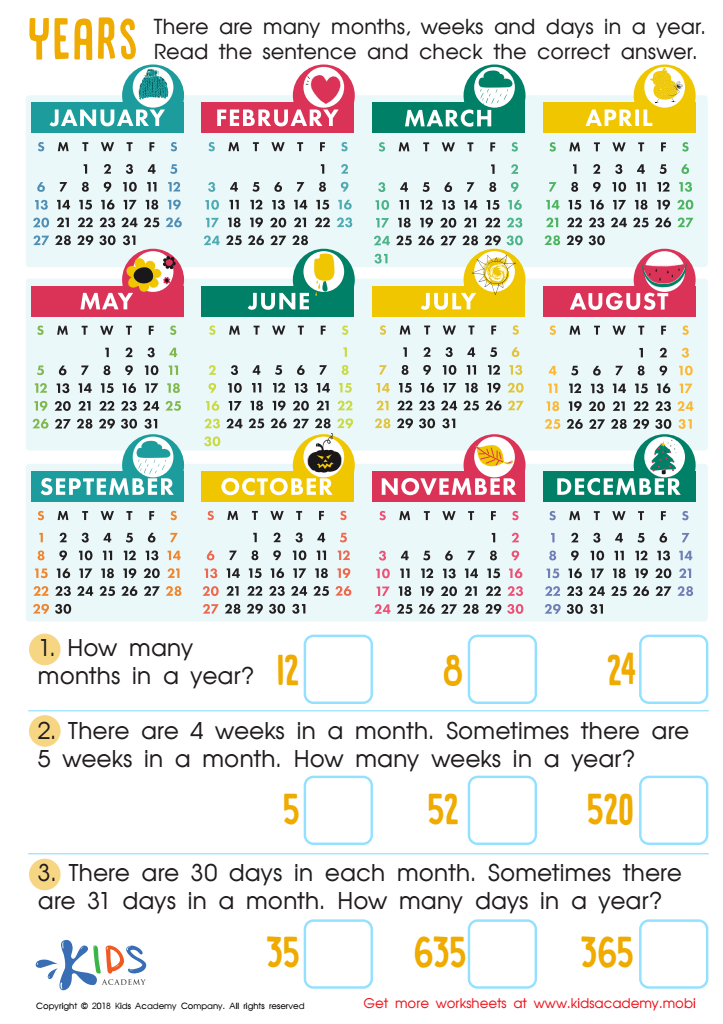
Years Worksheet
 Assign to My Students
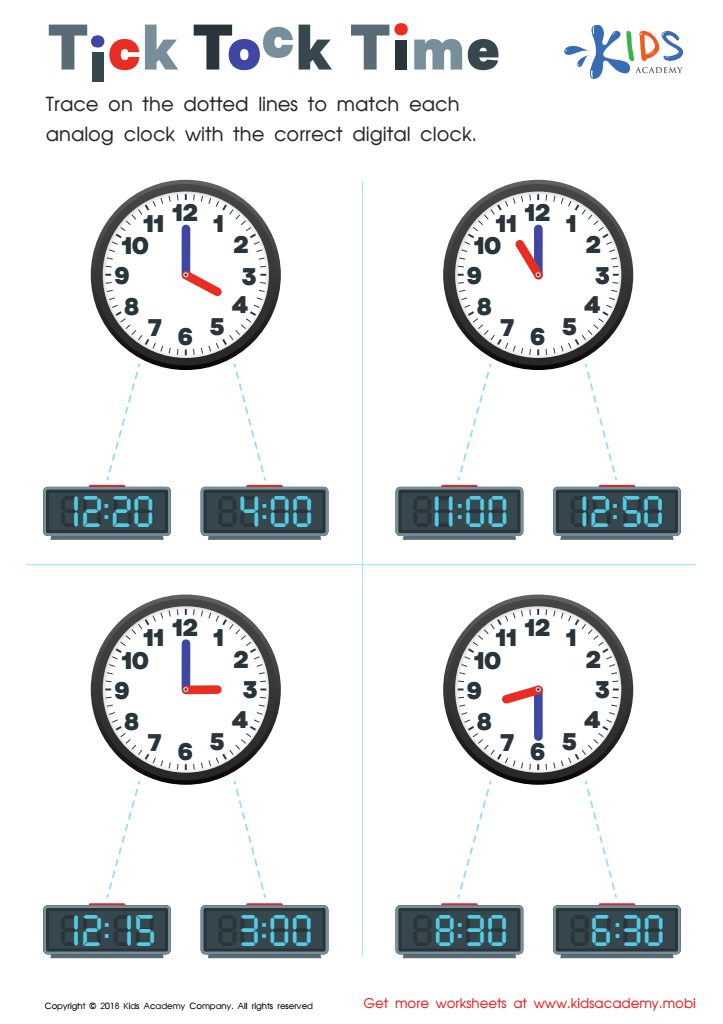
Tick Tock Time Worksheet
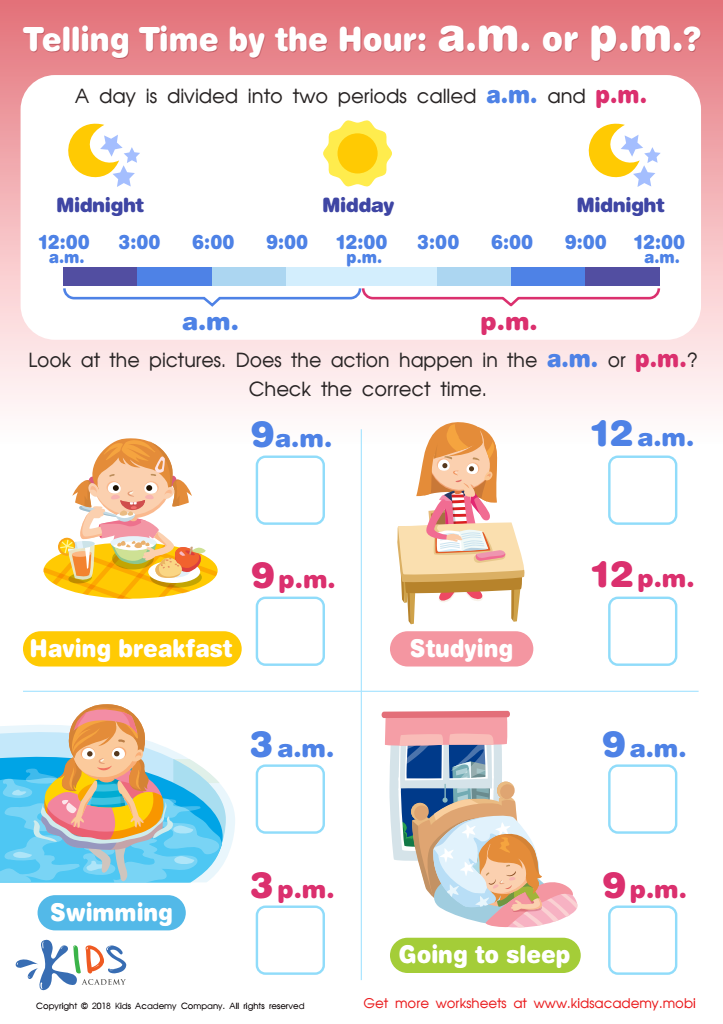
Tilling Time by the Hour: a.m. or p.m.? Worksheet
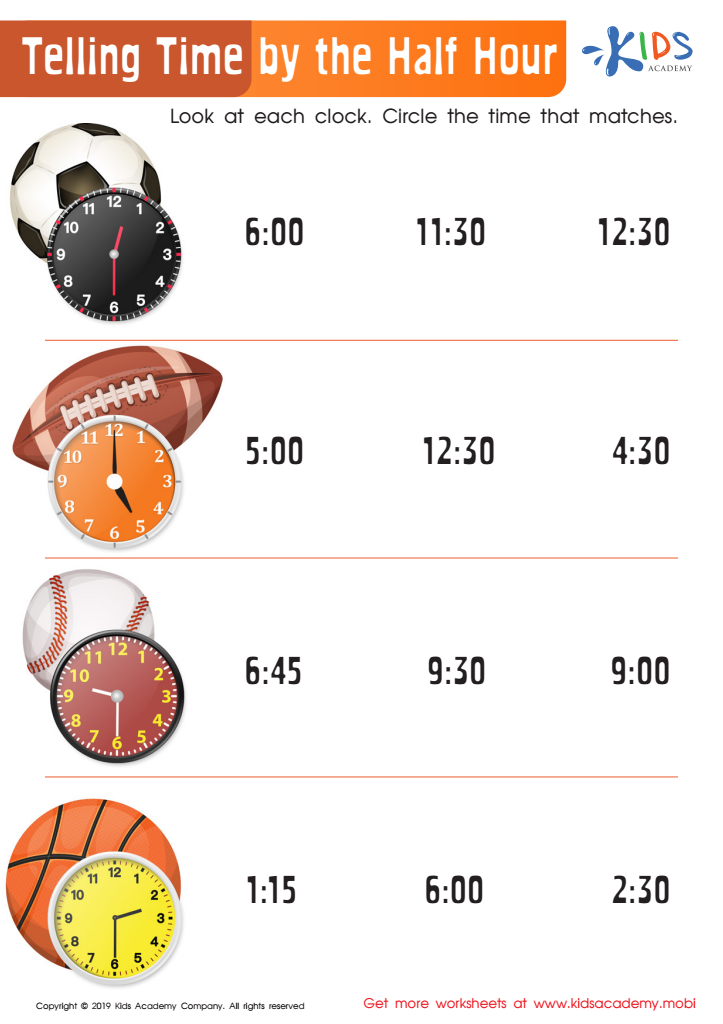
Telling Time by the Half Hour Worksheet
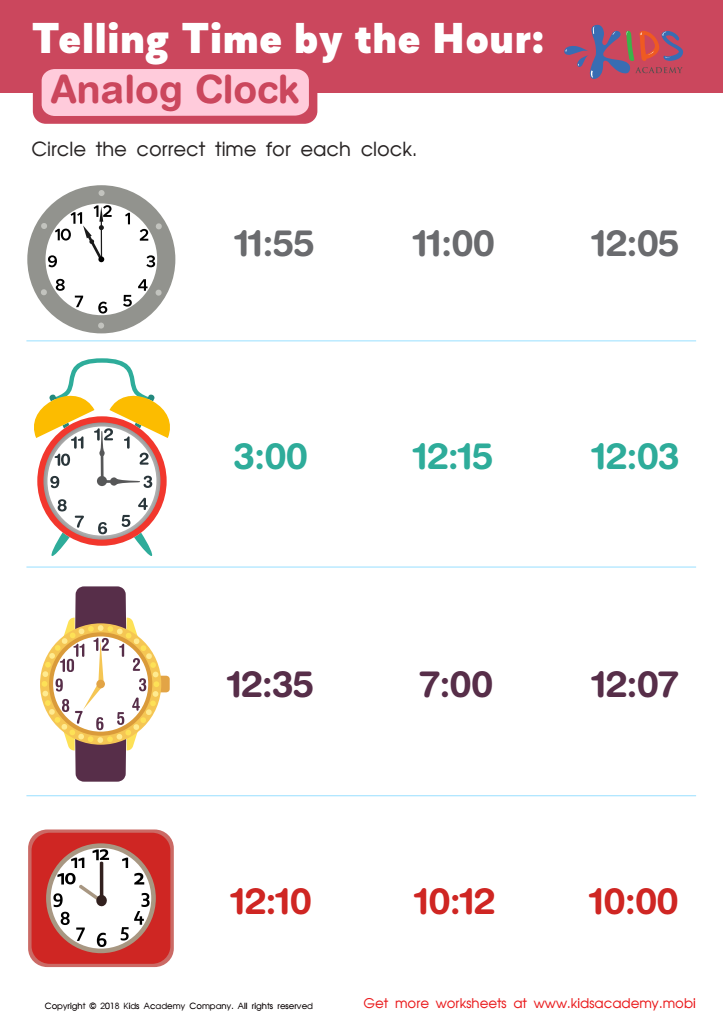
Telling Time by the Hour: Analog Clock Worksheet








Normal sleep time is crucial for children aged 3-7 due to its fundamental impact on their overall development. Sleep plays an essential role in brain maturation, physical growth, and cognitive function, all of which are vital during these early years. During sleep, the brain consolidates learning and memory, therefore, a well-rested child exhibits better attention, creativity, and problem-solving skills — key aspects for early learning and classroom success.
Sleep also profoundly influences emotional regulation and behavior. Children receiving an adequate amount of sleep are better equipped to handle frustration, interact positively with peers, and face daily challenges. Inadequate sleep, contrastingly, can lead to irritability, hyperactivity, and depressive symptoms, potentially hindering social interactions and causing difficulties in a classroom setting.
Furthermore, normal sleep promotes physical health; growth hormones are predominantly secreted during deep sleep stages, ensuring healthy development. Regular sleep strengthens the immune system, reducing the likelihood of infections that can disrupt school attendance and learning.
Therefore, parents and teachers should prioritize and monitor normal sleep patterns in children aged 3-7 to nurture a foundation for lifelong learning, emotional well-being, and health. By doing so, they can support children's academic performance, foster positive behaviors, and ensure optimal growth during these formative years.








