Counting skills Normal Word Problems Worksheets for Ages 3-7
4 filtered results
-
From - To
Explore our engaging "Counting Skills Normal Word Problems Worksheets" designed for children ages 3-7. These worksheets aim to develop essential counting skills through fun and relatable scenarios that captivate young minds. Each activity encourages critical thinking as children read simple word problems and explore basic math concepts. By providing a hands-on approach to learning, kids will strengthen their number recognition and counting abilities while enhancing their comprehension skills. Our carefully crafted worksheets are perfect for both classroom use and at-home practice, offering children a solid foundation in math that will serve them throughout their educational journey. Print and start counting today!
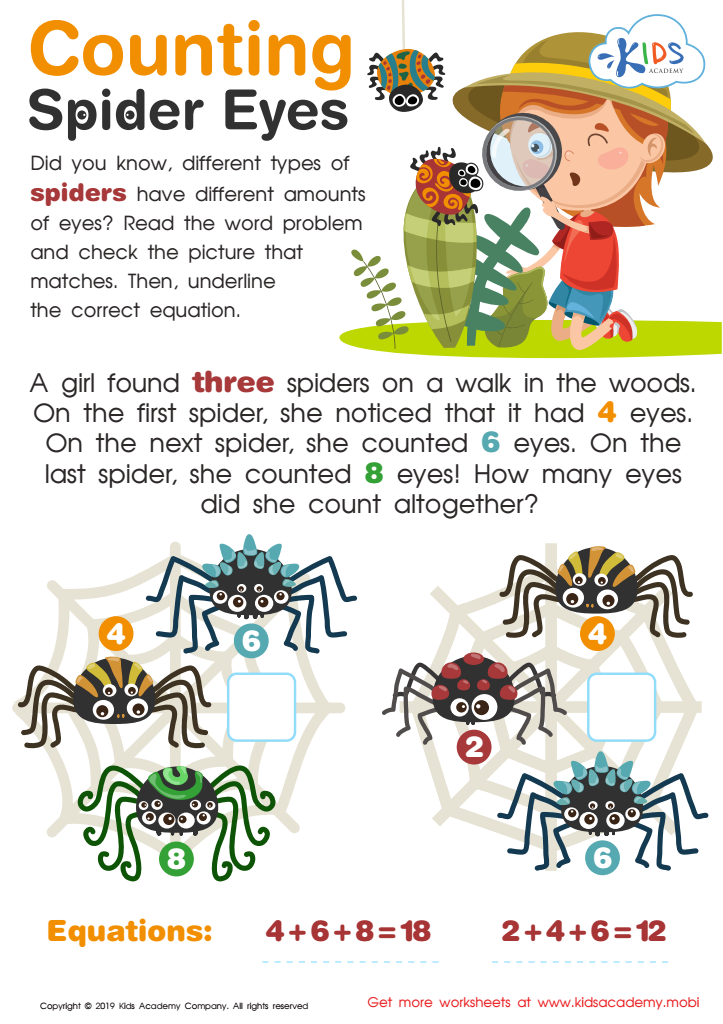
Counting Spider Eyes Worksheet
 Assign to My Students
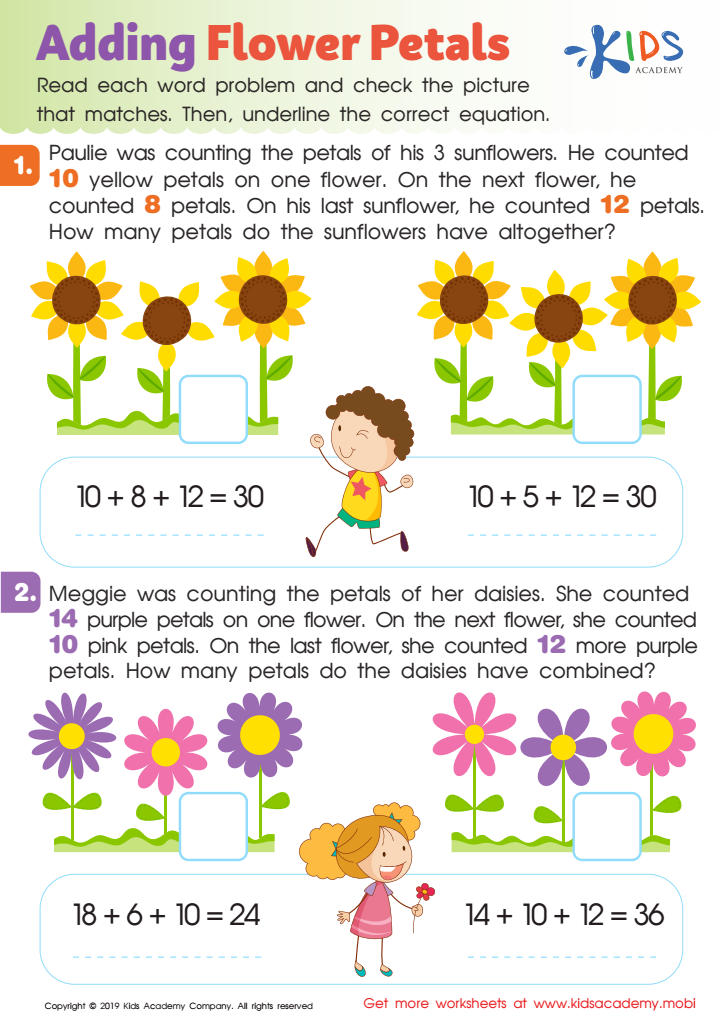
Adding Flower Petals Worksheet
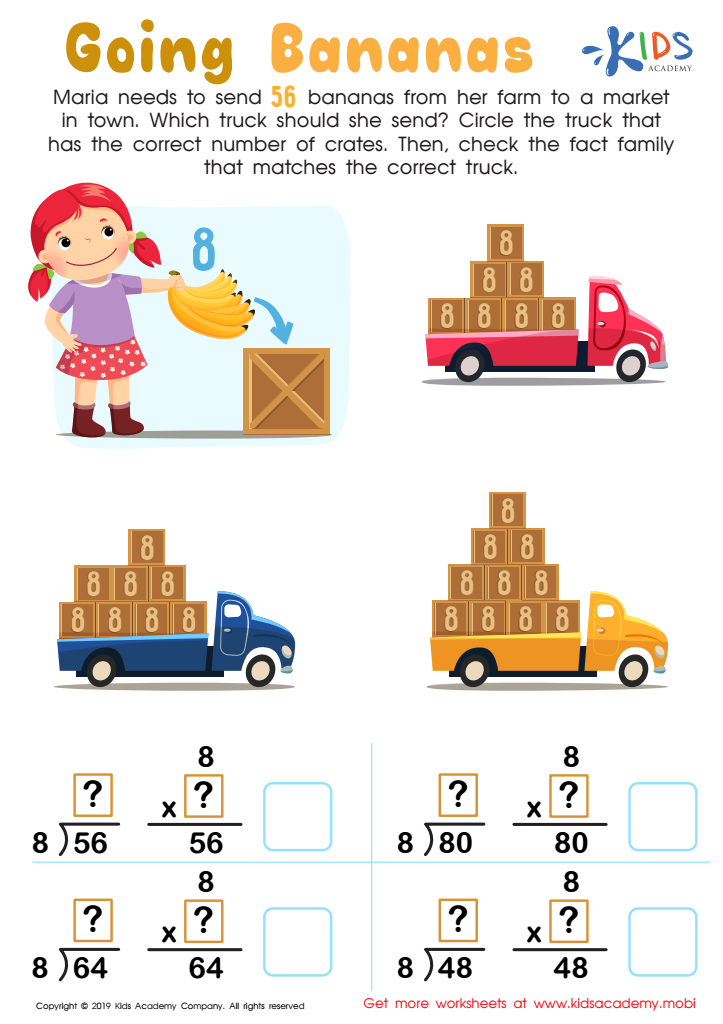
Going Bananas Worksheet
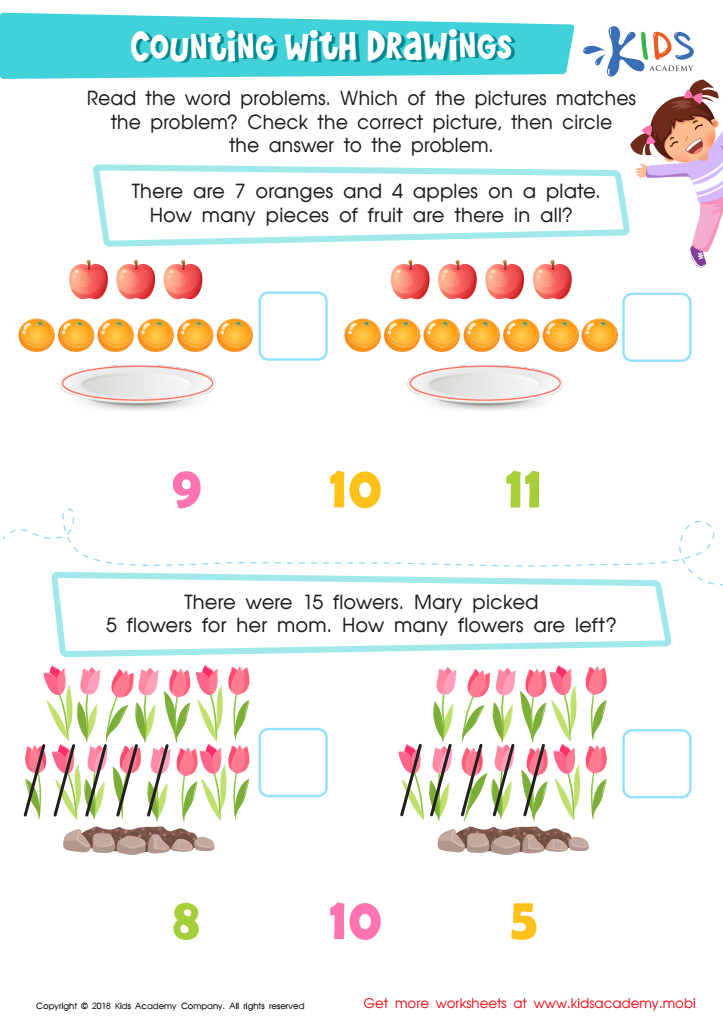
Counting with Drawings:Fruits & Flowers Worksheet








Counting skills and normal word problems are foundational elements of early math education for children ages 3 to 7. Parents and teachers should prioritize these skills because they serve as the building blocks for numeracy and problem-solving skills that are crucial in later stages of education.
At this age, children are naturally curious and eager to explore the world around them. Engaging them in counting and simple word problems helps foster critical thinking, as they learn to relate numbers to real-life situations. This not only enhances their mathematical understanding but also promotes language development, as they learn to articulate problems and solutions.
Moreover, developing strong counting skills early on supports children's confidence in mathematics, creating a positive attitude towards the subject. These skills can reduce anxiety and struggles in later years when they encounter more complex mathematical concepts.
By encouraging this early engagement with counting and word problems, parents and teachers can lay a strong foundation for lifelong learning—imbuing children with the skills they will need to navigate more advanced mathematical challenges in school and real-world scenarios. Ultimately, caring about these skills makes learning more interactive, fun, and relevant, setting children up for future success.








