
Sentence construction Normal Building Vocabulary Worksheets for Ages 3-7
6 filtered results
Difficulty Level
Grade
Age
-
From - To
Subject
Activity
Standards
Welcome to our Sentence Construction Normal Building Vocabulary Worksheets for ages 3-7! These engaging worksheets are designed to help young learners develop essential language skills through fun, interactive activities. Tailored for early readers, each worksheet focuses on improving vocabulary and understanding of sentence structure. Kids will enjoy colorful illustrations and simple prompts that encourage creativity and critical thinking while constructing meaningful sentences. These worksheets not only enhance literacy skills but also build confidence in young learners as they express their thoughts. Perfect for classroom use or at-home learning, our resources provide a solid foundation for lifelong language development. Start your journey today!
Favorites
With answer key
Interactive
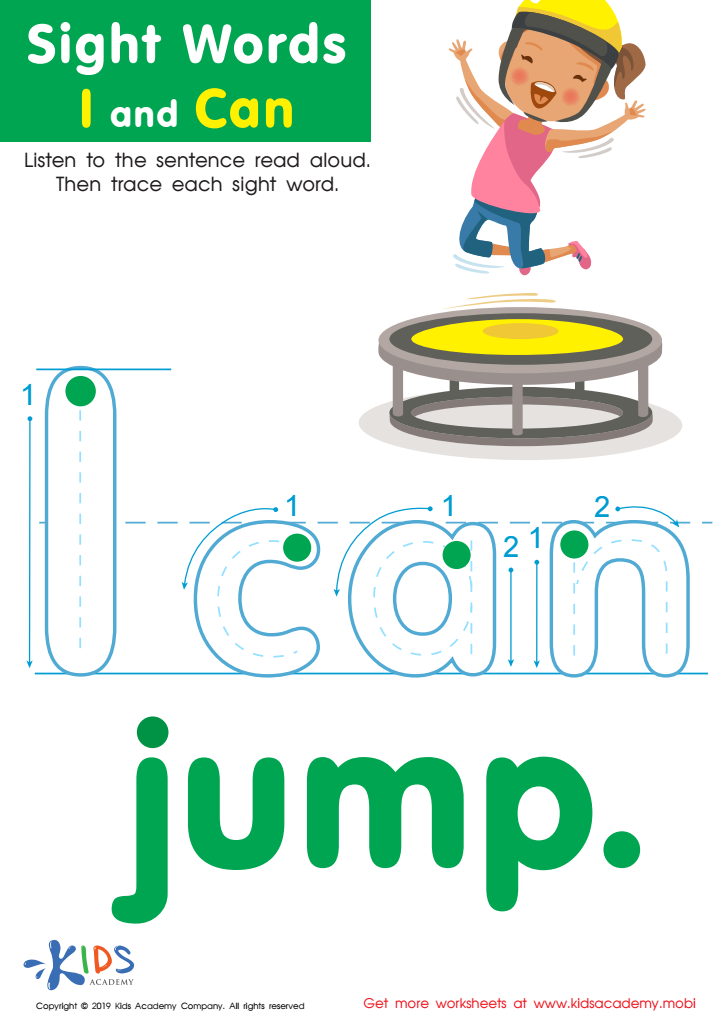
Sight Words I Can Worksheet
Emerging readers can build confidence and improve reading skills with this free worksheet! They'll trace the lines to complete the "I Can" phrase then use the picture clue to decode the last word. This activity encourages reading and writing, and is empowering for kids as they explore all the things they can do!
 Assign to My Students
Sight Words I Can Worksheet
Worksheet











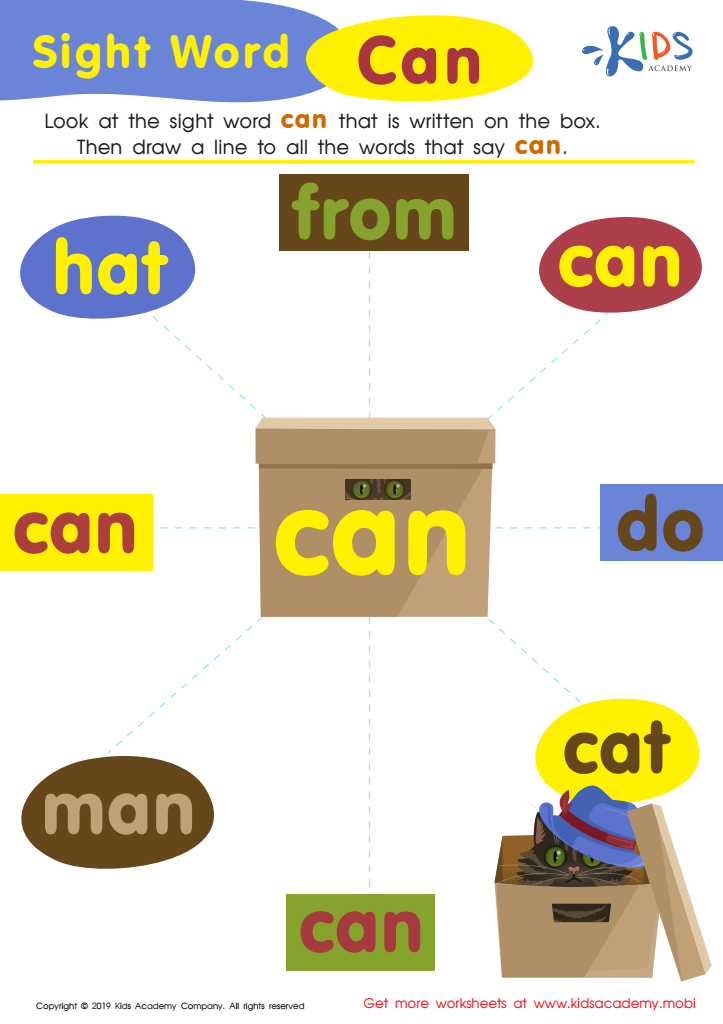
Sight Word Can Worksheet
Learning sight words is key for strong readers. Kids with large word bases find reading simpler, since they don't have to decode words they already know. This free worksheet uses the word 'can' to help kids improve their visual discrimination and refine motor skills, while providing pictures to help them along.
Sight Word Can Worksheet
Worksheet
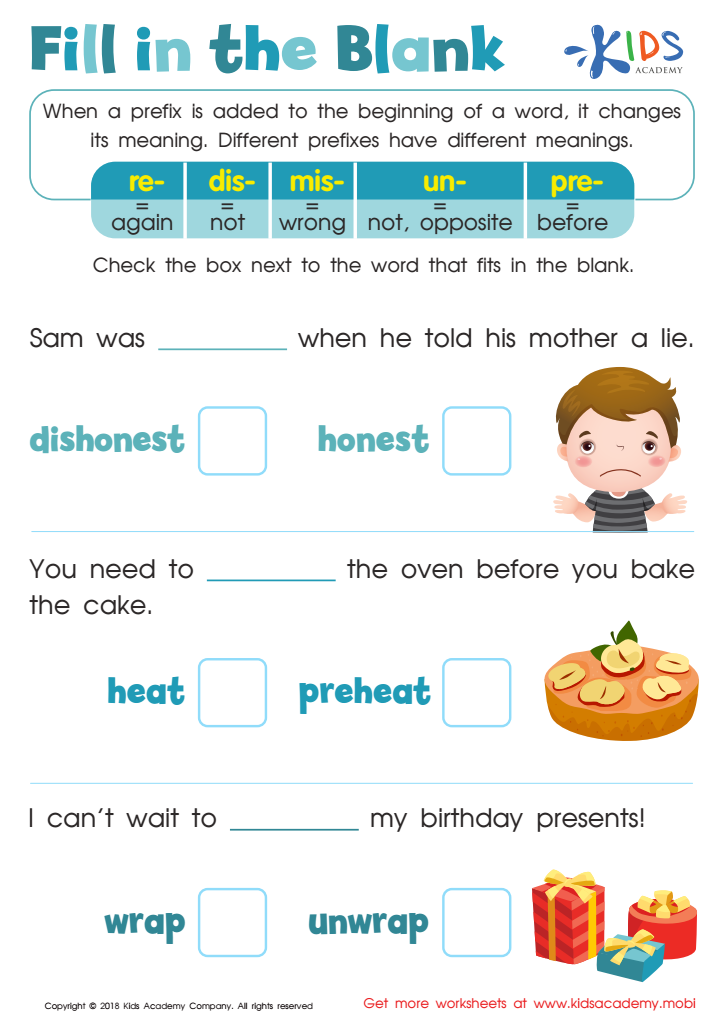
Reading: Fill in the Blank Worksheet
Students can practice understanding the meaning of common prefixes with this worksheet. They read sentences and pick the correct word with the appropriate prefix to complete it. Downloadable and a great addition to reading and vocabulary resources, this helps improve comprehension with mastery of the skill!
Reading: Fill in the Blank Worksheet
Worksheet
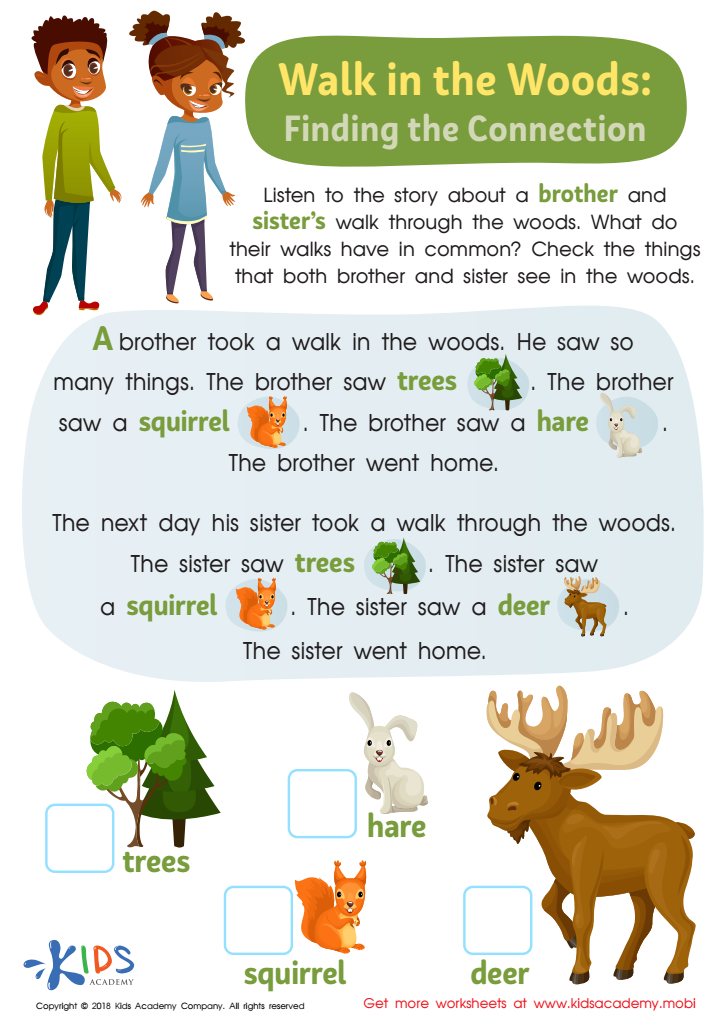
Walk In the Woods: Finding Connections Worksheet
Brother and sister took a walk in the woods to connect with nature and get some exercise. As they went, they noted different things like birds and plants, which they share in this story. Read it to your little ones, and help them check off the items the two saw. It's a great way to learn about nature and enjoy the outdoors.
Walk In the Woods: Finding Connections Worksheet
Worksheet
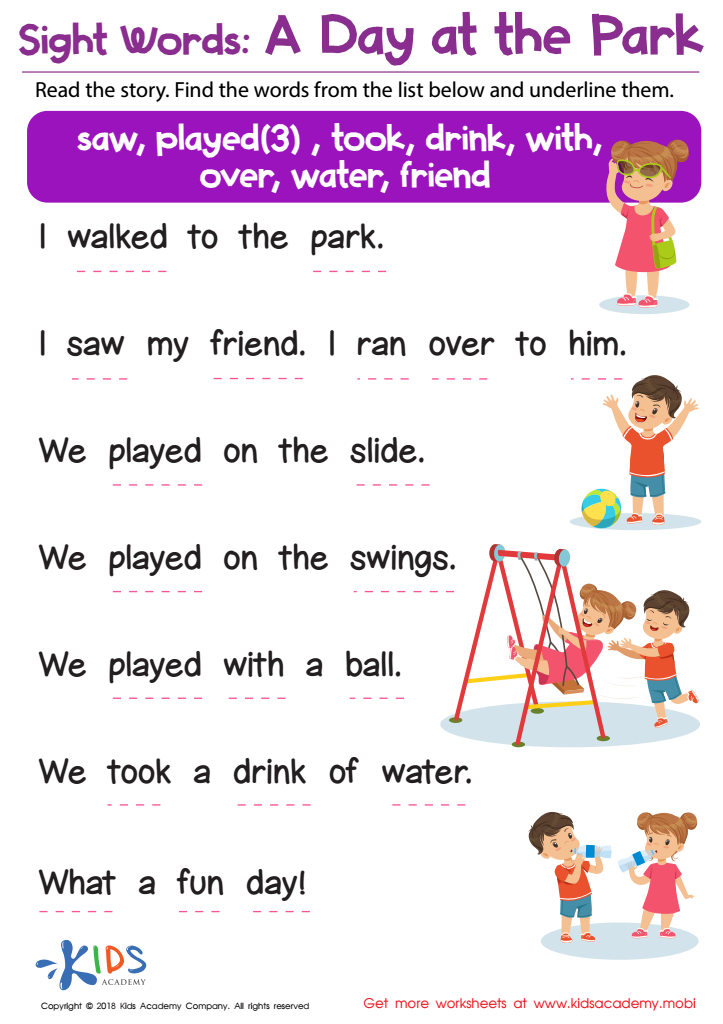
Sight Words: A Day at the Park Worksheet
This worksheet offers kids practice reading sight words in a story. With picture clues and repetitive wording, they'll work with words that can't be sounded out to reinforce their learning. This is an important step in the reading process that helps kids become more confident readers.
Sight Words: A Day at the Park Worksheet
Worksheet
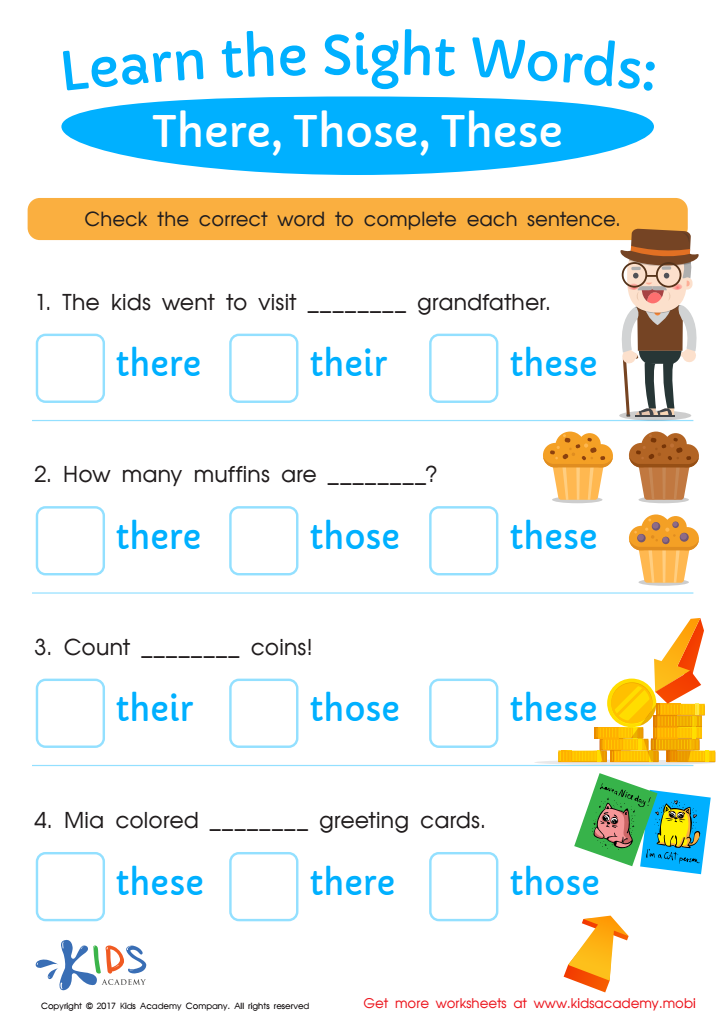
There, Those and These Sight Words Worksheet
Help teach your child to read and use tricky demonstrative pronouns. Use this 2nd grade sight words worksheet: there, those, these. Have them read each sentence and choose the right pronoun by looking at the pictures.
There, Those and These Sight Words Worksheet
Worksheet
Join Kids Academy for Free
Who is primarily going to use this learning content?








Sentence construction and vocabulary development are integral components of early childhood education for children aged 3-7. During these formative years, children are not only learning to express themselves but also to comprehend the world around them. Developing strong sentence construction skills lays the foundation for effective communication. It enables children to articulate their thoughts, emotions, and ideas clearly, fostering their confidence and social interactions.
Furthermore, a robust vocabulary is essential for reading comprehension and overall academic success. When children have access to a variety of words, they are better equipped to comprehend stories, instructions, and conversations. Expanding their vocabulary boosts critical thinking and creativity, as they can make connections between concepts and express intricate ideas.
Parents and teachers play a vital role in this developmental stage. By nurturing strong language skills through engaging activities like storytelling, play, and conversations, they contribute significantly to a child's cognitive growth. This early investment in language development not only supports their academic journey but also encourages lifelong learning, encourages curiosity, and enhances emotional intelligence. Ultimately, a solid foundation in sentence construction and vocabulary sets children on a path to effective communication and successful future learning experiences.








