Analytical skills Normal Reading Worksheets for Ages 3-7
5 filtered results
-
From - To
Enhance your child's analytical skills with our engaging Normal Reading Worksheets designed for kids aged 3-7. These worksheets encourage critical thinking and problem-solving, helping young learners develop a strong foundation in reading comprehension.
With fun activities and colorful illustrations, children will enjoy exploring patterns, making predictions, and drawing conclusions from stories. Perfect for early education settings or home practice, each worksheet is crafted to strengthen analytical abilities while keeping learning enjoyable. Whether you’re a teacher or a parent, our resources provide essential tools to nurture your child's intellectual curiosity and support their reading journey. Start building those analytical skills today!

Finding the Details and Connections: Assessment 2 Worksheet
 Assign to My Students
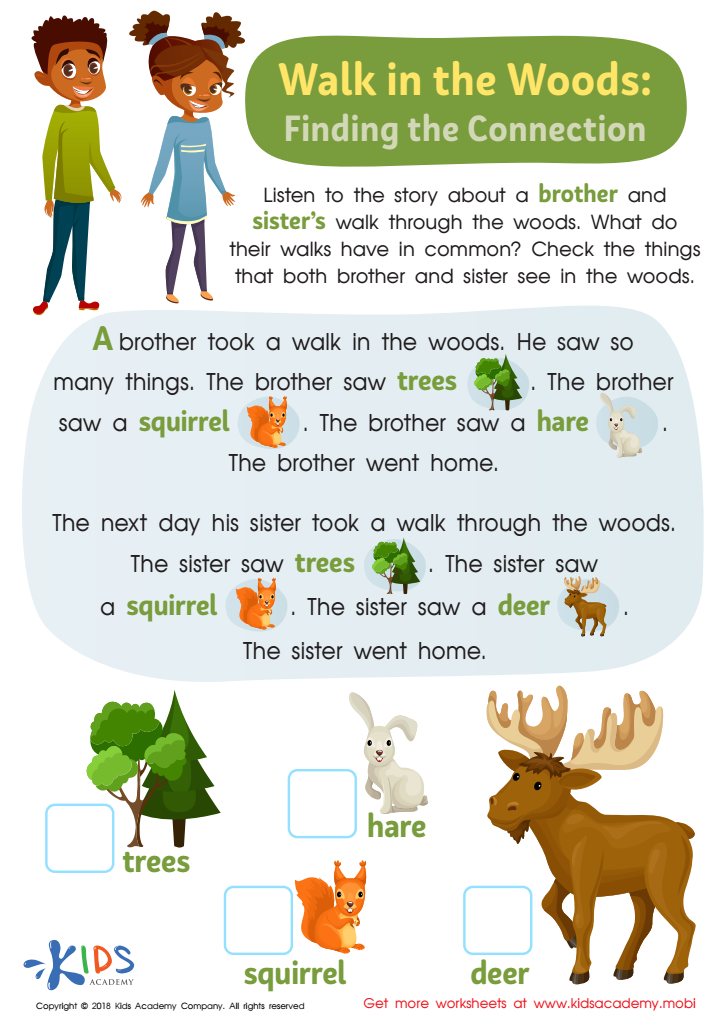
Walk In the Woods: Finding Connections Worksheet
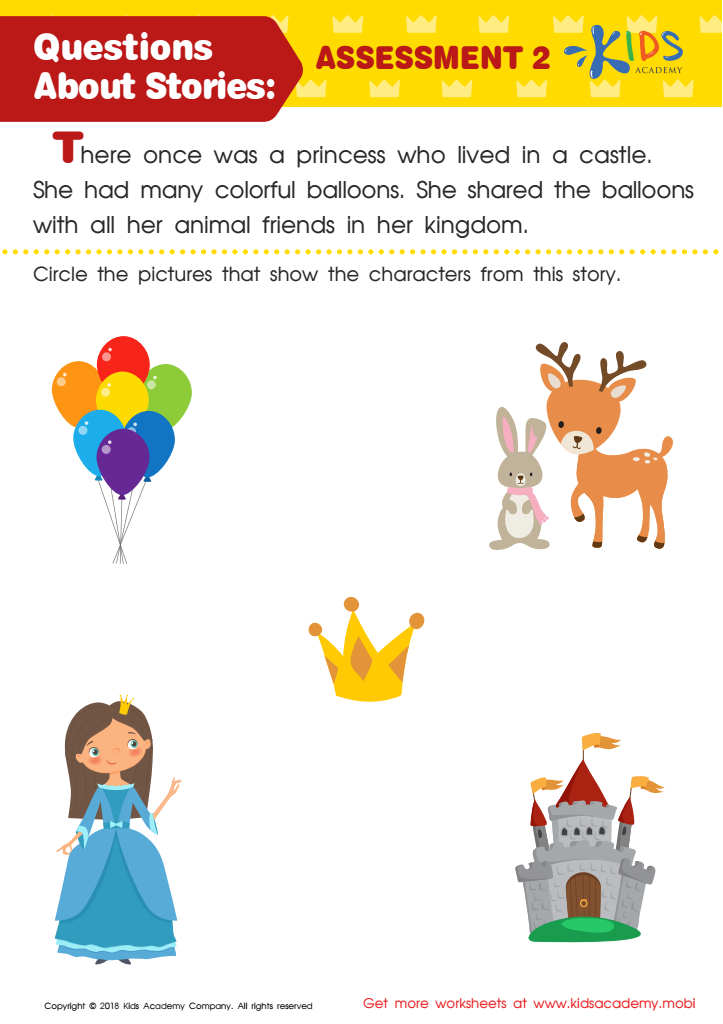
Questions About Stories: Assessment 2 Worksheet
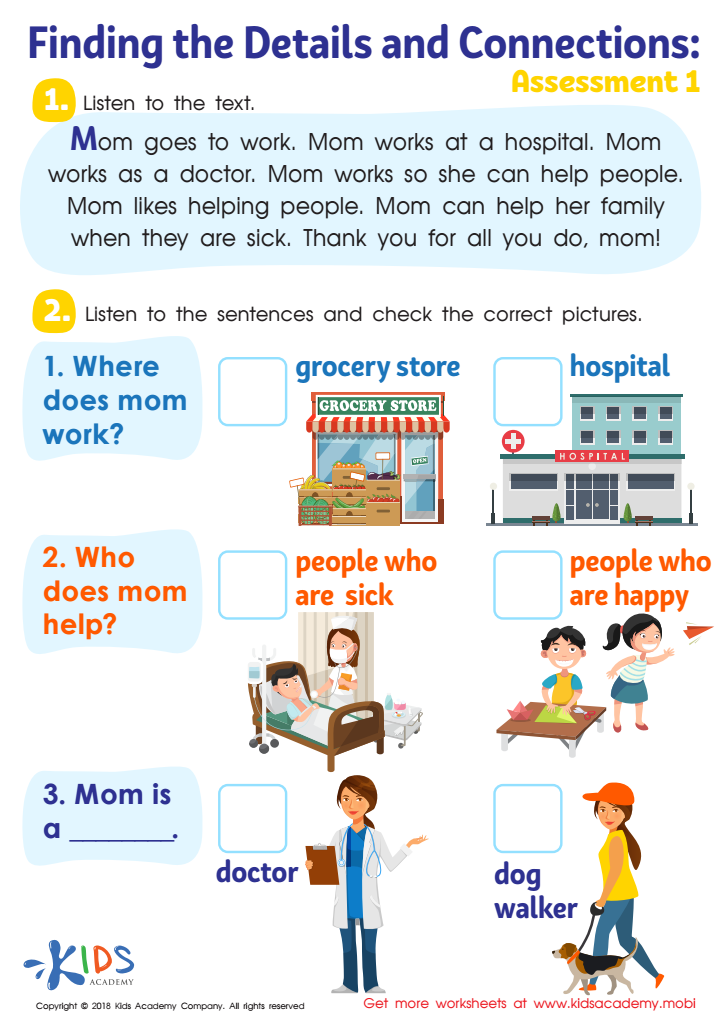
Finding the Details and Connections: Assessment 1 Worksheet
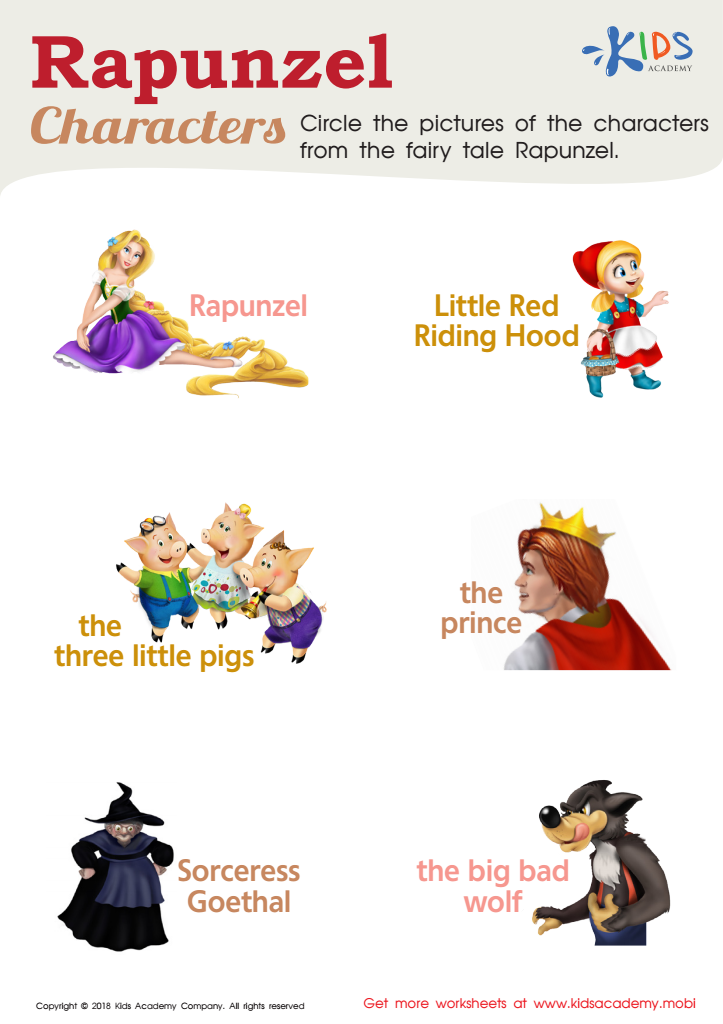
Rapunzel Characters Worksheet





.jpg)


Analytical skills are crucial for young children, especially for those aged 3 to 7, as they serve as the foundation for problem-solving, critical thinking, and decision-making. Parents and teachers should prioritize the development of these skills during this formative period because children are naturally curious and eager to explore their environments. By fostering analytical skills, caregivers can encourage creativity and help children make connections between concepts, which enhances their understanding of the world.
Incorporating activities that promote analytical thinking, such as puzzles, patterns, and games, can make learning engaging and fun. This not only improves cognitive abilities but also nurtures emotional intelligence as children learn to articulate their thoughts and analyze their feelings. Additionally, strong analytical skills contribute to better academic performance as children progress through school, making it essential for long-term educational success.
Moreover, early development of these skills prepares children to navigate social situations, analyze their interactions, and understand varying perspectives. Overall, when parents and teachers focus on cultivating analytical skills in children, they equip them with the tools necessary for lifelong learning and adaptability in an ever-evolving world.








