Logical thinking Normal Reading Worksheets for Ages 3-7
4 filtered results
-
From - To
Introducing our "Logical Thinking Normal Reading Worksheets for Ages 3-7" – the perfect way to foster critical thinking and literacy skills in young learners! Crafted to engage and challenge, these worksheets are designed to help children develop logical reasoning and reading comprehension from an early age. Each activity encourages kids to make connections, solve problems, and understand sequences, all while having fun. Ideal for both classroom use and at-home learning, our printable worksheets provide an excellent foundation for future academic success. Boost your child's cognitive skills and watch them thrive with our expertly curated selection of exercises!
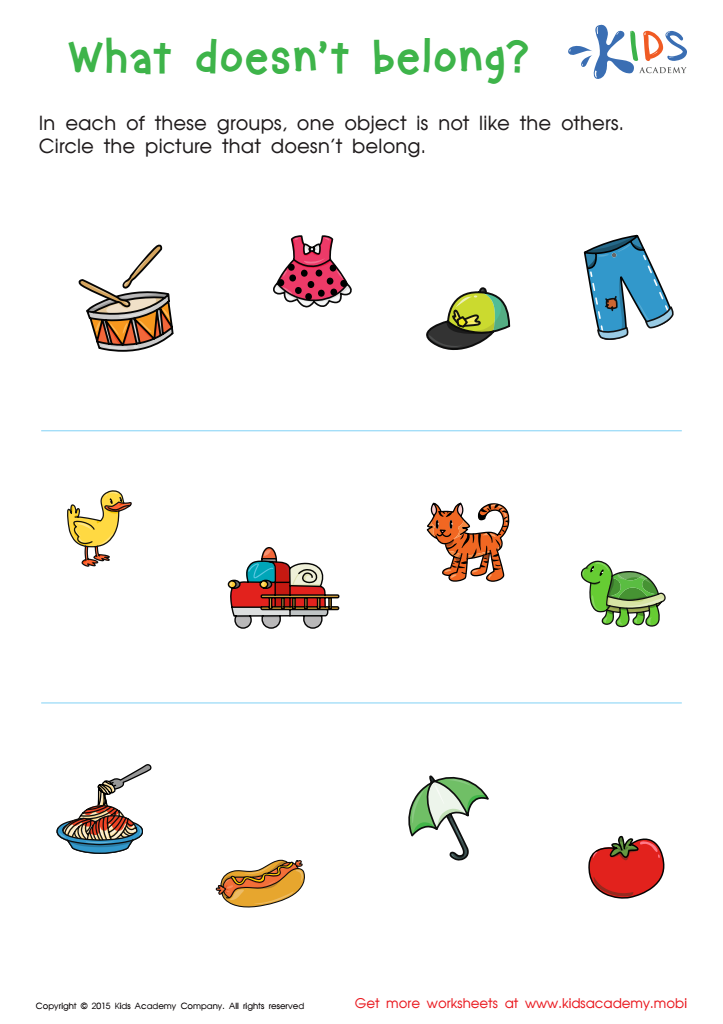
First Words: What Doesn't Belong Worksheet
 Assign to My Students
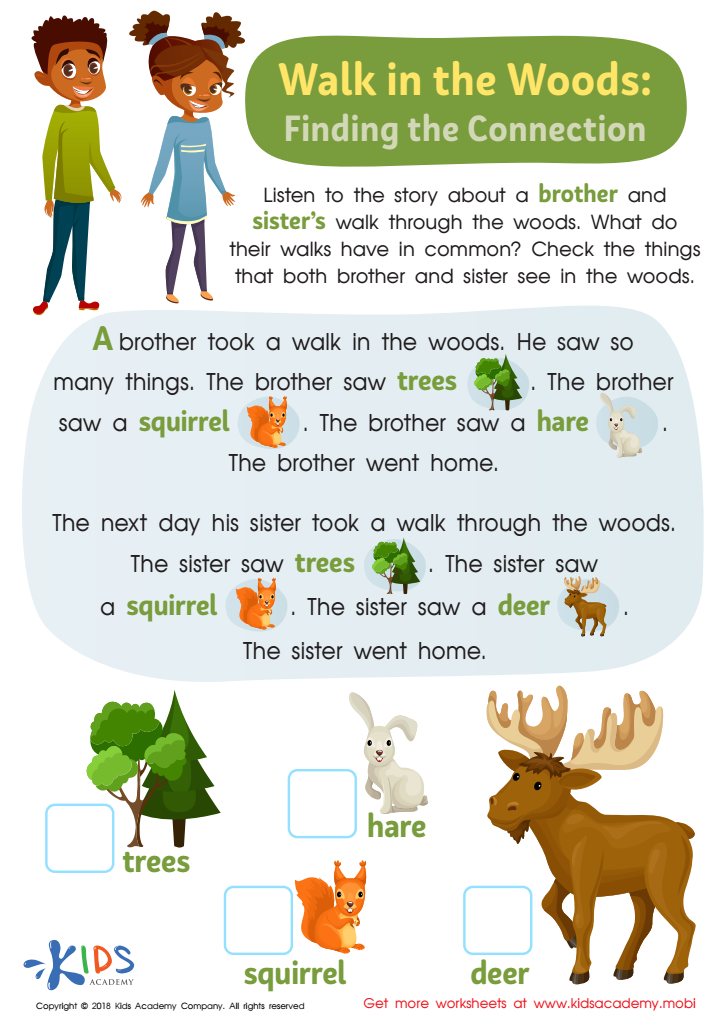
Walk In the Woods: Finding Connections Worksheet
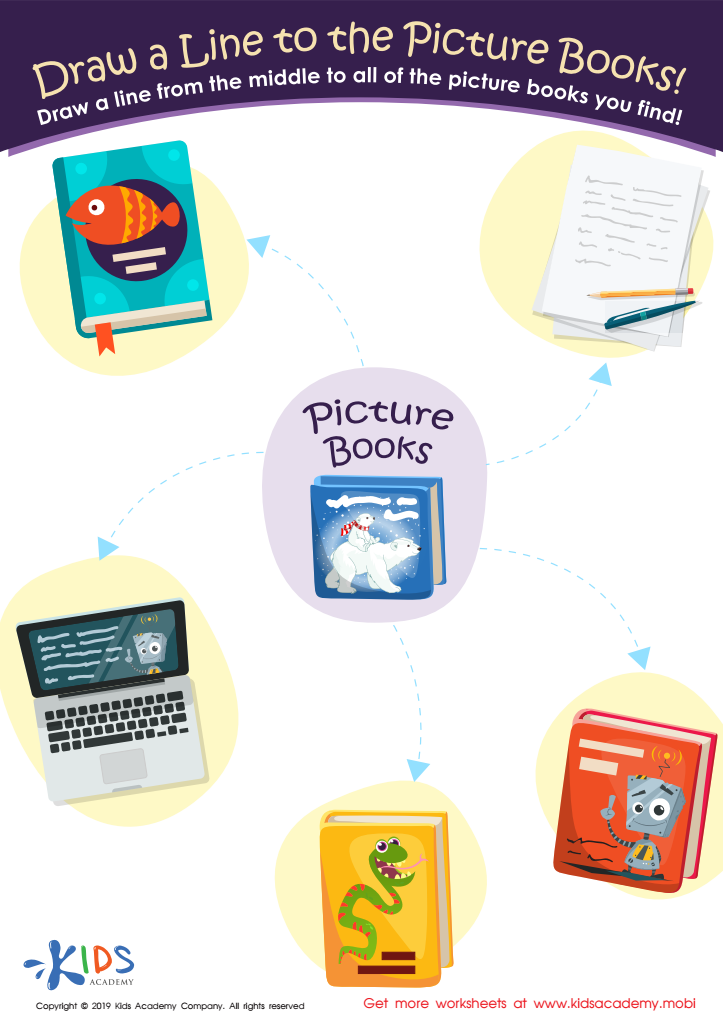
Draw a Line to the Picture Books Worksheet
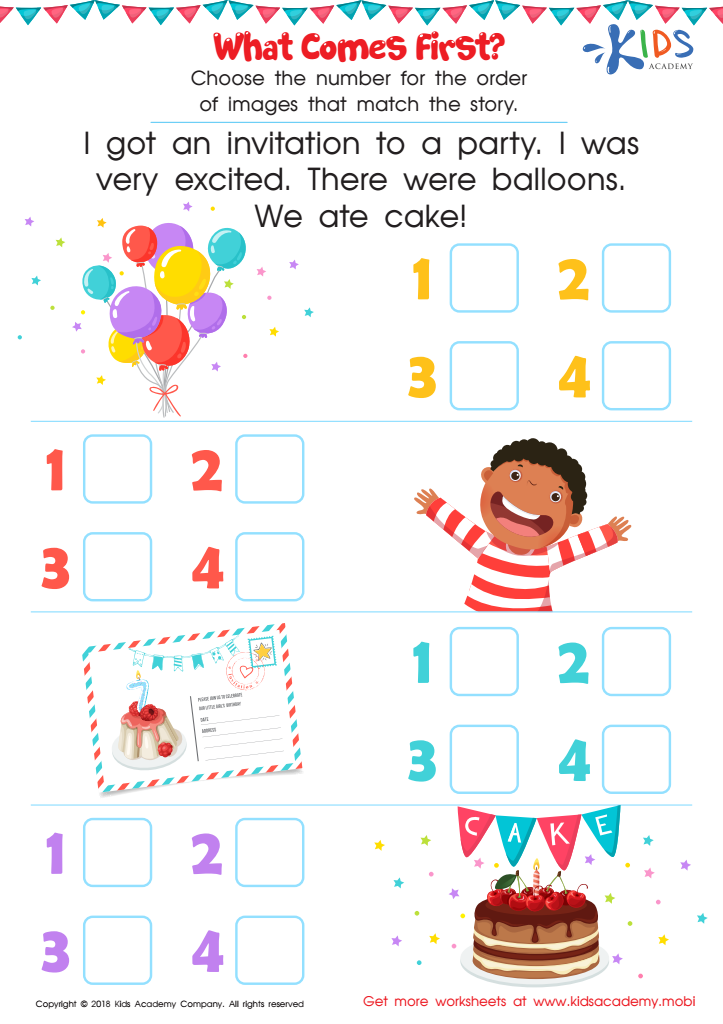
What Comes First Worksheet





Developing logical thinking and normal reading skills in children aged 3-7 is critical for their overall cognitive and academic growth. At this early stage, a child's brain is rapidly evolving, and fostering logical thinking helps them understand cause-and-effect relationships, make connections, and solve problems effectively. These skills lay a cornerstone for future learning in subjects such as math and science, as they enhance a child’s ability to reason systematically and articulate ideas clearly.
Additionally, normal reading abilities—encompassing not just the ability to recognize words but also to understand and interpret text—are fundamental. Early reading proficiency supports cognitive development by expanding vocabulary, improving language skills, and enhancing memory. When young children are read to or start reading simple texts, they are exposed to new concepts, cultures, and worlds, which fuelling their imagination and curiosity.
Parents and teachers who prioritize these skills enable a child's educational foundation to be robust. They contribute to creating learners who are not only academically proficient but also capable of critical and independent thinking. Ultimately, these early cognitive investments result in children who are more adaptable, better problem-solvers, and more equipped for future academic challenges, paving the way for lifelong learning and success.








